Why Doctors Lose Money on Google Ads (And How to Get ROI)
You spend money on Google Ads every month. You see clicks coming in. But where are the patients? This is the reality for most doctors and clinics in India today. Google Ads promises more patients. More calls. More appointments. But what you get instead are bills that keep growing and waiting rooms that stay empty.
Table of Contents
ToggleYou are not alone in this struggle. Every month, doctors across India put lakhs of rupees into Google Ads. Many see their money disappear with little to show for it. Studies show that a large part of ad spending gets wasted in many Google Ad accounts. The clicks come in. The meter runs. But appointments do not follow.
Your clinic deserves better than this. Most doctors start Google Ads with high hopes. A medical representative or marketing agency tells them it will bring 50 new patients next month. They set up a campaign. They choose some keywords. They write an ad. Then they wait.
Week one goes by. A few clicks. No calls. Week two arrives. More clicks. One inquiry. No booking. By week three, the budget is half gone. The frustration is real. By month end, you are left wondering if Google Ads even works for doctors.
The problem is not Google Ads. The platform works fine for thousands of clinics worldwide. Healthcare digital advertising is growing because it provides targeted and measurable results. The problem is how most doctors use Google Ads.
Three big mistakes happen again and again. First, clinics target the wrong people. Your ad shows up for searches that have nothing to do with your practice. Second, there is no clear plan. Nobody knows what the goal is or how to measure success. Third, the follow up is slow or missing. A patient shows interest, but by the time you respond, they have already booked with another doctor.
These mistakes are common. They are also fixable.
When you fix them, Google Ads becomes a patient machine. Every rupee you spend brings back two or three in return. Your waiting room fills up. Your phone rings with genuine appointment requests. Your clinic grows.
This guide will show you exactly why your ads fail and how to fix them. You will learn the mistakes that drain your budget. You will discover the strategies that bring real patients through your door. You will understand how to track results so you know what works.
No complex marketing terms. No confusing tech talk. No fluff. What you will get are clear answers written for doctors who want real results. By the end, you will know how to turn your Google Ads into a growth tool instead of a money drain.
Your competition is already doing this. Other clinics in your city are getting patients from Google Ads right now. They are smart. They track everything. They follow up fast. You can do the same. You can stop wasting money and start getting real returns. It starts with understanding what goes wrong and how to make it right.
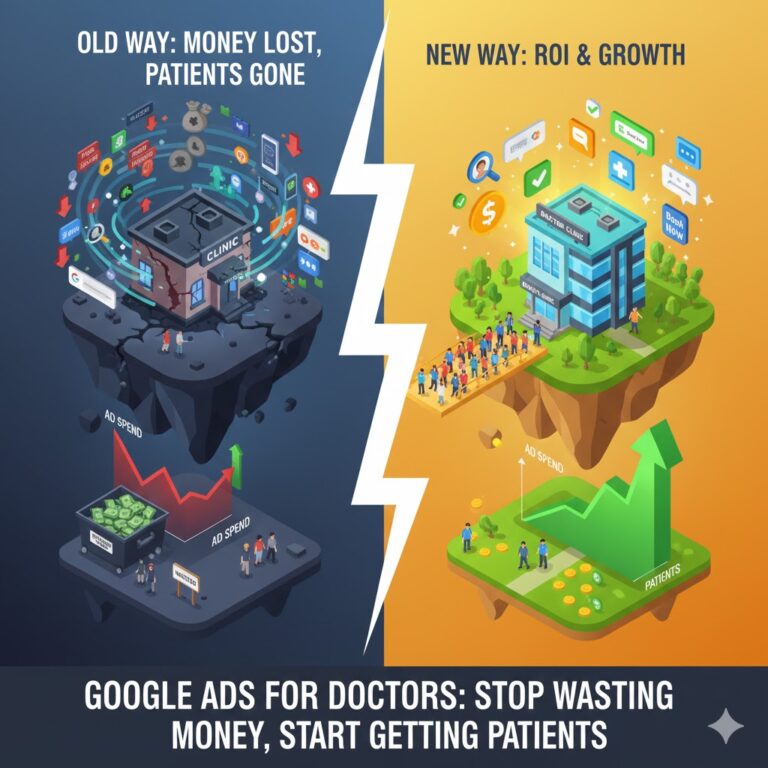
1. Why Your Google Ads Are Not Bringing Patients
You started Google Ads because you wanted more patients. You wanted your clinic to grow. You wanted the phone to ring more often.
But that is not happening.
Instead, you are watching money leave your account every day. The clicks keep coming. But your waiting room stays empty. This is the reality for most doctors who try Google Ads alone.
You Pay For Clicks That Lead Nowhere
Every time someone clicks your ad, you pay Google. Sometimes 50 rupees. Sometimes 200 rupees. Sometimes even more. Research shows that healthcare clicks can cost between 100 to 400 rupees per click in major Indian cities. That adds up fast.
You check your Google Ads account. It shows 100 clicks this week. That means you spent maybe 15,000 rupees or more.
But how many patients called? How many booked appointments?
Maybe two. Maybe none.
This is what we call wasted clicks. People click your ad. They visit your website. Then they leave. They never call. They never book.
Your money is gone. But you got nothing in return.
Most doctors tell us they lose 60 to 70 percent of their ad budget this way. They pay for traffic that does nothing for their practice.
Your Ads Reach The Wrong People
Google shows your ad to people who search certain words. But not everyone who searches is your patient.
Let me give you an example. A dentist in Mumbai ran ads for “tooth pain treatment.” Sounds good, right? But here is what happened. Students doing homework clicked the ad. People looking for home remedies clicked the ad. Even other dentists researching clicked the ad.
These people were never going to become patients. But the dentist paid for every single click. This happens because your ad settings are too wide. Google shows your ad to anyone who might be interested. Not to people who are ready to visit a doctor.
You end up paying for curiosity clicks. Not patient clicks. Another doctor we spoke with ran ads for “diabetes care.” His ad showed up for people searching “diabetes diet chart” and “diabetes causes.”
These searchers wanted information. They did not want to book an appointment. But he paid for those clicks anyway. Wrong audience means wrong results. Your ad budget goes to people who will never walk through your door.
You Have No Plan And No Goals
Most clinics start Google Ads without a clear plan. They think putting money in will bring patients out. But that is not how it works.
Before you spend even one rupee, you need to answer these questions: What do you want from these ads? More phone calls? More appointment bookings? More people visiting your website?
How many new patients do you need each month? What is one new patient worth to your practice? Which services make you the most money? Should you promote general checkups or specialized treatments?
Most doctors cannot answer these questions. They run ads and hope for the best. Hope is not a strategy. Without clear goals, you cannot tell if your ads are working. You cannot fix problems. You cannot make smart choices about where to spend more or spend less.
One clinic owner told us he spent 80,000 rupees in three months on ads. When we asked what he got back, he said, “I think some patients came. But I am not sure.” That is throwing money away.
Another doctor ran ads for six months. He never checked which ads brought patients. He never looked at which keywords worked. He kept doing the same thing and kept losing money.
Your Google Ads need a plan. They need clear goals. They need someone watching the numbers every single day. Without that, you are playing a game you cannot win.
Every rupee you waste on bad ads is a rupee you cannot spend elsewhere. You could hire better staff. You could buy better equipment. You could train your team. Instead, that money disappears into clicks that bring nothing.
The doctors who succeed with Google Ads do three things differently:
They target the right people. They track everything. They adjust based on what works. The doctors who fail do the opposite. They target everyone. They track nothing. They keep doing the same thing and hope it gets better.
Your ads can work. But not the way you are running them now. You need to stop the bleeding first. Then you need to build a system that brings real patients through your door.
That is what we help doctors do every day. We turn wasted ad spend into phone calls, appointments, and loyal patients. Because your clinic deserves better than empty clicks and empty waiting rooms.
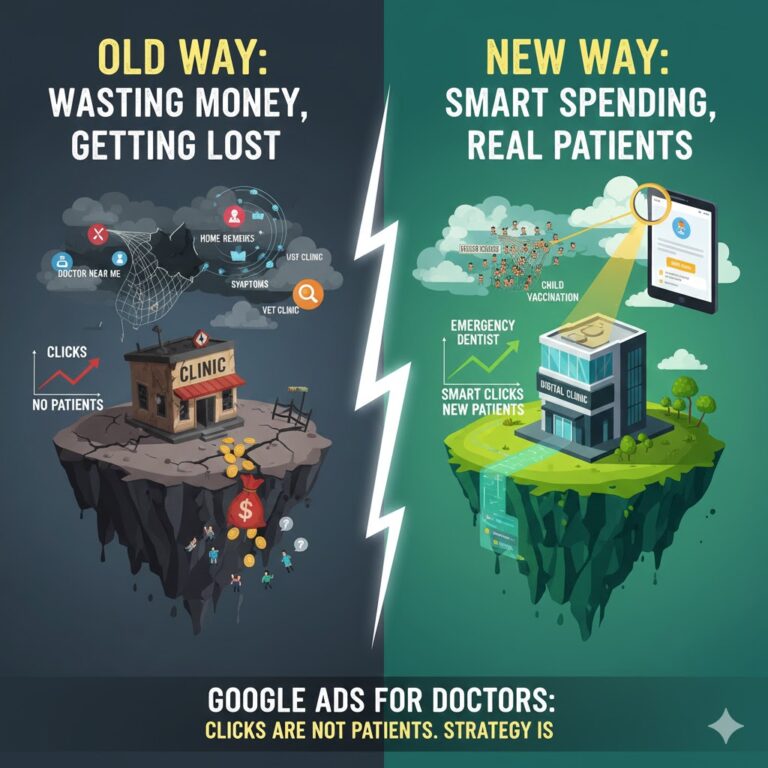
2. The Real Story Behind Google Ads for Doctors
Spending More Money Does Not Bring More Patients
Many doctors believe that a bigger budget will solve their problems. They think putting more money into ads will automatically bring more patients through the door. This is not how Google Ads actually works in the real world.
Think about it this way. If you buy ten pairs of shoes but only wear two, did you spend your money well? The same thing happens with your ad budget. You might spend 50,000 rupees per month, but if only 5,000 rupees brings you real patients, you are throwing away 45,000 rupees every single month.
Smart spending means you focus on what actually works for your clinic. You need to know which keywords bring people who book appointments. You need to understand which areas of your city have patients looking for your services. You need to see which time of day gets you the most calls.
A pediatrician in Mumbai once spent 80,000 rupees in one month on ads. She got many clicks but only three new patients. After changing her approach and spending 30,000 rupees the next month, she got fifteen new patients. She did not spend more. She spent better.
Your Local Competition Is Fighting For The Same Patients Right Now
Every day, patients in your city search for doctors on Google. When someone types “best cardiologist near me” or “child specialist in Bangalore,” they see a list of ads. Your competitor clinics are paying to show up in those results. If you are not there, patients will call someone else.
This competition is happening in every major city across India. In Delhi, over 40 clinics might be running ads for the same specialty. In Pune, a patient searching for a skin doctor will see at least five to seven different ads before they even reach the normal search results.
The doctors who show up first are not always the best doctors. They are the ones who understand how to make their ads stand out. They use the right words that match what patients are searching for. They show their timings, their location, and what makes them different from others.
When a clinic down the street from you is getting ten new patients every week from Google Ads. Those are patients who could have come to you. The difference is not in medical skills. The difference is in how well your ad speaks to what patients need right now.
Google Makes You Pay More When Your Ad Does Not Match What People Want
Google has a scoring system that most doctors do not know about. It is called Quality Score. This score decides how much you pay every time someone clicks your ad. If your score is low, you might pay 80 rupees per click. If your score is high, you might pay only 35 rupees for the same click.
How does Google decide your score? It looks at whether your ad actually helps the person searching. When someone searches “fever clinic open Sunday,” Google checks if your ad talks about Sunday timings and fever treatment. If your ad says “Best Doctor in Town,” Google sees this as not helpful. Then Google charges you more money for each click.
A dental clinic in Hyderabad learned this the hard way. Their ad said “Award Winning Dental Care” but people were searching for “tooth pain emergency treatment.” Google kept charging them higher amounts because the words did not match. After they changed their ad to focus on emergency dental care and pain relief, their cost per click dropped by almost half.
This system exists because Google wants people to find what they are looking for quickly. If your ad wastes someone’s time, Google punishes your wallet. If your ad gives people what they need, Google rewards you with lower costs and better ad positions.
The landing page matters too. When people click your ad and land on your website, Google watches what happens next. If they leave in five seconds, Google thinks your ad was misleading. If they stay, read, and book an appointment, Google thinks your ad was helpful. The more helpful Google thinks you are, the less money you pay.
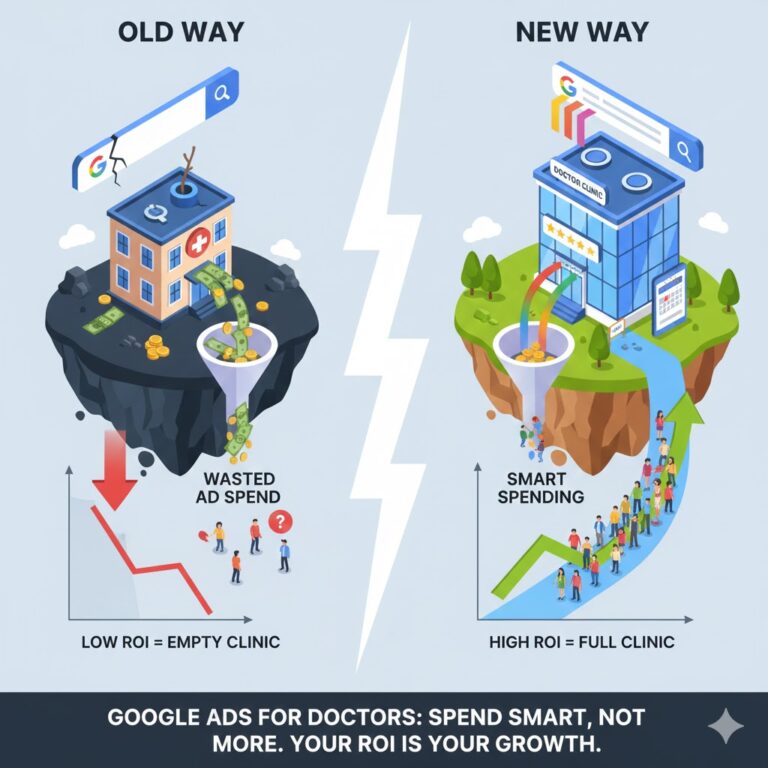
3. Common Mistakes That Drain Your Budget
Using Too Many General Keywords Costs You Real Money
Many doctors start their Google Ads with terms like “dentist near me” or “best doctor in Delhi.” These words sound perfect because patients search for them every day. But here is the problem. When you use such general words, your ad shows up for everyone. A person looking for free dental tips sees your ad. Someone searching for veterinary dentists sees your ad. A student doing homework about dentistry sees your ad. You pay for every single click. Most of these people will never book an appointment with you. Your money disappears fast.
Think about this. If 100 people click your ad and only 2 book appointments, you wasted money on 98 clicks. General keywords bring the wrong crowd. They look for information, not treatment. They compare prices but never call you. Your budget gets spent in one week instead of lasting the whole month. This happens because Google shows your ad to anyone typing those common words. You need specific keywords that match what your actual patients search for. Words like “root canal treatment in Kolkata” or “pediatric dentist for kids in Bangalore” work better. They cost less per click and bring people who need your services.
Sending People to Your Homepage Stops Them from Booking
Your homepage talks about everything. It shows your services, your team, your location, and your story. But when someone clicks your ad about teeth whitening, they want to see the details. They do not want to hunt through five pages to find what they need. This confusion makes them leave your website in seconds. You paid for that click and got nothing back.
A landing page solves this problem. It is one simple page that matches your ad. If your ad promises affordable dental implants, your landing page should talk only about dental implants. It should show the cost, the process, and a big button to book an appointment. No extra links. No distractions. No long stories about your clinic history. The visitor sees what they came for and takes action immediately. Clinics with good landing pages get 3 times more bookings than those sending people to their homepage. The difference is huge.
Your landing page must load fast on mobile phones. Most patients search on their phones while traveling or during lunch breaks. If your page takes more than three seconds to load, they go back and click your competitor’s ad. Keep forms short. Ask for name, phone number, and preferred date only. Long forms scare people away. Add real patient photos if possible. Show your clinic location on a map. Put your phone number at the top where everyone can see it. Make booking feel easy and safe.
Running Ads Without Tracking Means You Fly Blind
Imagine driving at night with no headlights. You cannot see where you are going. Running Google Ads without tracking feels the same way. You spend money every day but have no idea which ads bring patients. You do not know if people call you after seeing the ad. You cannot tell which keywords work and which ones waste your budget.
Tracking shows you the complete picture. It tells you exactly how many people clicked your ad. It reveals how many filled your contact form. It counts how many actually called your clinic. With this information, you make smart decisions. You stop paying for ads that bring no results. You spend more money on ads that fill your appointment book. Without tracking, you keep making the same mistakes month after month.
Setting up tracking takes some work but saves thousands of rupees later. You need to connect your Google Ads account with your website. You add a small piece of code that watches visitor actions. This code tells you when someone books an appointment after clicking your ad. You can see which city sends you the most patients. You discover which time of day works best for your ads. All this data helps you improve your results every single week. Clinics that track their ads properly spend 40% less money and get better results. The numbers prove that tracking matters more than anything else in digital advertising.
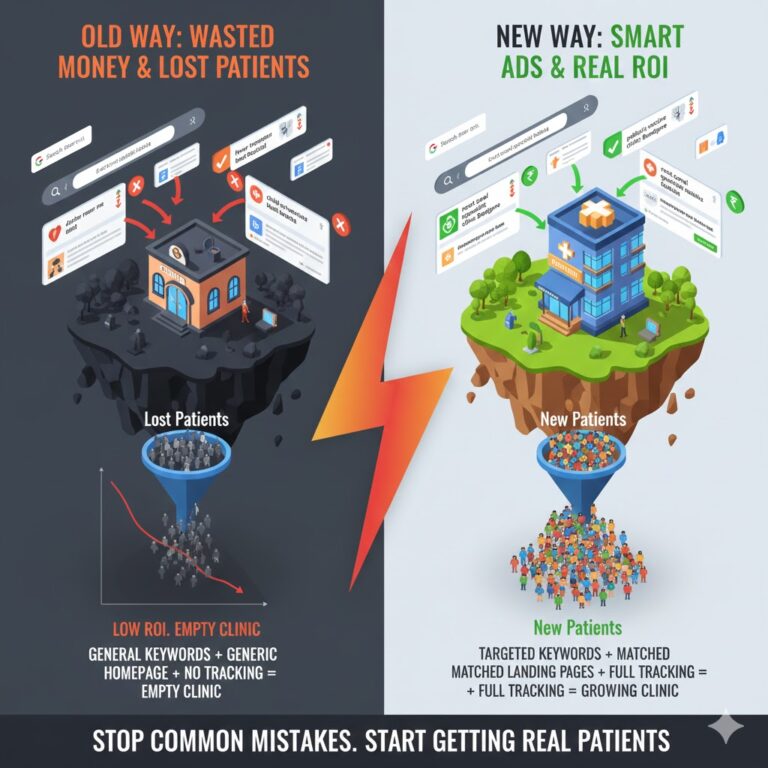
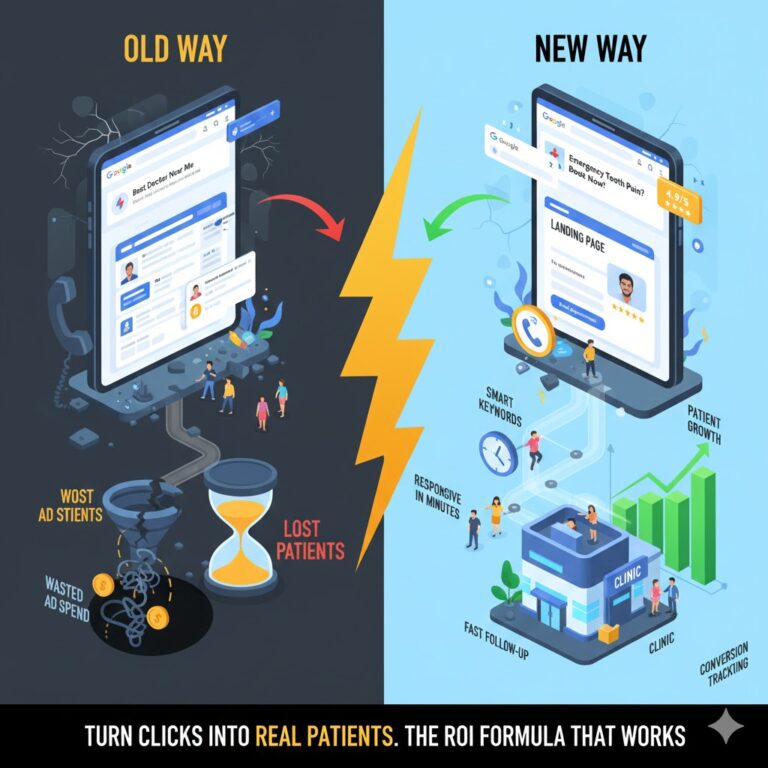
4. How to Turn Clicks Into Patients
Your Google Ads are bringing visitors to your website. But are those visitors becoming patients? Most doctors see a gap here. They get clicks but not bookings. This happens because the journey from click to patient needs clear steps.
Know What You Want Before You Spend
Before you put money into ads, you need to be clear about your goal. Do you want more phone calls? Do you want people to fill a form? Or do you want direct appointment bookings? Each goal needs a different plan.
Many clinics make ads without deciding this first. They think any click is good. But a click from someone who will never visit your clinic is wasted money. When you know your goal, you can design everything to reach that goal. Your ad copy, your keywords, and your landing page all work together. This focus helps you spend less and get more.
A dental clinic in Mumbai wanted more root canal patients. They made ads that spoke only about root canal treatment. They did not talk about general dentistry. Their landing page showed root canal benefits, cost, and a booking button. In three months, they got 47 new root canal patients. Their ad spend stayed the same. Their results went up because they had one clear goal.
Pick Keywords That Show Real Intent
Keywords are the words people type when they search. Not all keywords are equal. Some keywords bring serious patients. Other keywords bring curious browsers who will never book.
Broad keywords sound helpful but cost you more. If you use “doctor near me” as your keyword, your ad shows to everyone searching for any doctor. That includes people looking for a skin doctor when you are a heart specialist. You pay for that click and get nothing.
Smart keywords show what people want. Instead of “dentist near me,” use “emergency tooth pain dentist open now.” This person has pain and needs help today. They are ready to book. This keyword costs less and brings better patients.
A pediatric clinic in Delhi used to bid on “child doctor.” They got many clicks but few appointments. They changed to “vaccination for babies” and “fever treatment for toddlers.” Their appointment rate went up by 62 percent. They paid less per click and got more serious parents.
Build a Landing Page That Books Appointments
Most doctors send ad clicks to their homepage. This is a big mistake. Your homepage has too much information. It talks about your history, your team, your awards, and every service you offer. A visitor gets lost and leaves.
A landing page is different. It has one job only. It matches the ad and makes booking simple. If your ad talks about knee pain treatment, your landing page should talk about knee pain treatment. Nothing else.
Your landing page needs to load fast. If it takes more than three seconds to load, half your visitors will leave. Keep it clean and simple. Use large fonts. Add clear buttons that say “Book Now” or “Call Us.” Put your phone number at the top. Show your clinic address and hours.
An orthopedic doctor in Pune sent traffic to his homepage. His booking rate was 4 percent. He made a separate page for back pain treatment. The page had a short paragraph about back pain, treatment options, patient reviews, and a big booking form. His booking rate jumped to 18 percent. Same ads, same budget, but four times more patients.
Respond to Leads Within Minutes
Speed matters more than most doctors think. When someone fills a form or calls your number, they are interested right now. If you wait hours to respond, they will call another doctor.
Studies show that calling a lead within five minutes makes you nine times more likely to convert them. After an hour, your chances drop sharply. People move on. They find another clinic. They forget why they searched in the first place.
Set up instant alerts when someone submits a form. Train your staff to call back right away. If you cannot answer calls during busy hours, use automated text messages. Send a text saying “Thank you for your interest. We will call you in 10 minutes.” This keeps the person engaged.
A dermatology clinic in Bangalore used to respond to form leads the next day. Their conversion rate was 12 percent. They changed their process and started calling within five minutes. Their conversion rate went up to 41 percent. They got three times more appointments from the same number of leads.
Some doctors worry about bothering patients with quick calls. But think about it from the patient side. They searched for help. They took time to fill your form. They want to hear from you. A fast response shows you care and you are available.
Track the Complete Patient Journey
You need to know which ad brought which patient. Many doctors look at their Google Ads dashboard and see clicks. But clicks alone tell you nothing about patients. You need to connect your ads to actual appointments.
Use call tracking numbers for your ads. When someone calls the number, you know they came from your ad. Use form tracking to see which ad made someone submit their details. Ask new patients how they found you. Keep a simple record.
This tracking helps you stop wasting money. You might find that one keyword brings 50 clicks but zero appointments. Stop using that keyword. You might find that another keyword brings 10 clicks and 5 appointments. Spend more on that keyword.
A fertility clinic in Chennai tracked their Google Ads for six months. They found that ads for IVF treatment had a high cost but low bookings. Ads for fertility checkups had lower costs and higher bookings. They shifted their budget to fertility checkups. This brought more patients through the door. Many of those patients later signed up for IVF treatment. Total revenue went up by 34 percent.
Test and Improve Your Ads Daily
Your first ad campaign will not be perfect. No campaign is perfect on day one. You need to test and improve. Change one thing at a time and see what happens.
Try different ad headlines. Test different landing page designs. Change your call to action button from “Submit” to “Book My Appointment.” Small changes can bring big results.
Run two versions of the same ad. Send half your traffic to one version and half to another. After a week, see which one gets more bookings. Keep the winner and test something else.
A cardiologist in Hyderabad tested two landing pages. One page had a long form asking for name, age, phone number, email, and medical history. The other page asked only for name and phone number. The short form got 2.4 times more submissions. Fewer fields meant less work for the visitor. More people completed the form.
Build Trust With Reviews and Proof
People search for doctors online because they want to find someone they can trust. Your ad and landing page need to show that trust. Add patient reviews to your landing page. Show before and after photos if you can.
Mention your qualifications but keep it brief. People care more about results than degrees. Instead of listing all your awards, show one sentence like “Treated over 2000 patients in the last five years.”
Video testimonials work very well. A short 30 second video of a happy patient talking about their experience can boost bookings by 20 to 30%. You do not need expensive equipment. A phone camera works fine.
A cosmetic clinic in Kolkata added three video reviews to their landing page. Their appointment rate went up from 11 percent to 19 percent. Visitors felt more comfortable seeing real people talk about their treatment.
Make Booking as Simple as Possible
Every extra step in the booking process loses you patients. If someone has to call during office hours only, you lose night time visitors. If your form has 10 fields, you lose impatient visitors.
Offer many ways to book. Let people call, fill a form, or use WhatsApp. Some people prefer talking on the phone. Others want to type and book at midnight. Give them options.
Use a booking calendar on your landing page if possible. Let patients see available slots and click to book. This removes back and forth calls and emails. It makes booking instant.
A physiotherapy clinic in Ahmedabad added a booking calendar to their website. Before this, patients had to call and wait for a callback to confirm slots. With the calendar, patients picked their slot right away. The clinic saw 53% more bookings in the first month.
Follow Up With Patients After Booking
Your work does not end when someone books an appointment. Send them a confirmation message right away. Remind them one day before their visit. This reduces no shows.
After the visit, send a thank you message. Ask them to leave a review if they are happy. This helps you get more patients in the future.
A children’s hospital in Jaipur started sending appointment reminders through WhatsApp. Their no show rate dropped from 23% to 8%. More patients showed up, which meant better use of doctor time and clinic resources.
Understand the True Cost of Getting a Patient
Many doctors think Google Ads are expensive. They look at the cost per click and feel worried. But the real question is not how much one click costs. The real question is how much one patient is worth to you.
If you spend 500 rupees to get one patient, and that patient pays 3000 rupees for treatment, you make a profit. If that patient comes back three more times and refers two friends, your return is even higher.
Calculate your patient lifetime value. Add up all the money one patient brings over months or years. Compare that to your ad cost. This shows you the real picture.
A dental practice in Lucknow spent 80000 rupees per month on Google Ads. They got 40 new patients every month. Each patient was worth 15000 rupees over one year. That meant 600000 rupees in revenue from 80000 rupees in ad spend. Their return was more than seven times their investment.
Stop Doing What Does Not Work
Many clinics keep running the same ads month after month. They hope the results will improve. But hope is not a plan. If something is not working after a fair test, stop it.
Check your ad performance every week. If a keyword is getting clicks but no calls, pause it. If a landing page has a high bounce rate, change it. If an ad gets no clicks at all, rewrite it.
Your budget is limited. Every rupee spent on bad ads is a rupee you cannot spend on good ads. Be ruthless about cutting waste.
A gynecology clinic in Indore was running ads in five different cities. Three cities brought good patients. Two cities brought almost no one. They stopped ads in those two cities and increased the budget in the three good cities. Total patient count went up by 28% with the same total spend.
Turning clicks into patients is a system. You need a clear goal, smart keywords, a focused landing page, and fast follow up. You need to track everything, test daily, and cut waste. When you do all this, your Google Ads stop being an expense and start being an investment.
5. The ROI Formula That Works for Doctors
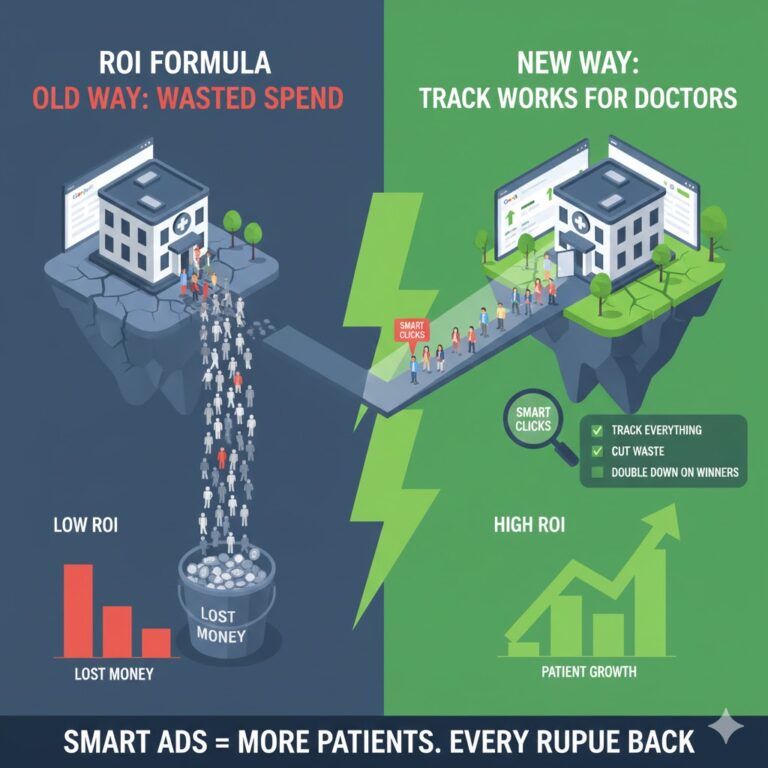
Track Every Step to See What Works
You need to know where your patients come from. When someone calls your clinic, ask them how they found you. When someone fills a form online, see which ad they clicked. When someone books an appointment, check which keyword brought them to your website.
Most doctors spend money on Google Ads but never track results. They see the bills going out every month. But they cannot tell which ad brought five patients and which ad brought zero patients. This is like driving with your eyes closed.
Set up proper tracking from day one. Use Google Analytics to see visitor behavior. Connect your ads to your phone system. Tag every form on your website. When you track everything, you can see the full picture clearly.
A skin clinic in Mumbai spent 40,000 rupees monthly on ads. After three months, they had no idea what worked. We helped them set up tracking tools. Within two weeks, they found that 70 percent of bookings came from one specific ad. The other ads were burning money with no return.
Cut What Doesn’t Convert and Save Your Budget
Not every click will become a patient. Some ads bring curious people who never book. Some keywords attract bargain hunters who will never pay your fees. Some locations send traffic but zero appointments.
Look at your numbers every week. Find the ads that cost you money but bring nothing back. Stop those ads immediately. Find the keywords that get clicks but no calls. Remove them from your campaign. Find the areas where people click but never visit. Reduce spending there.
One dental clinic ran ads for veneers, braces, and teeth whitening. After tracking for one month, they saw that veneer ads brought six new patients. Braces ads brought two inquiries. Teeth whitening ads brought zero bookings. They stopped the whitening ads completely. They moved that budget to veneer ads. Their patient count went up by 40 percent without spending an extra rupee.
Cutting bad ads is not about giving up. It is about being smart with money. Every rupee you save from bad clicks can go into winning ads. Your total spending stays the same but results go up.
Double Down on Winners and Grow Fast
Once you know what works, put more money there. If one ad brings patients every week, increase its budget. If one keyword converts better than others, bid higher for it. If one location sends quality leads, focus your spending there.
Many doctors fear spending more even when something works well. They think keeping the same budget is safe. But when you have proof that an ad brings patients, spending more means getting more patients. The return keeps growing as long as you scale carefully.
An eye clinic found that their cataract surgery ad performed very well. It cost them 800 rupees per patient. Their surgery fee was 45,000 rupees. The math was clear. They doubled the ad budget for that campaign. In two months, they got 18 new surgery bookings instead of the usual eight bookings.
Always test before you scale. Run a winning ad for two weeks with a small increase. Watch if the quality stays good. If results remain strong, add more budget slowly. Keep watching the numbers closely. Scale up when you see consistent performance.
This formula is simple but powerful. Track everything to find the truth. Cut whatever wastes money. Put more budget into proven winners. Your ad spend becomes an investment that pays back month after month. You stop guessing and start growing with confidence.
6. Why Working With Marketing Experts Makes Sense
Running a clinic takes all your time and energy. You have patients to see. Staff to manage. Bills to pay. Adding Google Ads on top of that becomes too much.
Many doctors try running ads alone at first. They watch a few videos online. They set up a campaign. Then they wait. But the results don’t come. Or worse, the money goes out but patients don’t walk in.
This happens because digital marketing needs constant attention. You cannot set it and forget it. The rules change. Costs go up and down. What worked last month may fail this month.
You Need Time That You Don’t Have
Think about your typical day. Morning rounds. Back to back appointments. Emergencies. Paperwork. Phone calls. When do you find time to check your ads? When do you study which keywords work better? When do you test new landing pages?
Most doctors check their ads once a week. Some check once a month. But your competition checks every single day. They adjust bids. They pause bad ads. They test new messages. That gives them an edge you cannot match.
Marketing experts do this full time. They wake up thinking about ads. They spend hours studying data. They know what works in your city. They track every rupee spent.
Experts Save You From Costly Mistakes
A small mistake in Google Ads can waste thousands of rupees in days. Wrong keyword match type. Bad bid strategy. Poor quality score. These terms sound simple but they hide complex systems.
One clinic owner set his daily budget to unlimited by accident. He lost thirty thousand rupees in two days. Another doctor targeted the whole country instead of his city. His budget finished in hours with zero real leads.
Experts have made these mistakes before. They learned from them. Now they protect your money from the same traps. They know which buttons to press and which to avoid.
They Bring Tools You Don’t Own
Professional marketers use expensive software. Call tracking systems. Heatmap tools. Conversion tracking platforms. These tools cost thousands every month. But they show exactly what happens after someone clicks your ad.
Do they call your number? Do they fill the form? Do they bounce after three seconds? Which page makes them leave? What time of day brings the best leads?
You could buy these tools yourself. But learning them takes months. Most doctors don’t have that kind of time. Experts already know how to read the data and act on it fast.
Results Come Faster With Experience
A marketing team has worked with dozens of clinics before yours. They know what headline gets more clicks. They know which landing page layout books more appointments. They tested these things over years.
When you try alone, you start from zero. Every test takes weeks. Every mistake costs money. By the time you figure out what works, you might have burned through your entire budget.
Experts skip the learning curve. They apply proven methods from day one. Your first campaign performs better because they already know the winning formula.
Your Job Is To Heal, Not To Market
You spent years studying medicine. You trained in hospitals. You earned your degree. That expertise should go toward treating patients, not managing ad campaigns.
Every hour you spend on ads is an hour away from your actual work. You could see two more patients at that time. You could train your staff better. You could improve your clinic systems.
Marketing experts handle the technical side while you do what you do best. They send you reports. They bring you leads. You convert those leads into happy patients. That division of work makes everything run smoother.
Consistent Growth Beats Random Spikes
Running ads yourself often creates ups and downs. One month you get ten new patients. Next month you get two. This happens because attention shifts. You get busy and forget to optimize. Or you change too many things at once.
A dedicated team maintains steady growth. They work on your campaigns every single day. They make small improvements constantly. Over months, these small changes add up to big results.
Your patient flow becomes predictable. You can plan better. Hire staff at the right time. Order supplies knowing demand will stay strong. This stability helps your whole business grow.
They Speak The Language Of Data
Google Ads shows you hundreds of numbers. Click through rate. Cost per conversion. Quality score. Search term reports. What do these actually mean for your clinic?
Experts translate data into action. They tell you that your cardiology ad performs better on weekends. Or that people searching for knee pain books faster than people searching for general checkup. This insight helps you make smart choices.
You don’t need to understand every metric. You need someone who does and can explain it in simple terms. That’s what a good marketing partner provides.
The Math Works In Your Favor
Hiring experts costs money upfront. But they often pay for themselves through savings and better results. They cut wasted ad spend. They improve your conversion rate. They bring in higher quality patients who actually show up.
One clinic was spending fifty thousand rupees monthly on ads with poor results. After partnering with professionals, they spent the same amount but got 3 times more appointments. Same budget, triple the outcome.
Another doctor was ready to quit Google Ads completely. An expert team stepped in, fixed the campaigns, and turned a losing effort into a profitable channel in 60 days.
Peace Of Mind Has Real Value
Knowing that someone capable handles your marketing removes stress. You stop worrying if you set something wrong. You stop second guessing every decision. You stop losing sleep over wasted money.
This mental freedom lets you focus on your patients completely. You show up fresher. You listen better. Your quality of care improves when marketing anxiety disappears.
Finding The Right Partner Matters
Not all marketing companies understand healthcare. Some use the same tricks they use for restaurants or retail stores. That approach fails in medical advertising.
Look for teams with proven healthcare experience. Ask them about other doctors they helped. Request case studies. Check if they understand medical terms and patient behavior.
The right partner becomes an extension of your team. They learn your goals. They understand your patient base. They respect your budget limits. This partnership approach creates results that last.
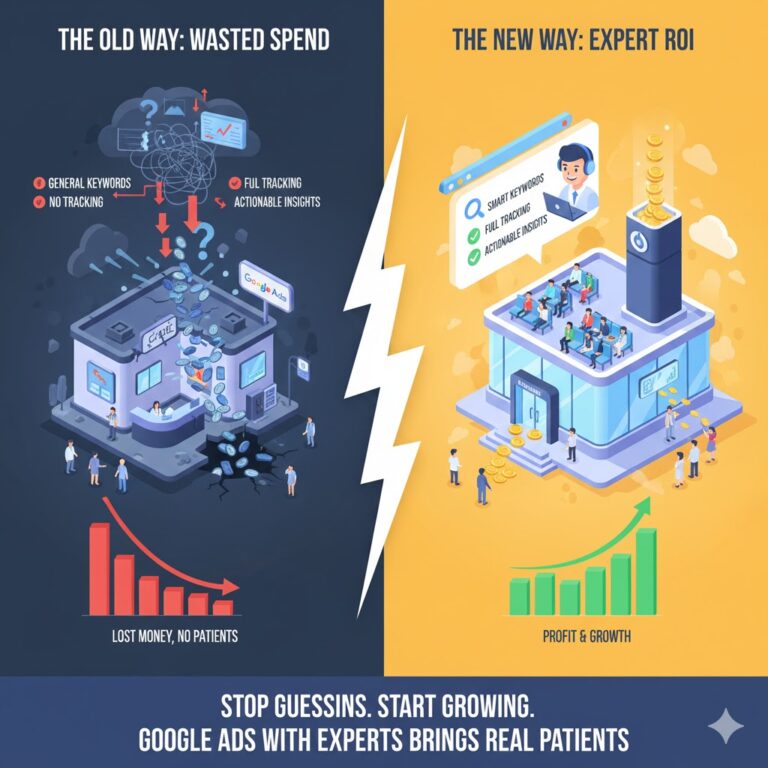
7. Stop Throwing Money Away. Start Seeing Real Patients Walk In
You became a doctor to heal people, not to worry about where your advertising money goes. But right now, many clinics across India are paying thousands every month for Google Ads and getting very little back.
The problem is not that advertising does not work. The problem is that most doctors run ads without a clear plan. They click a few buttons, set a budget, and hope patients will call. But hope is not a strategy.
Here is what actually happens. Your ad gets clicked. You pay Google. The person lands on your website. They look around for five seconds. Then they leave. No call. No booking. No patience. Your money is gone.
This happens because three things are missing. First, you need a plan that matches what patients want. Second, you need to track every single step so you know what works. Third, you need someone who understands both healthcare and digital marketing to guide you.
When you get these three things right, everything changes. Your ads stop being a cost. They become an investment. Every rupee you spend brings back two, three, or even five rupees in patient bookings.
Think about a general physician in Pune. He was spending fifteen thousand rupees every month on Google Ads. After six months, he had only twelve new patients to show for it. That is more than one thousand rupees per patient. But his average consultation fee was only five hundred rupees. He was losing money on every single patient he got from ads.
Then he changed his approach. He stopped using vague keywords like “best doctor in Pune” and started using specific ones like “fever treatment near Kothrud” or “diabetes specialist Pune.” He created a simple landing page that showed his clinic timings, fees, and a book appointment button. He also set up call tracking so he knew which ads brought which patients.
Within three months, his cost per patient dropped to three hundred rupees. He started getting forty patients per month from the same budget. That same 15000 rupees now brought him 20000 in consultation fees alone. Not counting follow up visits or tests.
This is not luck. This is what happens when you stop guessing and start tracking.
Most doctors think they need to spend more money to get better results. But that is wrong. You need to spend smarter. You need to know which ads bring patients and which ones waste money. Then you cut the waste and put more money into what works.
At Clickniti Digital, we work with doctors and clinics across India. We do not sell you dreams. We show you numbers. Real data. Real patients. Real growth.
We start by understanding your clinic. What services bring you the most profit? What kind of patients do you want more of? What areas do you serve? Then we build ads that speak directly to those patients in those areas.
We create landing pages that load fast and make booking simple. We set up tracking so you see exactly which ad brought which patient. We test different messages and different keywords until we find what works best for your clinic.
Then we keep improving every single month. We cut ads that waste money. We boost ads that bring patients. We watch your numbers like they are our own business.
Because at the end of the day, you need results you can see. More phone calls. More appointment bookings. More patients walking through your door. That is the only thing that matters.
Your Google Ads can work for you instead of against you. You do not need to be a marketing expert. You do not need to spend hours learning about keywords and bidding strategies. You need a partner who knows healthcare digital marketing inside out.
Someone who understands that a dermatology patient is different from an orthopedic patient. Someone who knows that patients searching at ten in the morning behave differently from patients searching at ten at night. Someone who can turn your advertising spend into steady, predictable patient growth.
Stop throwing money at ads that do not work. Stop hoping that more budget will fix everything. Stop accepting reports full of numbers that mean nothing to your bottom line.
Start working with people who treat your money like their own. People who focus on one thing only. Getting you more patients for every rupee you spend.
At Clickniti Digital, we help doctors and clinics turn wasted ad money into real return on investment. We make your phone ring with patients who actually need your services. We make your calendar fill up with booked appointments.
Your practice deserves to grow. Your ads should help that happen, not drain your bank account. Get in touch with us and let us show you how smart advertising brings real patients through your door. Month after month. Year after year.
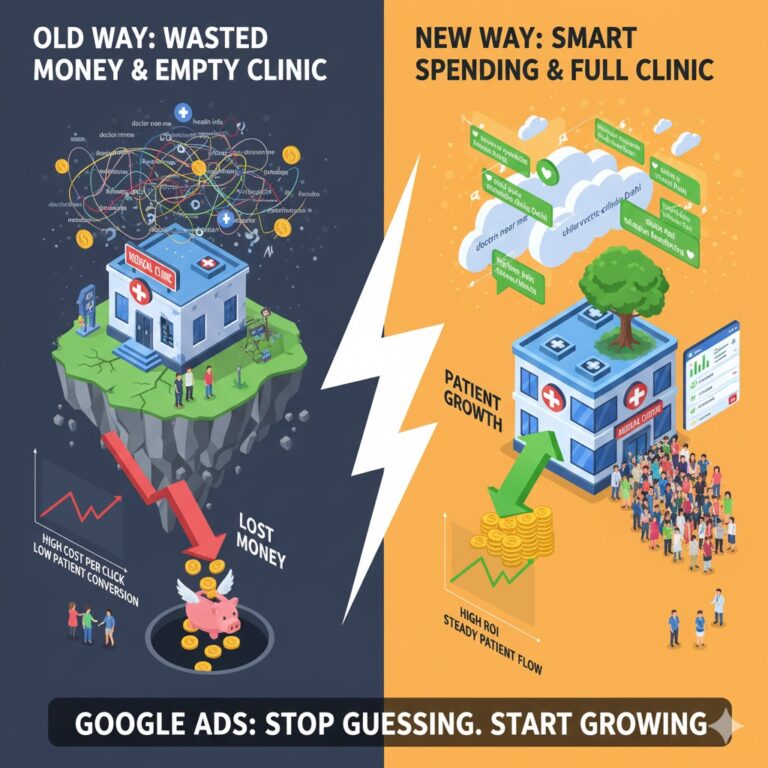
FAQs-
Because clicks don’t always mean patients. If your ad or landing page isn’t clear or targeted right, people click and leave without booking.
Yes, if done right. Many clinics waste money because they run ads without a plan. With the right setup, it can be your best source of new patients.
You should track every call, form, and message that comes from your ad. If your agency can’t show you where your money goes, something’s wrong.
That’s a targeting issue. Your ads might be showing to a wider area. Fixing your location settings and keywords can stop this waste fast.
Start small and test. Even ₹10,000–₹20,000 a month can bring results when ads are set up right. What matters more is the strategy, not just the spend.
Usually within 2 to 4 weeks if your campaign and landing page are optimized. It’s not instant, but it’s much faster than most marketing methods.
Absolutely. Sending people to your clinic’s homepage is like sending them into a maze. A landing page tells them exactly what to do is call, book, or visit.
You can, but most doctors end up spending more and getting less. Running ads well needs time, testing, and experience things better handled by specialists.
We don’t just run ads. We understand healthcare. We know what patients search for, how they think, and how to turn clicks into actual appointments.
When campaigns are done right, doctors usually see 3 to 6 time returns within the first few months. But it depends on your location, service, and patient demand.
Yes. With regular tracking and smart adjustments, ads keep bringing new patients month after month, not just a short burst of traffic.
Start with a quick audit. We check what’s working, what’s wasting your budget, and show you where your real ROI can come from.