How Patients Choose Doctors Online: What You’re Missing Right Now
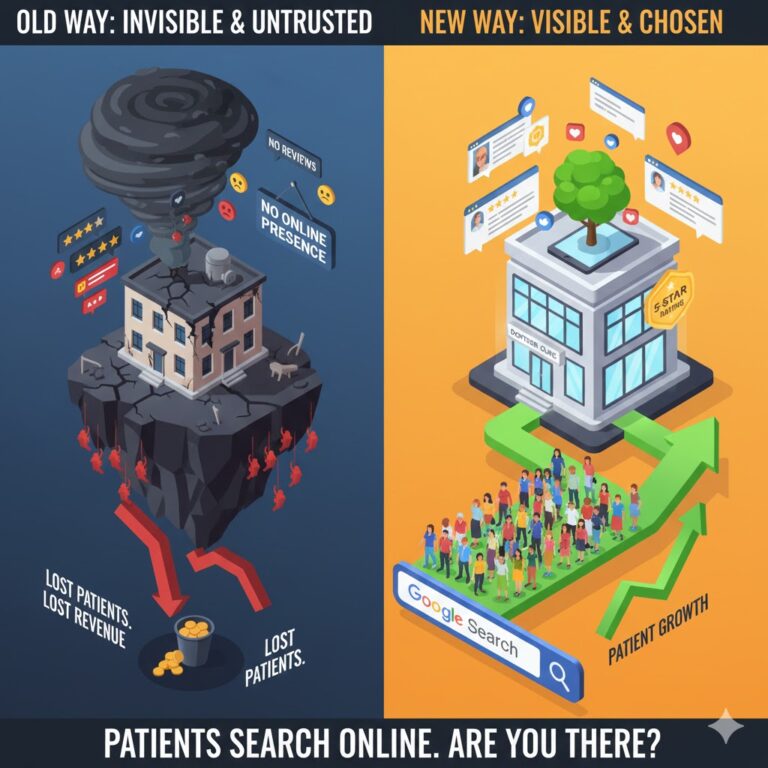
a.) Patients Search for Everything Online
I need to know this: 90% of patients do online research before deciding which practice to visit. They look for doctors “near me” or by my specialty.
Table of Contents
Toggle72% of patients view online reviews when selecting a new provider. If I don’t show up on Google Maps or search results, they will choose someone else.
What this means for me: If my clinic has no strong online presence, patients may never find me.
Why This Is Important Right Now
Here are the facts I need to understand:
- 61% of users now schedule appointments online
- 47% have looked online for information about doctors or other health professionals
- 71% of patients use online reviews to check and select a new doctor
- 7% of Google searches each day are healthcare-related
This means millions of people are searching for doctors like me every single day.
What My Patients Are Doing Online
When my patients need a doctor, this is what happens:
- They search Google first. They type “doctor near me” or “heart doctor in my city.”
- They read reviews. 88% of patients trust online reviews as much as personal recommendations.
- They look at Google Maps. They want to see where I am located and how to get there.
- They check my website. They want to know about my services and how to book.
- They call or book online. If everything looks good, they contact me.
What I’m Missing If I’m Not Online
If patients can’t find me online, I am losing them to other doctors. Here’s what’s happening:
- Lost appointments: Patients book with doctors they are easy to find
- Lost trust: Patients think I am not modern or updated
- Lost money: Each missed patient means less income for my practice
Simple Steps I Can Take Right Now
Step 1: Get on Google Business Profile
- I need to create my Google Business Profile (it’s free)
- I must add my clinic address, phone number, and hours
- I should upload photos of my clinic and myself
- I need to keep my information updated
Step 2: Ask for Reviews
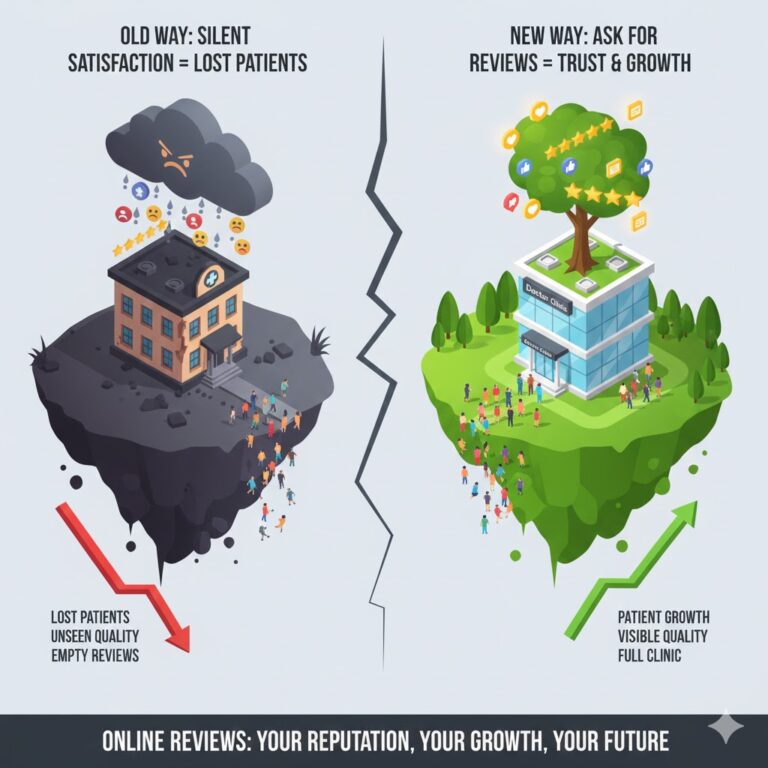
- I should ask happy patients to leave reviews
- 37% of patients use Google Reviews
- Good reviews help me show up higher in searches
- I must respond to all reviews (good and bad)
Step 3: Update My Website
- My website needs to load fast on phones
- I should use keywords like “doctor near me” and my specialty
- I need to show my address and phone number
I should add an online booking system if possible
Step 4: Use the Right Keywords
- I need to think about what patients type in Google
- Examples: “family doctor [my city]”, “pediatrician near me”
- I should use these words on my website and Google profile
- This helps Google show my clinic to the right patients
What Happens When I Do This Right
When I have a strong online presence:
- More patients find my clinic
- Patients trust me before they visit
- I get more appointments
- My clinic grows
My patients are online looking for me right now. If I’m not there, they will find another doctor who is. I need to start today by setting up my Google Business Profile and asking patients for reviews.
The internet is where patients make their healthcare choices. I need to be there when they search.
b.) Reviews Matter More Than Ads
My practice was emptying. Good doctors down the street were getting my patients. I found out why when I checked online.
My reviews were terrible. Patients were writing about long waits. They complained about rude staff. One bad review said I rushed through appointments.
I had no idea patients were reading these reviews. I focused on treating people, not managing my online reputation.
The Numbers That Shocked Me
Here’s what I discovered about how patients choose doctors:
9 out of 10 patients read online reviews before picking a doctor. 90% of healthcare consumers use online reviews as part of their decision-making process. That means almost every patient who might come to my practice checks reviews first.
3 out of 4 patients start with online reviews. 71% to 75% of patients use online reviews as the very first step to finding a new doctor. My online reputation was often the first impression I made on potential patients.
Patients trust reviews like personal advice. Almost half of patients trust online ratings and review many doctor’s recommendations. 80% trust online reviews as much as personal recommendations.
Bad reviews push patients away fast. 61% of patients now see online reviews over referrals from friends and family members. Even when friends recommended me, patients would not come if they found poor online reviews.
What This Means For My Practice
I realized I needed to treat online reviews like patient care. Here’s what I learned:
Every review matters. Patients don’t count stars. They read what other patients wrote about their experience. One angry patient’s review could stop ten new patients from booking.
I needed to respond to reviews. When I left bad reviews without answers, patients thought I didn’t care. Now I respond to every review in a professional way and fast.
Good reviews help me compete. 72% of patients prefer choosing providers rated four out of five stars or higher. My good reviews now help patients pick me over other doctors.
Reviews are my new marketing. I used to spend money on ads. Now I ask happy patients to write reviews. It works better and costs less.
Simple Steps I Take Now
I ask patients to review my practice. After good appointments, I give patients a simple card with links to review sites. Many patients want to help but forget to review later.
I respond fast to all reviews. Good reviews get a thank you. Bad reviews get a professional response and an offer to talk personal about their concerns.
I track my online reputation. I check review sites weekly. I use Google Alerts to know when someone writes about my practice.
I train my staff about reviews. Everyone in my office knows that patient experience affects our online reputation. We all work to make visits smooth and pleasant.
The Results I See
My practice is full again. Patients often mention my good reviews when they call. They feel confident choosing me because other patients recommend me online.
I still focus on being a good doctor. But now I also focus on making sure patients have good experiences they want to share.
Online reviews changed how patients find doctors. I had to change how I do my practice. Now I see that managing my online reputation is part of taking care of patients.
If patients can’t find me online or don’t trust what they read, they can’t become my patients. Good medical skills are not enough anymore. I need good reviews too.
c.) Websites Are the First Impression
When I look at how patients choose doctors today, I see a clear truth. Your website is where patients decide if they trust you or not.
My Website Is Being Judged Fast
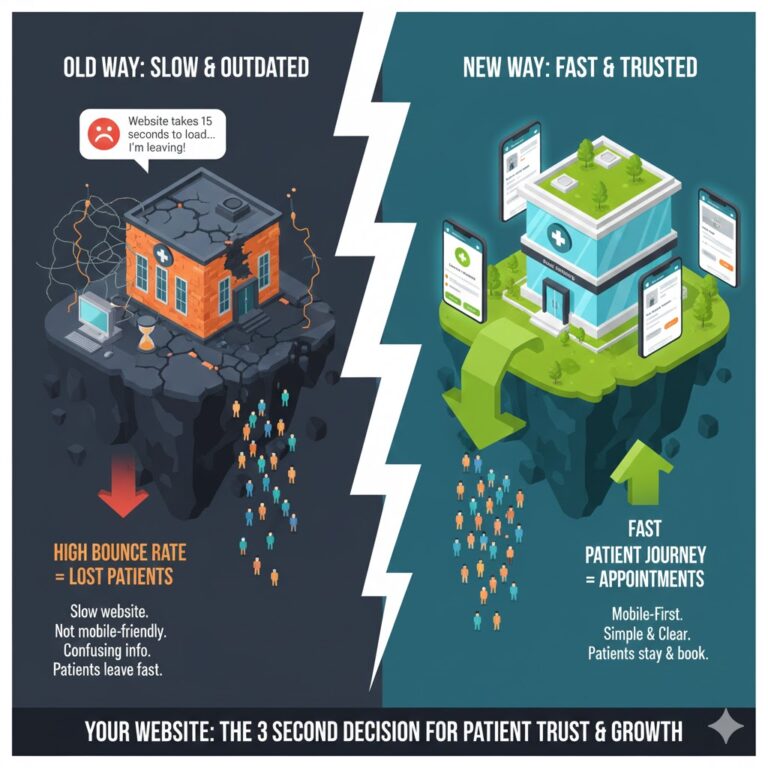
Patients make up their minds about my practice in seconds. A prospective patient leaving your website within 3 seconds of landing on it may show a negative first impression. This means I have almost no time to make a good impression.
When my website loads slowly or looks old, patients leave right away. Standard bounce rates depend on your content, objective, and industry, but average bounce rates generally range between 45% and 66%. For healthcare websites, Healthcare websites show bounce rates from 55% to 70%, as visitors often leave after quickly checking out service details or contact information.
What Patients Look For On My Website
When patients visit my website, they want to find these things fast:
- Clear services – I need to tell them what I do in simple words
- Easy location info – Patients want to know where I am right away
- Quick booking – They want to make appointments without calling
- Doctor info – Patients want to know about me and my training
- Insurance details – They need to know if I take their insurance
My Website Speed Matters Most
I learned that website speed kills patient interest. For optimal user experiences, aim for under 3 seconds load time on mobile devices and under 2 seconds on desktop. When my website is slow, patients think I don’t care about their time.
Most patients use phones to find doctors. If my website doesn’t work well on phones, I lose them fast.
The Real Numbers I Need To Know
Here’s what the data shows me:
- Website bounce rate: I should keep mine under 60% to be good
- Patient decisions: Made in the first 3 seconds of visiting
- Online booking: 2.4% of healthcare appointments are scheduled online
- Mobile usage: Most patients search on their phones first
What This Means For My Practice
My website is my digital front door. When it looks weak or broken, patients walk away before they even call me.
I am losing patients every day if my website:
- Loads too slow
- Looks old or messy
- Doesn’t work on phones
- Hides important information
- Makes booking appointments hard
How I Can Fix This Now
Make my website fast: I need to check that it loads in 2-3 seconds
Keep it simple: Patients want clear, easy words – not medical jargon
Show what matters: Put my services, location, and booking button where patients see them first
Make mobile work: Most patients will use phones to find me
Test it myself: I should visit my own website like a patient would
My website decides if patients choose me or my competitor down the street. In today’s world, a bad website means lost patients and lost money.
I can’t afford to have a website that turns patients away. It’s not about looking good – it’s about growing my practice and helping more people get the care they need.
d.) Patients Want Convenience
My patients are choosing doctors online in ways I don’t understand. The facts show I need to change how I do things.
What The Numbers Tell Me
Almost 80% of people prefer a doctor who provides online scheduling. This is not some patient. This is most of my patients.
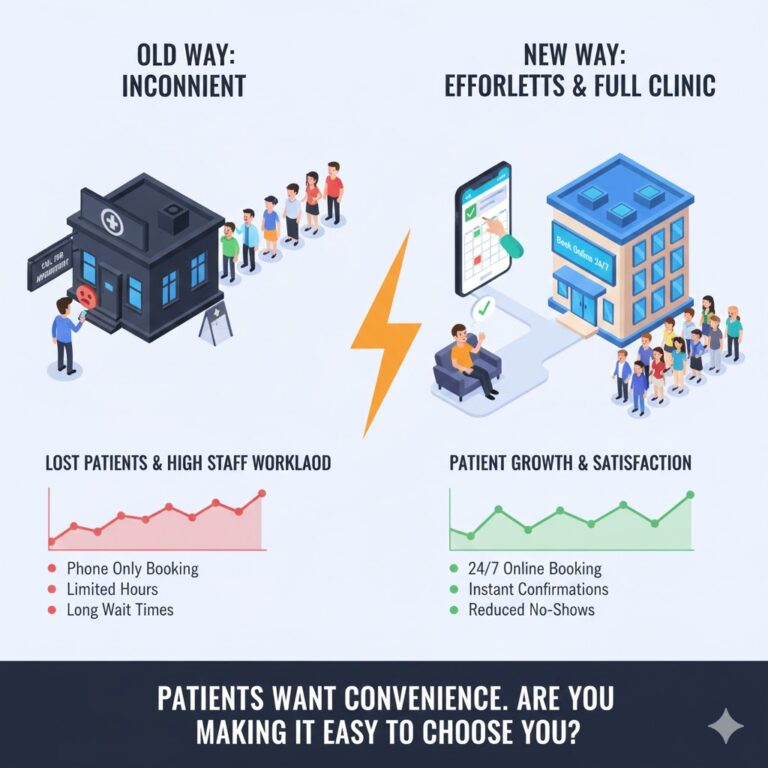
67% of patients prefer online booking, compared to only 22% who choose to book by phone. When I make patients call, I am making it hard for them.
92% of patients read bios before booking. They look at my information before they choose me. If my information is bad or missing, they pick someone else.
Why This Hurts My Practice
When I don’t offer online booking, patients go to my competitors. 94% of individuals would be more likely to choose a new service provider if that provider offered online booking options.
My phone lines get busy. Patients get frustrated. They hang up and call another doctor.
42% of appointments are booked outside standard business hours. When my office is closed, patients are still trying to book. If they can’t book with me, they book somewhere else.
What My Patients Want From Me Online
Quick Information
Patients want to know:
- What time I am open
- What insurance I take
- Where I went to school
- How long I have been a doctor
- What other patients say about me
Easy Booking
They want to book online when it’s good for them. Not when my office is open.
They want to see my schedule. They want to pick their own time.
Clear Communication
I need to write about myself in simple words. Patients don’t want doctor words they can’t understand.
They want to know why I became a doctor. They want to know I care about them.
What I Need To Do Now
Fix My Online Information
I need to check what patients see about me online. Is my information complete? Is it easy to read? Does it show I am a good doctor?
Add Online Booking
I need to let patients book online. This should work 24 hours a day. It should be easy to use.
Make My Website Better
My website needs to load fast. It needs to work on phones. Patients should find what they need quickly.
Keep Information Updated
I need to update my hours, insurance, and other facts often. Old information makes patients angry.
The Truth About My Competition
Other doctors in my area are already doing this. While I wait, they are getting my patients.
Patients now expect these things. It’s not special anymore. It’s basic.
If I don’t do this, I look old-fashioned. Patients think I don’t care about making things easy for them.
What Happens If I Don’t Change
- I lose patients to doctors who offer online booking
- My staff spends more time answering simple questions
- Patients get frustrated with my practice
- I miss patients who try to book when my office is closed
- My practice grows slower than my competitors
Patients have changed how they choose doctors. The internet changed everything. I need to change too.
This is not about technology. This is about giving patients what they want. When I make it easy for them, they choose me.
e.) Social Media Builds Trust
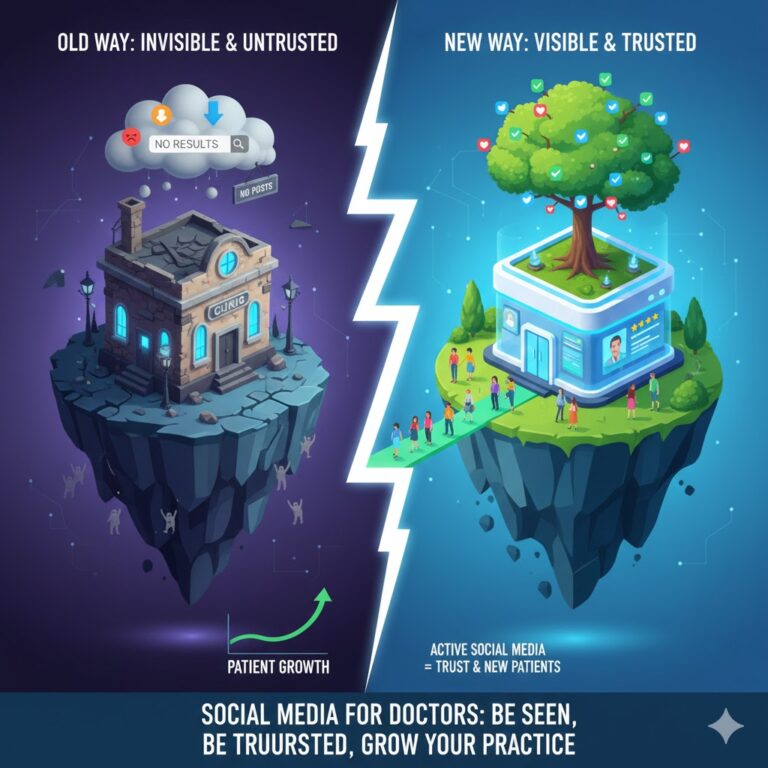
I am seen by my patients before they even call my office. Patients are using AI, social media, and online reviews when choosing doctors. This is how my patients find me now.
Social Media Builds Trust
My patients check my Facebook, Instagram, and LinkedIn pages. They want to see if I am active online. When I share health tips and success stories, my patients feel more connected to me.
38% of young adults trust social media over doctors for health advice. This means I need to be where my patients are looking.
What This Means For My Practice
Invisible doctors lose patients. When I have no social media, younger patients cannot find me. They think I am not up to date with new ways of helping them.
When doctors share knowledge on social media. Patients trust them more and follow treatment plans better. My active online presence helps my patients get better results.
The Numbers I Need To Know
84% of patients check online reviews before booking appointments. My online reputation is built before patients meet me.
2/3 of doctors use social media for work. I was left behind if I am not online.
70% of doctors have social media accounts, but 90% post nothing. Having an account is not enough. I need to be active.
What My Patients Want To See
My patients want to see:
- Health tips they can use
- Stories about helping other patients (without names)
- Updates about my practice
- Information about new treatments
- My expertise in action
Being Active Online Builds Trust
When I post helpful content, my patients see me as an expert before they visit my office. Patients are using social media more and more when choosing where to get care.
My active social media makes patients trust me more. It shows I care about helping people stay healthy, not treating sick people.
What This Means For My Practice Right Now
Being active online builds trust before patients call me. My social media presence helps patients choose me over other doctors in my area.
I am missing new patients every day when I am not active on social media. My competitors who are active online are getting the patients I could have helped.
The time to start is now. My future patients are looking for me online today.
What You’re Missing Right Now
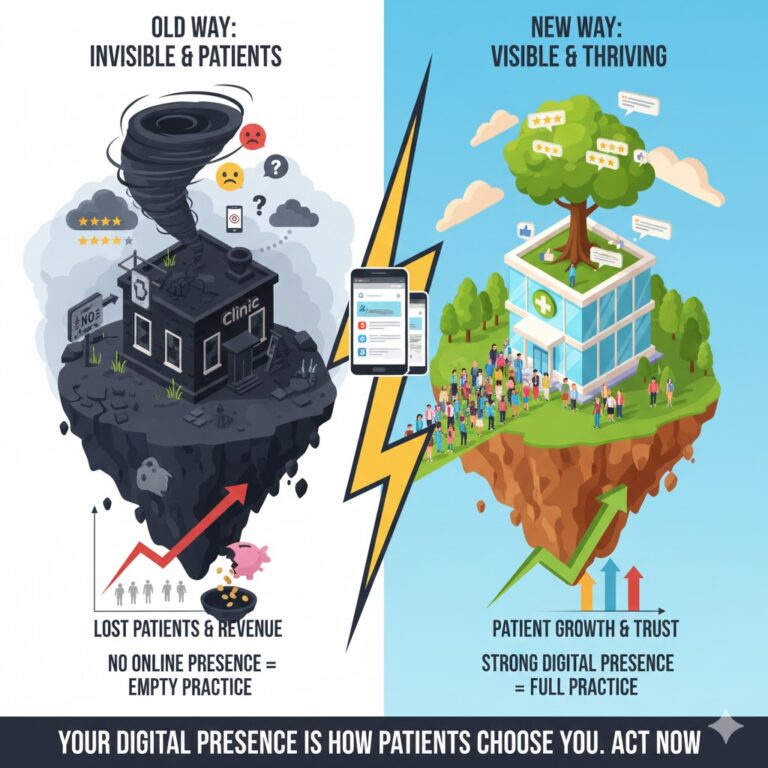
My patients are not picking me because I am close to their home anymore. They are picking doctors based on what they see online. They want trust. They want easy booking. They want to see good reviews.
If I am not online the right way, my patients are booking with other doctors. This is happening right now.
The Facts I Need To Know
Here are the real numbers about how patients pick doctors:
Online Reviews Matter Most
- 71% of patients use online reviews as the very first step to finding a new doctor
- 72% of patients read online ratings and reviews before booking with a new healthcare provider
- 72% of patients prefer providers rated four out of five stars or higher
Digital Booking Is Expected
- Over 61% of users now schedule appointments digitally
- 55% of patients were likely to consider changing doctors to one who offers online appointment scheduling
Voice Search Is Growing
- 25% of patients used voice search in 2025 to find physicians
The Review Gap Problem
- While reviews mainly influence choice, 57% of patients rarely or never leave them
What This Means For My Practice
My online presence is often the first thing patients see about me. My online reputation is often the first impression I make on many potential patients.
Young patients trust online reviews. 91% of 18-34-year-olds trust online reviews as much as personal recommendations.
Patients are willing to switch doctors. As many as 26% of patients are considering switching their health care providers in 2025.
Steps You Can Take Right Away
Step 1: Get My Google Presence Right I need to show up first when patients search for doctors in my area. My Google Business Profile must be complete. My address, phone, and hours must be correct.
Step 2: Ask For Reviews Practices should integrate automated review requests into their workflows. I need to ask happy patients to leave reviews. I should make it easy for them.
Step 3: Answer All Reviews I need to respond to both good and bad reviews. This shows I care about my patients. It also shows new patients that I am active online.
Step 4: Make Online Booking Easy Patients want to book online. If they cannot do an easy booking with me, they will book with someone else who makes it simple.
Step 5: Fix My Website My website should load fast. It should work on phones. It should have clear information about my services. It should have my contact details easy to find.
Step 6: Use Social Media Patients look at social media too. I should post helpful health tips. I should share patient success stories. I should show that I am a real person who cares.
Conclusion
Patients are choosing doctors online right now. They are looking at reviews. They are comparing websites. They are checking social media.
If I am not online daily, I am losing patients to doctors who are. This is not about the future. This is about today.
I need to invest in my digital presence now. My Google presence, reviews, website, and social media are how patients choose me today.
The question is not if I should go digital. The question is how fast I can make it happen. At Clickniti Digital, they specialize in helping only he doctors and the clinics.
FAQs-
It is because most patients now check doctors on Google before booking. If your clinic is not seen online, patients may choose another doctor.
Yes. Online reviews are trusted like personal advice. A clinic with more positive reviews is chosen faster.
A simple website is still helpful. It makes the clinic look professional, shows services clearly, and allows easy online booking.
Yes. Simple health tips build trust. Patients feel connected and are reminded of the clinic when they need care.
No. Many free tools like Google Business Profile, WhatsApp reminders, and patient reviews can bring good results without big cost.
No. Reviews can be requested politely after treatment. Most happy patients agree when asked kindly.