Global Healthcare Marketing Trends Doctors Should Copy in India
The way people find doctors has changed everywhere. A patient in New York thinks like a patient in Mumbai now. They go online first. They read what other people say about doctors. They want fast answers. They want to book appointments in seconds. They do not wait for phone calls anymore.
Table of Contents
ToggleIndian doctors are missing out on these new ways patients search for them. While clinics in America and Europe are getting more patients through smart online methods. Many Indian doctors are still relying on old ways. They think word of mouth is enough. They think their reputation alone will bring patients. But patients have moved on. Patients today search on Google. They read reviews on websites. They watch videos to understand treatment options. They choose clinics that reply fast to their questions.
This is the real story now. Medicine is the same everywhere. Trust is the same everywhere. But how doctors show themselves to patients has become very different. Doctors in India can learn from what works globally. These methods are not difficult. These methods do not need big money. What they need is understanding and daily work.
This guide shows Indian doctors what global clinics are doing right. It shows real examples of how patients think and choose. It shows what Indian clinics can do starting today. The doctors and clinic owners who read this can start copying these ideas tomorrow. Your clinic can grow. Your patients can trust you more. Your schedule can fill up faster. Let us see how.
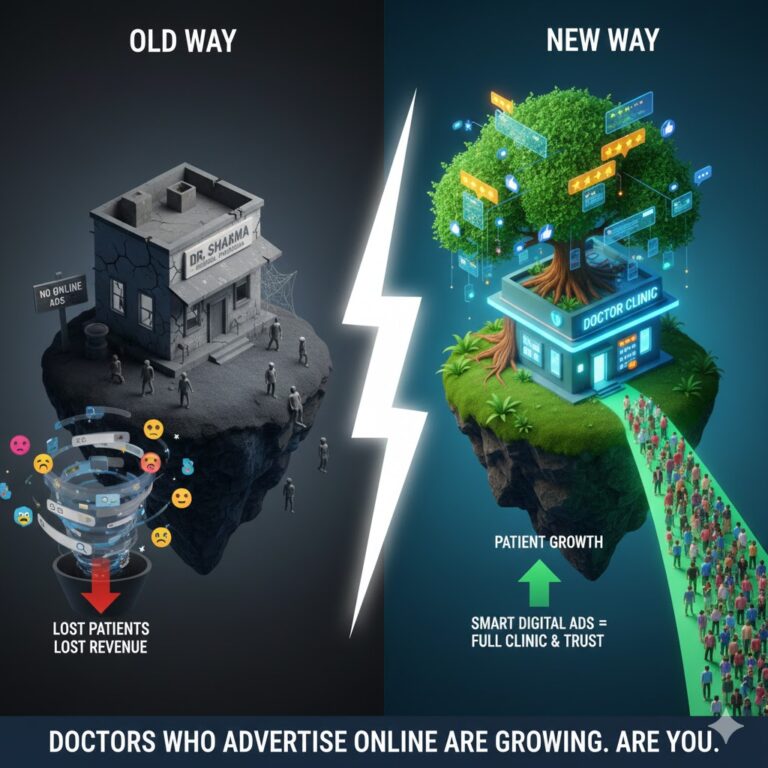
1. Patients Around the World Think the Same Way Now
How Modern Patients Search and Decide Everywhere, Including Your City
Today, a patient in Mumbai works the same way as a patient in New York. They do not visit your clinic first. They visit Google first. They search for symptoms, read what others say, and then make a choice. Your Indian patients are doing this right now.
When someone feels sick or needs health care, they type their problem into their phone. They look for clinics near them. They read the reviews from past patients. They check if your clinic has a website. They want to know your fees, your timing, and if you are real or fake. This happens in every country now. In America, in Europe, in Australia, and in India, patients follow the same path.
A patient will spend time online before they even call you. They will check your Google page. They will look at your WhatsApp status. They will see what you post on social media. If you are not there, they think you are not modern. If you are not there, they go to another doctor. Your Indian patients think this way too. They are not different from patients in other countries anymore.
The world has become smaller. Information moves fast. Patients talk to each other across cities and countries. What works for clinics in Delhi works for clinics in Bangalore. What patients want in London is what they want in Kolkata. They want speed, they want proof, and they want to feel safe before they come to you.
Your job now is to meet patients where they search. You need to be where they look. You need to show them that you are real, that you care, and that they can trust you. This is not a choice anymore. This is how health care works in the modern world. Your Indian patients expect this from you.
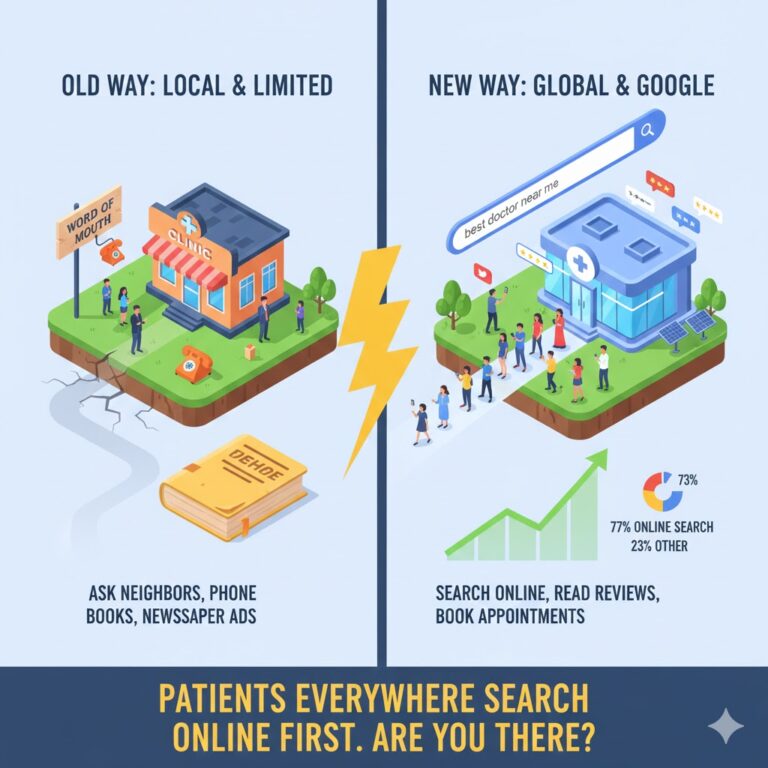
2. Trust Is Built Before the First Visit
Your Clinic’s Online Face Makes the First Impression
When a patient searches for a doctor in your city, they see your website or social media first. They do not walk into your clinic. They read what you have written online. They look at photos of your clinic. They check what other patients have said about you. This happens before they call or visit you in person.
Global clinics around the world know this truth. They spend time making their online presence clean and helpful. They understand that patients form their first feeling about a doctor through a screen. Not through a handshake. This is how modern patients think now. Indian patients think the same way too.
Your Website Tells Patients You Are Real and Careful
A good website does three things for you. First, it shows that your clinic is professional and open. Second, it tells patients what you offer and how you help them. Third, it makes them feel safe to contact you. When your website looks new and organized, patients believe you run your clinic the same way.
Write clear information about your services. Tell patients what problems you solve. Use simple words. A patient who is worried about their health does not want to read hard medical terms. They want to know if you can help them feel better. Your website should answer this in plain language.
Photos and Videos Build Confidence Before They Meet You
Patients want to see where they will go. They want to see your clinic chairs, your waiting room, your staff. Show them real photos of your clinic. Not expensive pictures, but honest ones. When patients see a clean clinic and friendly staff online, they feel less fear about their first visit.
Videos of you speaking help even more. You do not need fancy production. Record yourself explaining one health topic in simple words. Talk about a problem you see often in your patients. A two minute video of you speaking feels real and builds trust. Patients feel like they already know you before they arrive.
Patient Reviews Are Your Strongest Marketing Tool
When one patient writes good things about you online, ten other patients read it. This is more powerful than any ad you can pay for. People trust other people. They trust strangers who have visited your clinic more than they trust what you say about yourself.
Make it simple for happy patients to write reviews. Ask them after their visit. Ask them to write on Google or other platforms that patients use. Answer every review you get, even the bad ones. When you respond with kindness and offer to help, other patients see that you care about their experience.
The First Message or Call Sets Everything
When a patient contacts you, your response time matters more than you think. If a patient sends a message and waits two hours for a reply, they move to another doctor. If you reply in ten minutes, they feel valued. Your team should answer calls fast and messages quick.
Train your staff to be warm and helpful in their first response. A patient who is sick or worried needs calm answers. Your receptionist is building trust right now. Teach them to listen more than they talk. Let patients explain what they need. Then give them clear answers about how you can help.
Your Clinic’s Message Should Sound Like You Talking
Patients can tell when you sound like a robot or a sales person. They can tell when you copy words from the internet. Write like you talk to a friend. Use words your patients use in their daily life. If you speak about blood pressure, say blood pressure. Do not say hypertension unless patients ask.
Share small helpful tips on your social media. Tell patients how to sleep better before surgery. Tell them what to eat before a blood test. Tell them when they should come see a doctor. These tips show you understand what patients worry about. They show you care about their health even before they visit you.
Your Online Presence Shows You Are Open and Working
Patients look for signs that you are a real clinic that is open now. Old information on your website or social media makes patients think you have closed. Update your clinic information. Post new things two or three times a week. Tell patients about your clinic hours. Share photos of your team. Talk about a patient’s success story without using their real name.
When your online space looks fresh and active, patients believe you are a doctor who cares about your business and your patients. They see that you take time to be close to them. This makes them choose you over another clinic they do not know.
Your Reputation Starts Now, Not on Visit Day
Every patient forms an opinion about you before they walk through your door. This is the new world. Your website is your reception desk. Your social media is your waiting room. Your first message to a patient is your handshake. Make each one count. Make each one kind. Make each one clear. This is how you build trust before the first visit.
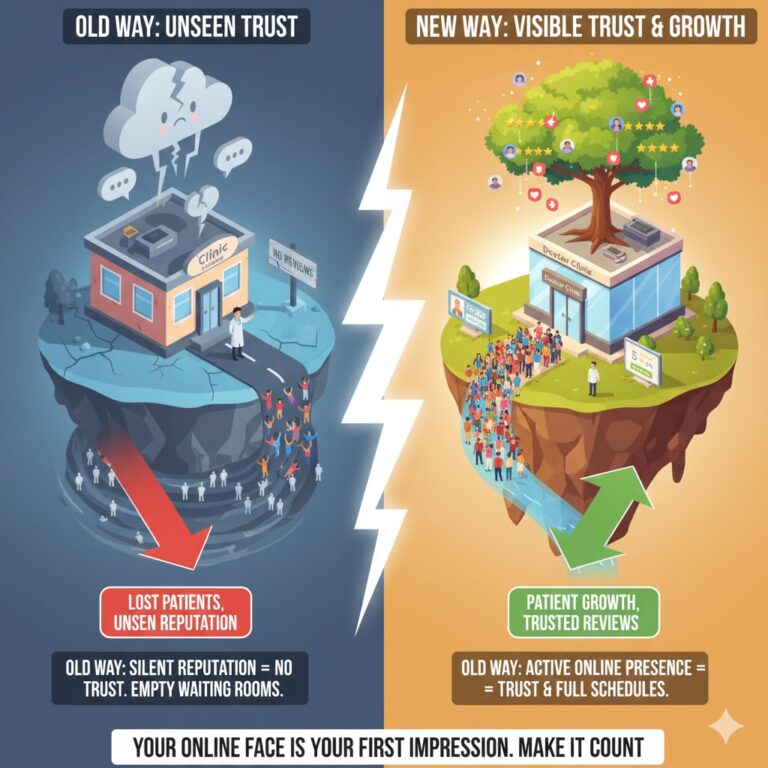
3. Simple Booking Wins More Patients
Why Doctors Need to Make Booking Easy Right Now
Today’s patients want to book an appointment the same way they order food or book a taxi. They do not want to call and wait. They do not want to explain their problem on the phone. They want a simple button on your website or app. They want to fill a form in two minutes. That is it.
When you make booking simple, more people become your patients. This is not an opinion. This is what the numbers tell us.
What the World Data Shows Us
Around 67% of patients worldwide prefer to book their appointments online instead of calling a doctor. Only 22% of people still want to call. More than half of younger patients, people between 25 and 45 years old, will switch to another doctor if you do not have online booking. They will go to someone else.
When clinics add online booking to their website, they see a revenue increase of 27 percent. Some clinics see more than that. Some clinics saw an increase of 120 percent. That is because more people book appointments when it is simple.
What Happens in India
India is moving the same way. The digital health market in India is growing fast at 17.67 percent every year. More and more Indians are looking for online ways to book with their doctors. The government has also made it possible to book appointments at hospitals through websites and apps using a simple QR code on your phone.
Yet, only a small number of private clinics in India have made booking simple online. This means most doctors are losing patients. Patients want to book with someone else because those clinics have online booking. You have a big chance here. Start now and catch these patients.
The Real Problem with Hard Booking
When a patient finds your clinic online but cannot book easily, something bad happens. They go away. They find another doctor. They do not come back. Studies show that only about 2 percent of people who fill a form and want to book actually complete the booking. But 25 to 40 percent of people who call the clinic and speak to staff to complete the booking.
This looks like calling is better. But it is not. Calling is better because your staff is trained to convince people. But when patients cannot even reach your clinic or cannot find the booking button. They never even call. They have already left.
How Simple Booking Helps Your Clinic
When you offer simple online booking, two things happen at the same time.
First, more patients see your clinic and want to book. They do not need to make a phone call. They can book at 10 PM at night when they remember they need to see a doctor. They can book on Sunday when your office is closed. They book when they are ready, not when your office is open.
Second, you get fewer angry phone calls. Your staff can focus on talking to patients who are already booked. You can use your staff better. Your team has time to help patients instead of answering booking calls.
What Makes Booking Simple
Simple booking is not about fancy technology. It is about thinking like a patient. Here is what makes booking simple.
Your website or app should show a big button that says “Book an Appointment” or “See a Doctor Now.” Patients should find it in two seconds. Not hidden. Not small. Big and clear.
The form should ask only 5 to 7 questions. Name. Phone number. Why do you want to see the doctor? What date you want. That is enough. Do not ask 20 questions. Patients will leave.
After patients fill the form, they should see the available times right away. They should choose a time in one click. Then they get a message that says their booking is confirmed.
Send a message to the patient right after they book. Tell them your clinic address. Tell them what to bring. Tell them your phone number. Show them the doctor’s name. This message should come within five minutes. Not tomorrow. Now.
Why Response Time Matters
If a patient books an appointment on your website and no one replies for two days, the patient feels worried. Is the booking confirmed? Will the clinic remember? Did something go wrong? This worry makes patients cancel.
Clinics that reply in 5 minutes or faster book 25% more patients than clinics that reply in 30 minutes. This is a big difference. Your staff needs to see the booking right away. Someone should send a confirmation message in minutes.
Following Up Keeps Patients Coming Back
After you book the appointment, send reminders. Send a reminder 24 hours before. Send another reminder on the morning of the appointment. Patients who get reminders are less likely to miss the appointment. Missed appointments cost you money. A patient might be charged or lose their slot. Reminders stop this.
After the patient visits, send a follow-up message. Thank them for coming. Ask if they have questions. Give them the next appointment reminder if needed. Patients feel cared for. They come back. They tell their friends.
The Numbers That Prove It Works
In India right now, 72% of patients say they want to book their appointment online. But only about 10 percent actually do book online. This gap is because most clinics have not made it simple yet. They do not offer it. Or they offer it but it is too hard.
If you offer simple online booking right now, you will catch these 72 percent of patients. Your competitors are sleeping. You can wake up first.
When you make the form shorter, more people finish it. When you show available times right away, more people click and book. When you send a confirmation within minutes. More people feel sure about their booking.
What You Need to Do Today
Start small. You do not need the most expensive booking system. You can use free or cheap tools to add a booking button to your website.
Put a form on your website. Ask for name, phone, reason for visit, and preferred date. Add the button today.
Make sure your staff sees new bookings right away. Someone should send a confirmation message within five minutes.
Send a reminder 24 hours before the appointment.
Say thank you after the visit. Ask if they need anything else.
That is it. This is all you need to start.
The Cost of Not Doing This
Your competitors are adding online booking. Patients prefer clinics with online booking. If you do not offer it, patients go to clinics that do. You lose patients without ever speaking to them. They never even call. They choose another doctor.
Every month you wait costs you money. Costs you patients. Costs you trust.
Moving Forward
Simple booking is not the future. It is the present. Patients expect it now. Doctors who offer it grow their practice. Doctors who do not offer it lose patients.
You do not need expensive software. You do not need IT experts. You need a simple form on your website. You need your staff to reply fast. You need to show that someone cares about the patient’s booking.
Start this week. Add one booking button. Make it simple. Watch more people book with you. Watch your practice grow.
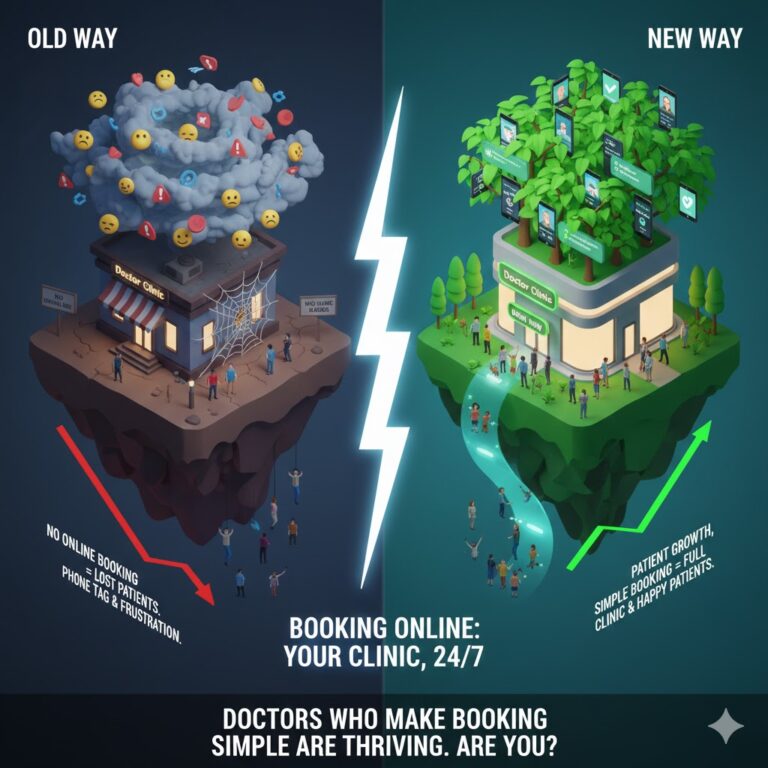
4. Real Reviews Matter More Than Big Claims
Why Patient Stories Sell Better Than Doctor Promises
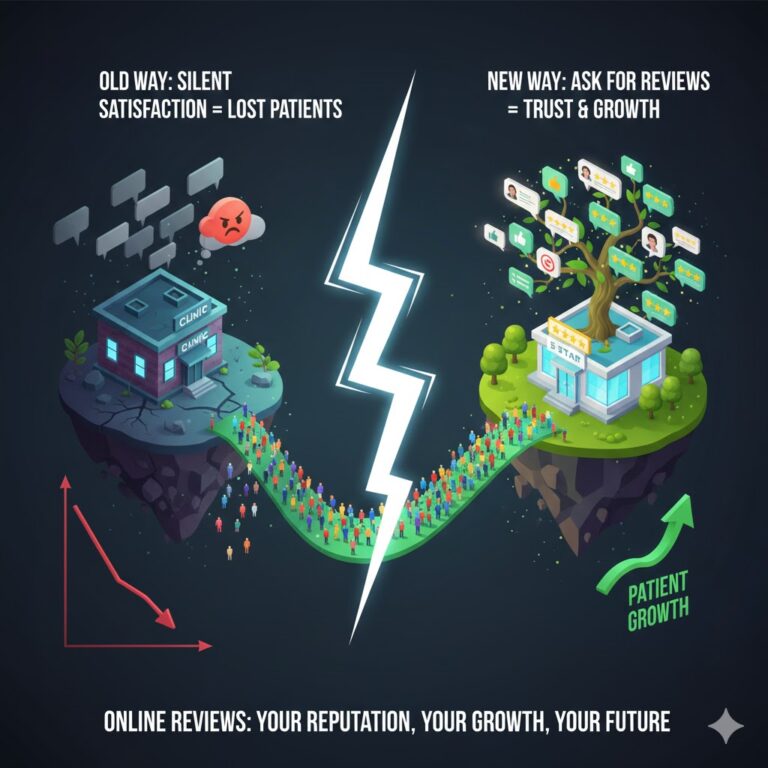
When a patient walks into your clinic, they have already made up their mind before meeting you. They read what other patients wrote about you online. They check Google reviews. They look at what people say on Facebook. This is the new truth of healthcare marketing in India.
Big ads saying “Best Doctor in Town” do not work anymore. Patients do not trust them. Why? Because they know ads are paid. They know doctors wrote those words to get more patients. But patient reviews are different. These come from real people. From people like them. From people who sat in your waiting room. From people who spent their money on your treatment.
When a patient reads a review from another patient, they believe it more than anything you can say. If someone writes “Doctor treated my back pain in three weeks,” that story matters. If another patient says “Staff was kind and the clinic was clean,” that becomes real proof. This is called social proof. It works everywhere in the world. It works in America. It works in Europe. It works in India too.
Your competitors know this now. Clinics that grow fast are the ones getting good reviews. Not the ones spending big money on ads. When you have ten real patient reviews saying good things, new patients call you. They ask for an appointment. They do not ask for more ads.
The problem many Indian doctors face is this. They think reviews come from nowhere. They do not ask patients to write reviews. They do not make it easy for patients to share their experience. But global clinics do this. They send a message after treatment. They ask the patient to write one or two lines about their visit. They make the form simple. They say thank you when patients write reviews.
This habit creates a chain. Good reviews bring new patients. New patients get good treatment. Good treatment brings more good reviews. This circle keeps growing. Soon, your clinic becomes known in your area. People recommend you to their family. Your name spreads without big ad spending.
Right now, if you have zero reviews, start asking. If you have five reviews, ask for ten more. If you have twenty reviews, keep them coming. Every new review is a voice speaking for you. Every positive review is a patient saying “Come here, I trust this doctor.”
The doctors winning in their cities are not the ones with the biggest names. They are the ones with the most honest reviews from real patients.
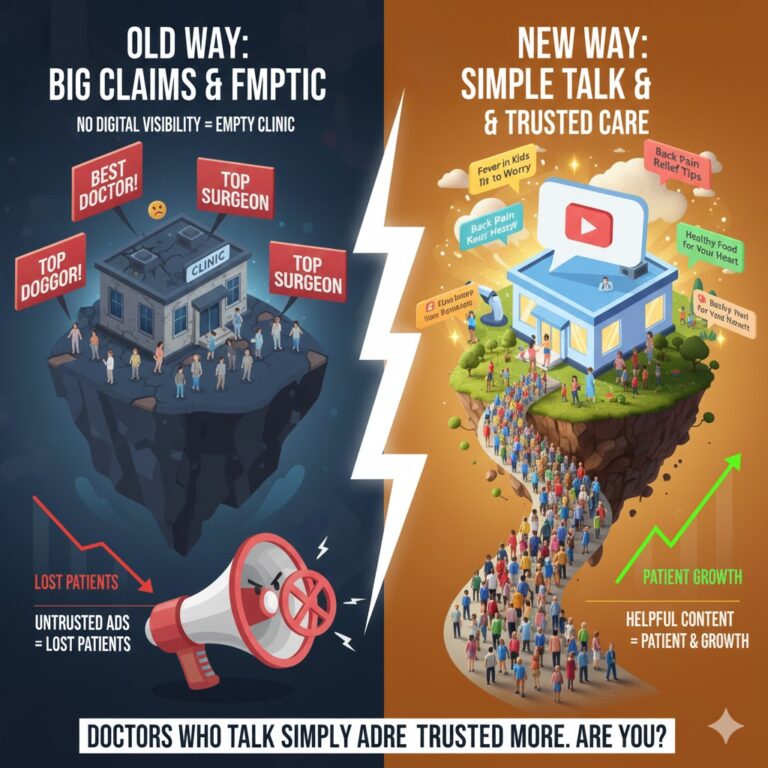
5. Doctors Who Talk Simply Get Chosen More
When You Speak Like Your Patients, They Trust You More
Think about the last time you visited a doctor. Did they use words you understood or did they confuse you with medical terms? Most patients feel scared when doctors speak in a language they do not know. This fear makes them doubt the doctor and the treatment. But when a doctor speaks in simple words, something changes. The patient feels calm. They feel understood. They come back to that doctor again and again.
Around the world, doctors are learning this lesson. A doctor in London shares health tips on social media in simple words. A doctor in New York writes blog posts that a school child can read. A doctor in Singapore sends messages to patients using everyday language. And what happens? More people call them. More people book appointments. More people become loyal patients who tell their friends and family about the doctor.
In India, your patients think the same way. They come to your clinic feeling nervous. They have many questions in their mind. If you speak to them using big medical words, they feel more nervous. They may not follow your advice because they did not understand it. They may not come back for the next visit. But if you speak in simple Hindi or English mixed with examples from daily life. Everything changes. They understand. They trust you. They get better results.
Share Health Tips That Your Patients Can Understand
Start writing simple health tips for your patients. Write about what they eat every day. Write about the water they drink. Write about why they feel tired. Write these tips in short sentences. Use words that a ten year old child would understand. Share one tip on your clinic website. Share one tip on your social media page. Share one tip in the message you send after a patient visits.
A doctor who treats children writes a tip saying “Why does your child get a fever in monsoon.” Another doctor who treats joints writes “How to sit at your desk without back pain.” These are real problems your patients face. When you solve these problems using simple words. People think “This doctor understands my life. This doctor can help me.”
Your Patients Remember How You Made Them Feel
When a patient sits in your clinic chair, they are listening to every word. They are watching your face. They are feeling your energy. If you speak in a way that makes them feel small and uneducated, they remember that feeling. If you speak in a way that makes them feel heard and respected, they remember that feeling too. The patients who feel respected come back. The patients who feel confused go to another doctor.
Your local newspaper and online groups are full of people asking health questions. They ask in simple words because they do not know the medical words. When you answer these questions in simple words, you become known as a doctor who cares. You become known as someone who can explain things. People in your city start calling you because they heard you help people understand their health.
Make Your Clinic Name Known by Speaking Clear
Every message you send is a chance to build your good name. When you explain a treatment in simple words, you show you know your job well. A doctor who can make a difficult thing sound simple is a strong doctor. A doctor who uses hard words is someone people think does not want to explain things. Your patients tell their families what you said. They tell their friends what you explained. If you said it in simple words, their families and friends want to meet you too.
Your clinic grows not because you put big ads in newspapers. Your clinic grows because people talk about you. They talk about how you spoke to them. They talk about how you made them feel smart, not stupid. They talk about how you said things they could understand. This word of mouth is stronger than any paid advertisement. This is how global doctors build their clinics now. This is how you can build yours.
6. Follow-Ups Turn Visits Into Long-Term Care
Why Patients Come Back When You Remember Them
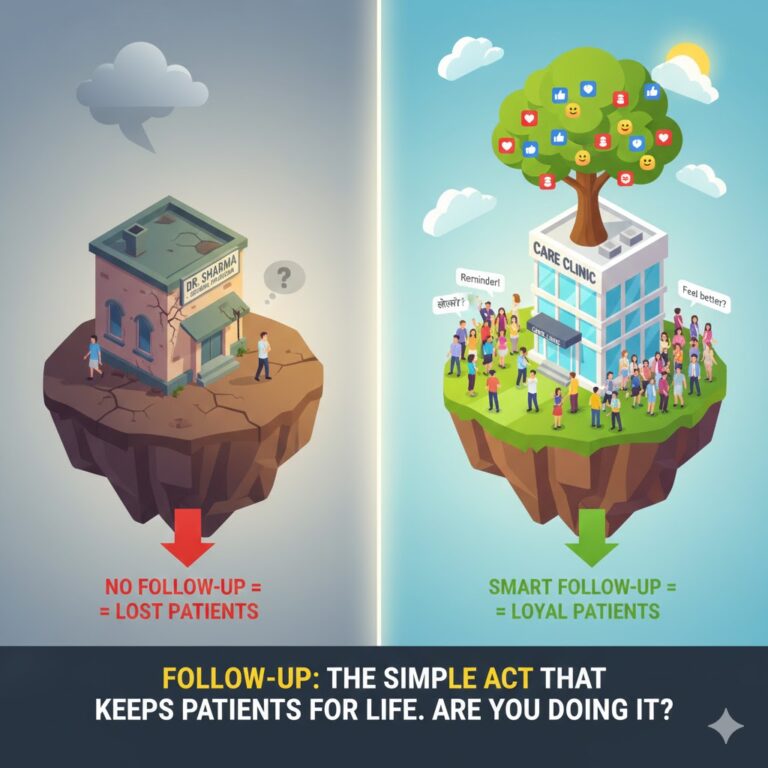
A patient visits your clinic one time and then disappears. You never hear from them again. This happens to most doctors in India. But doctors around the world are doing something different. They send messages to patients after the visit is over.
These messages are not trying to sell anything. They are not pushing new treatments. They are simply saying hello and checking if the patient feels better. This small action makes patients feel that the doctor cares about them. When patients feel cared for, they return to the same doctor again and again.
How Follow-Up Messages Work in Real Life
Think about what happens in other countries. A patient goes to a doctor and gets treated for a cold. Three days later, the patient receives a message from the clinic. The message asks if the cough has stopped. It asks if the medicines are working fine. The patient feels happy because someone is thinking about them.
This patient now trusts that doctor. When the same patient gets sick again, they return to that doctor. They bring their family members too. One patient becomes three patients through a simple message. This is how follow-up care brings more business to your clinic.
The Money in Showing You Care
In India, patients spend money at clinics where they feel valued. A follow-up message takes two minutes to write but costs nothing. Yet it builds trust that makes patients return. Studies from hospitals in America and England show that patients who receive follow up messages visit their doctors 2 times more than other patients.
When patients return again and again, your clinic earns more money. Your clinic becomes busy. Your reputation grows in the neighborhood. Other patients hear that your clinic cares about them after they leave. They choose your clinic instead of going somewhere else.
Simple Ways to Follow Up With Your Patients
You can send a follow-up message through WhatsApp. You can call the patient after one week. You can send a reminder message before their next appointment date. Each of these actions takes a small time but creates big results.
Some clinics send messages the day after the visit. Some clinics follow up after one week. Some clinics check on patients who had surgery or serious problems. The time does not matter as much as doing it daily. A patient who receives one message feels good. A patient who receives messages three times feels like family.
What Should Be in Your Follow Up Message
The message should be short and warm. You can write something like this: Hello, I hope you are feeling better now. Please tell me if your pain has stopped. If you need anything, you can call me anytime.
The message should not mention fees or new treatments. The message should not sound like a sales pitch. It should sound like a friend asking how you are doing. When messages sound natural and kind, patients respond to them. They feel safe to ask more questions. They feel safe to return to your clinic.
Why Indian Doctors Should Start This Practice Now
Most doctors in India do not send follow-up messages. This is why many patients visit different doctors each time. Patients do not feel connected to any one doctor. But the doctors who do send follow-up messages stand out. They become famous in their area. Patients remember them. Patients bring their parents, children, and friends to them.
Your competitor clinic across the road does not do this. You can do this. You can become the doctor that patients trust and remember. This costs almost nothing. You only need to take time to write a simple message.
Making Follow Up a Regular Habit
You can ask your staff to help you. You can set one day in the week to send messages to patients. You can keep a list of all patients and when they visited. You can write down what problem they had. Then you can send them a message that fits their situation.
Over time, this becomes a habit. Your staff understands what to do. Your patients get used to receiving your messages. They start telling their friends that your clinic follows up on them. Word spreads. More patients come to your clinic.
The Real Difference This Makes
A doctor who follows up on patients is not the same as a doctor who only treats patients. One doctor sees patients. The other doctor builds a family of patients. One doctor has patients. The other doctor has loyal fans. One clinic is busy today. The other clinic is busy today and tomorrow and next month.
This is the difference between a clinic that grows and a clinic that stays the same. Follow-up messages are the tool that builds this difference. It is the simplest tool. It is also the strongest tool. Start using it this week. Start with even five patients. Watch what happens to your clinic.
7. Ads That Feel Helpful, Not Pushy
Stop Selling. Start Showing Patients What They Actually Need
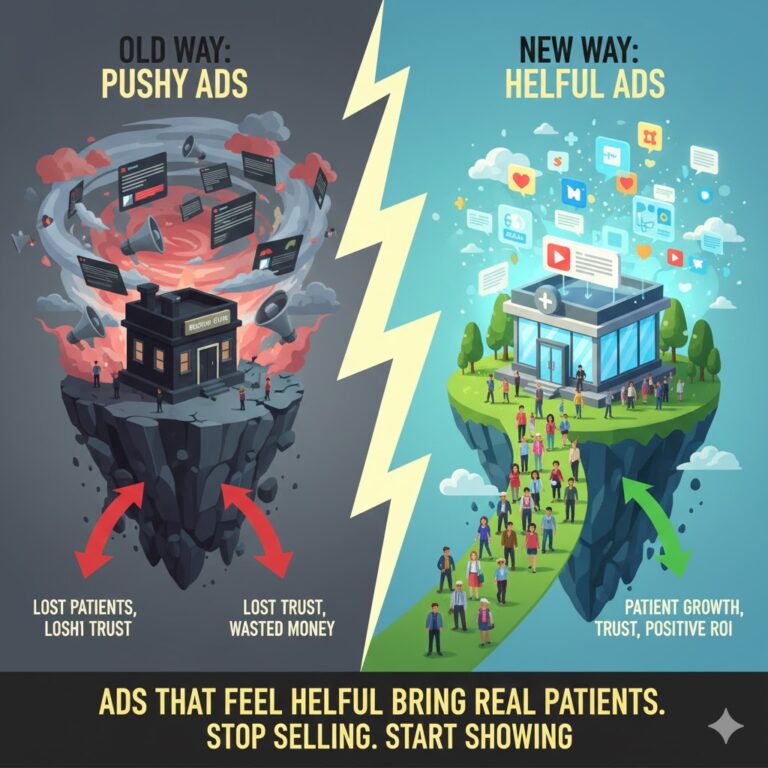
When a patient sees your ad, they feel one of two things. Either they think you care about helping them. Or they think you want their money. That is the difference between good ads and bad ads.
Around the world, the best clinics do something different with their ads. They do not scream “Come to us now” or “We are the best doctors”. Instead, they show real things that patients worry about. A woman with joint pain sees content about how to sit at her desk without pain. A father worried about his child’s fever sees tips on when to call a doctor and when to wait. A man thinking about heart health sees information about food choices that matter.
This works because patients trust you when you help them first. An ad that teaches is not pushing. It is giving. When you give information, people remember you. When you ask for money first, people run away.
Think about your own life. You do not buy from shops that only shout about sales. You buy from people who show you something worth having. Your patients think the same way. A young mother will come back to a doctor who gave her good fever tips on social media. A working man will trust a doctor whose content taught him about blood pressure. These patients come because you showed you know their problems.
The ads that work best are not fancy. They are simple. They show one problem. They show one answer. A post about “five ways to know if your child needs a doctor” is better than ten posts about your clinic name. A simple video of you explaining stomach issues in plain words works more than a colorful photo of your clinic waiting room.
When doctors in other countries run ads, they count what happens after. They see how many people click. They see how many people call or book. They measure if the patient buys or comes back. Then they make the ads better. They do not only run ads and hope. They watch and learn and change.
Your clinic can do the same thing right now. Start with one problem your patients have. Write about it as if you are talking to a friend. Share it on the platform where your patients already are. Then wait and see who comes. Some ads will work better than others. Keep doing the ones that bring real patients. Stop doing the ones that do not work.
The money you spend on ads matters. But how you spend it matters more. An ad that teaches costs the same as an ad that pushes. But one brings patients who trust you. The other brings no one. Or brings someone who feels tricked and never comes back.
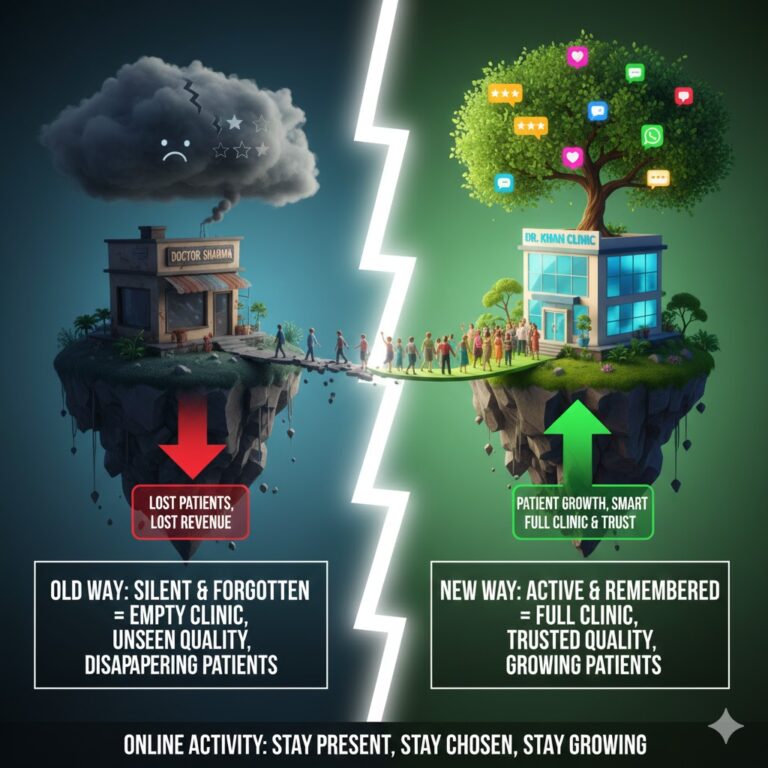
8. Staying Active Keeps You Remembered
Why Your Clinic Needs to Show Up Every Day Online
Your patients forget about you when they don’t see you. Think about your own life. You remember shops and restaurants you visit often. You forget the ones that disappear. Your clinic is the same way.
When a doctor stops posting on social media, patients think the clinic is closed. They think you are not taking new patients. They think you moved away. Silence sends a wrong message. Activity sends the right one.
Studies from healthcare marketing firms in America and Europe show something clear. Doctors who post twice a week get 40 percent more patient calls. Doctors who post once a month get almost nothing. The numbers are hard to ignore.
A clinic in Delhi posted health tips every Tuesday. Their phone rang more. Another clinic in Mumbai shared patient stories every week. Patients came back for follow up visits. A doctor in Bangalore posted treatment updates every Sunday. His booking went up by 30 percent.
What does staying active mean? It means sharing one health tip per week. It means answering patient questions in comments. It means posting when you get a new machine or tool. It means telling people you are open and ready to help. It means showing your team working. It means being there when patients need answers.
Social media is like a shop window. If the shop window is dark, people walk past. If the window is bright with new things, people stop and look. Your clinic’s social media is that window. Keep it bright. Keep it full. Keep it moving.
Patients see your posts. They remember your name. When they need a doctor, your name comes first in their mind. That is the power of staying active.
9. Indian Clinics Can Do This Too
Why Money Is Not Your Real Problem
Many doctors in India think they need lots of money to do good marketing. They believe only big hospitals can copy the ways global clinics work. This is not true at all. The real secret is not money. It is doing the right things over and over again.
Your patients want the same things worldwide patients want. They want to find you online. They want to read what other people say about you. They want to book an appointment without calling. They want you to care about them after they leave your clinic. You can give them all of this without spending big money.
What You Need to Start
The first thing you need is something you already have. You have a phone. You have time between patients. You have knowledge that sick people need. These three things are enough to start.
You do not need fancy software or ads that cost lakhs. You do not need a big team sitting in an office. You do not need to hire someone full time to manage your digital presence. One person from your clinic can do this work in thirty minutes every day.
Start With What Works Everywhere
Global clinics are successful because they do basic things well. They reply to people fast. They keep their clinic information correct on Google. They ask happy patients to write reviews. They send short health tips that help people understand their bodies better. They send a message when a patient gets better. These are not new ideas. These are old ideas done with new tools.
Your clinic can do all of this today. Right now. You already have a phone. You already know how to write messages. You already have patients who like you. You only need to do it on purpose and do it often.
The Real Cost of Marketing in India
Doctors worry about cost. They ask how much money they need to spend. The answer is less than you think. Here is what you need.
A Google Business account costs nothing. You create it in five minutes. A Facebook page costs nothing. WhatsApp costs nothing. A simple website that shows your name and phone number costs between 5,000 to 20,000 rupees one time. You do not need more than this to start.
The money you will spend is not on software. The money is on your time. If you spend one hour every day doing these things, that is your cost. Not money. Your time.
How to Start Today Not Tomorrow
Do not wait for the right time. Do not wait for a good plan. Start now with what you have. Here is how.
First, go to Google right now. Search your clinic name plus your city name. See what shows up. If nothing shows up, open Google Business. It takes ten minutes to fill the form. Put your clinic address. Put your phone number. Put in your clinic hours. Done.
Second, ask one happy patient to write a review on Google. Tell them it helps other people find you. Many patients will say yes. One review is better than zero reviews.
Third, take a photo of yourself. Write two lines about why you became a doctor. Post it on Facebook and WhatsApp. Tell people they can call you. That is your first health tip. You can do this in ten minutes.
What Success Looks Like In Month One
Do not expect many new patients in week one. Marketing takes time in India like it takes time everywhere else. But in month one you will see change.
Your phone will ring more. This is because people found you on Google. Your WhatsApp will have more messages. This is because your number is now visible on Facebook. People will start asking you questions. This means they trust you enough to ask. This is good progress.
What To Do In Month Two and Beyond
After one month you know what works. Maybe Facebook gives you more calls. Maybe Google reviews work better. Do more of what works. Do less of what does not work.
Start asking every patient to take a photo with you. With their permission ask them to write two lines about their visit. Their real words are gold. Other patients will believe them more than they believe your ads.
Send a message to patients you saw three weeks ago. Ask them how they feel now. Are they better? Do they need another visit? This message shows you care. Patients remember doctors who care. Many will come back.
Money Matters But Consistency Matters More
Yes, good clinics in America spend more money on ads. But they started somewhere. They started small. They started with free tools. They grew slowly. Over months and years they became big. You can do the same thing.
The doctors who succeed in India are not the ones with the most money. They are the ones who do something every single day. The ones who post two lines about health every day. The ones who reply to every call and message in one hour. The ones who ask happy patients to spread the word.
Real Numbers From Clinics Like Yours
A clinic in Delhi did this. They started with no social media. In month one they got five new patients from Google. In month two they got fifteen. In month three they got thirty. They spent no money. They only spent time.
A clinic in Bangalore did this. They sent a follow up message to every patient. In three months one hundred old patients came back because they felt cared for. They did not run any ads. They only sent messages.
Another clinic in Mumbai asked ten happy patients to write reviews. In two months they got forty new calls from Google. People could see real reviews from real people.
Why Indian Clinics Have An Advantage
You think global clinics have an advantage over you. You are wrong. Indian patients are hungry for good healthcare with good care. They will come to you if they know you exist. They will trust you if they see reviews from other Indians. They will stay with you if you show them that you care.
Global clinics are far away. You are near. Global clinics are expensive. You are cheaper. Global clinics do not speak your language in the way you do. You understand your patients better. You have advantages they do not have.
The Three Things That Will Work For Your Clinic
The first thing is being findable. When a person in your city searches for a doctor like you on Google, your name should show up. This costs no money. Only time. Google Business is free.
The second thing is being trusted. When people find you, they should see real reviews from real people. They should see that other patients liked you. Ask five patients this month to write one review. Next month ask five more. Keep doing this.
The third thing is being reachable. When someone wants to book with you, it should take less than two minutes. Your phone should be easy to find. Your WhatsApp should be easy to message. Your clinic hours should be clear. Your location should be clear. Make it simple for people to reach you.
What Your Patients Want From You
Your patients do not want you to be a big name. They want you to be someone they can find. They want you to have good reviews. They want you to reply fast. They want you to remember their names. They want you to send them a message after they get better. They want to know you care. These things cost no money.
A patient from Pune said this about his doctor. “I liked that my doctor sent me a message after two weeks asking how I felt.” He did not say “I liked that this clinic spent millions on ads.” He said he liked a simple message. That message made him come back. That message made him tell his friends.
One More Thing About Your Time
You worry you have no time. You see patients all day. You are tired. You can do this work in thirty minutes every day. In the morning check your Google reviews and reply to anyone who wrote something. In the afternoon write one health tip in simple words and post it on Facebook. In the evening send one follow up message to a patient you saw last week. That is all.
Thirty minutes every day for one month equals five hours. Five hours is what you need to change your clinic. A global clinic might spend five lakh rupees to do this. You will spend five hours there. In one year you will have spent two hundred fifty hours. A global clinic might have spent fifty lakh rupees. You spent your time.
The Promise Is Simple But True
You do not need to be like a global clinic in America. You need to be like a good clinic in India that uses modern tools. You need to be findable. You need to be trusted. You need to be reachable. You can become this in ninety days. Without big money. Without a big team. Without a big ad budget. Only with time and care.
Your patients are waiting for this. They want to find a doctor like you. They want to trust you. They want to book with you. You can give them all of this right now. Not after you get a website. Not after you hire someone. Right now. Today.
10. Clickniti Helps You Apply Global Ideas At Local
Why Global Ideas Need a Local Touch in India
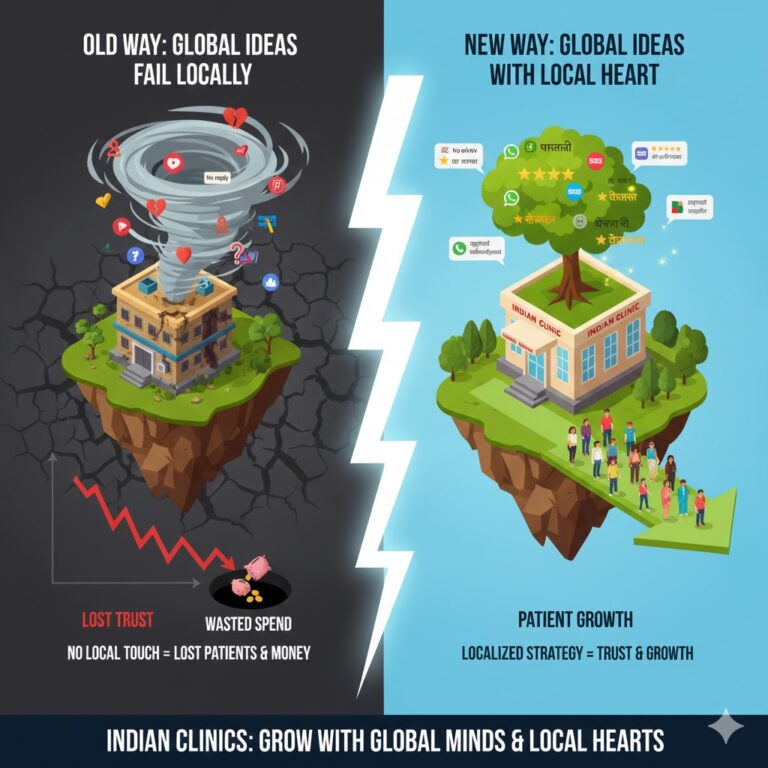
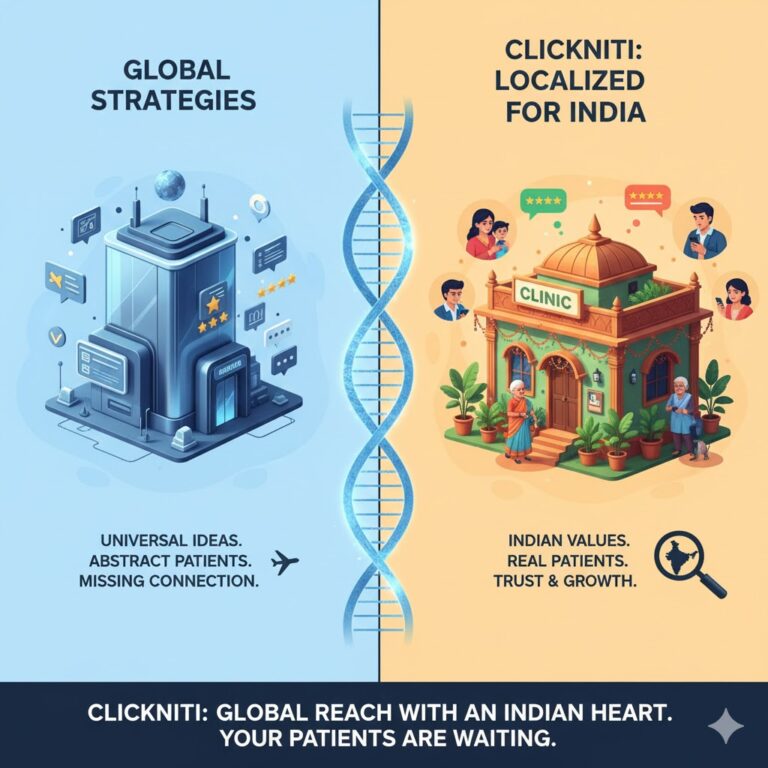
The world talks about healthcare marketing in one way. But India is different. Your patients speak Hindi or Tamil. They trust word of mouth more than any advertisement. They live in cities, towns, and villages. What works in America or Europe may not work here. This is where Clickniti comes in.
Clickniti is a healthcare marketing team that understands India. They know what Indian doctors need and what Indian patients want. They take the best ideas from around the world and change them to fit your clinic.
The Problem Most Doctors Face
You read about a marketing idea from a global clinic. You see it works for them. You try to copy it in your clinic. But something goes wrong. The idea does not connect with your patients. The message feels strange or foreign. Your money gets spent but no new patients come.
This happens because global ideas are made for global patients. Indian patients are different. They have different needs. They speak different languages. They trust different things. What makes sense in London may seem wrong in Delhi or Bangalore.
How Clickniti Bridges This Gap
Clickniti works like a bridge between the world and your clinic. They study what works globally. Then they change it to fit India. They make sure your message sounds like it comes from a real doctor, not a foreign company.
When you work with Clickniti, they do four things for your clinic. First, they learn about your clinic and your patients. Second, they study what global clinics do well. Third, they mix global ideas with Indian values. Fourth, they help you use these ideas in your daily work.
Real Ideas That Fit India
Clickniti knows that Indian patients want to feel respected. They want doctors who care about them as people. They do not want to feel like only a number. Global clinics sometimes make patients feel like only appointments in a book. Clickniti helps you stay personal while still using modern marketing.
For example, a global clinic may send an email reminder. An Indian patient wants a phone call or a message in their language. Clickniti knows this. They help you send reminders in the way your patients like them.
Another example is trust building. Global clinics use online reviews and certificates. Indian patients also trust these things. But they trust them more when they see other Indian patient stories. Clickniti helps you collect and share real stories from your Indian patients.
Why You Do Not Need Big Money
Many doctors think they need a lot of money for good marketing. They see global marketing budgets and feel scared. The truth is different. Good marketing in India does not need big budgets. It needs the right ideas and good work.
Clickniti helps doctors of all sizes. You may have a small clinic in a small town or a big clinic in a big city. Clickniti can help you. They know how to do good work with small budgets. They focus on what will bring you more patients, not on spending more money.
How Clickniti Works With Your Team
Clickniti does not take over your clinic. They work with you and your team. They teach your staff how to do marketing tasks. They show you how to talk to patients in ways that work. They help you understand what your patients want.
You stay in control. You make the big decisions about your clinic. Clickniti guides you and helps you avoid mistakes. They share reports that you can understand. They do not use difficult words or confuse you with data you cannot read.
The Real Benefits for Your Clinic
When you use Clickniti, several things happen to your clinic. More patients call and ask about your services. More patients come back for follow up visits. Your patients tell their friends and family about you. Your clinic grows without feeling rushed or fake.
Your staff feels happier too. They spend less time on confusing marketing tasks. They get clear directions about what to do. The work starts to feel natural instead of forced. Your clinic becomes known as a place that cares and listens.
Starting With Clickniti Is Simple
You do not need to change everything at once. Clickniti helps you start small and grow slowly. Maybe you start with better booking on your website. Maybe you start with patient follow up messages. Maybe you start with collecting patient stories. You choose what feels right for your clinic.
As you see good results, you do more. You grow at a speed that fits your clinic. You never feel pushed into something that does not match your values or your budget.
The Difference Between Clickniti and Others
Many marketing companies promise big results. They use complicated words. They do not care if you understand what they are doing. Clickniti is different. They explain everything in simple language. They show you what they are doing and why. They care about your clinic growing in a real and honest way.
They also know India. They have worked with clinics like yours. They understand your patients and your challenges. They do not give you a cookie cutter plan that works for everyone. They make a plan that works for you and your clinic.
Starting Your Journey Today
If you are a doctor tired of marketing that feels fake or complicated, Clickniti is for you. If you want to grow your clinic in a way that feels natural and honest, reach out to them. If you want to use the best ideas from around the world in a way that feels Indian, they can help.
Your clinic does not need to be like a global clinic. It needs to be like your clinic. But it can be smarter about how it talks to patients and how it brings them in. That is what Clickniti helps you do. They help you stay true to yourself while growing your practice and serving more patients in your community.
The Time to Change Your Clinic's Approach Is Now
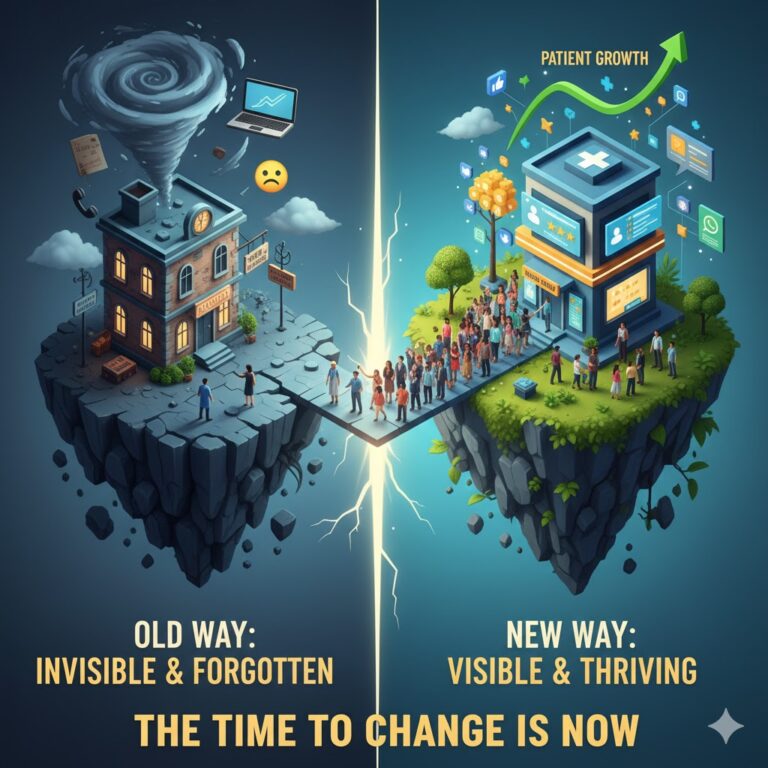
The world has changed how patients find doctors. Patients in India are no longer different. They search online, read what other patients wrote, and make their choice in seconds. Your clinic cannot wait anymore to start this change.
Think about it this way. A patient in America does the same thing a patient in Delhi does today. They check online first. They read reviews second. They book appointments third. This pattern is everywhere now. Your patients in India are doing this right now.
Why Your Clinic Cannot Stay Behind
You have spent years building trust with your patients inside your clinic. That trust was built by being present and listening well. But today, that trust starts online before the patient ever comes to see you. Your clinic’s online presence is your first doctor meeting with every patient.
Patients today do not have patience. They want information fast. They want to book an appointment without ten phone calls. They want to feel that your clinic cares about them even before they arrive. This is not difficult. You do not need big money or fancy technology for this.
What Global Clinics Know That Works
Successful clinics around the world have learned something important. They reply to patients fast. They show real patient reviews on their websites. They make booking simple. They send a message after the visit to check if the patient is fine. They share health tips in simple words on social media. They do not push sales. They guide patients to be better.
This approach works because it is real. It is human. It shows care. It shows you are a doctor who listens and wants to help. Patients feel this difference immediately.
The Indian Clinic Has an Advantage
Your clinic has something that global clinics want. You have a community. You have regular patients who trust you. You have the ability to talk to patients in their language and their way. You understand their problems. You know their culture. This is your strength.
When you add the global marketing ways to your clinic, you become powerful. You combine what the world knows works with what you already know works in India. You do not need to copy America or London exactly. You use their ideas but make them Indian. You keep your heart while making your clinic smart.
The Step You Need to Take Today
Start with one thing. Pick the easiest change for your clinic. Maybe it is replying to messages faster. Maybe it is collecting patient reviews. Maybe it is making your booking link simple. Maybe it is sharing a health tip every week. Pick one. Do it well. Then add another. This is how real change happens.
You do not need a big team. You do not need a big budget. You need a person who can send a message. You need a doctor who will take five minutes to record a health tip. You need someone to check your booking page once a day. This is all.
Your Clinic’s Real Future
The doctors who understand this today will have full clinics tomorrow. The doctors who wait will wonder why patients go elsewhere. Patients have choices now. They will choose the clinic that makes them feel heard. They will choose the clinic that respects their time. They will choose the clinic that talks in a way they understand.
You have built a good clinic. You have helped many people. Now help them find you. Make it simple for them to come back. Show them that you care beyond the appointment. This is the new way. This is how clinics grow today.
The world changed. Your patients changed with it. Your clinic can change too. And it can happen faster than you think. Start today. Start small. Start with care. The rest will follow.
FAQs-
Yes. Patients everywhere want the same things like trust, clarity, and quick help. Indian patients now behave the same way.
No. Small clinics benefit the most. Simple steps bring steady patients without heavy spending.
No. Most global clinics focus on consistency, not cost. Small actions done daily work best.
No. It increases walk-ins. Patients often check online before they visit in person.
Yes. Patients trust other patients more than ads or boards outside clinics.
Never. Patients prefer doctors who start now than those who wait longer.
Yes. Short, clear health tips build trust and keep your clinic in their mind.
No. Done correctly, it improves respect and shows care, not promotion.
Yes, with the right system. Many clinics lose patients only because follow-ups are missed.
We guide clinics to use proven global methods in a simple, safe, and patient-friendly way.