
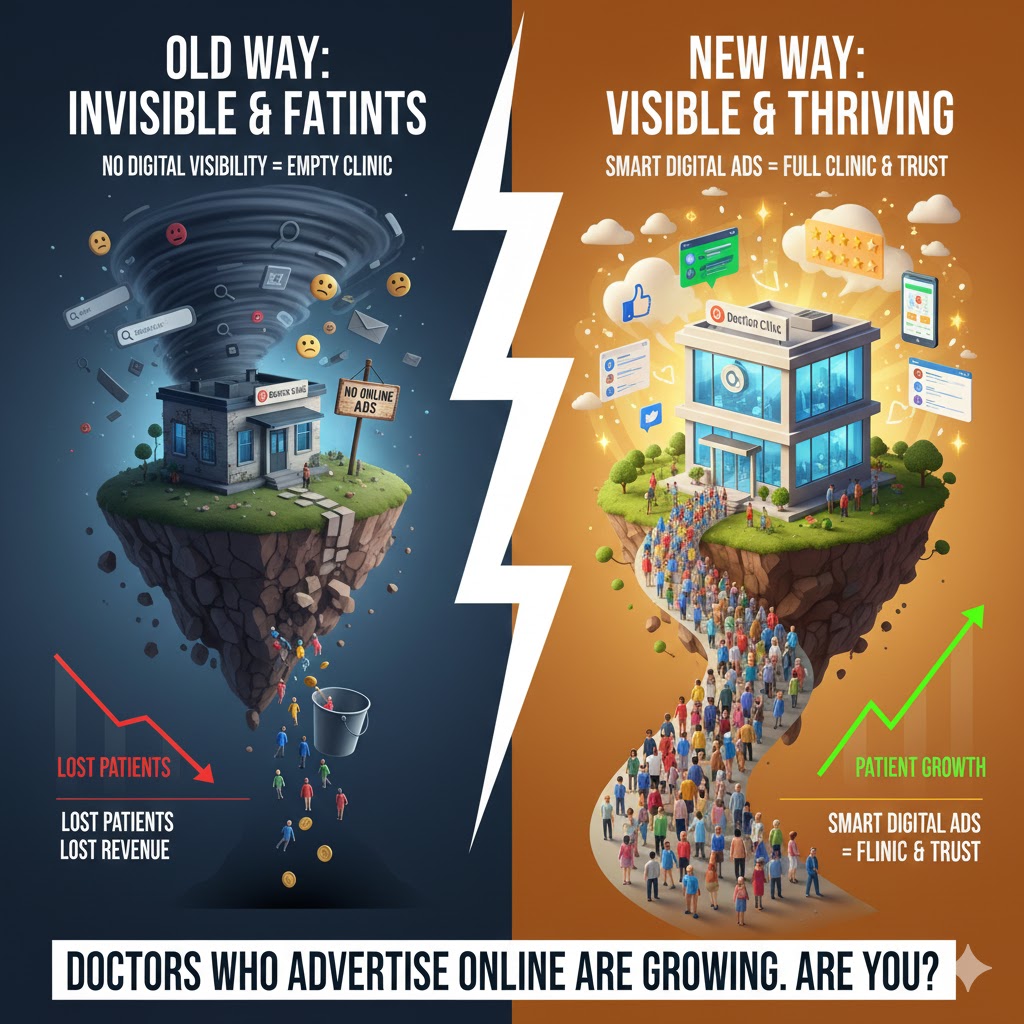
Doctors Who Don’t Advertise Online Are Falling Behind Every Month
You spent years studying medicine. You worked long hours during your residency. You saved money and opened your own clinic. You bought good equipment and hired caring staff. Everything was ready for patients to come. But something changed in the last few years.
Table of Contents
ToggleWalk-in patients became fewer. Your phone rings less than before. Some days you sit in your cabin waiting for appointments that never come. Your clinic has empty slots that could bring income but stay blank instead. You wonder what went wrong.
The answer is not about your skills or your care. You are still the same good doctor you always were. The problem is where patients look for doctors now. They do not ask neighbors anymore. They do not flip through phone books or look at newspaper ads. They pick up their phones and search online.
When someone needs a doctor today, they type on Google. They ask their questions and wait for answers. Within seconds, they see a list of clinics. They click on the first few names. They read reviews and check websites. They book appointments with doctors who show up in those search results. If your name is not there, they will never find you.
This shift happened slowly but completely. Research from Google India shows that 77% of patients now search online before choosing a healthcare provider. That means eight out of every ten sick people start their search on the internet, not by asking friends or family. They look for symptoms, treatments, and doctors all in one place.
Another study from the Indian Medical Association found something worrying. Clinics without any online presence lost an average of 30% of their patient flow between 2022 and 2024. Meanwhile, clinics with active online advertising grew their patient numbers by 45% in the same period. The gap between online and offline doctors keeps getting bigger every single month.
Think about your own behavior when you need something. Maybe you wanted a plumber last month. Maybe you looked for a good restaurant last week. Where did you search first? You probably used your phone. You typed your need into Google or asked in a WhatsApp group. You trusted what you found online more than old memories or distant recommendations.
Your patients do the same thing when they feel sick. A mother whose child has fever at night does not wait till morning to ask her neighbor. She searches for a pediatrician near her right away. A man with chest pain does not remember which cardiologist his uncle visited five years ago. He searches for the best heart doctor in his area immediately.
If you are not online, these patients never see your name. They never know you exist. They book with someone else who showed up in their search. You lose that patient forever. Worse, you lose all the future visits that patient would have made. You lose the family members they would have referred to you.
Many doctors feel uncomfortable with online advertising. They believe good work speaks for itself. They think patients will find them through reputation and word of mouth. That belief was true twenty years ago. Today it costs you patients and income every single day.
Word of mouth still matters, but it moves slower than online search. By the time someone hears about you from a friend, they already booked an appointment somewhere else. Online ads work faster. They catch patients at the exact moment when they need help. That speed makes all the difference in a competitive market.
Some doctors worry that advertising makes them look desperate or unprofessional. They feel that marketing is below their dignity as healers. But advertising is not about desperation. It is about visibility. You cannot help patients who cannot find you. Being visible online is not showing off. It is showing up where your patients already are.
Right now, while you read this, someone in your city is searching for the exact services you provide. They need your expertise. They would benefit from your care. But they will never reach you because your competitor runs Google Ads and you do not. That competitor will treat them, earn their trust, and keep them as long-term patients. All because they decided to be visible online.
The gap between doctors who advertise and doctors who do not keeps growing. Every month you delay, your competitors get stronger. They fill their schedules. They hire more staff. They expand their clinics. Meanwhile, you work harder to fill the same appointment slots you had last year. Hard work alone cannot fix a visibility problem.
This article will show you exactly what happens when doctors ignore online advertising. You will see real data and real examples from clinics across India. You will understand why patients choose online doctors over offline ones. You will learn what you lose every month by staying invisible. Most importantly, you will see what changes when you finally decide to show up where your patients are looking.
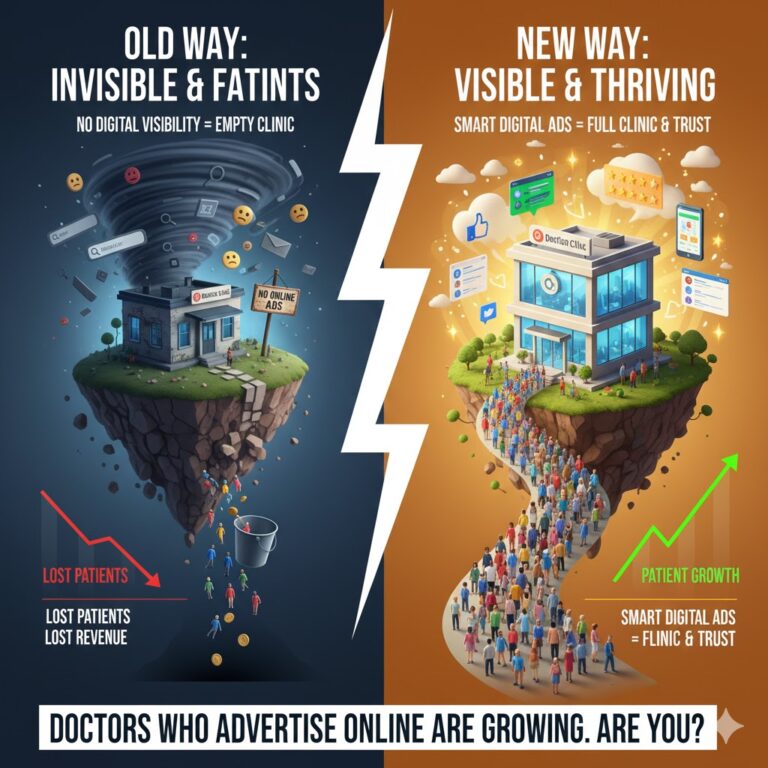
1.) The Truth: Your Patients Are Online, Not in the Waiting Room
People Search for Doctors Every Single Day, But They Find Your Competitors First
Your clinic opens at 9 in the morning. You check the appointment book and see empty slots scattered through the day. Maybe three patients booked for the afternoon. The rest of your time sits blank and waiting. You wonder where all the patients went.
Here is the truth that changes everything. Your patients did not disappear. They moved online. Right now, while you read this, someone in your neighborhood is typing “best doctor near me” into Google. Another person is scrolling Facebook looking for a good pediatrician. A third person is asking on a WhatsApp group for dentist recommendations.
These people need a doctor. They have pain, worry, or health questions that keep them up at night. They want help from someone they can trust. But they will never know you exist if you are not visible where they are looking.
Research from Google India shows that 77% of patients now search online before booking a doctor appointment. That means out of every 10 people who need medical care, at least 7 of them start their search on a phone or computer. They do not walk down the street looking at clinic boards anymore. They do not flip through phone directories or ask neighbors as much as before.
The digital shift happened faster than most doctors realized. Five years ago, word of mouth and location mattered most. Today, your online presence matters more than your clinic signboard. A patient will drive past three closer clinics to visit the one they found and trusted online.
Think about your own behavior for a moment. When you need a plumber or electrician, what do you do? You probably search online or ask in a family group chat. You look at reviews. You check if they have a website or active social media. You want proof that they are real, active, and good at their work.
Your patients do the exact same thing when looking for healthcare. They search. They scroll. They read reviews. They check photos. They want to see that you are modern, approachable, and capable. If they cannot find you online, doubt creeps in. They wonder if you are still practicing. They question if you keep up with new treatments. They worry that you might be outdated or hard to reach.
Meanwhile, the clinic two streets away runs Google Ads. Their name appears at the top when someone searches for “fever doctor near me.” Their Facebook page shows helpful health tips and patient testimonials. Their Instagram has photos of a clean, friendly clinic. That clinic looks busy, trusted, and modern. The patient books there without ever seeing your name.
This happens hundreds of times every month in every city across India. Patients search. Doctors who advertise online get found. Doctors who do not advertise stay invisible. The invisible clinic loses patients to the visible one. Even if the invisible doctor has more experience and better skills.
A general physician in Pune faced this exact problem in 2023. He had 25 years of experience and a good reputation in his area. But his appointment book kept getting thinner. Younger doctors nearby were always busy. He could not understand why. Then he searched for his own specialty online. He found four other clinics ranking above him. Their ads showed up first. Their websites looked professional. His name did not appear until page three of search results. Nobody scrolls that far.
He started running simple Google Ads targeting his neighborhood. Within three weeks, his phone started ringing more. Patients mentioned they found him online. His appointment slots began filling up again. He spent 6000 rupees per month on ads and gained 18 new patients in the first month. Each patient was worth much more than what the ads cost. His clinic came back to life because he became visible where patients were actually looking.
Another example comes from a dental clinic in Nagpur. The dentist there believed that good work speaks for itself. She did not want to advertise because she felt it seemed unprofessional. Her practice survived on old patients and occasional referrals. Then a new dental clinic opened nearby and ran aggressive Facebook campaigns. Within six months, the new clinic was booked solid while her schedule had gaps. She realized that staying silent online meant losing patients to louder competitors. Even if they were newer and less experienced.
The online world does not care about your years of experience if nobody can see them. It does not reward your kindness to patients if that kindness stays hidden inside your clinic walls. The only thing that matters online is visibility. Can people find you when they search? Do you appear where they spend their time? Does your presence look trustworthy and current?
Every day without online advertising is a day you give away patients to competitors who show up in search results and social feeds. These are not random people from other cities. These are your neighbors. These are families living five minutes from your clinic. They would come to you if they knew you existed and looked reliable online.
The gap keeps growing wider each month. Clinics that advertise online get more patients. More patients mean more revenue. More revenue allows better equipment, more staff, and even bigger advertising budgets. They grow stronger while non-advertising clinics grow weaker. The distance between them increases month after month until catching up feels impossible.
But here is the good news. You can start today. You do not need to become a marketing expert overnight. You do not need a huge budget or fancy tools. You need to understand one simple fact. Your patients moved online and you need to meet them there. That means showing up where they search. That means running ads that put your name in front of people who need your help right now.
The internet is not a trend that will fade away. It is the new reality of how people make every decision, including healthcare choices. Fighting this change or ignoring it does not protect your practice. It weakens it. The doctors who accept this reality and adapt to it will thrive. The ones who resist will keep watching their waiting rooms empty out. While wondering where everyone went.
Your skills deserve to be found. Your care deserves to reach more people. Your clinic deserves a full appointment book. But none of this happens by waiting and hoping. It happens when you become visible online. Where your patients spend their time and make their choices. Every search is an opportunity. Every day you miss online is an opportunity you hand to someone else.
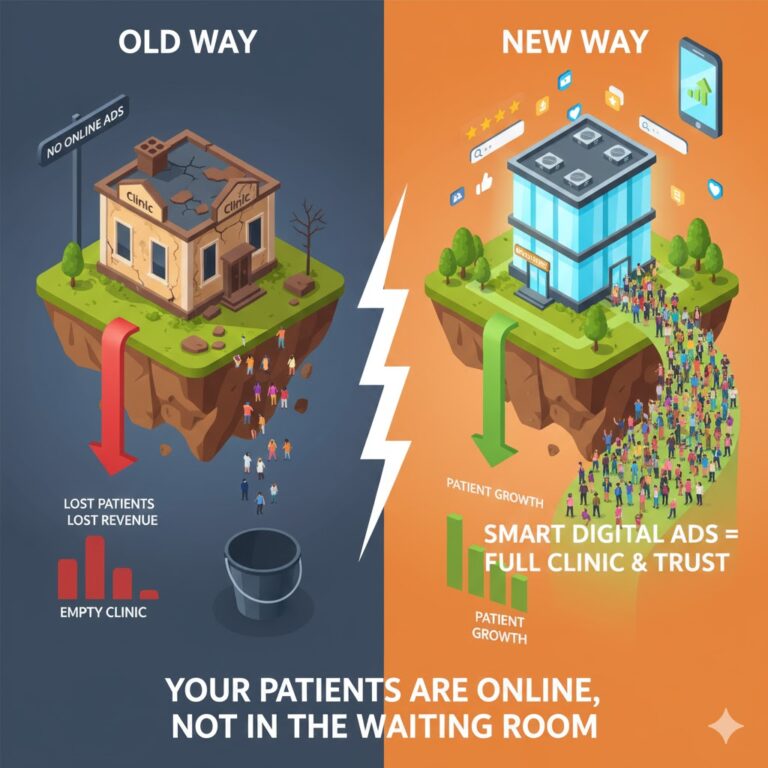
2.) No Online Ads Means Missing Appointments Every Single Day
Other Clinics Fill Their Schedules While You Wait for Walk-Ins
Your clinic opens at nine in the morning. Your staff arrives on time. The reception desk is clean and ready. Everything looks good. But the phone stays quiet. Only two or three patients walk in during the first half of the day. You wonder where everyone went.
The answer is simple but hard to accept. They went to the clinic that showed up on Google when they searched for help. They booked with the doctor whose Facebook ad appeared while they scrolled during breakfast. They called the clinic that had a WhatsApp button right on their website. None of these patients knew your clinic existed because you were not online.
This happens every single day across India. Good doctors with empty appointment slots sit in their clinics. Meanwhile, other doctors who may not be more skilled or experienced have patients lined up. The difference is not medical knowledge or years of practice. The difference is visibility. One doctor can be found online. The other cannot.
Research from healthcare consumer behavior studies in 2024 shows a clear pattern. About 78 percent of patients now search online before choosing a doctor. They type things like “best skin doctor near me” or “child specialist in my area” into Google. The doctors who run ads appear at the top of those search results. The doctors who do not run ads stay invisible.
Think about what this means for your practice. Every day, people in your neighborhood need your exact services. They have the health problem you specialize in treating. They have money to pay for good care. They want to book an appointment today or tomorrow. But they never find you because you are not showing up where they look.
A general physician in Nagpur realized this problem too late. For three years, he relied only on walk-in patients and old patient referrals. His monthly patient count stayed around 80 to 90 people. Then a new clinic opened two blocks away. That clinic ran Google and Facebook ads from day one. Within six months, the new clinic was seeing 200 patients per month. The old doctor finally started online ads. It took him eight months to get his numbers back up.
Those eight months cost him more than lost patients. He had to cut his staff salary. He struggled to pay rent on time. His confidence dropped. All of this could have been avoided if he had started online advertising earlier. The market did not reject him. The market simply could not find him.
Your waiting room might feel empty, but the demand for healthcare is not going down. People still get sick. Children still need vaccinations. Adults still need checkups and treatments. The patient volume is there. The question is whether those patients can find you when they need you.
Walk-in patients are becoming rare in cities. People do not wander around looking for doctors anymore. They search online from home or office. They compare options. They read reviews. They check websites. They look at photos of the clinic. Then they decide and book. This entire journey happens online before they ever step out of their house.
Some doctors believe that good work speaks for itself. They think word of mouth will always bring patients. This was true 20 years ago. It is not true anymore. Even when someone gets a recommendation from a friend, they still search for that doctor online. If your online presence looks weak or outdated, they book with someone else instead.
Social media has changed how trust works. Patients see ads from clinics many times per week. They see patient testimonials and health tips. They see clean clinic photos and friendly doctor videos. All of this builds familiarity and trust before the first appointment. When they finally need care, they choose the clinic they already feel connected to online.
A pediatrician in Pune tracked where her new patients came from for one year. She found that 65 percent came through Google searches and Facebook ads. Only 25% came from direct referrals. The remaining 10% were walk-ins. Her online presence brought almost three times more patients than traditional word of mouth. She increased her ad budget and her practice grew by 40% the following year.
Empty appointment slots cost you money in ways you might not calculate. Your rent stays the same whether you see five patients or fifty. Your staff salary does not change based on patient volume. Your equipment sits unused. Every empty hour is money you will never get back. Online ads fill those hours with patients who need your help and are ready to pay.
The clinics with full schedules are not doing anything magical. They are not better doctors than you. They are not spending lakhs on advertising. Most successful clinic ad campaigns run on budgets between 5000 to 15000 rupees per month. That small investment brings 20 to 40 new patients every month. Each patient brings revenue that far exceeds the ad cost.
You might worry that online advertising is complicated or time consuming. The truth is simpler than you think. You do not need to become a marketing expert. You need to work with someone who understands healthcare advertising. They set up your campaigns. They write the ad copy. They track the results. You focus on treating patients.
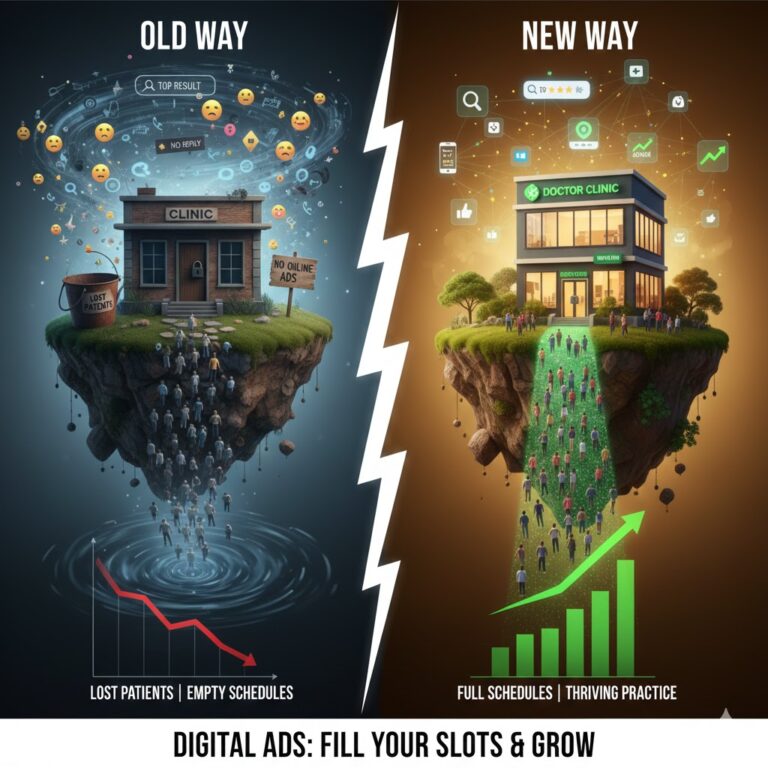
3.) Why Patients Trust Online Ads More Than Friend Recommendations Now
The Internet Changed How People Choose Their Doctors
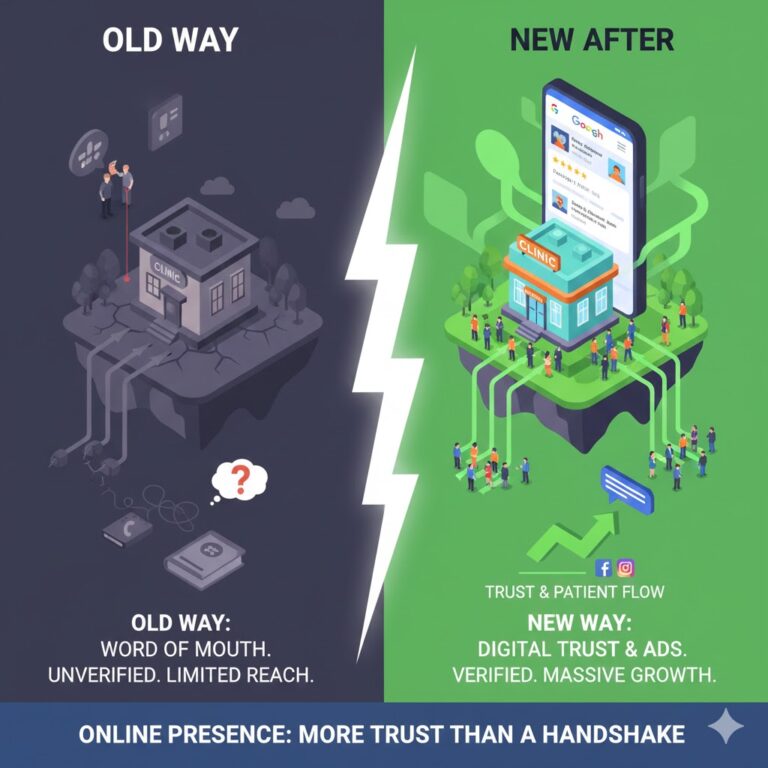
Your parents chose doctors through family recommendations. Your grandfather went to the same doctor his neighbor recommended. Word of mouth was the only way to find good healthcare. That world does not exist anymore.
Today, a friend might say “Try Dr. Sharma, he is good.” The person nods and says thank you. Then they go home and search for Dr. Sharma online. If his website looks old or does not exist, they search for other options. If his Google reviews are few or negative, they book with someone else. The friend’s recommendation started the process, but online presence closed the deal.
Data from patient surveys conducted across Mumbai, Delhi, and Bangalore in 2024 reveals something important. When asked how they choose a new doctor, 68% of respondents said they trust online reviews and ads more than personal recommendations. This is a huge shift from ten years ago when word of mouth dominated everything.
Why did this change happen? The answer has three parts. First, people want proof beyond one person’s opinion. Online reviews give them 20 or 30 opinions, not one. Second, people want to see the clinic and doctor before visiting. Photos and videos online show them what to expect. Third, people value convenience. Booking online through a website or WhatsApp is faster than making phone calls during work hours.
Think about your own behavior when you need something. You want a good restaurant for dinner. Your friend suggests one place. What do you do next? You check Google reviews. You look at food photos on Instagram. You check if they take online reservations. You make your final decision based on what you see online, not what your friend said.
Patients do the same thing with healthcare. They want to verify recommendations with their own research. A strong online presence gives them that verification. Weak or missing online presence makes them doubt whether you are the right choice.
A dermatologist in Kolkata experienced this directly. She had a good reputation built over 15 years of practice. Her patients loved her. But new patient numbers started dropping in 2023. She asked her existing patients why fewer people were coming through referrals. They told her the truth. They recommended her to friends, but those friends could not find good information about her online. Her website was old. Her social media had no posts. Her Google listing had only three reviews. Friends assumed she was semi-retired or not accepting new patients.
She invested in proper online advertising and updated her digital presence. Within three months, referral based bookings went back up. Why? Because when existing patients recommended her, new people could verify that recommendation online. They saw recent photos, active social media, good reviews, and easy booking options. The referrals worked again because online presence supported them.
Online ads also reach people who have no connection to your existing patients. Word of mouth only spreads within social circles. If you treat mostly senior citizens, word of mouth brings more senior citizens. But what if you want to attract young families or working professionals? Online ads let you target exactly the patient demographic you want to serve.
Facebook and Instagram ads can show your clinic to parents with young children in your area. Google ads can appear when busy professionals search for quick consultation options. This targeting brings diversity to your patient base. You stop depending on one type of patient and build a more stable practice.
Trust has moved online because information has moved online. Twenty years ago, patients had no way to research doctors before visiting. They took their chances based on recommendations. Now they have endless information at their fingertips. They use that information to make careful choices. Doctors who provide good online information win those careful choosers.
Online trust is not about tricking people with fancy ads. It is about transparency and accessibility. Patients want to see your qualifications, your clinic, your approach to care, and what other patients say about you. When you put all of this online through ads, websites, and social media, you build trust before the first meeting.
An orthopedic surgeon in Hyderabad put this to the test. He created short educational videos about knee pain, back problems, and joint care. He ran these videos as Facebook ads to people over 40 in his area. The videos did not sell anything. They provided helpful information and positioned him as an expert who cares. His patient bookings tripled in four months. People trusted him because he educated them before they even met him.
This is the power of online presence. You earn trust at scale. One conversation with one patient builds trust with that person. One good online ad builds trust with thousands of people at the same time. Some of them book now. Others remember you for later. All of them feel they know you before they walk through your door.
Word of mouth still matters. But word of mouth now includes online reviews, social media comments, and shared posts. When a patient has a good experience, they leave a Google review or share your post on WhatsApp groups. That digital word of mouth reaches more people faster than traditional face to face recommendations ever could.
The doctors who understand this new reality are thriving. The doctors who resist it are struggling. The market has not rejected traditional medicine or good doctors. The market has simply changed how it finds and chooses healthcare providers.
4.) Grow Your Practice Without Adding More Hours to Your Day
Digital Ads Fill Your Schedule While You Focus on Patients
You already work long hours. Morning clinics start early. Evening sessions end late. Between patients, you handle paperwork, prescriptions, and phone calls. Adding more working hours is not possible. Your day is already full.
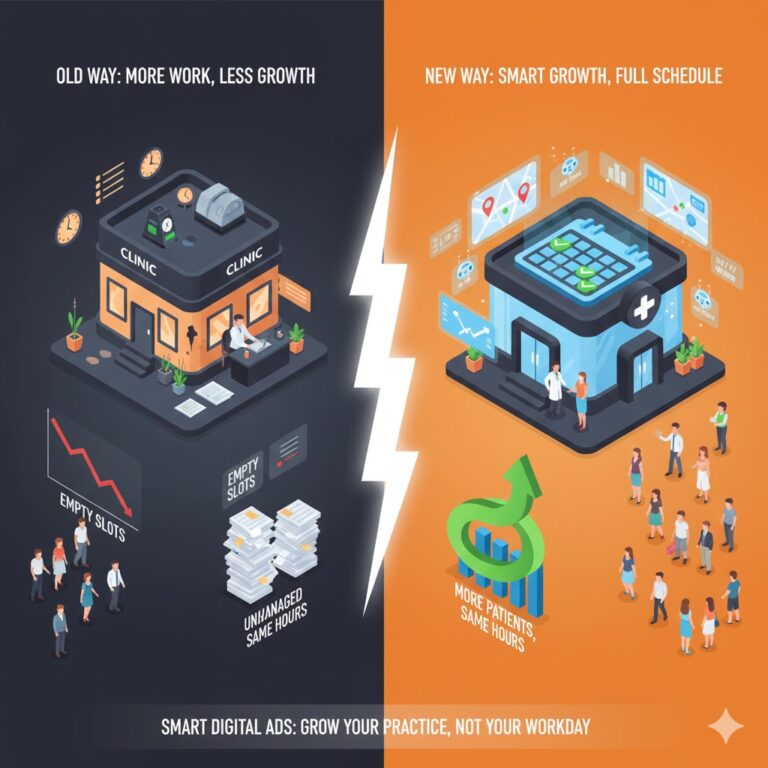
But your appointment book is not. Some mornings see only three or four patients. Afternoon slots stay empty. You finish early some days not because you want rest, but because nobody booked. This gap between your available time and actual bookings costs you money every single month.
The problem is not your skills or your care. The problem is that people do not know you have time for them. They do not know you exist. They search online and find other doctors who show up in ads. Those doctors fill their schedules while you wait for the phone to ring.
Online advertising solves this problem without demanding more of your time. You set up your ads once. They run automatically every day. People see your ad when they search for help. They click. They call. They book. All of this happens while you see your current patients or even while you sleep.
Think about it this way. Your clinic hours are fixed. You have 40 appointment slots each week. Right now you fill maybe 25 of them. Those 15 empty slots represent lost income and wasted time. Digital ads target people who need your exact services in your exact area. They turn those empty slots into booked appointments.
A general physician in Nagpur faced this same situation last year. He worked six days a week but saw only 12 to 15 patients daily. His mornings stayed busy but afternoons felt slow. He started running Google Ads targeting people searching for fever treatment, diabetes care, and health checkups in his locality.
Within three weeks, his afternoon slots started filling up. By the second month, he was seeing 25 patients daily. His working hours stayed the same. He did not hire extra staff or extend his clinic timings. The ads brought the right patients at the right time. His income went up by 45 percent without any extra effort from his side.
This is what smart advertising does. It works as your 24 hour marketing team. When someone in your area searches for a doctor at 11 PM, your ad appears. They save your number. They call you the next morning. You did nothing except set up the ad once and let it run.
Another pediatrician in Chandigarh had a different challenge. She had good patient flow during vaccination months but slow periods during other times. She used Facebook Ads to promote child health checkups and growth monitoring services. These ads ran to parents in her neighborhood with children under five years old.
The results came fast. Parents who did not know about her clinic started calling. Her slow weeks became busy weeks. She filled morning slots that used to stay empty. Her monthly patient count increased from 80 to 130 without any change in her schedule or staff.
Digital ads are also smart about timing. You can set them to run only when your clinic is open. You can pause them when you go on vacation. You control everything from your phone. No need to sit and manage campaigns all day. Spend 10 minutes a week checking results and your ads keep bringing patients.
The best part is you get the right kind of patients. Your ads can target specific problems you treat best. If you specialize in joint pain, your ads reach people searching for knee treatment or back pain relief. If you run a skin clinic, your ads reach people looking for acne treatment or hair fall solutions. This targeting means less time wasted on patients outside your expertise.
Compare this to old methods of building a practice. Word of mouth takes years. Newspaper ads reach everyone but convert very few. Pamphlets get thrown away. None of these methods let you control who sees your message or when they see it. Digital ads give you that control and save you time in the process.
Your time is valuable. Every hour you spend seeing patients creates income and builds your reputation. Every empty hour is a missed opportunity. Online advertising makes sure those opportunities do not go to waste. It fills your schedule with people who need your help and are ready to pay for it.
You do not need to become a marketing expert. You do not need to spend hours learning Facebook or Google. Good digital marketing agencies handle everything for you. You tell them your goals. They create ads, run campaigns, and send you reports.
5.) Real Numbers That Prove Small Spending Brings Big Returns
How a Few Thousand Rupees Creates Steady Patient Flow
Many doctors hesitate to spend on ads because they worry about cost. They think online advertising needs lakhs of rupees each month. They imagine big budgets that only large hospitals can afford. This fear keeps them stuck while their competitors move ahead with small, smart investments.
The truth is different. You do not need a huge budget to see real results. Small monthly spending of 5000 to 10000 rupees can bring 10 to 20 new patients. Those patients spend an average of 1000 to 2000 rupees per visit. Your return covers your ad cost many times over.
Let me show you real examples with real numbers from clinics across India. These are not made up stories or best case scenarios. These are actual results from doctors who started small and grew steadily.
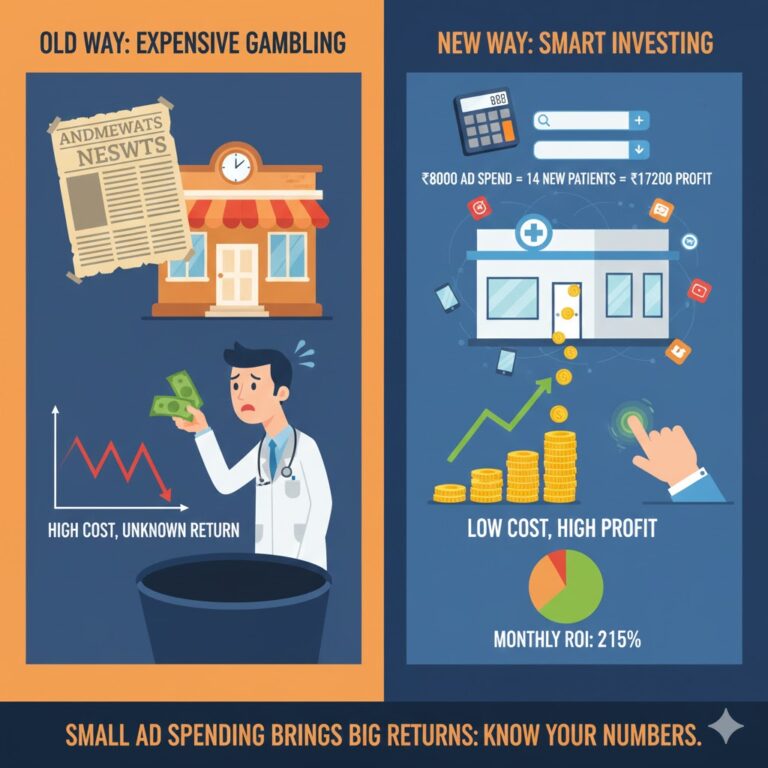
A dental clinic in Surat spent 8000 rupees on Google Ads in their first month. They targeted people searching for tooth pain, dental checkup, and teeth cleaning in Surat. The ads brought 14 new patients. Each patient spent an average of 1800 rupees on their first visit. Total revenue from those ads was 25200 rupees. After subtracting the 8000 rupees ad cost, they made 17200 rupees profit. That is more than double their investment.
They continued running ads with the same budget for six months. The numbers got better each month because they learned what worked. By month six, the same 8000 rupees brought 22 new patients. Their return on investment kept growing without increasing spending.
Another example comes from an orthopedic clinic in Bhopal. The doctor spent 6000 rupees monthly on Facebook Ads targeting people over 40 years old in his area. The ads focused on knee pain and joint problems. In three months, these ads brought 31 new patients. His average treatment cost per patient was 3500 rupees. Total revenue was 108500 rupees. Total ad spend for three months was 18000 rupees. Net profit was 90500 rupees.
These numbers show something important. You do not need to spend big to see results. What matters is spending smartly. The right message to the right people at the right time brings patients no matter how small your budget is.
A skin clinic in Kochi started with only 4000 rupees per month on Instagram Ads. They showed before and after photos of acne treatment and pigmentation removal. Their target was women aged 20 to 35 in Kochi. The first month brought eight new patients. The second month brought 12. By the fourth month, they were getting 18 new patients daily from the same 4000 rupee budget.
This growth happened because digital ads learn and improve. The platforms track which images, words, and audiences respond best. Over time, your ads get better at finding people who actually book appointments. Your cost per patient goes down while your patient count goes up.
Now compare this to traditional advertising. A quarter page newspaper ad costs 8000 to 15000 rupees for one day. You cannot track how many people called because of that ad. You cannot target only people who need your services. You pay for everyone who sees the paper, even those who will never visit a doctor.
Digital ads cost less and perform better. A 10000 rupee monthly budget on Google or Facebook reaches thousands of people. You pay only when someone clicks your ad. You track every call and booking. You know exactly how many patients came from your ads and how much they spent. This clarity helps you make better decisions about where to invest.
Research from healthcare marketing agencies shows that clinics spend between 5000 to 15000 rupees monthly on digital ads. And see an average return of 30 to 50%. This means every rupee spent brings back three to five rupees in revenue. Few investments in your clinic give returns this good.
A homeopathy clinic in Pune tracked their numbers carefully for one year. They spent 7000 rupees every month on a mix of Google and Facebook Ads. Total annual spending was 84000 rupees. These ads brought 187 new patients over the year. Average spending per patient was 1200 rupees. Total revenue from these new patients was 224400 rupees. After removing ad costs, their profit was 140400 rupees.
That profit paid for new equipment, staff bonuses, and clinic improvements. All of this came from a small monthly investment that ran automatically in the background. The doctor did not work extra hours or see more patients than before. The ads filled existing empty slots with paying patients.
The key lesson here is to start small and stay consistent. Do not wait until you have a big budget. Start with whatever you can afford, even if it is 3000 or 4000 rupees. Run ads for three months without stopping. Track your numbers. See what works. Increase your budget only when you see clear results.
Many doctors make the mistake of running ads for two weeks, seeing slow results, and stopping. Digital advertising needs time to learn and optimize. The first month sets things up. The second month improves performance. By the third month, you see the real power of consistent advertising.
Your clinic deserves a full schedule. Your expertise deserves to reach more people. Small ad spending makes both happen without stressing your budget. Start this month with whatever amount feels comfortable. Track your results. Watch your appointment book fill up. That is how modern clinics grow in 2025.
6.) Let Your Clinic Be Seen Where It Matters
Show Up When Patients Need You Most
Every day, thousands of people in your city open their phones and search for help. They type words like “doctor near me” or “clinic open now” or “pediatrician in my area.” These are real people with real health concerns. They need a doctor right now. The question is simple. Will they find you or will they find someone else?
When you do not advertise online, you become invisible to these searches. Your clinic might be two streets away from someone searching desperately for help. But if you do not show up in their search results, they will never know you exist. They will click on the first clinic they see. They will book an appointment there. You lose a patient you could have helped.
Google search data from India shows that health related searches have grown by 80 percent in the last three years. People no longer ask neighbors for doctor recommendations. They ask Google. They ask Facebook groups. They check online reviews before they visit any clinic. This shift is not temporary. This is how patients find healthcare now.
Think about your own behavior when you need something. You search online first. You read reviews. You check photos. You look at the clinic website. You want to feel confident before you spend time and money. Your patients do the same thing when they look for medical care.
Online advertising puts you exactly where these searches happen. When someone types “best pediatrician near me,” your Google Ad can appear right at the top. When someone asks their Facebook community about skin doctors, your sponsored post can show up in their feed. You meet patients at the exact moment they decide to find help.
This is about being visible and available. Your clinic offers good care. Your staff treats patients well. But none of that matters if people cannot find you when they need you. Online ads solve that problem by putting your clinic in front of people looking for your services.
A general physician in Lucknow started running Google Ads six months ago. Before ads, he saw 40 patients each week. Most came from old connections or walk-ins. After starting ads, his weekly patient count went up to 75. The new patients came from online searches. They found him when they needed help. His clinic location did not change. His services did not change. His visibility changed.
Another clinic in Bhopal focused on local SEO and Facebook ads together. They made sure their Google Business Profile was complete and updated. They ran small ads showing their services to people within 5 kilometers. Within three months, they ranked in the top three results for “clinic near me” searches in their area. Their appointment bookings doubled without any other changes to their practice.
The power of online advertising is that it brings the right patients to you. You do not waste time on people who are not interested. Your ads target people searching for your specific services in your specific location. A dialectologist gets inquiries about diabetes management. A physiotherapist gets calls about pain relief and mobility. Your ads work like a magnet that attracts the patients you can actually help.
Location targeting makes this even more effective. You can set your ads to show only to people within 3 to 5 kilometers of your clinic. This means you do not waste money reaching people too far away to visit. Every rupee you spend goes toward reaching local patients who can actually book and come for appointments.
Online advertising also helps you stand out from bigger hospitals. Large hospitals have brand names and big budgets. But they cannot offer the personal care and quick appointments that small clinics provide. Your ads can highlight these advantages. You can mention same day appointments, personal attention, and affordable consultation fees. These messages attract patients who value care over brand names.
Timing matters too. Your ads can run 24 hours a day, 7 days a week. Someone might search for a dermatologist at 11 PM because they noticed a serious skin change. Your ad appears. They save your number. They call you first thing in the morning. That patient came to you because you were visible when they needed help, even at odd hours.
The best part is that you control everything. You decide your budget. You choose which services to promote. You target the exact neighborhood you want to reach. You can start small with 5000 rupees a month and scale up as you see results. Online advertising adapts to your needs and grows with your practice.
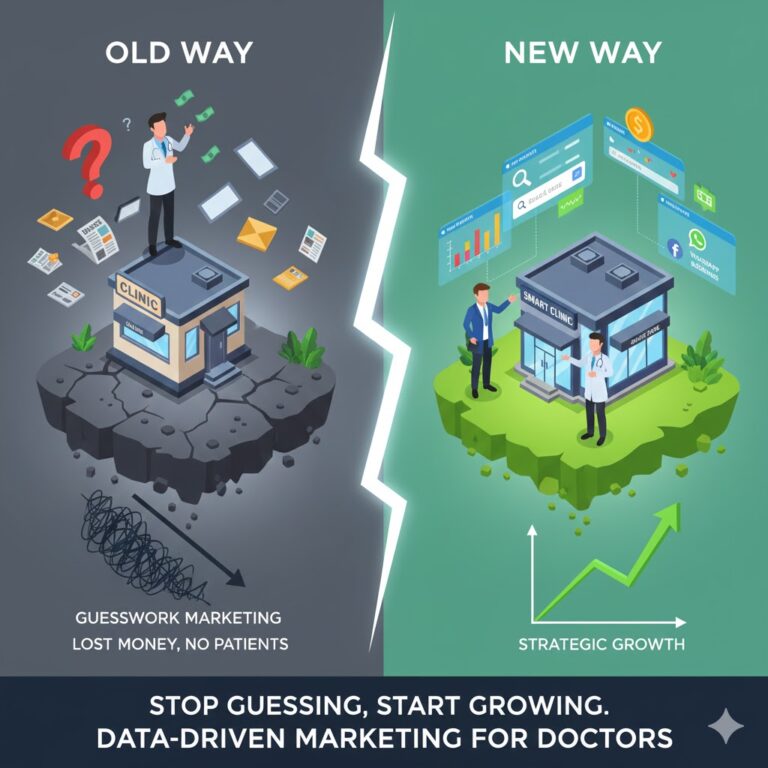
7.) Stop Guessing, Start Growing
Know Exactly What Brings Patients to Your Door
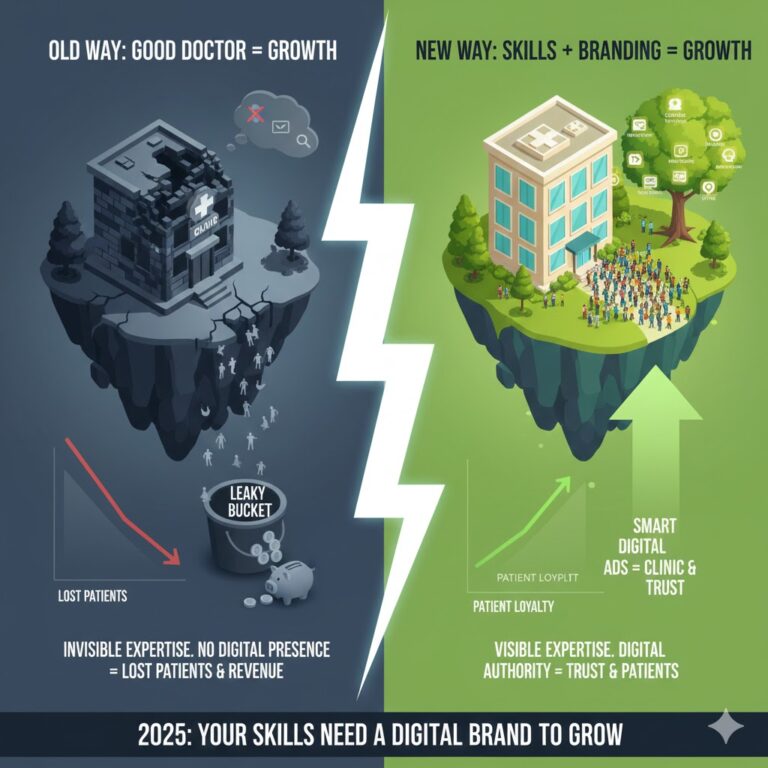
For years, clinic marketing was a guessing game. You put an ad in the local newspaper. You printed flyers for the neighborhood. You sponsored a health camp. Some patients came. You never knew which effort actually worked. You spent money and hoped for the best.
Online advertising removes all that guesswork. Every click, every call, and every booking can be tracked and measured. You know exactly which ad brought which patient. You see what works and what does not. That knowledge transforms your marketing from gambling to strategy.
When you run Google Ads, you see how many people searched for your keywords. You see how many clicked your ad. You see how many called your clinic. You know your cost per click and cost per patient. All these numbers appear in simple dashboards that anyone can understand. No marketing degree needed.
Facebook and Instagram ads give you similar insights. You see how many people saw your ad. You know how many clicked through to your website or WhatsApp. You track which image or video performed best. This data tells you what your potential patients respond to and what they ignore.
One orthopedic clinic in Nagpur ran two different Facebook ads at the same time. The first ad showed their modern equipment and facilities. The second ad featured a short patient testimonial video. Both ads ran to the same audience with the same budget. The testimonial ad brought 4 times more inquiries than the facilities ad. That information changed their entire marketing approach. They now focus on patient stories because the data proved it works better.
This is the power of tracking and testing. You do not rely on opinions or assumptions. You rely on real numbers from real campaigns. When something works, you do more of it. When something fails, you stop wasting money on it. Your marketing gets smarter every month because you learn from actual results.
Tracking also shows you patient behavior patterns. You might discover that most appointment bookings happen on Monday mornings or Thursday evenings. You can increase your ad budget during those times to catch more patients when they are ready to book. You might find that ads about specific treatments bring more calls than general health checkup ads. You shift your focus accordingly.
A pediatric clinic in Surat tracked their campaigns for six months. They found that Google Ads brought patients at an average cost of 450 rupees per booking. Their Facebook ads cost 280 rupees per booking. Both worked, but Facebook was more cost effective for them. They adjusted their budget to spend more on Facebook and less on Google. Their total patient acquisition cost dropped by 35% while their booking numbers stayed the same.
This kind of optimization is impossible without tracking. You need numbers to make smart decisions. Online advertising gives you those numbers clearly and consistently. You become the boss of your marketing budget instead of being controlled by it.
Growing your clinic becomes a clear process instead of a mystery. You set goals based on data. You want 20 new patients this month. You check your current cost per patient. You calculate how much budget you need. You run the campaigns. You track the results. You adjust based on what you learn. That cycle repeats and improves each month.
Compare this to old marketing methods. You never knew if your newspaper ad worked. You had no idea if your banners brought any patients. You spent money and crossed your fingers. That approach does not build a growing practice. It keeps you stuck in the same place year after year.
Online advertising also helps you plan for growth. You can see seasonal trends in your data. Maybe respiratory problems increase during winter months. You can prepare by increasing your ads for cough and cold treatments before the season hits. Maybe back pain inquiries spike during summer when people travel more. You plan your campaigns around these patterns.
The clarity that comes from tracking changes how you think about marketing. It stops being a necessary evil that drains money. It becomes an investment that brings predictable returns. You know that spending 10000 rupees will bring approximately 30 new patients based on your past data. That confidence helps you invest more in marketing because you trust the process.
Every month you track your campaigns, you get better at understanding your patients. You learn which messages they respond to. You discover which services they need most. You find out what questions they ask before booking. This knowledge makes your entire practice better, not only your marketing.
So stop guessing about what works. Start growing with clear data and smart decisions. Online advertising shows you the truth about your marketing. It tells you where to spend, when to spend, and how much to spend. That clarity is worth more than any single campaign because it compounds over time. Your marketing gets better every month. Your clinic grows stronger every quarter. That is what happens when you stop guessing and start growing with real numbers.
8.) Every Month You Wait, You Lose Patients
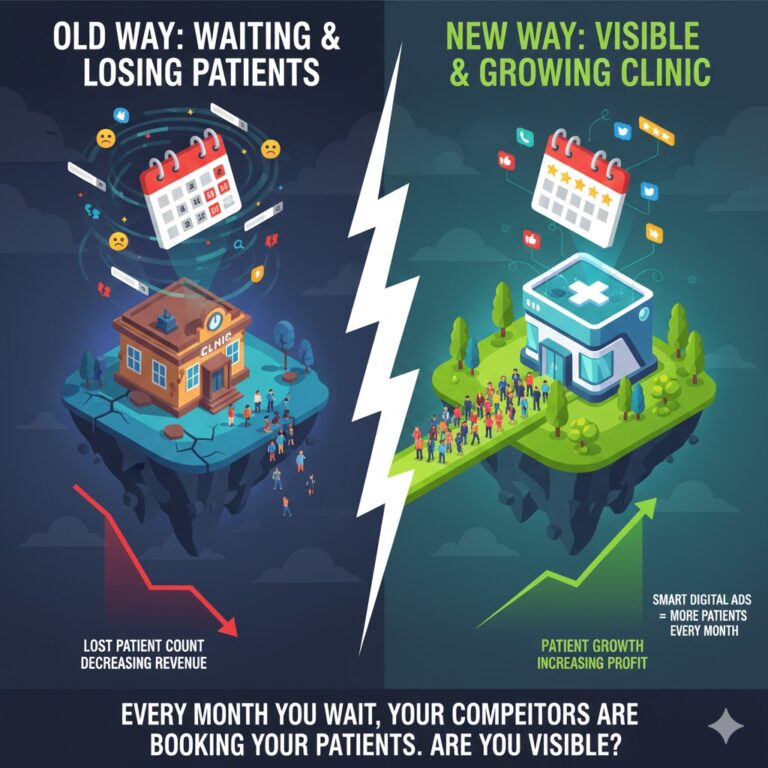
While you stay offline, other doctors are booking your patients
Time moves fast in healthcare marketing. Every month you wait means more patients go to other clinics. Your competitors are not sitting idle. They are running ads on Google and Facebook right now. They appear first when someone searches for medical help. You lose because you are not there.
Think about this. A patient needs a doctor today. They open their phone and search. Three clinics show up with good reviews and clear information. Your name is missing. Who do you think they will call? The answer is simple. They will pick from what they can see.
Studies from India show that 78 out of 100 patients search online before visiting a doctor. They read reviews. They check clinic photos. They look at timings and services. If your clinic is not visible, you do not exist in their mind. That patient books an appointment somewhere else. You never even knew they were looking.
Your competition is not waiting. They invest small amounts in digital ads each month. These ads bring them 15 to 25 new patients regularly. Meanwhile, you hope for walk-ins and references. The gap between you and them grows wider every month.
Delayed action costs you more than money. It costs you reputation. When patients see other doctors online frequently, those doctors become familiar names. Your competitors build recognition while you remain unknown. By the time you decide to start, they already have loyal patients who could have been yours.
The numbers tell a clear story. Clinics that started online advertising two years ago now see 40% more patients than before. Those who waited are now struggling to catch up. The early advantage matters because patients remember the first name they see.
You might think your current patients are enough. But what happens when they move to another city? What happens when their needs change? New patients keep your practice growing and healthy. Without a steady flow, you face empty slots and income drops.
Starting late means you have to work harder. You need bigger budgets to compete with clinics that already have online presence. Your competitors have reviews, social proof, and regular visibility. You will spend more money trying to match what they built slowly over time.
Every single month counts. December passes. January comes. Your competitors add 20 new patients. You add 3 from walk-ins. This pattern repeats. After one year, the difference becomes huge. They grow while you stay the same or even shrink.
Patients also judge you by your online activity. A clinic with no website or social media looks outdated. People wonder if you are still practicing. They question if you keep up with modern medicine. Your silence online sends the wrong message about your practice.
The healthcare market in India is changing fast. More doctors open clinics every year. More patients use smartphones to find medical help. If you are not part of this digital shift, you become invisible. Invisible clinics do not grow. They slowly fade away.
Your delay helps your competition more than you think. When you finally start advertising, patients will compare you with doctors they already know online. Breaking through becomes harder. First impressions matter, and your competitors already made theirs.
This is not about being fancy or technical. This is about basic visibility. Patients cannot choose you if they cannot find you. Every month without online presence is a month of lost opportunities. These are patients who needed your expertise but never got the chance to meet you.
You worked hard to become a doctor. You spent years learning and training. But all that knowledge stays limited if people do not know you exist. Online advertising is simply telling people you are here and ready to help them.
The choice is yours. Keep waiting and watch others grow. Or take action now and start getting the patients you deserve. Each month you wait makes the next month harder. The best time to start was last year. The second best time is today.
9.) Build Trust Before Patients Even Walk In
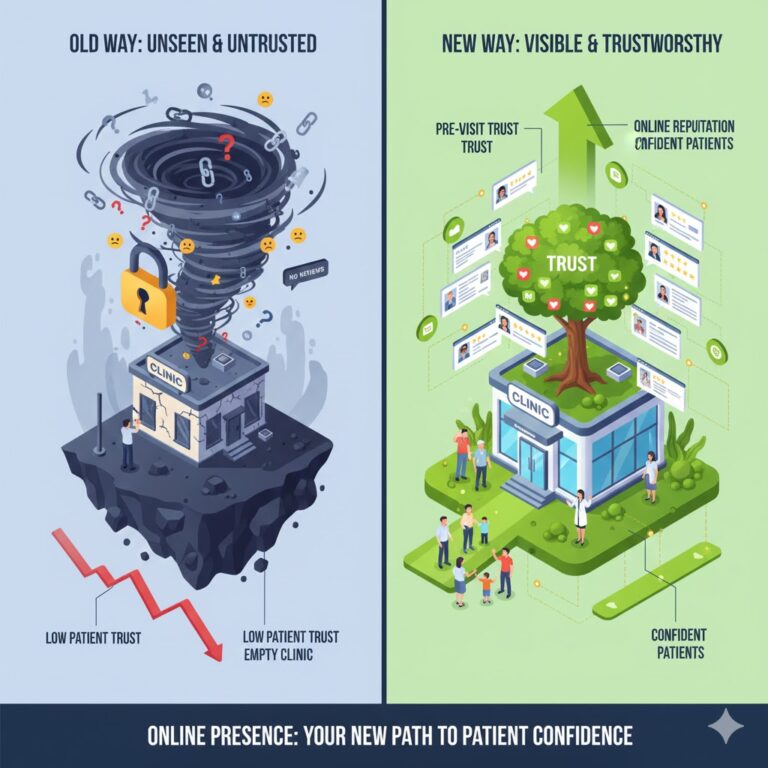
Your online presence tells patients you are worth their time
Trust is everything in healthcare. Patients want to feel safe before they visit you. Your online presence creates that safety. When people see your clinic online, they start building confidence. They read about you. They see your qualifications. They check what other patients say. All this happens before they call for an appointment.
A strong digital presence works like a recommendation letter. Patients feel they already know you a bit. This makes them comfortable reaching out. They believe you are a real doctor who cares about helping people. Without online visibility, you are a complete stranger. Strangers feel risky, especially for health matters.
Research from healthcare marketing shows an important fact. Patients who find you online are 60% more likely to keep their first appointment. They already decided you are trustworthy. They saw your credentials. They read positive reviews from other patients. This pre-visit trust reduces cancellations and no-shows significantly.
Your website acts as your digital clinic. Patients visit it like they visit your physical location. They notice if it looks clean and professional. They check if the information is clear and helpful. A good website tells them you pay attention to details. This quality reflects on how you might treat them as patients.
Social media presence adds another layer of trust. When you post health tips daily, patients see you as an expert. You become the doctor who educates and cares. They follow your page. They read your posts. They feel connected even before meeting you. This connection turns into loyalty later.
Online reviews matter more than you think. About 85 out of 100 patients read reviews before choosing a doctor. Good reviews work like personal recommendations. They tell new patients that you are reliable and skilled. Each positive review adds to your credibility. Patients think if others trust you, they can too.
Photos and videos on your digital platforms help build familiarity. Patients see your clinic setup. They see your staff. They might see you explaining a health topic. These visuals make you feel approachable. People prefer doctors who seem friendly and open. Your online content shows this side of your personality.
Responding to patient queries online shows you care. When someone asks a question on your Facebook page, your quick reply matters. It tells them you are attentive and responsive. This small interaction builds trust. They think if you reply online, you will definitely listen during consultations.
Your online presence also shows you are current and updated. Patients want doctors who know modern treatments. An active website and social media suggest you stay informed. You appear as someone who grows with medical advances. This perception matters for educated patients who research their options.
Having clear information online reduces patient anxiety. They know your timings before calling. They see what services you offer. They check your location and parking details. This clarity makes them feel prepared. Prepared patients are confident patients. They walk in knowing what to expect.
Online visibility helps you stand out from others. When patients compare three doctors, the one with better online presence usually wins. You look more professional and organized. Your digital footprint shows you invest in patient experience. This investment signals quality care.
Trust built online converts into real appointments faster. Patients who trust you online do not hesitate to book. They do not shop around much. They already made their decision. Your job becomes easier because half the convincing happened through your digital presence before any phone call.
Think of your online presence as your reputation made visible. Everything you post, every review you get, every piece of information you share builds this reputation. Over time, this creates a strong image in patient minds. They see you as reliable, skilled, and easy to reach.
Patients today expect doctors to be online. Not having presence makes them suspicious. They wonder why you are hiding. They question if something is wrong. Your visibility removes these doubts. It shows you are confident and open about your practice.
The emotional comfort patients feel from your online presence cannot be measured easily. But it exists and it matters. They sleep better knowing they chose a doctor they could research. They feel smart about their decision. This feeling starts their healing journey on a positive note.
Building trust online does not need fancy content. Simple, honest communication works best. Share real information. Post genuine health advice. Respond with care. Be consistent. These basics create powerful trust that brings patients to your door ready to believe in your expertise.
Ready to See the Difference?
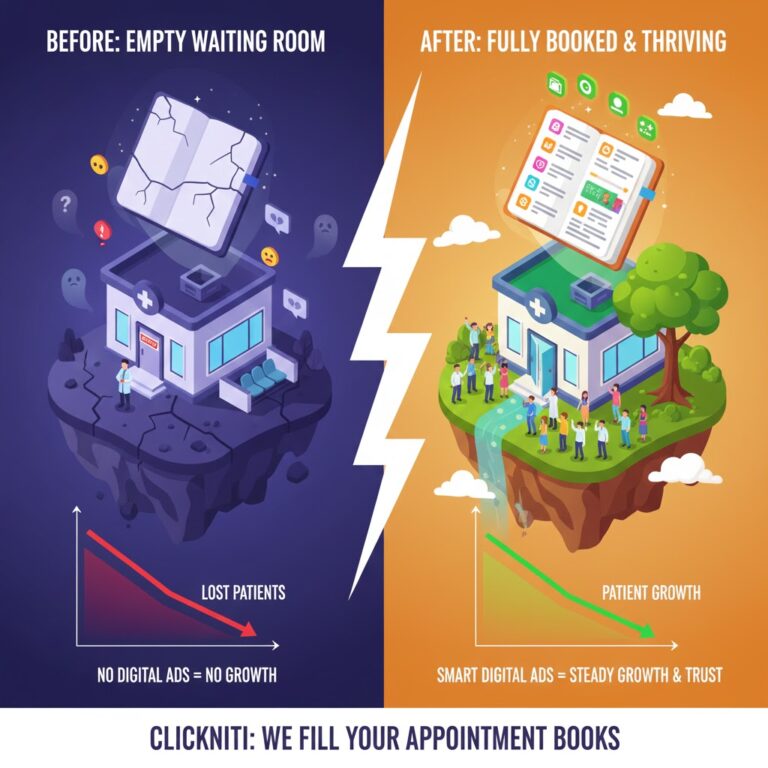
We Help Doctors Fill Their Appointment Books Through Smart Online Ads
You became a doctor to help people get better. You did not study for years to become a marketing expert. That is where we come in to support your practice.
Clickniti Digital works with doctors across India who want more patients. We understand how busy your schedule is every single day. We know you cannot spend hours learning about online ads. That is our job.
We create ads that show up when people search for doctors in your area. These ads appear on Google when someone types words like best doctor near me or clinic for back pain. Your practice name shows up at the top of their screen. They click on it and book an appointment with you.
Our team tracks every single rupee you spend on these ads. We show you how many people saw your ad each week. We tell you how many clicked on it to learn more. Most importantly, we count how many new patients came to your clinic because of the ad.
You get a simple report every month that anyone can understand. No confusing charts or difficult words. You see clear numbers that tell you what is working. If something is not bringing results, we change it right away.
Many doctors tell us they were scared to try online ads before. They thought it would be too expensive or too complicated. After working with us for three months, they see their waiting room getting busier. New patients mention they found the clinic through a Google search or Facebook ad.
We do not make big claims that sound too good to be true. We show you real numbers from real campaigns. You decide if the results make sense for your practice. No pressure, no tricks, no hidden costs.
Your competitors are already doing this. They are getting new patients every week through online ads. You can do the same thing starting today. The difference is that you will have a team that understands healthcare and respects your time.
We handle everything from creating the ads to answering basic questions from potential patients online. You focus on treating people who come through your door. We make sure more people walk through that door every month.
The cost of advertising online is much less than you think. Some doctors spend only ten thousand rupees per month and get twenty new patients. That investment pays for itself when those patients come back for follow up visits.
Getting started takes one phone call. We listen to what you want for your practice. We explain how online ads can help you reach those goals. Then we create a simple plan that fits your budget. No long contracts or complicated agreements.
Your practice deserves to grow. Your patients deserve to find you when they need help. Let us connect the two through smart digital marketing that actually works.
FAQs-
Because your patients are already searching online every single day. Online ads help them find you instead of another clinic. You don’t need to be a marketer, that’s what we’re here for.
Word of mouth is great, but it’s slow. Online ads reach hundreds of people at once, people who are actively looking for your specialty right now.
Most clinics start seeing inquiries within the first few weeks. It depends on your location and services, but digital ads are much faster than traditional marketing.
Absolutely. We take care of everything from running the ads to tracking your results, so you can focus fully on treating your patients.
That’s common. The issue usually isn’t the ads, it’s how they were set up. We design campaigns that speak directly to your ideal patients and track every result clearly.
Yes. We use location based targeting so your ads show only to people near your clinic who are searching for your services.
It helps, but it’s not a must. We can run ads that go to your WhatsApp, phone number, or Google profile, whatever’s easiest for you.
Yes, as long as it’s done ethically and follows medical ad guidelines. We make sure every ad is accurate, respectful, and within industry rules.