The Digital Shift in Indian Healthcare: What Doctors Must Do Now
The way people find doctors has changed completely in the last few years. A patient wakes up with chest pain or their child has a fever. Ten years ago, they would call a neighbor or ask a family member. Today, they pick up their phone and start typing on Google. They look for clinics nearby, read what other patients say, and check if the doctor looks good online.
Table of Contents
ToggleThis change is happening fast in India. More than 700 million Indians are online now. That number keeps growing every month. People in cities and small towns both use their phones to search for doctors. They want quick answers, clear information, and a doctor they can trust before they even step inside a clinic.
But here is the problem. Many good doctors are still not online. They have years of experience and they care about their patients deeply. But when someone searches for help, these doctors do not appear. The patient finds another clinic instead. The doctor loses that patient without even knowing about it.
This is not about fancy websites or big budgets. This is about being visible where your patients are looking. It is about making sure they can find you when they need help. The internet is now the front door of your clinic. If that door is closed, patients walk past without stopping.
Around the world, healthcare marketing has become simple and smart. Doctors in other countries use basic digital tools to stay connected with patients. They send appointment reminders through messages. They answer questions online. They share helpful health tips that people actually want to read. These small steps help them grow their practice every single day.
Indian doctors need to understand this shift now. This is not a trend that will pass. This is the new normal. Patients expect you to be online. They want to see your profile, read your reviews, and book appointments without making phone calls. If you delay this, you will keep losing patients to clinics that are already online.
The good news is that going digital does not have to be hard. You do not need to become a technology expert overnight. You need to take the right steps in the right order. Start with a simple online presence. Keep it updated. Respond to patients when they reach out. These basic actions can change everything for your clinic.
This guide will show you what is happening in healthcare marketing today. You will see how patients behave online and what they expect from doctors. You will learn simple steps that clinics around the world use to grow. And you will understand what you must do right now to stay visible and relevant in this digital age.
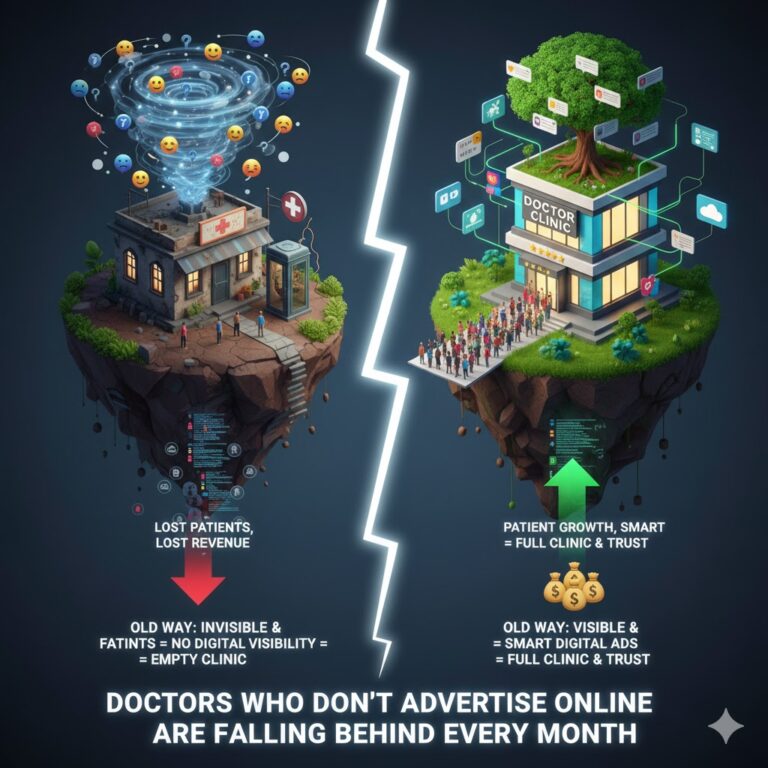
a. The Way Patients Choose Doctors Has Changed
Ten years ago, a patient would ask their neighbor about a good doctor. Today, they open their phone and type symptoms into Google. Before anyone calls your clinic, they have already checked your ratings. They have read what other patients said about you. They have looked at photos of your clinic on Google Maps.
This is how people decide now. Your medical degree still matters, but so does your online presence. A patient sitting at home can compare five doctors in ten minutes. They will pick the one who looks more trustworthy online. Not always the one with more experience.
77% of Indian patients search online before booking an appointment. That number was only 40% five years ago. The shift is real and fast. Patients want to see your qualifications, your clinic timings, and what others think about you. All this before they dial your number.
Your first impression does not happen when they enter your clinic anymore. It happens when they see your name on a search result. If your listing looks empty or outdated, they move to the next doctor. If you have no reviews, they think no one visits you. If your phone number is wrong, they get frustrated and pick someone else.
Young mothers search for pediatricians on their phones while their child is crying. Diabetic patients look for endocrinologists during lunch breaks at work. Even senior citizens now ask their children to find doctors online. Everyone has moved to digital. The question is, have you?
This change is not coming. It is already here. Patients expect doctors to be online like they expect clean clinics. If you are still depending only on word of mouth, you are losing patients every single day. Not because you are a bad doctor. But because patients cannot find you when they need you.
You may think your loyal patients will always come back. That is true. But what about new patients? What about families who moved to your city? What about someone whose regular doctor retired? They all start their search online. If your name does not appear, you do not exist in their world.
The way patients choose doctors has changed forever. Your skills in the examination room are still your strength. But now, your visibility on the screen decides who walks through your door. Being a great doctor is not enough anymore. You also need to be a doctor people can find.
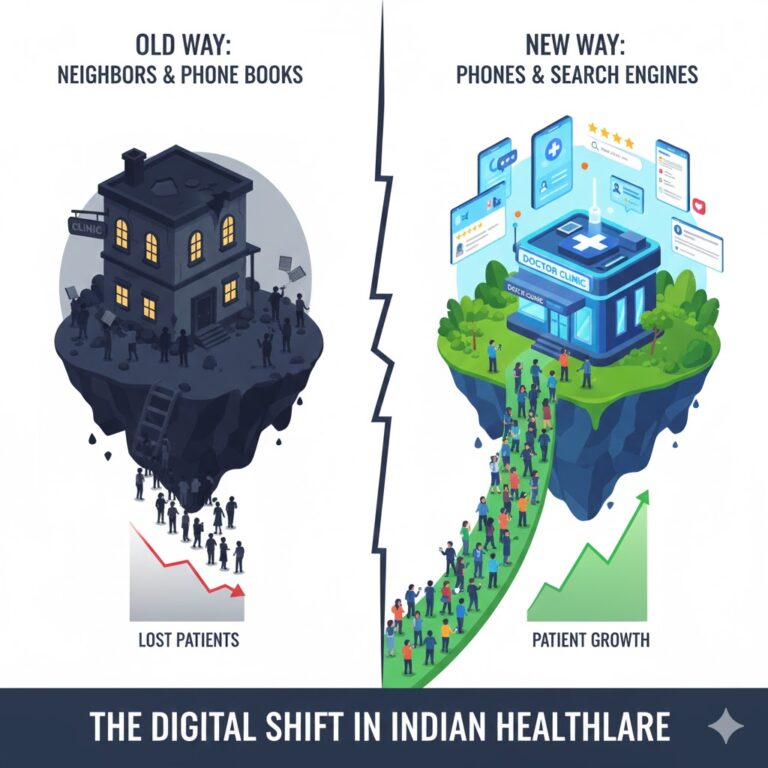
b. From Word of Mouth to Click of Mouse
Recommendations now travel through Google reviews, WhatsApp, and social media, not only friends. Remember when patients would ask their neighbors about a good doctor? Those days are fading fast. The way people share and find medical advice has completely changed in India.
Today, a patient woke up with a health problem. The first thing they do is pick up their phone. They type their symptoms on Google. They ask for doctor names in their housing society WhatsApp group. They check Facebook pages. They read reviews on Practo or Google Maps.
Within minutes, they have five doctor names. They look at star ratings. They read what other patients said. They check clinic photos. They see consultation fees. All this happens before they even make a phone call.
This is the new reality of patient behavior in Indian cities and towns. Word of mouth has not died. It has moved online. Your reputation now travels faster and farther than ever before.
A happy patient leaves a five star review. Fifty people in their area read it. A few share it in their family groups. Suddenly, your clinic gets calls from people you have never met. This is how modern recommendations work.
But there is a flip side too. One bad experience shared online can stop ten new patients from visiting you. A single negative review stays visible for months. People trust online opinions as much as they trust their own relatives.
WhatsApp groups have become the new word of mouth hubs. A mother asks for a pediatrician. Three people reply with names and phone numbers. Someone shares a Google Maps link. Another person forwards your clinic pamphlet they saved months ago. Your name spreads in seconds.
Social media adds another layer. Patients follow health pages. They watch short videos about treatments. They join community groups where people discuss their doctor visits. If your clinic is not part of these conversations, you are losing patients to competitors who are.
Healthcare survey data shows that over 70% of Indian patients now search online before booking an appointment. In metro cities, this number crosses 85 percent. Even in smaller towns, smartphone users rely heavily on digital recommendations.
The younger generation does not ask parents for doctor recommendations anymore. They trust Google ratings more than family advice. Parents themselves are learning to search online. Age is no longer a barrier to digital health searches.
This shift happened over the past five years. The pandemic made it explode. Lockdowns forced everyone to use phones for everything. Telemedicine became normal. Patients got comfortable finding doctors through apps and websites. That comfort has stayed even after lockdowns ended.
Your clinic might be excellent. You might have 20 years of experience. But if someone searches for your specialty and finds no trace of you online. They will pick another doctor. The one with good reviews and clear information wins.
Patients also compare clinics now. They check timing, services, and fees across many doctors. They want transparency before they visit. They want to feel confident about their choice. Online information gives them that confidence.
Reviews are the new referrals. A detailed positive review acts like a personal recommendation. It tells the story of a patient journey. New patients imagine themselves in that story. They feel assured that you will take care of them too.
Even word of mouth has become digital. Friends send screenshots of doctor profiles. Colleagues share links to clinic websites. Relatives forward appointment booking pages. The medium has changed but the trust factor remains the same.
Ignoring this shift means losing patients every single day. Doctors who understand this change are growing their practices. Those who wait are watching their patient numbers drop slowly. The digital shift is not coming. It is already here.
Your next step is simple. Start claiming your online space. Encourage happy patients to leave reviews. Make sure your clinic shows up when someone searches for you. Join the conversation where your patients already are.
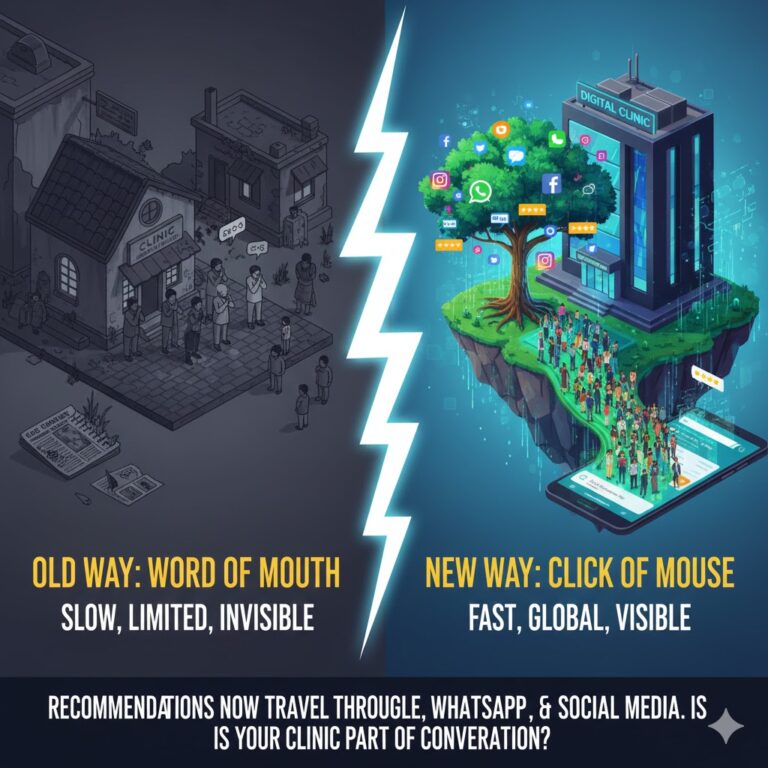
c. Why Staying Offline Means Staying Invisible
Your Expertise Matters Only If People Can Find You
Let me tell you what happens when a patient needs a doctor today. They pick up their phone. They type their problem into Google. They look at the first few names that show up. And they call one of them.
If your clinic does not appear in that search, you lose that patient. It does not matter how many years you have practiced. It does not matter how many people you have treated. That patient will never know you exist.
This is the reality now. A study from 2023 showed that 77 out of 100 patients in Indian cities search online before booking an appointment. They do not ask neighbors anymore. They do not wait for someone to suggest a name. They search, they find, and they decide in minutes.
Think about your own behavior. When you need a plumber or want to try a new restaurant, what do you do? You search online. Your patients do the same thing when they need a doctor.
Being offline today is like having your clinic in a dark alley with no signboard. People walking on the main road will never see you. They will go to the clinic that has a bright sign and easy directions.
Your competition is not sleeping. Other doctors in your area are already online. They have websites. They show up on Google Maps. Patients can see their timings and read reviews about them. When someone searches for a doctor near them, these clinics appear first.
And here is the painful part. The patient who could have been yours is now sitting in another doctor’s clinic. Not because that doctor is better than you. But because that doctor was visible when it mattered.
Let me share what happened in Pune last year. Two clinics stood only three kilometers apart. Both had experienced doctors. One clinic had 15 patients a day. The other had 45 patients a day. The difference was not the treatment quality. The busier clinic had a strong online presence. Patients could find them easily. They had good reviews. Their contact details were clear. The other clinic stayed offline and kept wondering why patients were not coming.
Being invisible online also means you miss out on younger patients. People between 25 and 40 years old almost never choose a doctor without checking online first. These patients have money. They want quality care. But they will only come to you if they can find you.
Some doctors think word of mouth still works the way it used to. Yes, recommendations still matter. But even when someone suggests your name, the patient will search for you online. They want to confirm. They want to see your clinic address. They want to check if other people also had good experiences. If they find nothing, they feel unsure. And unsure patients often choose someone else.
Your absence online also makes people doubt your credibility. Patients today expect every professional to have some online presence. When they search and find nothing about you, questions come up in their minds. Is this doctor still practicing? Is the clinic closed? Why is there no information available?
This doubt costs you patients every single day.
Another fact to consider. Google receives over 70,000 health related searches every minute in India. That means thousands of people in your city are searching for doctors right now. If you are not online, you are invisible to all of them.
The digital gap is growing fast. Five years ago, being offline was okay. Today it puts you at a serious disadvantage. In another two years, staying offline might mean your practice struggles to survive.
Your skills and experience deserve to reach the people who need them. But they can reach you only if people can find you. And today, being found means being online.
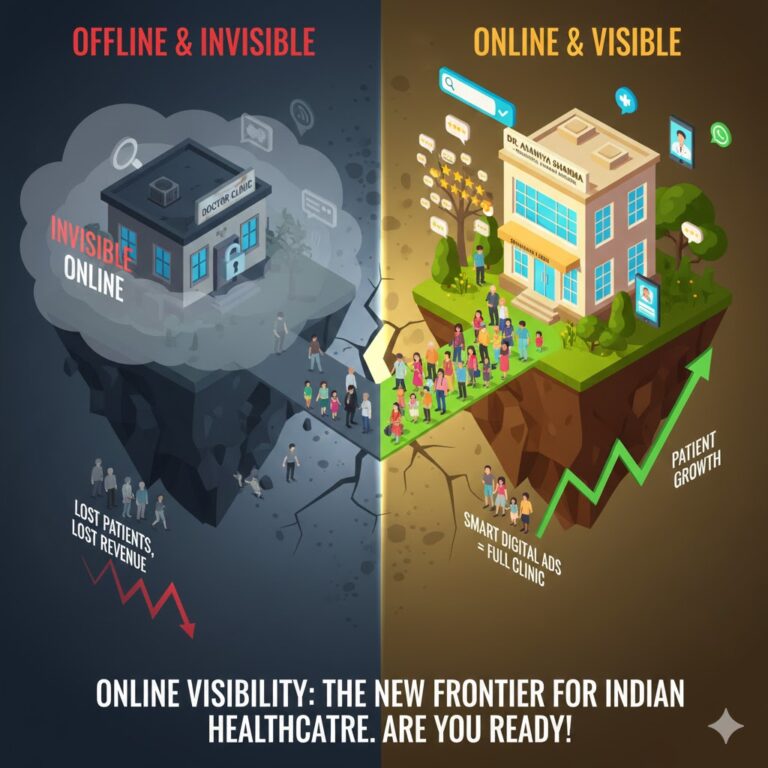
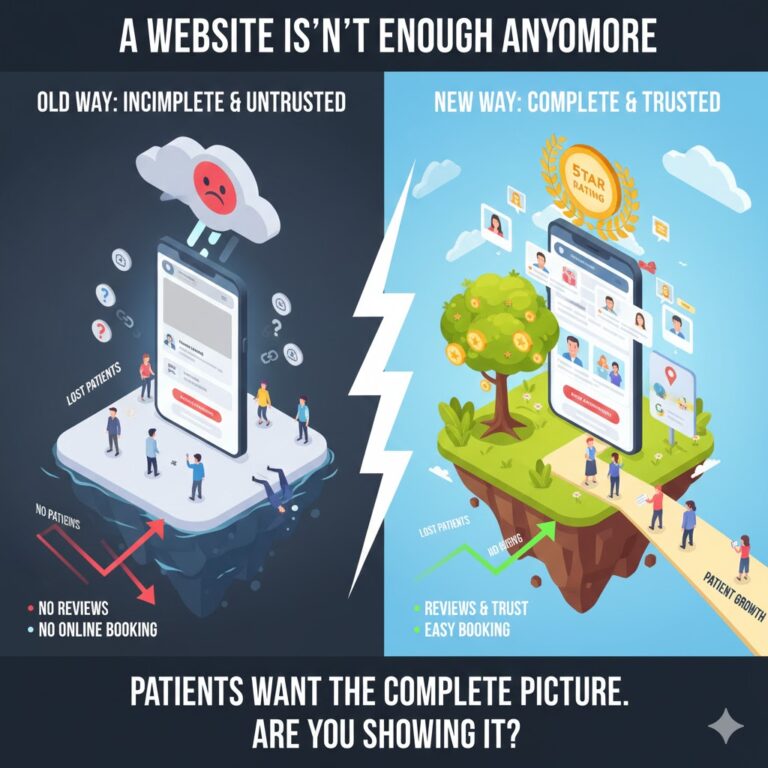
d. A Website Isn't Enough Anymore
Patients Want the Complete Picture Before They Choose You
Having a website is good. But it is not enough in 2025. Let me explain why.
A patient searches for a doctor. They find your website. They open it. The site shows your name and your qualifications. It has your clinic address. Maybe a phone number. That is all.
Now the patient has questions. What do other patients say about you? Can I book an appointment without calling? What are your exact consultation timings? Do you treat the specific condition I have? Your basic website does not answer these questions. So the patient closes your site and checks the next doctor.
This happens hundreds of times every month. Doctors lose patients not because their website is bad but because it is incomplete.
Patients today want to see everything before they make a decision. They want proof that you are the right choice. A simple website with only your contact details does not give them that confidence.
Let me tell you what patients actually look for. First, they want to read reviews. Real reviews from real patients. A 2024 survey found that 84 out of 100 patients read online reviews before choosing a doctor. They trust what other patients say more than what the doctor claims.
If your website does not show reviews or if you have no reviews anywhere online, patients feel unsure. They think maybe this doctor is new or maybe previous patients were not happy.
Second, patients want to see detailed information about you. Not only your degrees but your experience. What conditions do you treat? How long have you been practicing? Do you have any special training? These details help them feel they are making a smart choice.
Third, they want photos. Photos of you. Photos of your clinic. Photos of your team if you have one. Why does this matter? Because it makes everything feel real. Patients can imagine walking into your clinic. It builds trust before they even meet you.
Fourth, they want clear timings. Not only morning and evening. They want to know exact hours. Which days are you available? Do you take appointments on weekends? Is there a lunch break? Patients hate calling only to ask about timings.
Fifth, they want to see your exact location on a map. Not only an address in text. They want to click and see where your clinic is. How far is it from their home? Is parking available? A map solves all these questions instantly.
Sixth, and this is very important now, they want an easy way to book appointments. Calling during work hours is difficult for many patients. They want to book online. They want to choose a slot. They want confirmation. If your website does not offer this, you lose patients to doctors who do.
Some doctors believe that making patients call is better because it feels more personal. But think from the patient side. They are busy. They are unwell. They do not want to wait on hold. They do not want to explain their problem to a receptionist. They want a confirmed slot.
Online booking is not only convenient. It also reduces missed appointments. Patients who book online receive reminders. They are more likely to show up.
Now let me talk about social media. Your website should connect to your social media pages. Why? Because patients want to see you are active. They want to see that you share useful health information. They want to feel you care about educating people, not only treating them when they get sick.
A doctor in Bangalore noticed something interesting last year. His website had all his details. But his appointment requests doubled when he added links to his active Instagram and Facebook pages. Patients saw him answering questions. They saw health tips. They felt connected even before meeting him.
Another important thing is mobile friendliness. More than 80 out of 100 patients search for doctors on their phones. If your website does not work well on mobile, they will leave in seconds. The text should be easy to read. Buttons should be easy to tap. Everything should load fast.
Patients also appreciate blogs or articles on your website. Simple posts about common health problems. Prevention tips. Answers to questions patients often ask. This content does two things. It helps patients. And it shows Google that your website is useful, which makes you appear higher in search results.
Let me give you a clear picture. Imagine two doctors. Both are equally qualified. Both have good experience. Doctor A has a basic website with only contact details. Doctor B has a complete website that has the reviews, detailed profile, appointment booking, location map, and helpful articles.
A patient searches and finds both. Who do you think they will choose? Doctor B feels safer. Doctor B feels more professional. Doctor B gets the patient.
Your website is your digital clinic. It should make patients feel welcome. It should answer their questions. It should make choosing you feel like the obvious decision.
The online world moves fast. What worked two years ago does not work now. Patients expect more because other doctors are giving them more. If you stay behind, you lose.
Building a complete online presence is not about showing off. It is about making it easy for patients to trust you and choose you. And in healthcare, where trust decides everything, this matters more than you think.
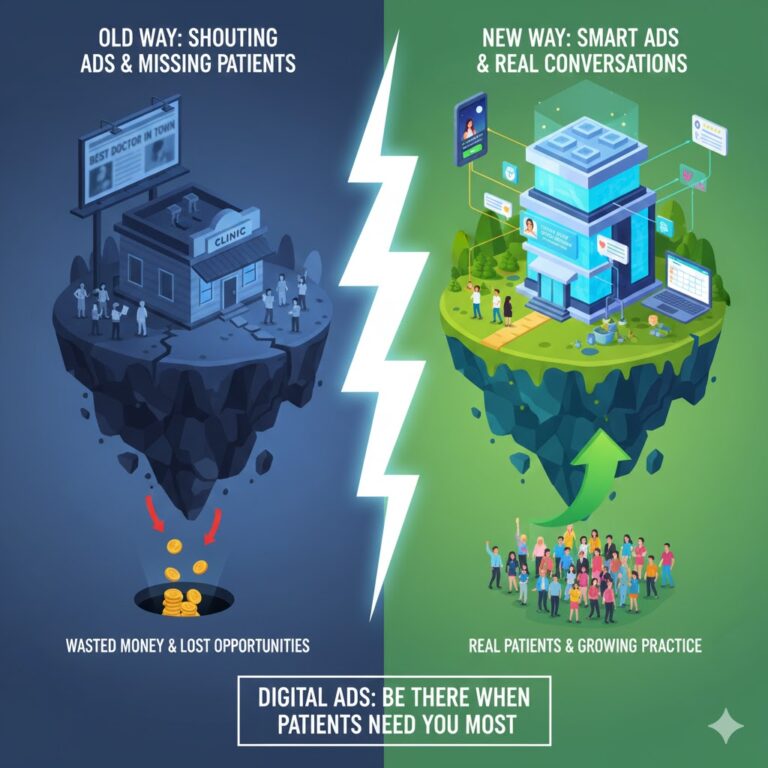
e. Ads That Work Like Real Conversations
Your clinic shows up exactly when someone needs you most
When a person types “best pediatrician near me” or “skin doctor in Kolkata” on Google, they want quick answers. They are not looking for fancy words or big promises. They want to know who can help them right now.
This is where smart online ads come into the picture. These ads work differently from old newspaper ads or banners on the road. They do not shout at people. They simply appear at the right time in front of the right person.
For example, a mother searches for a child specialist at 11 pm because her son has a fever. Your ad shows up with your clinic name, location, and a button to call or book. She feels relieved because she found you fast. That is how digital ads work today.
These ads run on Google and social media like Facebook and Instagram. You can decide who sees your ad based on their age, location, and what they search for. So your money does not get wasted on people who will never visit your clinic.
The best part is you only pay when someone clicks on your ad or calls you. You do not pay for people who only scroll past it. This makes it very affordable even for small clinics and solo doctors.
Many doctors think ads mean spending lakhs every month. That is not true anymore. You can start with as little as 5000 rupees a month and still get 20 to 30 real patient inquiries. It depends on how you set it up and who you target.
Another advantage is that you can track everything. You know how many people saw your ad, how many clicked, and how many became patients. This kind of clarity never existed with old methods like pamphlets or hoardings.
Patients also trust these ads more than before because they see reviews and ratings attached to your name. When your ad appears along with 4.5 stars and 200 reviews, people feel confident about choosing you.
Some doctors worry that running ads looks desperate or unprofessional. But that thinking is outdated now. Even top hospitals and specialists use ads to reach more people. It is not about desperation. It is about being visible where your patients are looking.
Digital ads also let you test what works and what does not. You can try two different messages and see which one gets more responses. Then you keep the better one and drop the other. This way you keep improving without guessing.
Timing plays a big role too. Ads for a general physician work well in the evening when people finish work and start feeling unwell. Ads for a dentist may work better on weekends when families plan visits together. You can schedule your ads to run only during those hours.
Location targeting is another powerful feature. If your clinic is in South Kolkata, your ad will show only to people in that area. You will not waste money showing it to someone in North Kolkata who will never travel that far.
Many doctors also use reminder ads for people who visited their website but did not book an appointment. These ads gently remind them to complete their booking. This simple step brings back many patients who would have forgotten otherwise.
The language of your ad should match the language your patients speak. If most of your patients are comfortable in Hindi or Bengali, your ad should use that language. Patients respond better when they see their own language on screen.
Video ads are becoming very popular now. A short 30 second video of you talking to the camera, explaining what you treat, works better than a text ad. People feel they know you already before they even visit. This removes a lot of hesitation.
You do not need expensive equipment to make these videos. A good phone camera and natural light are enough. Only speak clearly, smile, and be yourself. Patients trust real doctors, not actors in white coats.
Running ads is not a one time task. It needs regular monitoring and small changes based on what is working. But you do not have to do this yourself. A good digital marketing partner can handle everything while you focus on treating patients.
The biggest mistake doctors make is starting ads without a proper landing page or website. If someone clicks your ad and lands on a broken link or messy page, they leave immediately. Your ad and your website must work together smoothly.
Another common error is using medical jargon in ads. Patients do not understand terms like “idiopathic” or “prophylactic.” Use simple words like “unknown cause” or “preventive care.” Speak their language, not textbook language.
Some doctors stop ads after a month because they do not see instant results. But digital ads work like planting seeds. You need patience. Results grow over time as more people see your name and remember you when they need help.
Ads also help during slow months. If your clinic sees fewer patients in summer or during festivals, a small ad campaign can keep your appointment book full. You control when to run ads and when to pause them.
One thing to remember is that ads bring people to your door, but your service keeps them coming back. If your staff is rude or your clinic is unclean, no amount of ads will help. Digital marketing works best when the actual experience matches the promise.
In India, healthcare ads are growing fast. More doctors are using them every month. If you wait too long, your competitors will take up all the space online. Patients will find them first and may never discover you.
The shift is already happening. Patients now expect doctors to be online. If they cannot find you with a quick search, they assume you are outdated or not serious about your practice. Fair or not, that is the reality today.
Starting with ads does not mean you stop other methods. You can still rely on word of mouth and referrals. But adding digital ads gives you an extra channel that works 24 hours a day, even when you are asleep.
Think of ads as your digital receptionist. They greet patients online, tell them about you, and guide them to book an appointment. They never take a day off and never get tired. They only keep working quietly in the background.
The cost of not running ads is higher than the cost of running them. Every day you delay, potential patients are booking appointments with doctors who are visible online. You lose not only one patient but every patient they refer to others later.
Digital ads are not magic. They will not make a bad doctor famous. But if you are good at what you do and only need more people to know about you. Ads are the fastest and most affordable way to make that happen.
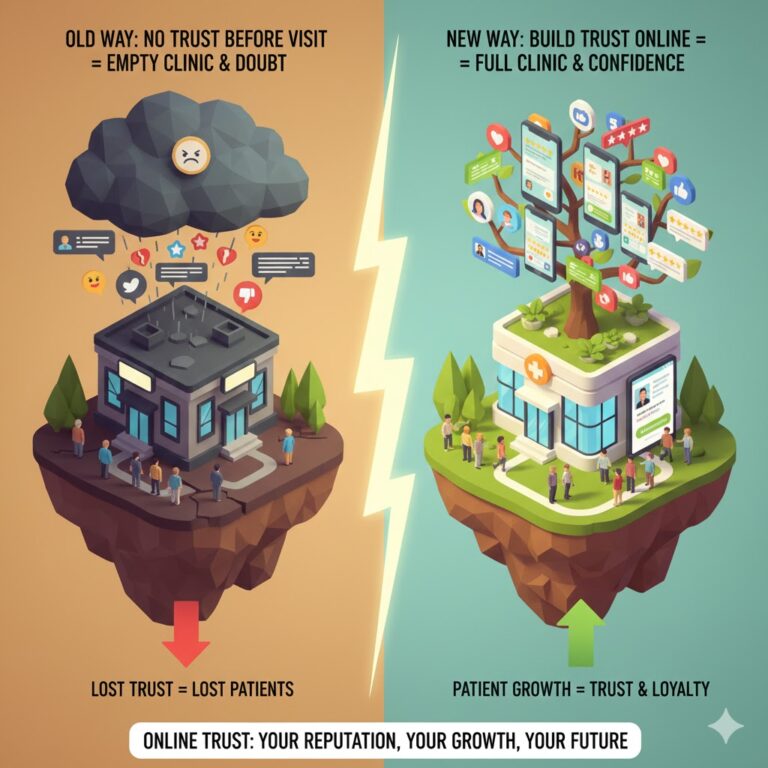
f. Build Trust Before They Walk In
Patients choose doctors they feel safe with, even before meeting them
Trust is the foundation of healthcare. No one visits a doctor they do not trust. Earlier, trust came from family recommendations or years of seeing the same doctor. But today, trust starts online before a patient even steps into your clinic.
When someone searches for a doctor, they look at many things before deciding. They read reviews from other patients. They check your qualifications and experience. They see if you respond to questions or complaints. All this happens on their phone in less than five minutes.
If your online presence shows care and honesty, patients feel comfortable. If it looks empty or careless, they move to the next name on the list. You do not get a second chance to make a first impression anymore.
Reviews play a huge role in building trust. A clinic with 150 positive reviews will always get more patients than one with no reviews at all. People believe other patients more than they believe your own claims about yourself.
But reviews are not only about numbers. How you respond to them matters even more. If someone leaves a good review and you reply with a simple thank you, it shows you care. If someone complains and you reply politely trying to solve the issue, others see that you are responsible.
Ignoring bad reviews is the worst thing you can do. People will think you do not care about patient feedback. Even if the complaint is unfair, a calm and kind reply can turn the situation around. Other readers will see your professionalism.
Many doctors feel scared of online reviews. They worry someone will write something mean or false. But hiding from reviews does not protect you. It only makes you invisible. The solution is to encourage happy patients to leave reviews so the good ones outnumber the bad ones.
You can simply ask patients at the end of a visit if they would share their experience online. Most people are happy to help if they have a good visit. You can make it easy by sharing a direct link to your Google review page via WhatsApp or SMS.
Apart from reviews, helpful content builds trust too. When you share health tips, answer common questions, or explain diseases in simple words on social media, people see you as an expert who cares. They feel you are not only interested in selling consultations.
For example, a skin doctor who posts every week about common skin problems, home remedies, and when to see a doctor will slowly build a following. People start trusting that doctor because the advice is free, clear, and useful. When they finally need treatment, they already know who to call.
This content does not have to be complicated. A short post, a quick video, or even a voice note works. People appreciate simplicity and honesty more than fancy graphics or perfect editing. Just be yourself and share what you know.
Patients also trust doctors who are transparent about their qualifications and experience. If your website or social media profile shows where you studied, how long you have practiced, and what you specialize in, people feel more confident. Hiding basic information makes them suspicious.
Photos matter too. A real photo of you smiling in your clinic feels more trustworthy than a stock image of a random doctor. Patients want to see the person they will meet. It makes them feel less nervous about the visit.
Your clinic’s contact details should be easy to find everywhere online. If someone has to search hard to find your phone number or address, they will give up and call someone else. Make it simple for people to reach you.
Responding fast to messages and calls is another trust builder. If someone sends a question on Facebook or WhatsApp and you reply within an hour, they feel valued. If you take two days to reply, they have already booked an appointment elsewhere.
Many clinics now use automated replies to acknowledge messages instantly. The reply can say something like “Thank you for reaching out. We will get back to you within an hour.” This small step stops people from feeling ignored while you prepare a proper response.
Being honest about what you can and cannot treat also builds trust. If a patient asks about something outside your expertise, guide them to the right specialist instead of pretending you can handle everything. Patients remember and respect that honesty.
Some doctors worry that talking too much online will bring too many questions and waste their time. But the opposite is true. When you answer common questions publicly, fewer people need to call you for the same doubts. It actually saves time in the long run.
Trust also comes from consistency. If you post daily, reply on time, and keep your information updated, patients see you as reliable. If your last post was six months ago and your phone number is outdated. They think you are not serious about your practice.
Your online behavior reflects your offline behavior. If you are careless online, patients assume you will be careless with their treatment too. If you are kind, clear, and helpful online, they expect the same experience when they visit your clinic.
Another way to build trust is by sharing patient success stories with their permission. When people see real stories of recovery and improvement, they feel hopeful. They think if this doctor helped others like me, they can help me too. But always take written consent before sharing any patient information or photo.
Being active in local health camps or community programs and sharing that work online also builds credibility. It shows you care about the community, not only about making money. Patients prefer doctors who give back to society.
Some doctors think trust building is only for new clinics. But even established doctors need to maintain trust online now. Your old patients may not search for you, but their children or friends will. If they find nothing about you online, they will pick someone else.
Trust takes time to build but seconds to lose. One rude reply, one ignored complaint, or one misleading claim can undo months of good work. So always think before you post, respond, or promise anything online.
The good news is that once trust is built, it brings patients without you asking. People recommend you to others. They leave positive reviews. They defend you if someone posts something negative. This kind of loyal patient base is priceless.
Digital tools make trust building easier than ever before. You do not need a big budget or a marketing team. You only need to be present, be helpful, and be human. Patients are not looking for perfect doctors. They are looking for caring ones.
Remember that trust is not about showing off degrees or expensive equipment. It is about making patients feel heard, respected, and safe. When your online presence does that, your clinic will never run short of patients.
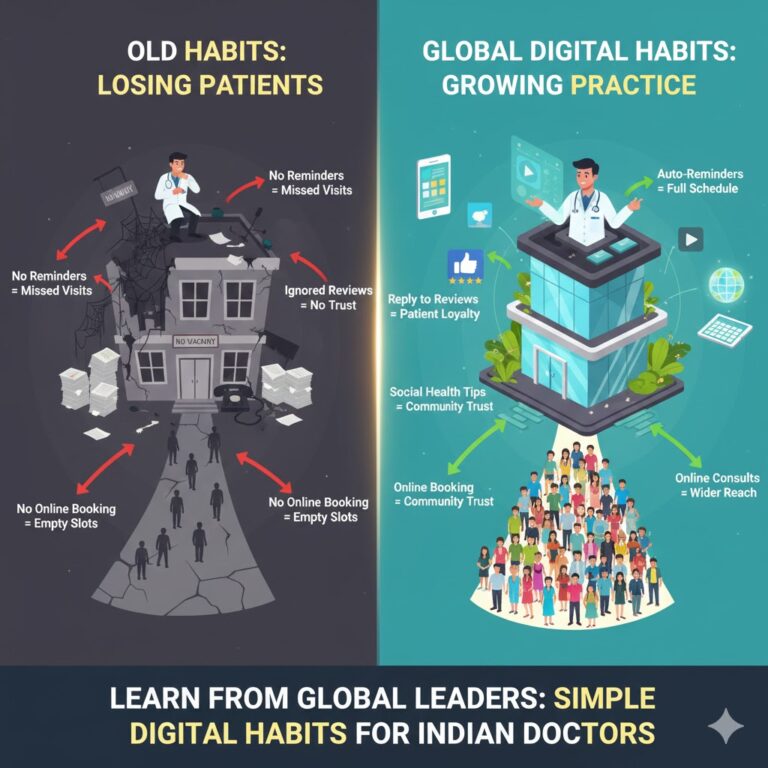
g. Learn From Global Healthcare Leaders
Clinics abroad use simple digital habits that Indian doctors can copy to grow their practice every single day.
Doctors in countries like the United States, United Kingdom, and Australia have been using digital tools for years now. They do not do anything complicated or expensive. They follow small habits that save time and bring more patients through their doors.
One common practice is sending appointment reminders through text messages or emails. When a patient books a visit, the clinic automatically sends a reminder one day before. This simple step reduces the number of people who forget or miss their appointments. Fewer missed appointments mean the doctor can see more patients and earn better.
Another habit is replying to online reviews within 24 hours. When someone leaves a good review, the clinic says thank you. When someone shares a complaint, they respond with care and offer to fix the problem. This shows future patients that the clinic listens and cares about people.
Global clinics also send follow up messages after treatment. A patient who had surgery gets a text asking how they feel. A mother who brought her child for vaccination gets a reminder for the next dose. These small touches make patients feel valued. They remember the kindness and come back again.
Many international doctors post health tips on social media twice a week. They do not write long essays or use difficult medical terms. They share one simple tip with a picture or short video. People see these posts, share them, and start trusting the doctor even before meeting them.
Email newsletters are another tool that works well abroad. Once a month, the clinic sends health updates to all their patients. The email talks about seasonal diseases, prevention tips, or new services at the clinic. Patients feel connected and informed. They do not forget about the clinic between visits.
Doctors outside India also use online booking systems on their websites. Patients can choose a date and time without calling the clinic. This makes booking fast and convenient. The clinic staff also gets fewer phone calls and can focus on patients who are already there.
Telemedicine became very popular during the pandemic and continues to grow. Clinics offer video consultations for patients who cannot travel. This service brings in patients from farther areas and helps the clinic grow beyond its location.
All these habits are simple to start. They do not need a big team or lots of money. What they need is consistency. Doing these small things every week builds trust and keeps patients coming back. Indian doctors can learn from these examples and apply them to their own practice right away.
h. What Indian Doctors Must Do Now
Going digital is not optional anymore. Doctors must start today, take small steps, and stay active to survive and grow.
The first step is to create a strong online presence. Start with a Google My Business profile. This free tool lets patients find your clinic when they search on Google or Google Maps. Fill in your address, phone number, working hours, and services clearly. Add good photos of your clinic so people know what to expect.
Next, build a simple website for your practice. The website does not have to be fancy or expensive. It should have your name, qualifications, services, contact details, and a way to book appointments. Patients want to know who you are before they visit. A website gives them that confidence.
Ask your happy patients to leave reviews on Google. Reviews are the new word of mouth. When people search for a doctor, they read what others have said. Good reviews bring new patients. Bad reviews that go unanswered push them away. Reply to every review with a polite and helpful message.
Be active on social media platforms like Facebook, Instagram, or WhatsApp. You do not need to be on all of them. Pick one or two where your patients spend time. Post health tips, clinic updates, or success stories twice a week. Keep the language simple and the tone friendly.
Start sending appointment reminders through SMS or WhatsApp. Many patients forget their appointments because life gets busy. A gentle reminder one day before helps them remember. This reduces no shows and keeps your schedule full.
Respond to patient messages and calls fast. When someone sends a message on WhatsApp or comments on your post, reply within a few hours. Fast responses show that you care. Slow replies make patients think you are not interested.
Offer online consultations if possible. Many patients prefer talking to a doctor from home, especially for follow ups or minor issues. This service adds convenience and helps you reach patients who live far away.
Collect patient contact details and send them useful health information once a month. It can be a simple message about preventing seasonal flu or managing diabetes. Staying in touch keeps your clinic in their mind when they need medical help.
Track what works and what does not. Check how many people visit your website, call your clinic, or book appointments online. Use this information to improve your efforts. If Instagram brings more patients than Facebook, focus more on Instagram.
Going digital does not mean you have to do everything at once. Start with one or two steps this month. Add more as you get comfortable. The goal is not perfection but progress.
Doctors who ignore digital tools will lose patients to those who embrace them. This is not about following trends or looking modern. This is about survival in a world where patients search online before they step out of their homes. The sooner you start, the stronger your practice will become.
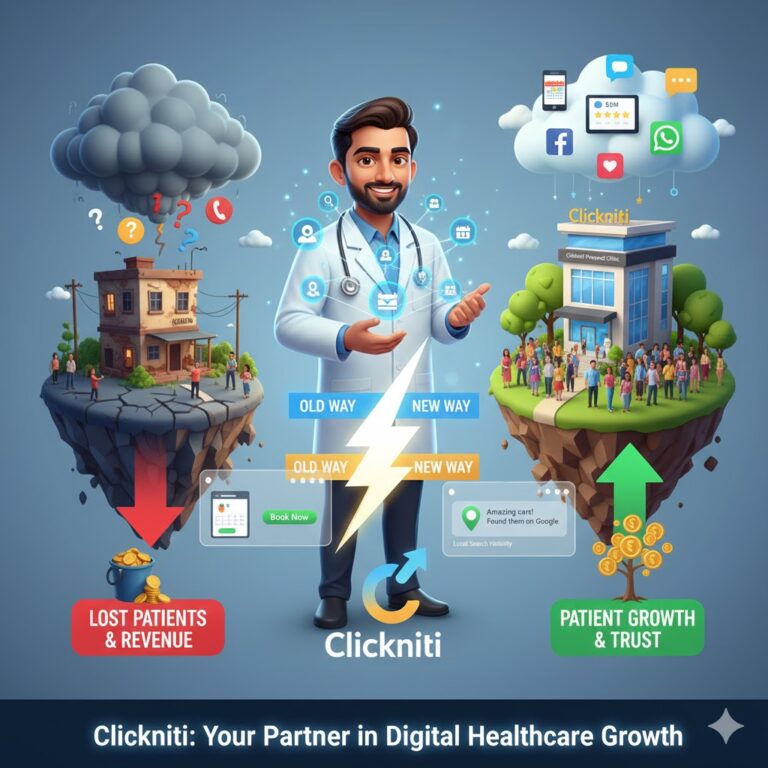
Clickniti Helps You Bridge the Digital Gap
We walk with you from your first online step to becoming a trusted name patients search for
Going online feels hard when you are busy treating patients all day. You have questions about websites, social media, and online ads. You worry about time, money, and whether it will even work. That is where Clickniti comes in. We understand doctors because we work only with doctors and clinics across India.
We do not hand you a complicated plan and leave. We sit with you and understand your clinic, your patients, and your goals. Then we build a simple path forward. First, we create a clean website that shows who you are and what you do. Patients see your experience, your services, and how to book appointments. Everything loads fast and looks good on mobile phones because most patients browse while traveling or waiting.
Next, we help you get found on Google. When someone types your specialty and location, your clinic should appear in the top results. We make that happen through smart local search strategies. We also manage your Google Business Profile so patients see your correct address, phone number, and working hours. Good reviews start showing up because we teach you how to ask happy patients to share their experience.
Social media confuses many doctors, but we make it simple. We create posts that educate and connect without sounding like sales messages. Patients see helpful health tips, clinic updates, and real stories. They start trusting you before they even visit. We reply to comments and messages fast so no patient feels ignored.
Online ads are another area where we guide you carefully. We run targeted campaigns that reach people searching for doctors like you. Your budget stays controlled and every rupee spent brings real patients to your door. We track everything and show you clear reports so you know what is working.
Many doctors worry about bad reviews or negative comments online. We handle that too. We see what people say about your clinic and respond professionally. One angry comment does not define you when ten happy patients share their positive experiences.
We also set up automated appointment reminders through WhatsApp and SMS. Patients get gentle messages before their visit. This reduces missed appointments and keeps your schedule full. After their visit, we send follow up messages asking how they feel. This small touch makes patients remember you and come back.
Training your front desk team is part of our service. They learn how to handle online inquiries, book appointments through your website, and reply to social media messages. Your entire clinic works together as one digital team.
We know doctors in India face unique challenges. Internet access varies across cities and towns. Patients speak different languages and have different comfort levels with technology. We adapt our strategies to match your location and patient base. A clinic in Mumbai needs different digital tactics than one in Ranchi.
Our pricing stays honest and transparent. No hidden charges or surprise bills later. We offer packages that fit small clinics and large hospitals alike. You pay for what you need, nothing extra.
Results take time, and we tell you that upfront. Digital growth happens in weeks and months, not overnight. But once it starts, it keeps growing. Patients find you, trust you, and recommend you to others. Your clinic becomes a name people search for instead of stumbling upon.
We have helped hundreds of doctors across India build their online presence. General physicians, dentists, pediatricians, and specialists from every field trust us. They were once worried and confused like you might be now. Today, they see new patients every week because their digital foundation is strong.
You do not need to understand technology or spend hours learning marketing. You only need to take the first step. Call us, and we will explain everything in simple terms. No jargon, no pressure, only honest advice about what your clinic needs right now. Going digital is not optional anymore. It is how modern medicine connects with modern patients. Let Clickniti be your guide through this shift.
FAQs-
It means patients now find, judge, and choose doctors online. They read reviews, check clinic photos, and book appointments through phones even before calling. If you’re not visible online, they move to someone who is.
Because patient behavior is changing fast. Even loyal patients compare clinics online now. Going digital helps you stay relevant, reach new people, and protect your reputation.
No. This is the new normal. From booking cabs to ordering food, everything is digital, healthcare is simply catching up. Patients expect convenience and clarity.
Of course. You don’t need to be tech-savvy. Clickniti helps you step by step from setting up your clinic page to managing reviews and ads. You focus on patients; we handle the rest.
Start simply, create or update your Google and social media profiles, add photos, timings, and a booking link. That’s the digital door to your clinic.
Yes. A strong online presence builds trust. When people see your clinic, reviews, and posts online, they feel confident to book an appointment even without referrals.
They focus on patient experience like reminders, reviews, and easy communication. They treat every online interaction as part of the care journey. Clickniti helps you do the same here in India.
We help you get noticed online, improve your patient journey, and run ads that bring real results, not just clicks. Think of us as your digital growth team, built for doctors.