Doctors Without a Digital Brand – Why a Digital Brand for Doctors Matters
Digital Brand for Doctors: My patients have changed how they find doctors. 49% of internet users use digital media to read health information before visiting a doctor. This means half of my patients are already searching online before they come to me. 72% of patients read online ratings and reviews to consider booking with a new healthcare provider. When patients need a doctor, they check online reviews first. If I am not found online, these patients are not choosing me. My medical degree means nothing if patients cannot find me.
Table of Contents
ToggleThe Shift in Patient Behavior That Demands a Digital Brand for Doctors
Digital Brand for Doctors: My patients are not coming to me the same way anymore. I see this change happening in my practice every single day. More than 3 in 4 patients (77%) look for doctors online often or sometimes. This means my patients are checking me out before they even call my clinic. I am being judged before I meet them. Almost 76% of patients reported going online to seek out in-depth information on an individual provider. My patients want to know everything about me before they book. They read about my experience, my reviews, and my clinic.
I noticed something important about younger patients. Millennials topped the generational charts by 38% searching online often. While 48% search online sometimes. These are patients between 31 to 45 years old. They make up most of my patient base now. 67% of patients prefer online booking, compared to only 22% who choose to book by phone. My patients want to book appointments online. They do not want to call and wait. They want quick solutions. I see patients are becoming very picky about doctors. Over half of millennials and Gen Z would switch providers, if they could not book appointments online. If I do not give them what they want, they go to another doctor.
5% of all Google searches are health related. Every day, millions of people search for health information. They search for symptoms, treatments, and doctors. If I am not online, they cannot find me. 47% have looked online for information about doctors or other health professionals. My patients research me like they research a new car. They compare me with other doctors. They check my reviews and ratings.
The internet became my patients’ first stop before visiting me. I am no longer their first choice by default. I need to earn their trust online first. My digital presence decides if they will choose me or go somewhere else. Patients now expect me to be available online. They want online booking, online reviews, and quick responses. 91% of patients expecting a reply within 24 hours. If I take too long to respond, they find another doctor.
The old way of getting patients through word of mouth is changing. Patients still trust recommendations, but they verify everything online first. They check my Google profile, read my reviews, and look at my social media.
I realized that patients judge my competence by my online presence. If I have poor reviews or no online presence, they think I am not good. If I have good reviews and active social media, they trust me more. This shift means I cannot ignore digital marketing anymore. My patients are already online looking for me. If I am not there, they will find someone else who is.
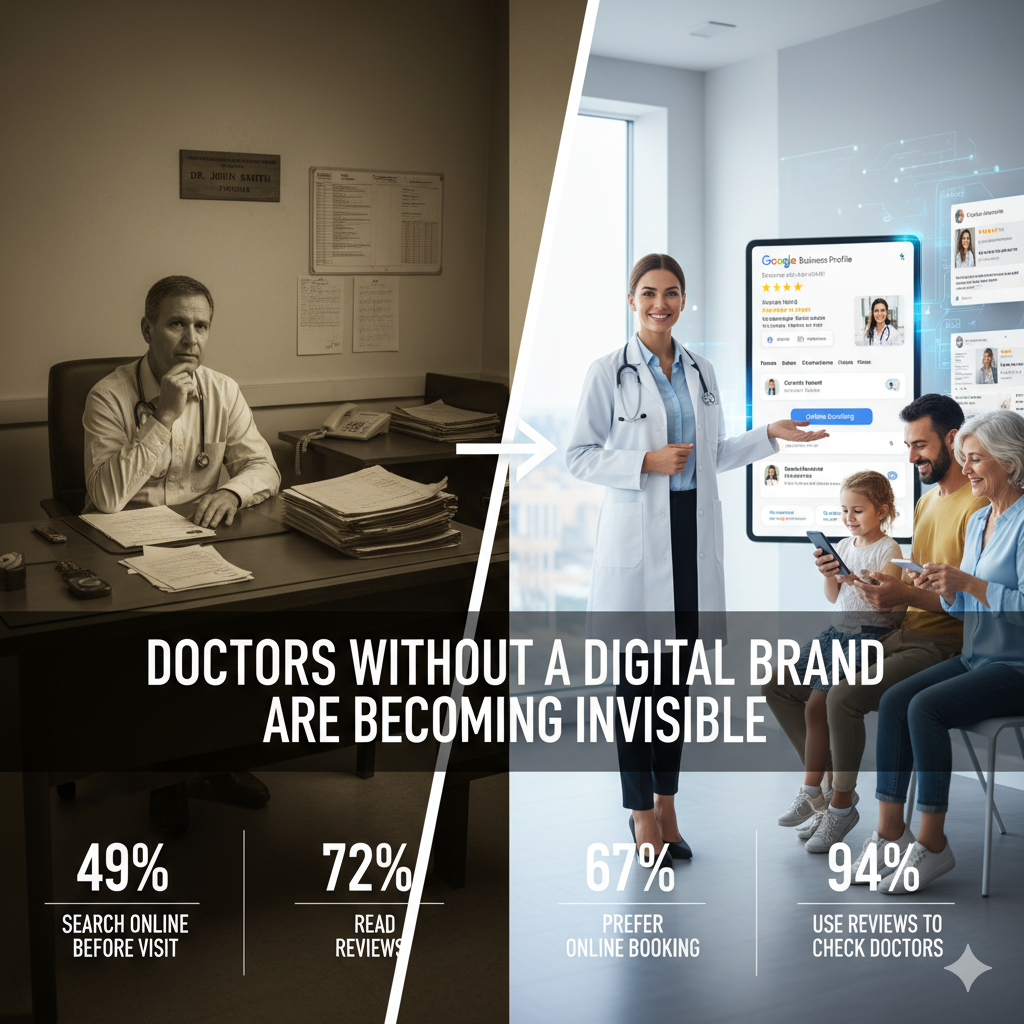
The New First Impression: Your Digital Brand for Doctors as the Waiting Room
I used to meet my patients at the front desk. Now things are different. 71% of patients use online reviews as their first step to find a new doctor. My patients see me on Google before they see me in person.
When someone needs a doctor, they pick up their phone. They search for doctors near them. They read what other people say about me. They look at my clinic photos online. All this happens before they call my office.
I know my patients follow a simple pattern when looking for doctors:
- They search on Google for doctors in their area
- They read reviews about different doctors
- They check photos of clinics and doctors
- They look at my clinic hours and contact details
- Only then they decide to call or visit me
94% of healthcare patients use online reviews to check doctors. This means almost every patient who comes to me has already read about me online.
Your digital presence has become your real waiting room
My Google Business Profile is now like my waiting room. Patients sit there and decide if they want to meet me. They read what my other patients wrote about me. They see pictures of my clinic. They check if I reply to questions fast.
If my online space looks good, patients trust me. If it looks empty or outdated, they move to another doctor. 95% of people read online reviews before choosing a doctor.
How Patients Judge My Care
When patients find me online, they look at specific things:
- My Google Reviews: They want to see good reviews from real patients. They read what people say about my treatment and behavior.
- My Clinic Photos: They check if my clinic looks clean and professional in photos.
- My Response Time: They see how fast I reply to questions online.
- My Information: They check if my phone number, address, and timing are correct.
- My Health Tips: They look at the health advice I share on social media.
- Fast and Confident Decisions
- Patients make fast choices online. They spend only 2 to 3 minutes looking at my profile. In those few minutes, they decide if they trust me or not.
If I have good reviews and updated information, they choose me. If my online profile looks poor, they pick someone else. There are many doctors online, so patients have lots of choices.
Trust that starts before the appointment
I build trust with patients before they visit my clinic. I do this by:
Sharing helpful health tips on Facebook and Instagram daily. Asking happy patients to write good reviews about their visit. Keeping my Google profile updated with correct information. Posting photos that show my clean, professional clinic. Replying fast to patient questions online
When I do these things well, patients feel confident about choosing me. They come to my clinic already trusting me as their doctor.
Tying It Back to Your Earlier Digital Actions
This new first impression connects directly to the 5 digital hacks I mentioned earlier:
My Google Business Profile becomes the place where patients make their first opinion of me. My WhatsApp reminders show I care about patient time. My online booking makes me look modern and easy to work with. My social media health tips prove I know my medical field well. My patient reviews give social proof that I am a good doctor.
All these digital steps work together to create a strong first impression. When patients see me online, they see a complete picture of a caring, professional doctor who uses technology to help them better
Key Data That Highlights the Importance of a Digital Brand for Doctors
My patients are already searching online before they visit me. 65% of patients search online before contacting a doctor. This means most of my patients check me out online first. They want to know about me before they call. It was surprising to learn that 76% of patients go online to seek out information on an individual provider. They search for my name specifically. They look for details about me as their doctor. This happens more than looking up my clinic or hospital.
When my patients find me online, they trust what they see. 88% of patients trust online reviews as much as personal recommendations. My online presence works like a friend telling them about me. They believe what they read about me online. I need to understand how important this is. 90% of patients conduct online research before making a decision. Almost 75% of patients turn to online reviews as the first step when searching for a new physician. This means almost all my future patients will check me online first.
My digital brand helps me get more patients. Patients are up to 70% more likely to choose a doctor with positive online reviews. When I have good reviews and a strong online presence, more people choose me. They feel confident about visiting me.
The facts show me something important. 80% of consumers trust online reviews as much as personal recommendations. My online reputation now equals word of mouth referrals. Both have the same power in my patients’ minds.
I see that my patients expect quick responses too. 91% of patients expect a reply within 24 hours. When they contact me online, they want me to respond fast. Slow responses can make them choose another doctor.
My patients prefer booking online over calling me. 67% of patients prefer online booking, compared to only 22% who choose to book by phone. They want easy ways to schedule visits with me. Making it hard to book means losing patients. These numbers tell me the truth. My patients live online now. They searched for me there. They trust what they find there. They expect me to be there too. Without a digital brand, I become invisible to them.
Building Trust Beyond Treatment Through a Digital Brand for Doctors
see patients making their first choice about me before we ever meet. They search my name online. They read my reviews. They look at my website. They check my social media. All this happens before they book their first visit. Studies show that 88% of patients research doctors online before choosing care.
They want to know who I am as a person. They want to see my values. They want to feel connected to me before walking into my office. I learned this when Mrs. Johnson told me she picked me because of my patient story videos. She said my face looked kind. She said I seemed like someone who would listen. She never mentioned my medical degrees or awards.
Patients today expect more than just good treatment. They want to trust the person giving that treatment. They want to see my human side. They want to know I care about their whole life, not just their symptoms. I build this trust through my digital presence every single day. I share patient success stories with permission. I post health tips that help people stay well. I answer common questions people ask me in my office.
When I post about preventing diabetes, I help people before they get sick. When I share tips about managing stress, I show I care about their mental health too. When I explain procedures in simple words, I reduce their fear.
My digital brand shows patients I am more than a doctor. I am someone who wants to help them live better lives. I am someone who takes time to explain things clearly. I am someone who celebrates their wins with them.
Patients remember doctors who make them feel heard and understood. They remember doctors who take time to explain things well. They remember doctors who show they care about more than just symptoms. I get referrals because patients trust me completely. They tell their friends about me. They bring their whole family to see me. They write good reviews because they feel genuinely cared for.
Research shows that patients with high trust in their doctor follow treatment plans 67% better. They miss fewer appointments. They ask better questions. They get better results from their care.
Trust changes everything about how patients experience healthcare. It makes them feel safe. It makes them more honest about their problems. It makes them more likely to come back when they need help. I build this trust by being real and honest in everything I share. I admit when something is hard to treat. I celebrate small wins with my patients. I show them I am human too. My digital brand is not about selling more services. It is about showing people who I really am. It is about proving I will take good care of them. It is about building relationships that last for years. When patients trust me completely, they get better faster. They feel less scared about procedures. They ask for help sooner when problems start. They become partners in their own healing.
This trust extends far beyond my exam room walls. It reaches people in my community who need healthcare. It helps people choose me when they are scared and vulnerable. It makes healthcare feel more human.
Patients want doctors who see them as whole people, not just medical cases. They want doctors who understand their worries and fears. They want doctors who make time to really listen to their concerns. I show this through every post I make and every story I share. I demonstrate that good healthcare is about treating people, not just treating diseases. I prove that caring and competence go together. Building trust beyond treatment means showing up for my community every day. It means sharing knowledge that keeps people healthy. It means being the doctor people can count on completely.
From Growth to Authority with a Digital Brand for Doctors
I watch my practice change every day. More patients are finding me online now. They book appointments after reading my content. My online presence was built when 76% of patients started looking for doctors on the internet. This shift changed everything for me.
My website gets more visits each week. I share health tips on social media. Patients comment and ask questions. They trust me before we even meet. I noticed this when 77% of patients began searching for doctors online daily. My digital brand was becoming my new front door. I used to worry about empty appointment slots. Now I have waiting lists. Good patients refer their friends to me. They choose me over other doctors in town. My reputation spreads faster online than word of mouth ever did.
The patients I attract now are different. They come prepared with questions. They follow my treatment plans better. They pay their bills on time. These are the patients every doctor wants to see. My referrals from other doctors have increased too. They see my expertise online. They read my articles about complex cases. Other medical professionals now know what I specialize in. This brings me the challenging cases I love to solve.
I was featured in a local health magazine last month. The reporter found me through my blog posts. My online content proved my knowledge to them. The traditional media now sees me as an expert voice. This never happened when I only had a basic website.
My speaking invitations have doubled this year. Conference organizers discover me through my online presence. They want speakers who can draw crowds. My digital authority helps fill their event seats. This creates more opportunities for me to share knowledge. Insurance companies contact me for advisory roles now. They need doctors who understand current medical trends. My online content shows them my expertise. These consulting roles add extra income to my practice.
Medical device companies ask for my opinions. They want feedback on new products. My online authority makes them trust my judgment. These relationships keep me updated on the latest medical technology. I sleep better knowing my practice has a future. Young doctors struggle to get patients nowadays. My online reviews matter because 89% of patients read them before choosing doctors. My digital presence protects me from this competition.
My practice value has grown significantly. When I retire someday, buyers will pay more for it. They know my established online brand brings steady patients. This digital authority becomes a valuable business asset.
The medical field changes fast each year. New treatments come out daily. I share these updates with my online audience. This keeps me current with medical advances. Teaching others helps me learn too. My staff feels proud to work here now. Patients mention seeing our content online. They compliment our professional image. This boosts team morale throughout the office. Everyone wants to work for a respected practice.
I connect with patients between visits now. They email me questions about their health. I can guide them without emergency room visits. This builds stronger doctor patient relationships than ever before.
My expertise reaches people beyond my city. Patients travel from other states to see me. They discovered my specialized knowledge online. This geographic expansion happened through digital marketing.
The transformation took time and consistent effort. I posted content daily for months. I answered patient questions online daily. The results came slow but steady with improvement. Now I cannot imagine practicing without this digital foundation. Authority in healthcare requires proving expertise all the time. Online platforms give me this opportunity daily. Every post demonstrates my medical knowledge. Each patient interaction builds my reputation further. Digital authority becomes self reinforcing over time.
Frequently asked questions
Because most patients search online before visiting. If they don’t see you there, they see someone else.
Word-of-mouth still works, but today it happens online through reviews and social media. If you’re missing there, you miss half the talk.
Your skills matter most, but patients won’t know until they meet you. A digital brand helps them trust you before they book.
No. Start with what matters most: Google, your website, and one social channel. Keep it simple and consistent.