The Complete Email Marketing Guide for Doctors: How to Build a Patient Email List and Nurture Them Until They Book (With Templates and Automation)
Most doctors believe their marketing works fine. They get calls and bookings every week. But here is the problem. You are only reaching patients who are ready to book today. What about the person researching treatments three months before booking? You lose them to another doctor who stays in touch.
Table of Contents
ToggleThink about this. A patient spends 8 to 12 weeks before booking an appointment. They Google symptoms, read reviews, compare costs, and ask friends for advice. If you only show up in week 12, you already lost the race.
Email marketing changes this completely. You capture patients in week 1 when they start researching. Then you guide them through their decision process. A dentist in Mumbai built a list of 412 people. He sent helpful emails for two months. Result? 34 new patients booked appointments. No extra ad spending.
This guide shows you how to build your own patient email list. You will learn what to offer people, what emails to send, and when to send them. Everything is systematic and works while you sleep.
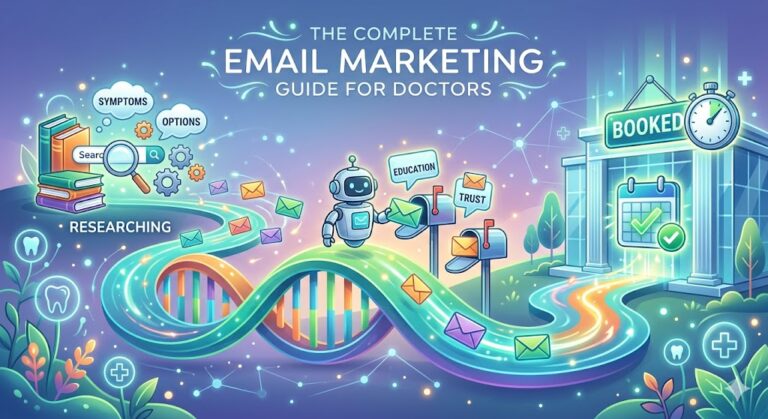
1. Why Doctors Need Email Lists
The Patient Research Journey You’re Missing
Think about the last time someone booked an appointment with you. They probably searched online weeks before calling your clinic. Most patients spend 30 to 90 days researching before they book anything. This is the reality today.
Here is how a typical patient thinks and acts. Week one starts when they notice a problem. Maybe their tooth hurts or their skin breaks out. They start searching on Google. They read blog posts. They watch YouTube videos. They ask friends for advice.
Week three comes around and they know what treatment they might need. Now they look at different options. Should they try medicine first? Do they need surgery? What are the side effects? This research phase goes on for another month.
By week seven, they start comparing doctors. They read reviews on Google. They check clinic websites. They look at before and after photos. They compare prices. They read about doctor qualifications. This comparison phase takes another three to four weeks.
Finally, around week eleven or twelve, they pick up the phone. They call your clinic to book a consultation. This is when most doctors first hear about this patient.
But here is the problem. You missed everything that happened before. Those ten weeks of research? Your competitor was in their inbox the whole time. While you waited for the phone to ring, someone else sent them helpful emails. They shared educational content. They answered common questions. They built trust slowly.
When the patient finally decided to book, who do you think they called first? The doctor they heard from once? Or the one who helped them for ten weeks?
This is where 90 percent of doctors lose patients. You only show up at the end. You compete on price and location. You miss the chance to educate and build trust. Email lists fix this problem.
An email list captures people early. Someone downloads your free guide about knee pain in week one. Now you can talk to them for the next eleven weeks. You send them useful information. You answer their questions. You share success stories. You stay in their mind.
By the time they are ready to book, you are not a stranger. You are the doctor who helped them understand their problem. The one who took time to educate them. The one they trust.
The money side makes sense too. Facebook ads cost you every single time. Email costs almost nothing after someone joins your list. One subscriber might become a patient. That patient might refer to three friends. Those friends join your email list. The cycle continues.
A dental clinic in Mumbai built a list of 890 people in six months. They sent emails every week. In one year, 67 people booked appointments. Each patient spent an average of 45,000 rupees. That is 30 lakh rupees from one email list. The email software costs them 15,000 rupees per year.
Email marketing creates a long term asset for your practice. Your list grows every month. Your trust grows with every email. Your bookings increase without spending more on ads. This is how modern medical practices grow in 2025.
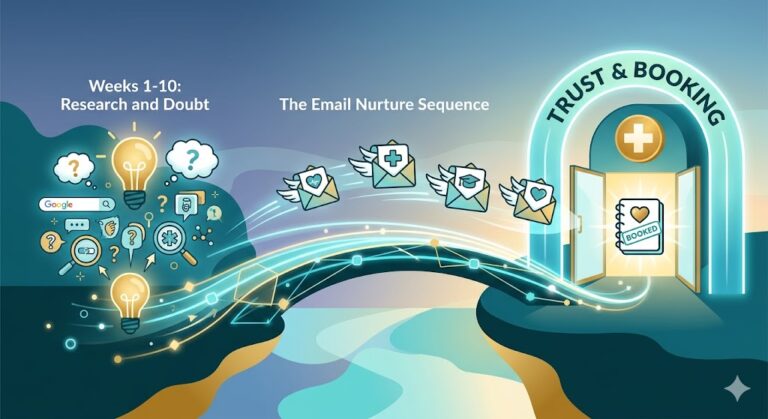
2. Creating Irresistible Lead Magnets
Why Patients Share Their Email
Let us be honest. No one gives their email for no reason. If you want it, you have to give them something helpful first. That free help is called a lead magnet.
Think of it like a small gift. It should solve a real problem. It should answer a question they already have in their mind. When patients feel that your free content helped them, they trust you more. That trust makes them share their email.
Guides That Patients Want
Many patients want full information before they book a visit. They want to understand what is happening with their body. A simple and clear guide works very well here.
Your guide can be 8 to 12 pages. Keep the language easy. Do not use heavy medical words without explaining them.
For example, a fertility doctor can create a guide called 12 Things That Affect Your Chances of Getting Pregnant. A dentist can offer The Complete Guide to Dental Implants in India.
Break the guide into small sections. Add simple images or diagrams. You can make this in Google Docs or Canva. It does not have to look fancy. What matters most is the information inside. If it helps, patients will value it.
Checklists That People Love
People love checklists. They are quick. They are simple. And they feel useful.
A dermatologist can create a Skin Cancer Risk Assessment Checklist. An orthopedic surgeon can offer Is Your Knee Pain Serious 10 Point Checklist.
Patients can read and use it in five minutes. They get instant value. That is why checklists often get more signups than long ebooks. In many cases, they get about 30 percent more downloads.
Keep your checklist short. One or two pages is enough. Make it easy to print so patients can keep it at home.
Simple Tools That Feel Personal
Online tools work great for some clinics. Patients like getting answers made only for them.
A fertility clinic can build an IVF Cost Calculator for India. A cosmetic surgeon can create a Hair Transplant Graft Calculator. A bariatric surgeon can offer a BMI and Weight Loss Surgery Eligibility Tool.
These tools can ask for an email before showing results. Most patients are happy to share it because they want to see their answer.
You can create basic tools with Google Forms or Typeform. If you want something more advanced, you can hire a developer. It may cost around fifteen to twenty five thousand rupees. Many clinics recover this cost because patients share these tools with friends and family.
Webinars That Build Real Trust
Some treatments are not easy to explain in one page. In such cases, a webinar works well.
You can speak directly to patients and explain topics like Understanding IVF Process Step by Step or Knee Replacement What to Expect. A simple format works best. Talk for about forty five minutes. Then answer questions for fifteen minutes.
You can record the session and use it again later. Patients who attend webinars are much more serious. Many clinics see that these patients are three times more likely to book a visit.
Weekday evenings usually work best because working people are free at that time.
Short Video Series That Keep Them Engaged
A short video series is also powerful. You can send one small video each day for five days.
On Day 1, talk about what causes the problem. On Day 2, explain the treatment options. On Day 3, share what happens during treatment. On Day 4, speak about recovery and results. On Day 5, invite them to book a consultation.
Each video can be three to five minutes long. You do not need costly cameras. You can record it on your phone. Patients care more about honest advice than studio quality.
Choosing What Fits Your Clinic
Not every lead magnet works for every doctor. It depends on your specialty.
Surgeons often do well with webinars and video series. General doctors usually see better results with checklists and simple guides. Cosmetic clinics get strong responses from calculators and self tests.
Start with one idea. Try it for thirty days. See how many people download it. Check how many appointments you have. Then test another format and compare.
You do not need ten things at once. One good lead magnet done right can bring steady patients to your clinic.

3. Building High Converting Landing Pages
Turn Website Visitors Into Email Subscribers
Your landing page is the place where people decide if they trust you or not. It is the page where they choose to give you their email. This one page can help you grow fast, or it can stop your growth. A strong landing page can turn 15 to 30 percent of visitors into subscribers. A weak page may convert less than 5 percent.
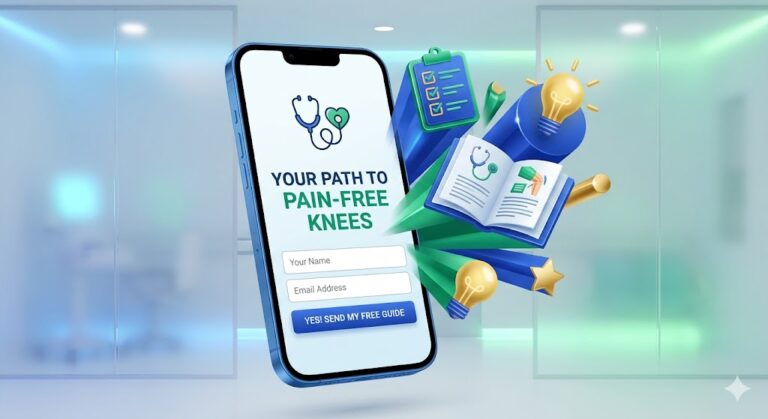
Your headline matters a lot. You only have about three seconds to catch attention. Tell people clearly what problem you will help them fix. For example, “Get Your Free Guide to Pain Free Knees in 30 Days” works much better than “Download Our Knee Pain Guide.” The first one feels clear and gives a promise. People like clear promises.
Under the headline, add three to five bullet points. Each bullet should explain one helpful thing inside your free guide. Keep them short and simple. Focus on benefits. Tell people what they will learn or what result they can get. Do not use difficult medical words that most people do not understand. Talk to them in simple words.
Add a simple image of your free guide. Show the cover of the PDF or a picture of the checklist. When people can see it, it feels real. It does not feel fake or random. People are more likely to download something they can actually see.
Keep Your Form Fields Minimum
Only ask for a name and email. Nothing else. Every extra box you add can lower your signups by 10 to 15 percent. You do not need their phone number right now. You do not need appointment details. You can ask for more later through email.
Some doctors worry about getting fake or spam emails. Most email tools already remove fake addresses. The main goal is to make signup fast and easy. If the form looks long, people leave. If it looks simple, more people join.
Design for Mobile Phones First
More than 65 percent of people will open your page on their phone. If your page loads slowly, they will close it. Try to keep loading time under three seconds. Remove extra pictures, videos, and heavy designs that slow the page down.
Make your signup button big and easy to tap. Use a color that stands out from the rest of the page. Write clear words on the button. For example, “Send Me The Free Guide” works better than writing “Submit.” Clear words feel more inviting.
Also remove the main menu from your website on this page. If people see too many links, they will click away. Your landing page should focus on one thing only. Get the email. That is it.
4. The 60 Day Email Nurture Sequence
What to Send and When to Send It
You have a new person on your email list. What happens next matters most. Many doctors send random emails hoping something works. This wastes the trust your subscriber gave you. A planned sequence works better. Think of it like a conversation that builds over time.
Your goal is simple. Take someone from curious to confident. They need to trust you before they book. This takes time. Research shows patients need about 8 to 10 touchpoints before deciding. Your email sequence provides these touchpoints in a natural way.
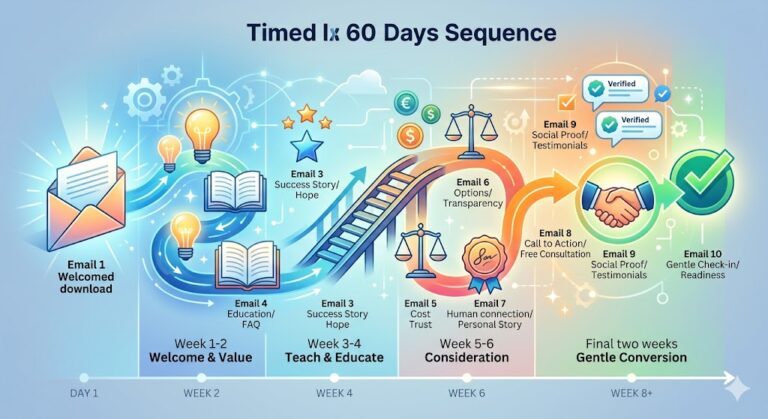
The 60 day journey breaks into four phases. The first two weeks focus on welcome and value. Next two weeks teach and educate. Weeks five and six build consideration. Final two weeks push gentle conversion. Each email has a specific job to do.
Email 1 arrives the same day someone downloads your lead magnet. Subject line says Welcome and Thank You. Body text reminds them what they downloaded. Give them the resource right away. Tell them what to expect next. Mention you will send helpful emails every few days. Keep this email short and warm. No selling happens here.
Email 2 goes out three days later with pure education. Pick one common question patients ask you. Answer it completely in simple words. For example, a fertility doctor explains what happens during the first visit. A dentist talks about why teeth sensitivity happens. You become the teacher here. Patients remember doctors who taught them something useful.
Email 3 lands on day seven with a success story. Share how you helped someone similar to your reader. Never use real names or photos without permission. Keep details vague but emotions real. Describe the problem they faced and how treatment changed things. This email builds hope. Hope is what patients need at this stage.
Email 4 arrives on day ten answering frequently asked questions. Take your top five questions patients always ask. Answer each in two or three sentences. Make it scannable and quick to read. This removes doubts sitting in their mind. Doubt stops people from booking. Your job is removing doubt slowly.
Email 5 comes on day fourteen talking about cost. Money worries stop many patients from moving forward. Be transparent here. Explain what treatment costs and why. Mention payment options or EMI if you offer them. Compare cost to value received. This builds trust because you discussed the elephant in the room.
Email 6 lands on day twenty one comparing treatment options. Most treatments have alternatives. Explain each option fairly with pros and cons. Help them understand what works for whom. This positions you as honest and patient focused. Patients appreciate doctors who present choices instead of pushing one option.
Email 7 goes out on day twenty eight introducing you personally. Share your story. Why did you become a doctor? What drives you to help patients? Mention your experience and training but keep it human. Add a photo if possible. Patients connect with people, not qualifications alone.
Email 8 arrives on day thirty five with your first clear offer. Invite them for a free consultation or discounted first visit. Make it risk free and easy. Explain what happens during the visit. Give clear booking instructions with a link. This is your first direct ask.
Email 9 lands on day forty five with more testimonials. Share three short patient stories. Real results from real people. Keep these compliant with medical council guidelines. Social proof matters most when people are deciding.
Email 10 comes on day sixty as a gentle check in. Ask if they have questions. Remind them you are there when ready. No pressure, only availability. Some patients need more time. Respect that while keeping the door open.
5. Email Marketing Tools and Setup
Getting Your Email System Ready to Work
You need software to send emails to your patients. Think of it like choosing a mobile phone. Some are simple to use. Some have more features. Both can make calls.
For doctors who are starting new, Mailchimp works well. You can send emails to 500 people for free. The buttons are big and clear. You can see who opened your emails. But after 500 people, you need to pay money every month.
Sendinblue is another good choice for beginners. You get free emails every day. The limit is on how many emails you send, not how many people you have. This works better if you have many patients on your list.
When your list grows bigger, you need better tools. ActiveCampaign lets you create smart email sequences. It remembers what patients clicked on your emails. Then it sends them content based on their interests. GetResponse also does this work.
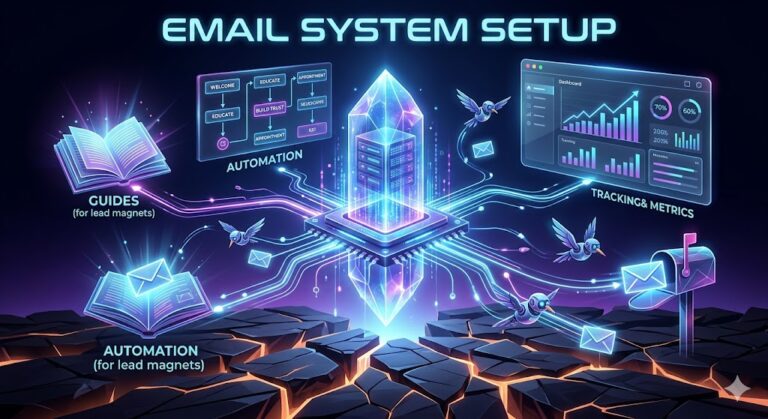
The most important features you need are automation and tracking. Automation means the emails go out by themselves. You set it up once. Then it runs without you touching anything. Tracking shows you who reads your emails and who clicks on your links.
Setting up takes about two hours. First, you create your account with the tool. Second, you make a new list for your patients. Third, you connect your website form to this list. Fourth, you write your email sequence. Fifth, you test everything by sending emails to yourself.
Your email tool should connect with your booking system. When someone books an appointment, they should get a confirmation email. This happens without your staff doing extra work.
Some doctors also connect WhatsApp to their email system. When a patient shows strong interest, the system sends their details to WhatsApp. Your team can then follow up personally.
6. How To Get More People On Your Email List
Smart Ways To Share Your Free Guide
You made a helpful guide. That is great. But now people need to see it. If they do not see it, they will not download it. Here are simple ways to grow your email list without making it complicated.
Using Facebook and Instagram Ads
Most people scroll on social media every day. They spend hours watching reels and posts. This is a good place to show your free guide.
If you run a child clinic, show your ad to parents in your city. If you offer fertility treatment, show it to women between 25 and 40. Keep it simple. Start small. You can begin with Rs 5000 per month.
Your ad should show the cover of your guide. Tell people what problem it helps with. Use simple words. Add a clear button that says Download Free Guide. When they click, send them to your landing page.
Many doctors get email signups between Rs 50 and Rs 150 each. It works when the message is clear and easy to understand.
Running Google Ads For Your Guide
Google Ads work in a different way. Here, people are already searching for help. Someone may type knee pain treatment near me. Your ad can show a free guide about knee pain.
When they click, they go to your page and enter their email. Some doctors also display ads on health websites.
You can start with Rs 300 to Rs 500 per day. Email signups from Google usually cost between Rs 80 and Rs 200. It depends on your city and your topic.
Free Ways To Grow Your List
You do not always need ads. There are free ways too.
Post about your free guide on social media three times every week. Put the download link in your Instagram bio. Share real patient stories and talk about your guide in the caption.
Add a small popup on your website after 30 seconds. Place a signup form on your blog page. Create a QR code and put posters in your waiting area.
Train your receptionist to tell callers about the free guide. Print the QR code on your visiting cards. You can also give a small handout after each appointment.
Growing an email list is not about doing one big thing. It is about doing small things again and again. That is what brings steady results.
7. Smart Ways to Sort Your Email List and Make Messages Personal
Why Every Patient Email Should Feel Different
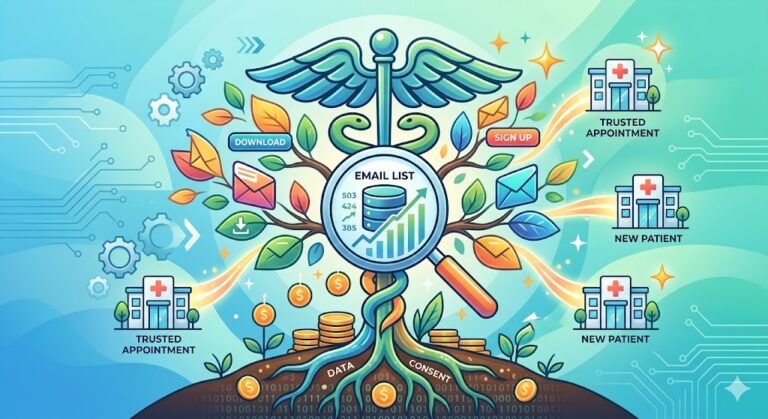
Now you have 500 people on your email list. That is great. But sending the same email to all of them is not smart. Think about it. A person who downloaded your knee pain guide needs different help than someone looking for skin treatment. If you send the wrong message, people stop reading. Some may even unsubscribe.
The good part is this. You can split your list into small groups. Then you send the right message to the right person. This is called segmentation. It may sound big and technical, but it is actually simple to do.
Group People by What They Downloaded
What someone downloads tells you what problem they have right now. If they downloaded your diabetes checklist, put them in the diabetes group. If they downloaded your hair loss guide, put them in the hair care group.
Now you can send diabetes tips to one group. You can send hair care advice to others. Both groups get emails that match their problem. And when emails feel useful, people keep reading.
Sort Subscribers by Their Treatment Interest
Some people are ready for surgery. Some want to try simple treatments first. You can ask this in your signup form. Add one easy question like, “What treatment are you thinking about?” Give two or three options to choose from.
Now you know what they want. So your emails can talk about that exact treatment. When people see something they care about, they pay attention.
Separate Active Readers from Quiet Ones
Look at who opens your emails often. These people are interested. They are closer to booking an appointment. Send them more details. Add stronger messages asking them to book a consultation soon.
Now check the people who never open your emails. They need a different style. Send them short and simple messages. Try new subject lines. If they still do not respond after 60 days, move them to another group.
Use Their Name and Location
Most email tools let you add the person’s name in the email. Saying “Hello Rajesh” feels warm. It feels human. It is better than just saying “Hello.”
If you also have their city, use it. You can write about patients in Mumbai or people living in Bangalore. Small details like this make your email feel personal. People like that.
Send Emails Based on What They Click
Your email tool shows you what links people click. This is very helpful. If someone clicks on “cost of treatment” many times, they are thinking about money. Send them an email about payment options next.
If someone clicks on “meet the doctor” more than once, they want to know you better. Send them an email about your experience and skills. You are answering their questions before they even ask.
Win Back People Who Stopped Reading
Some people will stop opening your emails after some time. Do not delete them right away. Try to bring them back first.
Create a small email series just for them. Send a short message asking if they still want to hear from you. Offer something new. Maybe a fresh guide or a short video. That might grab their attention again.
If they still do not reply after three emails, then you can remove them from your main list. It is better to keep your list clean and active.

8. Metrics and Optimization
How to Track Your Email Success and Make It Better
Your email list is working when you see real patients booking appointments. But numbers tell you what is working and what needs fixing. Let me show you the simple way to measure your success.
The Numbers That Matter Most
Start with your list growth rate. Count how many new people join your email list every week. A good target is 20 to 30 new subscribers each week. If you see less, your lead magnet needs more promotion.
Your open rate shows how many people actually read your emails. Good medical emails get opened by 20 to 25 people out of every 100. If your rate is lower, test different subject lines. Keep them short and curious.
Click rate tells you if people are interested in what you share. Aim for 2 to 3 clicks per 100 emails sent. When people click your links, they want to know more. This is a warm lead.
The big number is consultation bookings. Track how many email subscribers become actual patients. Even 5 to 8 bookings from 100 subscribers creates good profit. Calculate the money each subscriber brings to your practice.
Testing What Works Better
Never send the same email forever. Test two different subject lines every month. Send version A to half your list. Send version B to the other half. See which one gets more open.
Try sending emails on different days. Tuesday morning works well for many doctors. Thursday evening also gets a good response. Your patients may prefer different times.
Test your call to action button. “Book Free Consultation” might work better than “Schedule Appointment Now.” Small word changes can double your bookings.
Making Your Emails Better Each Month
Review your numbers on the first day of every month. Look at what changed from last month. Did more people open your emails? Did more people book appointments?
Find your best performing email. Look at the subject line, the content, and the offer. Use the same style in future emails. Copy what works.
When an email gets a poor response, do not send it again. Replace it with something new. Keep the emails that bring results. Remove the ones that do not work.
Your email system should get better every three months. More opens, more clicks, more bookings. This happens when you pay attention to numbers and make small changes.

9. Stay Safe and Smart with Email Rules
Every email you send must follow the law. This keeps your practice safe from problems. Here is what you need to know before you start.
Following India’s Email Laws
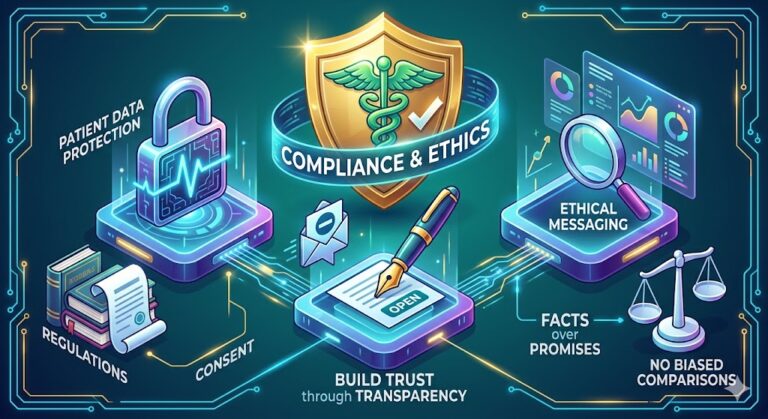
India has rules about sending emails to people. You must get permission before adding anyone to your list. Never buy email lists from other companies. This breaks the law and hurts your reputation. Every person on your list should have agreed to receive emails from you. They signed up through your form or gave you their email in person.
Your emails must have an unsubscribe link at the bottom. This is required by law. When someone clicks unsubscribe, remove them within 10 days. Do not send them any more marketing emails after that. Make the unsubscribe process simple. One click should do it. Do not make people log in or fill forms to stop emails.
You must include your clinic address in every email. This can be at the bottom in small text. It shows you are a real business. People trust you more when they see this information.
What Medical Council of India Allows
The Medical Council has strict rules about what doctors can say. You cannot make big promises about treatment results. Do not say things like “100% success rate” or “guaranteed cure”. These claims break medical ethics rules.
When you share patient stories, hide their identity completely. Do not use real names or photos without written permission. Change details like age or location slightly. The story should inspire but protect privacy. You can say “a 35 year old patient” instead of giving exact details.
Do not compare yourself to other doctors in your emails. Do not say you are better than others. Focus on your own experience and qualifications. Share facts about your training and years of practice. Let patients make their own decisions.
Avoid scary medical terms or graphic descriptions. Your emails should educate without frightening people. Explain conditions in simple words. Help people understand their options clearly.
Keeping Patient Information Private
Patient privacy is sacred in medicine. The same rules apply to email marketing. Never share patient data with your email software company without consent. Choose email tools that protect medical information. Read their privacy policy before signing up.
Do not mention specific patient cases in your emails. Even if you remove names, small details might identify someone. Keep patient stories general and anonymous. This protects everyone involved.
Store your email list securely. Use strong passwords for your email accounts. Only give access to trusted team members. Train your staff about privacy rules. They should know what they can and cannot share.
Building Trust the Right Way
Good email marketing puts patients first. Every email should give value before asking for anything. Teach something useful in each message. Answer common questions. Share helpful tips about health and wellness.
Be honest about costs and treatment times. Do not hide information to get people to book. Transparency builds trust faster than any sales trick. When patients trust you, they come to your clinic.
Respect people’s inbox space. Do not send too many emails. Two or three emails per month is enough for most practices. More emails might annoy people and make them unsubscribe.
Always keep your promises. If you said you would send a guide, send it immediately. If you mentioned a video series, deliver all videos on time. Breaking promises damages your reputation fast.
10. Real Stories from Medical Practices Like Yours
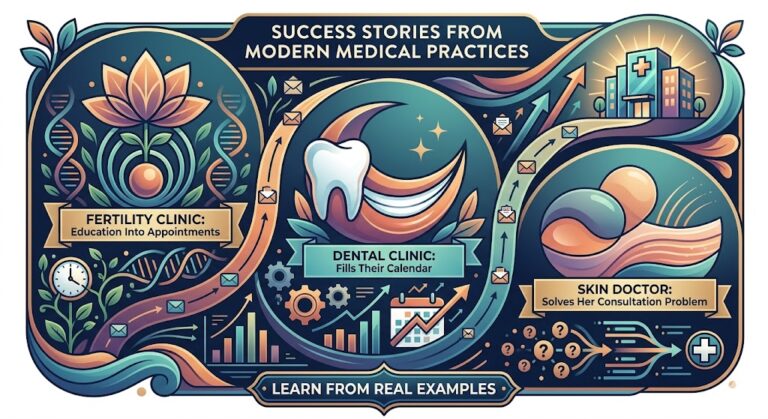
Case Study 1: A Fertility Clinic Turns Education Into Appointments
A fertility doctor in Mumbai wanted more patients but did not want to spend lakhs on ads. She decided to try something simple. She made a free guide called “Your First Steps Toward Parenthood.” In this guide, she explained fertility basics and the treatment options in easy words. She ran Facebook ads with a budget of 15,000 rupees per month to promote it. In four months, 287 people joined her email list.
She started sending emails two times a week. In these emails, she shared real success stories. She answered common doubts. She also explained how the procedures work. After two months of regular emails, 41 people booked consultations. That means 14 percent of the people on her list became real patients. Each patient brought an average revenue of 2.5 lakh rupees. She invested 60,000 rupees in total. Her total revenue crossed 1 crore.
Case Study 2: A Dental Clinic Fills Their Calendar
A dental clinic in Pune had many empty appointment slots. Some days were too quiet. They wanted more bookings without pushing hard sales. So they created a Smile Makeover Calculator on their website. People could enter their dental problems and see an estimate of their treatment plan. To see the result, they had to enter their email.
In three months, the clinic collected 156 emails. They started sending one email every week. The emails had simple dental care tips and before and after stories of patients. Within 60 days, 23 people booked appointments. The clinic also noticed something interesting. These patients spent more money than walk-in patients. The reason was simple. They already trusted the clinic before they came.
Case Study 3: A Skin Doctor Solves Her Consultation Problem
A dermatologist in Bangalore was facing a daily issue. Many people called her clinic to ask basic questions about acne and pigmentation. Her staff spent hours answering the same things again and again. It was tiring.
She decided to make a video series called ‘Clear Skin in 30 Days.’ When people signed up, they received one video each day for a week. In these videos, she explained common skin problems. She talked about treatments and showed real results.
After starting this, phone calls for basic doubts dropped by 40 percent. At the same time, consultation bookings went up by 25 percent. People who came to the clinic already understood the treatment. They were serious and ready to begin.
Conclusion: Your Email List is Your Practice's Biggest Asset
Building an email list takes time. There are no shortcuts. But every email you collect today will work for you tomorrow. Start with one lead magnet. Pick something your patients need. Create a simple landing page. Write five basic emails to begin. You can always add more later. The doctors who start today will have hundreds of interested patients in their list six months from now. The ones who wait will still be wondering where their next patient comes from. Your email list never stops working. It builds trust while you sleep. It brings patients when you need them most. This is how modern practices grow without burning money on ads every single month.
Call to Action: We Build Email Systems That Bring Patients
Clickniti Digital creates complete email marketing systems for doctors. We write your lead magnets. We build your landing pages. We set up your automation. You get ready-to-use email templates and a system that runs itself. Book a free 30 minute strategy session with us. Download our DIGITAL DOCTOR’S EDGE ebook to learn more growth strategies for your practice.
FAQs-
Because most patients are not ready to book immediately. They research quietly for weeks before deciding. If you do not stay in touch during that time, they will forget you and choose someone else.
Yes, when done properly. It helps you build trust slowly. Patients feel educated and comfortable before they even step into your clinic. Many bookings happen after weeks of regular emails.
They will, if you offer something valuable. A helpful guide, checklist, or short video series that solves a real concern makes patients comfortable sharing their details.
Focus on patient education. Answer common doubts. Explain treatment options. Share simple success stories. Introduce yourself and your approach. Avoid aggressive selling. Patients respond better to clarity and care.
Once a week is usually safe. During the first few weeks after someone joins your list, you can send a few more educational emails. After that, regular monthly communication keeps you remembered without being intrusive.
No. Short and clear works best. Patients usually read emails on their phones. Keep paragraphs small. Focus on one message per email.
Yes, but you must protect identity and follow ethical guidelines. Never reveal personal details without permission. Keep stories educational and respectful.
Email marketing builds slowly. You may start seeing consultations within one to two months. Over time, as your list grows, the results become stronger and more consistent.
The good news is that most of the work is done once during setup. After that, emails can go out automatically. You only need to review performance and add fresh content occasionally.
Compared to advertisements, email marketing is very cost effective. Once someone joins your list, you can communicate with them many times without paying again for each message. Over time, it becomes one of the most affordable ways to generate consultations.