class="archive paged category category-healthcare-marketing category-1 wp-custom-logo wp-embed-responsive paged-3 category-paged-3 wp-theme-generatepress ehf-template-generatepress ehf-stylesheet-generatepress right-sidebar nav-float-right separate-containers header-aligned-left dropdown-hover elementor-default elementor-kit-797" itemtype="https://schema.org/Blog" itemscope>

How to Keep Patients Coming Back Without Chasing New Ones
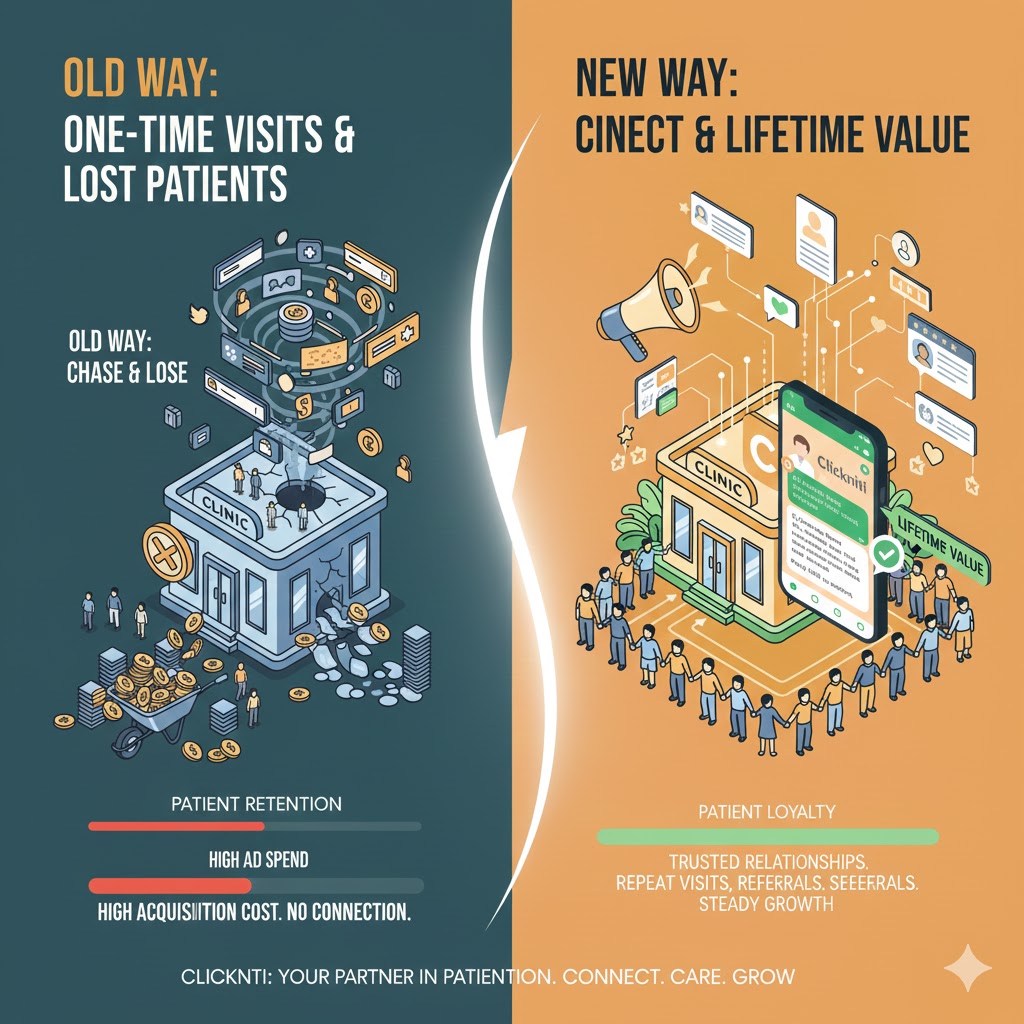
How to Keep Patients Coming Back Without Chasing New Ones I need to tell you something that most doctors miss. You spend money every month on ads to bring new patients. You put up banners, run Facebook campaigns, and pay for Google listings. But what happens after those patients visit your clinic once? Most of them never come back. You lose them forever. This is the biggest mistake I see in clinics across India. Doctors focus all their energy on finding new faces. They forget about the patients who already trust them. They forget about the women who already walked through their doors. Let me share some numbers that will surprise you. Getting a new patient costs five times more than keeping an old one. When you spend Rs. 500 to bring one new patient through ads, you spend only Rs. 100 to bring back someone who visited you before. That same returning patient also spends 67% more on healthcare over time. Think about your own clinic for a moment. How many patients came to you last month? Now think about this. How many of them will remember to come back for their next checkup? How many will think of you when their sister or friend needs a gynecologist? The truth is simple. Most won’t remember. Not because your treatment was bad. Not because they didn’t like you. They forget. Life gets busy. Other clinics advertise more. Your name slips from their mind. I worked with a clinic in Kolkata that had this exact problem. They saw 200 new patients every month through paid ads. But only 30 of those patients came back for follow up visits. The doctor kept spending more and more on ads. She felt tired of always chasing new patients. Her ad budget grew from Rs. 20,000 to Rs. 45,000 in one year. Then we changed her approach. We stopped focusing only on new patient ads. We started building relationships with patients who already visited her. We sent them health tips. We reminded them about checkups. We wished them on their birthdays. Within four months, 120 patients started coming back daily. Her ad spending dropped to Rs. 25,000. Her patient flow actually increased. This is what happens when you shift your focus. You stop wasting money on strangers. You start investing in people who already know and trust you. Your clinic becomes stronger. Your income becomes steady. Your work becomes less stressful. The best part about repeat patients is this. They don’t need convincing. They already experienced your care. They already saw how you treat them. When they return, they come ready to follow your advice. They book longer treatments. They refer to their family members. One happy returning patient can bring you three more new patients without any ad cost. In the next sections, I will show you exactly how to keep your patients coming back. You will learn simple methods that take less than 30 minutes per week. You will understand why patient loyalty matters more than patient numbers. You will discover how small actions create big results for your clinic. a. You Don’t Need More Patients, You Need Loyal Ones When the same patients return, your clinic grows stronger every month Let me tell you something most doctors miss. You spend money on ads to bring in new patients. They come once, get treatment, and then disappear. Next month, you spend more money again to find more new patients. This cycle never ends. Your wallet gets lighter, but your practice does not grow the way you want. I see this problem in clinics across India every single day. A doctor in Jaipur told me he spent 80,000 rupees on ads last year. He got many new patients. But when we looked at his records, we found something shocking. Only 2 out of 10 patients came back for their next visit. The other 8 never returned. He was pouring water into a bucket with holes at the bottom. Now think about this differently. What if 7 out of 10 patients came back? You would need fewer new patients each month. Your ad spending would go down. Your income would stay steady. This is not a dream. This happens when you focus on keeping patients instead of always hunting for new ones. Studies show that keeping an old patient costs five times less than finding a new one. In India, the average cost to get one new patient through ads is between 500 to 1,200 rupees. But keeping an old patient happy costs you almost nothing. Maybe a phone call. Maybe a simple message. That is all. Let me share what happened in a Mumbai clinic. The doctor there had 100 patients every month. She was always worried about getting more. Then she changed her mind. She started focusing on making her current patients happy. She made sure they knew when to come back. She sent them health tips. She remembered their birthdays. Within eight months, her patient count went up to 160. She did not spend one extra rupee on ads. Her old patients came back and brought their family members too. This is the power of loyal patients. They return for checkups. They come back when they have new health concerns. They trust you with their pregnancy care. They stay with you for years. One loyal patient can give your clinic 5 to 10 visits over time. Compare this to a new patient who comes once and vanishes. In Chennai, I worked with a women’s health clinic that tracked their patients for two years. They found that patients who came back three or more times spent 4 times more money at the clinic than one time visitors. These returning patients also needed less convincing. They did not ask for discounts. They did not compare prices with other clinics. They came because they trusted the doctor. Your clinic needs a strong base of patients who return again and again. These people become the … Read more
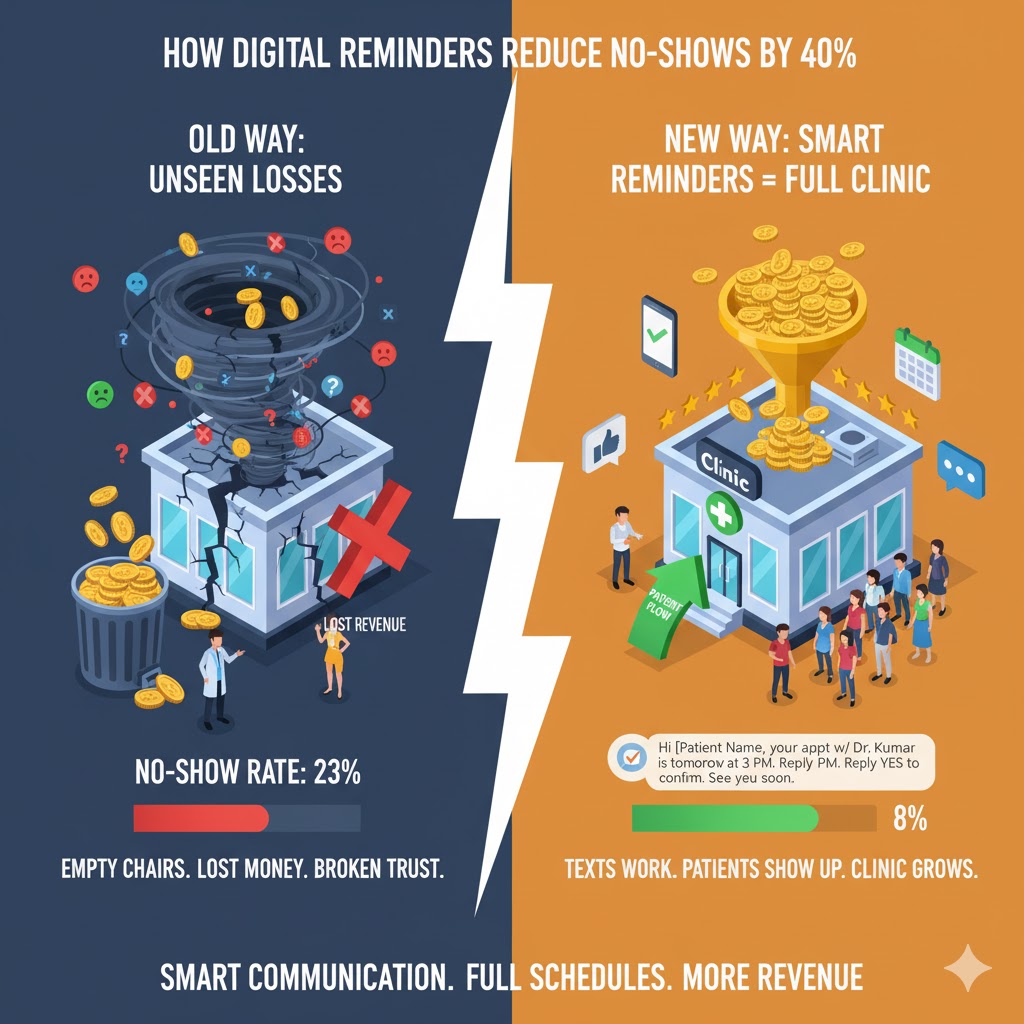
How Digital Reminders Reduce No-Shows by 40%

How Digital Reminders Reduce No-Shows by 40% My clinic was losing money every day without me knowing it. Empty slots kept showing up on my schedule like holes in a bucket. I would fill my calendar at the start of each week. But by the end, I saw far fewer patients than I planned. The rest did not show up. I started counting how many patients missed their visits each month. The number shocked me when I wrote it down. Most clinics see 80 old patients and 43 new patients miss visits each month. My clinic was in this range too. Over 120 missed visits every month meant empty chairs and lost money. The money loss was worse than I thought when I did the math. Each missed visit means losing $200 on average for a doctor. I multiplied this by my monthly missed visits. The result made my stomach drop. I was losing over $24,000 every month because patients were not showing up. This added up to almost $300,000 per year going down the drain. The problem was not only mine. Missed visits cost the U.S. health system about $150 billion every year. Every doctor I talked to had the same issue. Some had it worse than me. Missing rates go from 5% to 30% across the country based on clinic type and place. My rate was around 23%, which matched the national average for regular clinics. I tried to understand why this kept happening to my work. The average missing rate in regular clinics goes from 23% to 33%. This meant almost one in four visits could become empty. Some special clinics had even higher rates. Mental health services can see missing rates as high as 60% in some areas. The problem touched every part of healthcare. The hidden costs went beyond money loss only. For a doctor with a full day of 20 minute visits, three missing patients in eight hours can drop work output by 12.5%. My whole day got messed up when patients did not show. I could not fill those slots at the last minute. My staff sat doing nothing. My tools stayed unused. The waste grew in ways I had not thought about. I learned something important about patient actions from research. The most common reasons for missing visits are forgetting, work and family duties, poor health, and bad past experiences. Patients were not skipping visits because they did not care about their health. They were busy. They forgot. Life got in the way. This was a problem I could fix. The old reminder ways were failing me badly. My staff spent hours every day calling patients to remind them about visits. These calls took time and cost money. Many patients did not pick up their phones. Others forgot again even after getting the call. The phone reminder way from old times no longer worked in today’s busy world. I found that the answer was simpler than I thought. Research shows that text reminders can cut missing rates by up to 50%. Half of my missing patients could come back with a simple text. This was not a small change. This would transform my clinic’s money and work flow. The facts kept getting better as I looked more. Many studies have shown that text reminders can cut missing rates by 50% across all fields, not only healthcare. Every business that tried text reminders saw big gains. Restaurants, salons, helpers, and doctors all said the same thing. Text reminders worked. I found even better numbers from specific medical studies. Text reminders help show rates at children’s clinics with high missing rates. One real test showed the missing rate dropped from 38.1% in the normal group to 23.5% in the text group. That was a 14.6% drop in missing visits from adding text reminders to voice calls. The power of text messages made sense when I thought about it. Texts get opened at rates as high as 98%, with most texts read within 3 minutes. My patients were not ignoring my messages. They were reading them right away. Unlike emails that got buried in boxes, text messages popped up on their phone screens fast. The easy factor was huge for busy patients. Most people check their phones 205 times a day on average, making texts something used all the time. My patients had their phones with them all day. A text reminder reached them wherever they were. At work, at home, in the car, or at the store. The message found them. I saw that one text reminder could do more than stop a single missing visit. Auto reminders can cut missing rates by up to 38% based on many health studies. When I mixed this with my money loss math, the effect became clear. Cutting missing visits by 38% would save my clinic over $9,000 per month. That was $108,000 per year back in my pocket. The work gains went beyond money saved. Using auto reminders raised show rates by 20% to 50% while cutting work load on staff. My team could stop making endless reminder calls. They could focus on patient care instead. The auto system handled the repeat work. The tech was also not hard or costly to set up. Clinics that work to stop missing visits can cut them by up to 70%. The tools were there. The systems were tested. I needed to start using them. The wall was not tech. The wall was my own fear to change. I found proof that even simple reminder systems worked well. One study found that mental health clinic visits saw missing rates drop by up to 11% after making reminders auto. Even an 11% drop was helpful. But the chance for a 40% to 50% drop was there if I did it right. The time of reminders mattered a lot for results. The best time for sending a reminder is 24 hours before a visit, then another reminder one hour before … Read more

Why Some Clinics Grow Fast Online While Others Fade Away

Why Some Clinics Grow Fast Online While Others Fade Away Today, patients search online first before they visit a clinic. The internet is now the new “front door” for healthcare. But why do some clinics get full appointment books while others stay quiet? 1.) Strong Online Presence I know that my clinic needs to be where patients look for me. Today, I understand that patients find me online before they visit me. The Numbers Tell My Story I have learned that two-thirds of all patients search the internet before they visit a doctor. This means 67 out of 100 patients look me up online first. 89% of patients Google their health symptoms before visiting their doctor. This tells me that I am being searched for every single day. Google gets more than 1 billion health questions every day. Some of these searches are for clinics like mine. Put Your Clinic on the Radar I have found that my patients look for me in these places: Google Search: I make sure my clinic shows up when patients type “doctor near me” or “clinic in [my area].” 65% of people turn to Google before seeking advice from their doctor. If I am not on Google, I am invisible to most patients. Facebook: I know that 95% of hospitals have an active presence on Facebook. As a clinic, I need to be there too. Patients check Facebook to see if I am real and trusted. Google My Business: I claim my Google My Business page. I add my hours, phone number, and address. I post photos of my clinic. This is how patients find me on Google Maps. My Website: I make sure my website works on phones. Most patients use their phones to search for doctors. My website loads fast and shows my services in a clear manner. The Voice of My Clinic I keep my online presence simple and helpful: Health Tips: I share easy tips about staying healthy. I do not give medical advice online. I share general wellness tips that help people. My Services: I list what I do at my clinic. I use simple words. I do not use medical terms that confuse patients. My Team: I show photos of my staff. Patients want to see friendly faces. This makes them feel comfortable about visiting me. Clean Photos: I post clear photos of my clinic. I show my waiting room, my office, and my equipment. This helps patients know what to expect. How Often Your Patients Hear From You I post something new every week. This can be: A simple health tip A photo of my clinic Information about my services A reminder about check-ups I do not post every day. That is too much. Once or twice a week is enough. The Reason My Practice Stays Ahead When I show up online daily, good things happen: More patients find me Patients trust me before they meet me My appointment book gets fuller Patients choose me over other clinics I grow my practice without spending a lot Being online is not optional anymore. It is necessary. My patients live online. If I want to reach them, I must be where they are looking. I do not need to be perfect online. I need to be present, helpful, and real. When I do this daily, my clinic grows. 2.) Easy to Find When patients need a doctor, I know they search online first. 77% of patients conduct an online search before booking a healthcare appointment. This means my clinic must be found quickly on the internet. Why Being Found Online Matters My practice is lost if patients cannot find me online. 5% of all Google searches are health-related. Every day, thousands of people near my clinic search for doctors like me. If my clinic is not seen in these searches, those patients will go to other doctors. The First Page Rule The top three search results capture 60% of all clicks. This means most patients only look at the first few results when they search. If my clinic shows up on page two or three, very few patients will see it. My goal is to be on the first page of Google when people search for my type of care. Local Search Power Most of my patients live close to my clinic. About 72% of consumers who perform a local search visit a facility within five miles. When people search for “doctor near me” or “clinic in [my city]”, my practice needs to show up first. This is called local SEO. Google Maps is Key Patients use Google Maps to find my clinic. When they search on their phones, they want to see: My clinic’s exact location How to get to my office My phone number My hours Patient reviews If my clinic is not on Google Maps, or the information is wrong, patients cannot find me easily. Search Happens in Seconds Almost 60% of all healthcare searches are conducted on devices. This means most patients search for doctors on their phones, not computers. My website and Google listings must work well on mobile phones. If my site is slow or hard to use on phones, patients will choose other doctors. What Patients Search For When patients look for doctors online, they usually search for: “Doctor near me” “[My specialty] in [my city]” “[My clinic name]” “Best [type of doctor] near me” My online presence is built around these search words. I use them on my website and Google Business Profile. The Competition Reality Every day, more doctors start using the internet to find patients. If I wait too long to improve my online presence, other clinics will take my patients. The doctors who act fast get the most patients from online searches. Easy Ways to Shine Online To be found online, I need to: Claim my Google Business Profile – This free tool puts my clinic on Google Maps and search results. Use the right words – … Read more

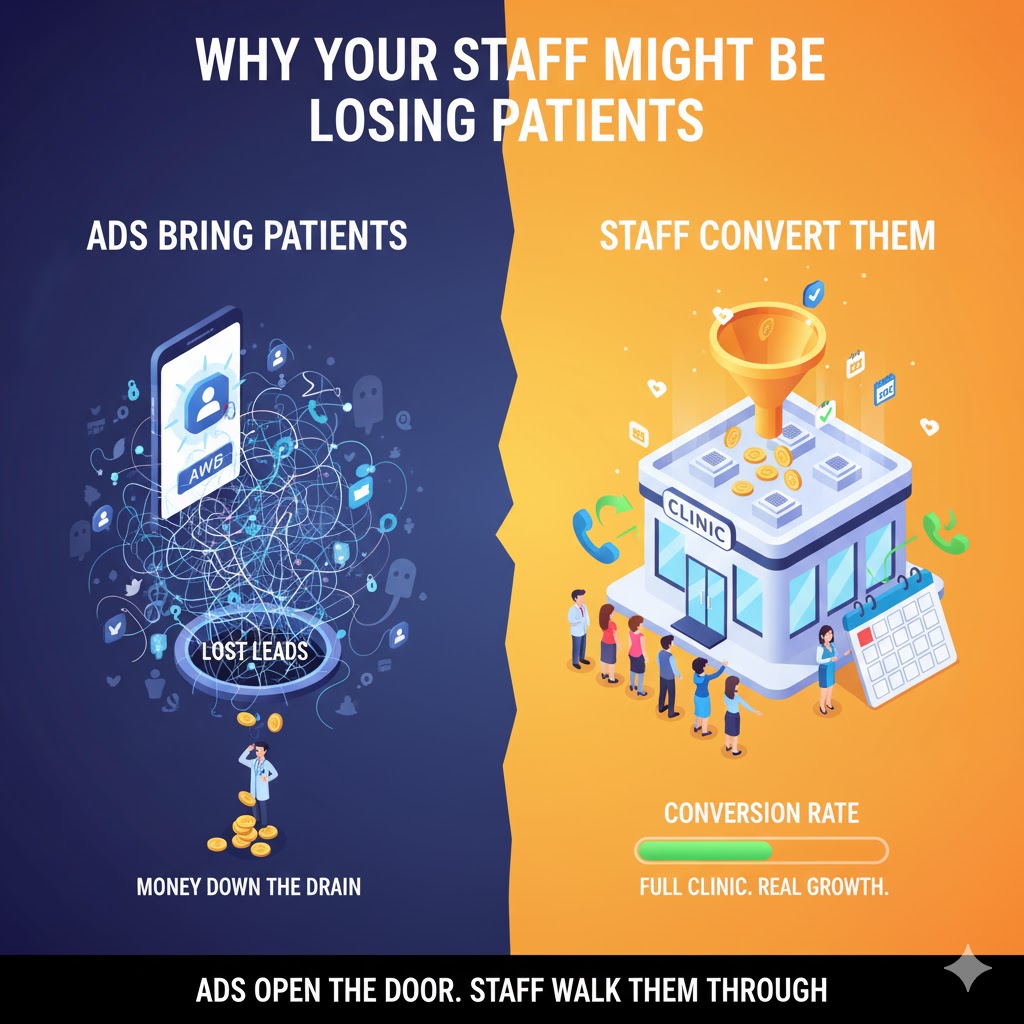
Why Your Staff Might Be Losing Patients Without You Knowing

Why Some Clinics Grow Fast Online While Others Fade Away You spend good money running ads for your clinic. The phone rings more often now. Your WhatsApp shows new messages every day. Everything looks fine from where you sit. But here is the truth most doctors miss. Your ads are working hard to bring patients to your door. But somewhere between that first call and the actual appointment, patients are slipping away. They are choosing another clinic instead of yours. The problem is not your skills or your services. The problem starts when your team picks up that phone or types that reply. Think about your last busy morning at the clinic. You had back to back appointments. Your staff was running around managing files and billing. Then a new call came in. Someone wanted to know about your consultation fees. Your receptionist was handling three things at once. She told the caller she would call back later. But later never happened because ten more urgent tasks came up. That caller did not wait. She moved to the next clinic on her search list. She booked an appointment there within the next hour. You lost a patient without even knowing it. This happens more often than you think. Every single day across clinics in India, hundreds of potential patients get lost this way. Your team is not doing this on purpose. They work hard and care about the clinic. But managing patient inquiries needs special attention and quick action. Most clinic staff are trained to handle patients who walk in. They know how to manage files and schedule appointments for people standing right in front of them. But handling digital leads is a different skill. It needs speed, the right words, and follow up that never stops until that person books. Your competition is not sleeping. Other clinics in your area are training their teams better. They reply within minutes. They follow up until they get a yes. They turn every inquiry into a conversation and every conversation into an appointment. Meanwhile, your ads keep running and your budget keeps draining. But the conversion from lead to patient is not happening the way it should. This gap between getting leads and converting them into appointments is costing you more than you realize. You might think your ads are not working. You might feel like digital marketing is a waste of money. But the real issue is what happens after someone contacts your clinic. That is where the money gets lost or earned. 1. You’re Great With Patients. But Is Your Team Great With Leads? Every missed call, late reply, or wrong message could mean one less appointment. You spend years learning medicine and building your practice. You know how to diagnose problems and treat patients with care. Your patients trust you because you give them your best. But here is something most doctors never think about. The person answering your phone might be losing patients before they ever meet you. Your front desk receives a call from someone looking for a pediatrician. They put the caller on hold for five minutes. The caller hangs up and dials the next clinic. That patient is gone forever. You never even knew they called. Someone sends a message on your Facebook page asking about consultation fees. Your receptionist sees it three days later and replies. By that time, the person already booked an appointment somewhere else. Your clinic lost a patient and you had no idea it happened. These small moments happen every single day in clinics across India. You work hard to bring people to your door. You spend money on ads to get noticed. But when those people reach out, your team might not be ready to handle them well. Your staff members are good people who care about their work. But they might not understand how important each phone call is. They might think one missed call does not matter much. They do not realize that behind every call is a person who needs help right now. Most clinic staff handle many tasks at the same time. They manage files, greet patients, and answer phones all at once. When things get busy, some calls go unanswered. Some messages get forgotten. Some follow ups never happen. These gaps seem small but they add up fast. Think about what happens when a potential patient calls your clinic. They might be worried about their health or their child’s condition. They want answers quickly. They need someone to speak with kindness and give clear information. If your team sounds rushed or confused, that caller feels it immediately. A patient calls asking about your visiting hours and your staff gives wrong information. The patient shows up at the wrong time and finds the clinic closed. They feel frustrated and embarrassed. They never come back and they might tell others about their bad experience. Your receptionist forgets to call back someone who left a message. That person waited all day for your call. When it never comes, they feel ignored. They think your clinic does not care about them. They choose another doctor who responds faster. These situations hurt your clinic in two ways. You lose the new patient who was ready to book. You also lose the chance to build trust with people who could refer others to you. Word of mouth still matters a lot in healthcare. One bad experience can cost you many future patients. The problem gets bigger when you run ads online. Your ads work hard to get people interested in your clinic. They see your post, read about your services, and decide to reach out. This is the most important moment. Your staff needs to respond fast and professionally. Research shows that people expect responses within one hour when they contact a business online. If you take longer, they move on to someone else. Your competitors are waiting to grab those patients you worked hard to attract. Your team … Read more

5 Low Cost Digital Hacks to Boost 

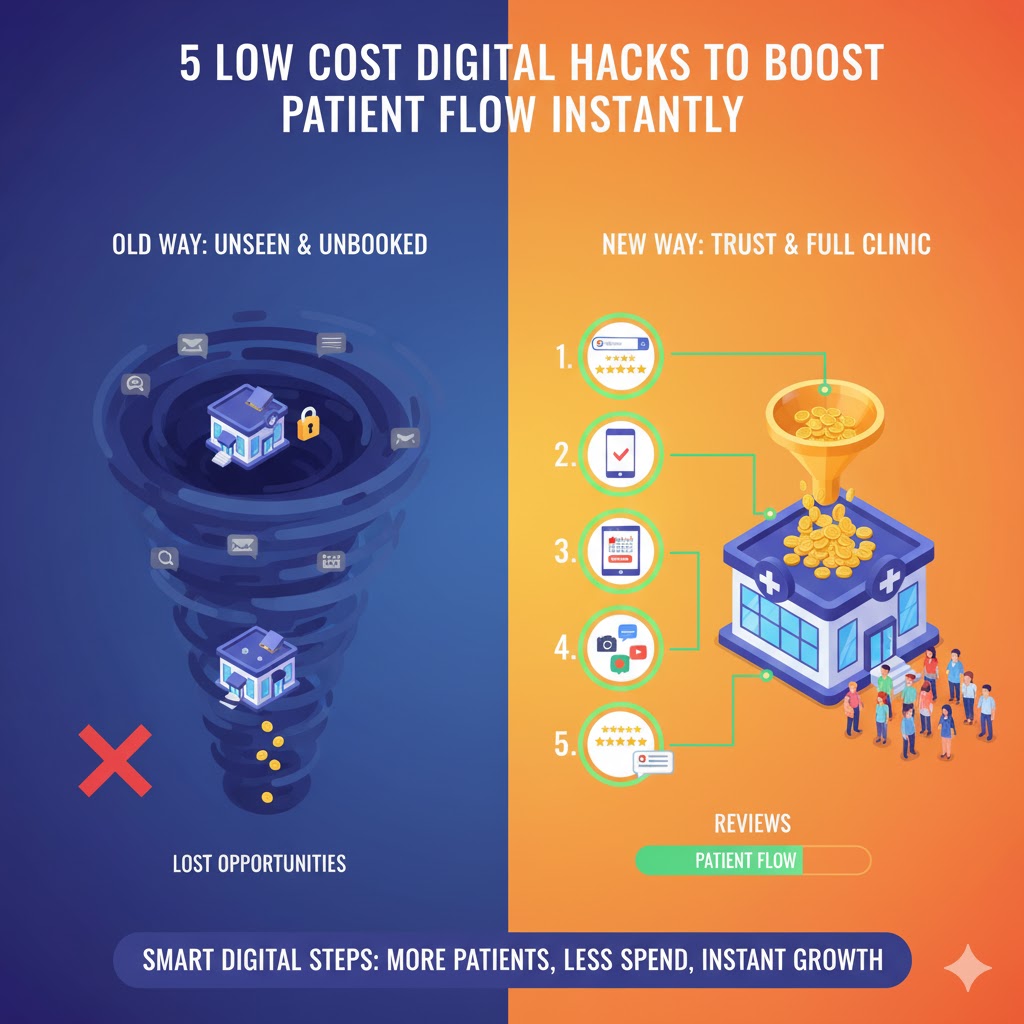
5 Low Cost Digital Hacks to Boost Patient Flow Instantly Running a clinic today is not only about good treatment. Patients also want quick answers, easy booking, and clear online info. The good news? You don’t need a big budget to make this happen.  Here are 5 simple, low cost digital hacks to bring more patients to your clinic fast:  1.) Google Business Profile: Your Free Online Signboard When patients get sick, I know they first go to Google. 77% of patients use search engines before booking appointments. My clinic needs to be seen when they search. 5% of all Google searches are health-related. This means millions of people in India are looking for doctors every day. If my clinic is not on Google Business Profile, I am missing these patients. Effortless growth for your practice, with patients always in focus Patients Find Me Fast When someone types “doctor near me” on Google, my clinic shows up with: My clinic name and address Phone number they can call right now Photos of my clinic What time I am open Reviews from happy patients I Get More Patients Customers are 70% more likely to visit a business with a complete Google Business Profile. This means if I fill in all the details, more patients will choose my clinic. It Works Like a Free Advertisement My Google Business Profile works 24 hours. Even when I am sleeping, patients can find my clinic online. They can see my timing, read reviews, and decide to visit. Quick Setup Guide Step 1: Claim My Profile (Free) I go to business.google.com I search for my clinic name If it shows up, I claim it If not, I create a new one Step 2: I Fill Complete Information I add these details: Clinic name: Exactly as written on my board Address: Complete with pin code Phone number: The main number patients call Hours: When I am available (morning and evening times) Category: “Doctor” or “Medical Clinic” Step 3: I Add Good Photos I take and upload: Front view of my clinic Inside photos of waiting area My consultation room Me in doctor coat (professional photo) Step 4: I Write About My Services In simple words, I write: What diseases I treat What age patients I see (children, adults, elderly) Special treatments I offer Languages I speak Results More Phone Calls Patients will call directly from Google when they see my number. No need for them to remember or write down. Patients Know I Am Open They can check my timing online. This stops them from coming when I am closed. Trust Builds Fast When patients see my complete profile with photos and information, they trust me before visiting. I Beat Other Doctors Many doctors in my area do not have complete profiles. When mine is complete, patients choose me first. Important Tips for Indian Doctors Use Hindi and English I write my services in both languages. This helps more patients understand. Add Festival Hours During Diwali, Eid, or Christmas, I update if my clinic is closed. Patients appreciate this. Put My Qualifications I mention my MBBS, MD, or specialist degrees. Indian patients want to know doctor’s education. Show My Clinic is Clean I post photos showing a clean waiting area and proper sanitization. After COVID, patients care about this. Update Often, Update Smartly Weekly I check if all information is correct I reply to any new patient reviews Monthly I add new photos if I renovate clinic I update services if I start treating new diseases During Festivals or Holidays I update my special timing I inform about emergency availability Digital Mistakes That Can Cost Patients Wrong Phone Number If patients cannot reach me, they go to another doctor. I double-check my number is correct. Old Photos Blurry or old photos make patients think my clinic is not good. I use clear, recent photos. No Reviews Response When patients leave reviews (good or bad), I must reply. This shows I care about patients. Missing Address Details Indian addresses can be confusing. I write a complete address with nearby landmarks like a particular bank or a library. Free Digital Helpers for Your Clinic Google Posts I can post health tips directly on my profile. When patients search, they see my helpful advice. Q&A Section Patients ask questions on my profile. I answer them. Other patients read these answers too. Messages Feature Patients can message me directly through Google. I can reply and help them. Why These Simple Hacks Outperform Costly Ads It is Completely Free Unlike newspaper ads or TV ads, Google Business Profile costs nothing. It Never Stops Working My profile is always online. It works even during holidays. Patients Trust It More When patients search naturally and find me, they trust more than paid advertisements. Local Patients Find Me It mainly shows my clinic to people near my area. These are the patients who will actually visit. This one-time setup will bring me patients for years to come. My clinic will be found by patients searching online. And I will never miss these opportunities again. 2.) WhatsApp or SMS Reminders I lose money when patients miss their appointments. No show rates average 17% nationwide, which means about 1 out of every 6 patients don’t come to my clinic. This hurts my income and wastes my time. What The Data Says: Studies show that text message reminders reduce no-show rates by 38%. Another study has shown that automatic appointment reminders can remove confusion in appointments by up to 60%. This means I can get back many lost patients just by sending simple messages. How This Works: When I send a reminder message 24 hours before the appointment, patients remember to come. Most people check their phones many times each day, so they will see my message. What I Should Do: I can use simple SMS tools that cost very little money I can use WhatsApp Business (it’s free) I should send the reminder 24 hours before … Read more

The Doctor’s Guide to Turning Casual Visitors Into Loyal Patients

loyal patients

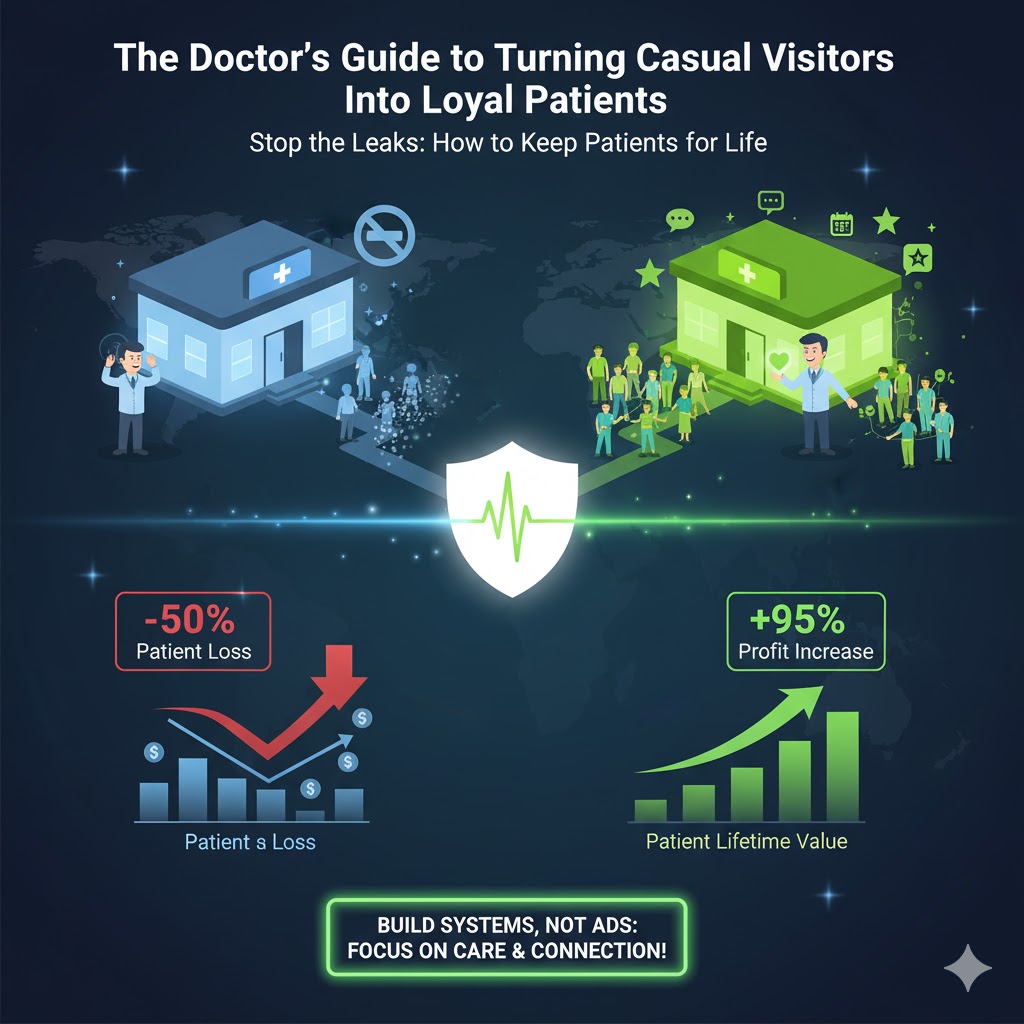
The Doctor’s Guide to Turning Casual Visitors Into Loyal Patients I run ads every month to bring new patients to my clinic. My Google ads work. My Facebook posts reach people. New patients book appointments. They come for their first visit. Then something strange happens. Half of them never come back. This keeps happening month after month. I spend money bringing them in. Then they disappear after one visit. For years I thought this was normal. I thought all doctors face this problem. Then I saw the numbers and everything changed. New patients have only a 5 to 20% chance of coming for a second visit. This shocked me when I first learned it. Out of every 10 new patients I bring through my door, only 1 or 2 will return. The other 8 or 9 will go somewhere else for their next health need. But here is what surprised me. Their estimated probability of returning for existing patients is 60% to 70%. That means if I do a good job and keep in touch, 6 or 7 out of every 10 will come back to me. The difference between new and old patients is huge. I was chasing the wrong goal the entire time. I thought I needed more new patients to grow my clinic. I spent all my marketing money on bringing fresh faces through the door. But the real opportunity was sitting right in front of me. My existing patients wanted to come back. They wanted to choose me again. I was not giving them a reason to remember me. The math tells an important story about my clinic’s money. Acquiring a new patient costs 6 to 7 times more than maintaining an old one. And every time I lose a patient after one visit, I lose all the money spent to bring them in. Then I have to spend that money again to replace them with someone new. Most doctors lose about 50% of their patient base over five years. This means half of all the patients I treat today will be gone in five years. They will find another doctor. They will visit another clinic. They will forget about me. This is not because I gave them bad treatment. This happens because I lost touch with them. The profit numbers opened my eyes even wider. A 5% increase in keeping the patients can raise my profits 25% to 95%. That means that keeping 5 more out of each 100 patients can actually double the income of my clinic. I do not need hundreds of new patients; what I need is to keep the ones I already have. I started looking at my own clinic’s numbers. The average patient brings between $12,000 and $15,000 in lifetime value. When someone visits me for years, they are worth more than a dozen one time visitors. They come for checkups. They bring their family. They follow my treatment plans. They trust me with their health over time. But I was treating every patient the same way. I would see them once. I would solve their problem. Then I would move on to the next patient. No follow up. No reminders. No messages to check how they were feeling. I thought good medical care was enough. I learned it is not. Patients today expect more from their doctors. 81% of patients feel unsatisfied with the care they got from their healthcare provider. This does not mean the medical treatment was bad. It means that the experience left them feeling forgotten. They want to feel cared for beyond the examination room. My clinic was bleeding patients and I did not even know it. The average healthcare business has a 45% growth rate but a 48% churn rate. This means I was losing patients faster than I was gaining them. My marketing was bringing people in through the front door. But they were walking out the back door after one visit. I realized something important about patient loyalty. Loyal patients are not born. They are created through consistent care and communication. When I stay connected with my patients between visits, they remember me. When I send them health tips, they see me as their trusted doctor. When I remind them about checkups, they feel valued. The cost of ignoring this problem is real. 19% of healthcare organizations lose 20% of their revenue because of poor patient retention. Some clinics lose even more. 43% of healthcare businesses lose more than 10% of their income from patients who never return. This money disappears because doctors like me were not paying attention. I learned that most doctors do not even understand their patient loss problem. 20% of practices admit they do not know where or why patients leave. 47% say they only have a moderate understanding of the issue. Only one third manage patient retention very well. Most of us are losing patients and we do not know how to stop it. The truth about ads and return on investment became clear. My ads were working. They brought patients in. But my retention was failing. I was not keeping them. This meant my return on investment was terrible. I was spending money over and over to replace patients I should have kept. This guide will show you how to change this pattern. You do not need more ads. You do not need bigger marketing budgets. You need systems that turn first time visitors into loyal patients. You need ways to stay connected after they leave your clinic. You need tools that make patients feel remembered and valued. Every section of this guide focuses on one simple truth. Keeping patients is easier and more profitable than finding new ones. When you build loyalty, your patients do your marketing for you. They tell friends. They leave good reviews. They bring family members. This kind of growth costs nothing and lasts forever. The strategies ahead are simple. They do not need technical knowledge. They do not need … Read more

Why Ignoring Patient Feedback Online Is Costing You Trust

Ignoring Patient Feedback

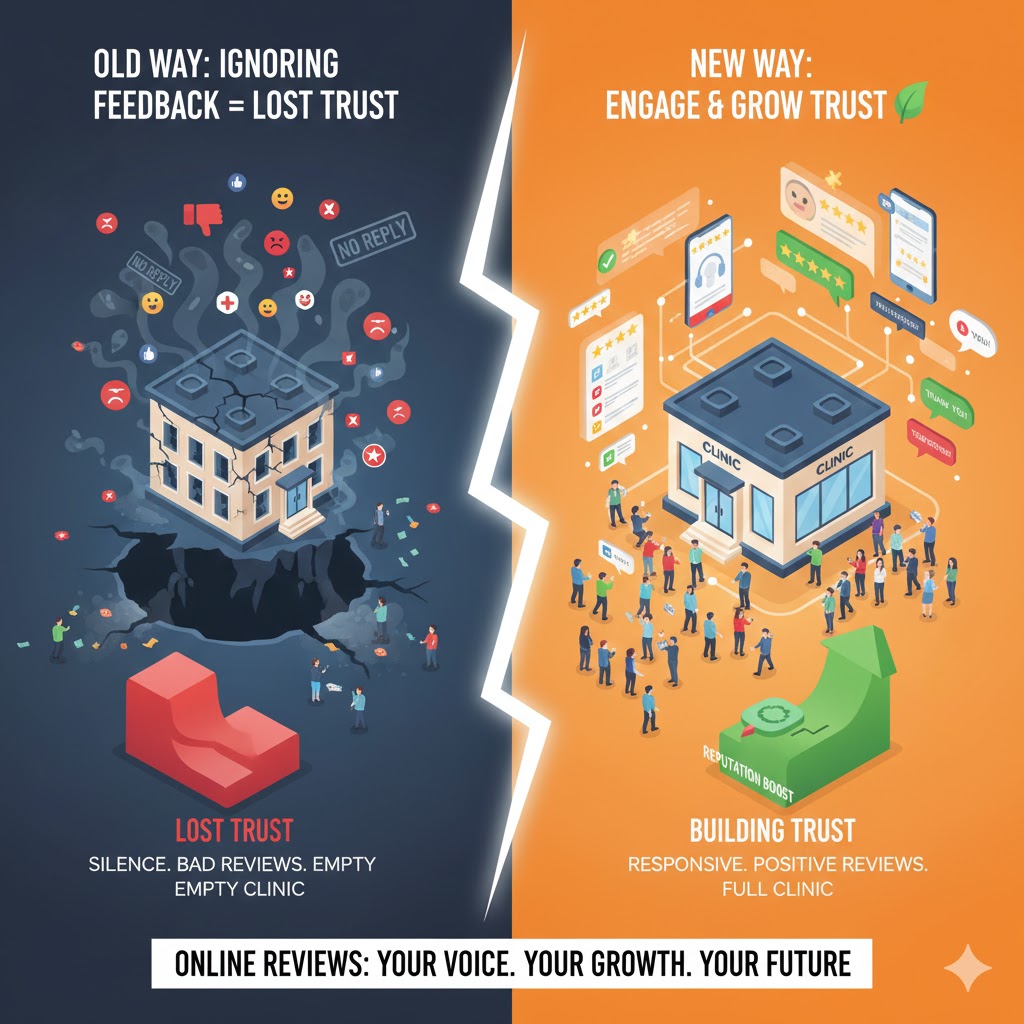
Why Ignoring Patient Feedback Online Is Costing You Trust My clinic had a problem I did not see coming. Patients were talking about me online. Some said good things. Some said bad things. I was not listening to any of it. I thought my medical skills were enough. I was wrong. Patients check online reviews when picking a healthcare provider. Three out of every four people read what others say before they book. I did not know that my online silence was hurting me. Every day I ignored reviews, I lost trust. Research found that 84% of patients read online review sites to check out providers. They read what past patients wrote. They believed those words. When I stayed quiet, they thought I did not care. The numbers opened my eyes to how serious this was. About 77% of people use online reviews as their first step in finding a new doctor. Before they call my clinic. Before they ask their family. They go online and read. If I was not there or not responding, I became invisible to them. I learned that patients trust online reviews as much as friend advice. Reports say 80% of people trust online reviews like personal recommendations. This shocked me. What strangers wrote about me mattered as much as what neighbors said. My reputation was being built by others while I stayed silent. The trust factor became clear when I dug deeper into patient behavior. Studies show 90% of patients use online reviews to check out doctors. Nine out of ten people look me up before deciding. They scroll through stars. They read comments. They judge me based on what they find. Without my voice there, they only heard one side. I discovered something else that changed how I think about reviews. More than one third of patients say a doctor’s online reputation is very important. Six out of ten patients picked a doctor because of positive reviews. Good words brought them in. The same research showed six out of ten avoided doctors because of negative reviews. Bad words pushed them away. The age of reviews matters more than I thought. Data shows 85.30% of patients look at how old a review is. They want recent information. Old reviews from three years ago mean nothing to them. They want to know what happened last month. If my reviews were old and ignored, patients thought things got worse. I found out patients need to see many reviews before trusting them. Reports say 74.7% of patients want at least seven ratings before they trust. Another 77.6% need seven similar comments before believing a pattern. Two or three reviews were not enough. I needed volume and I needed to engage with them. The specific number of reviews patients read was eye opening. About 70.96% of patients read between one and ten online reviews when deciding. Another study found 78.61% of patients check at least five online reviews. Some go deeper. Reports show that half of patients read ten or more reviews before picking. They do serious research before calling my number. The impact on my practice became obvious. Studies found that 40% of patients changed their care plans based on negative feedback online. They canceled appointments. They chose not to book at all. I was losing patients before they ever met me. All because I ignored what people said online. The platforms where patients look for me matter a lot. Google leads with 77.78% of patients using it in recent data. WebMD comes next with 52.47% usage. Health grades sit at 26.79%. Patients check many sites. They cross reference what they read. If I was only on one platform, I missed most patients. I realized that responding to reviews changes everything. Research shows 88% of consumers prefer a business that replies to all reviews. When I stay quiet, patients think I do not value their words. When I respond, I show I listen. This simple act builds huge trust with people reading. The response impact goes deeper than I expected. Studies found that consumers are 41% more likely to use a business that responds to all reviews. Not just good ones. My silence was costing me almost half of potential patients. They wanted to see me engage. Provider responses actually increase trust by 42% among people reading reviews. When I answer a comment, both the original patient and future readers trust me more. My words show I care. They prove I pay attention. They demonstrate I will listen if they become my patient. Another study showed 59.48% of patients prefer providers who respond to both positive and negative reviews. They do not want me to cherry pick. They want consistency. They want to see how I handle praise and criticism. My response style tells them about my character. The timing of my response matters as much as the words. Reports say 45% of patients value providers who actively respond to reviews. Another 41% said their trust increases when they see responses to feedback. These are not small numbers. Almost half of my potential patients judge me on this. I learned something powerful about negative reviews specifically. Data shows that 66% of people say providers answering negative reviews is very or moderately important. They do not expect perfection. They expect accountability. When bad things happen and I respond well, trust actually grows. The conversion from reviews to real appointments is direct. Studies found that businesses with high response rates saw 13.86% conversion from reviews to customers. Practices that respond turn online praise into real appointments. My silence was leaving money on the table every single day. Negative reviews can actually improve if I respond right. Research by Yelp showed 33% of users will upgrade their reviews if businesses respond with personal messages. A one star review can become three stars. A three star can become five. But only if I engage and make things right. The search visibility connects to reviews too. Online search drives three times … Read more

5 Small Changes in Patient Experience That Increase Revenue

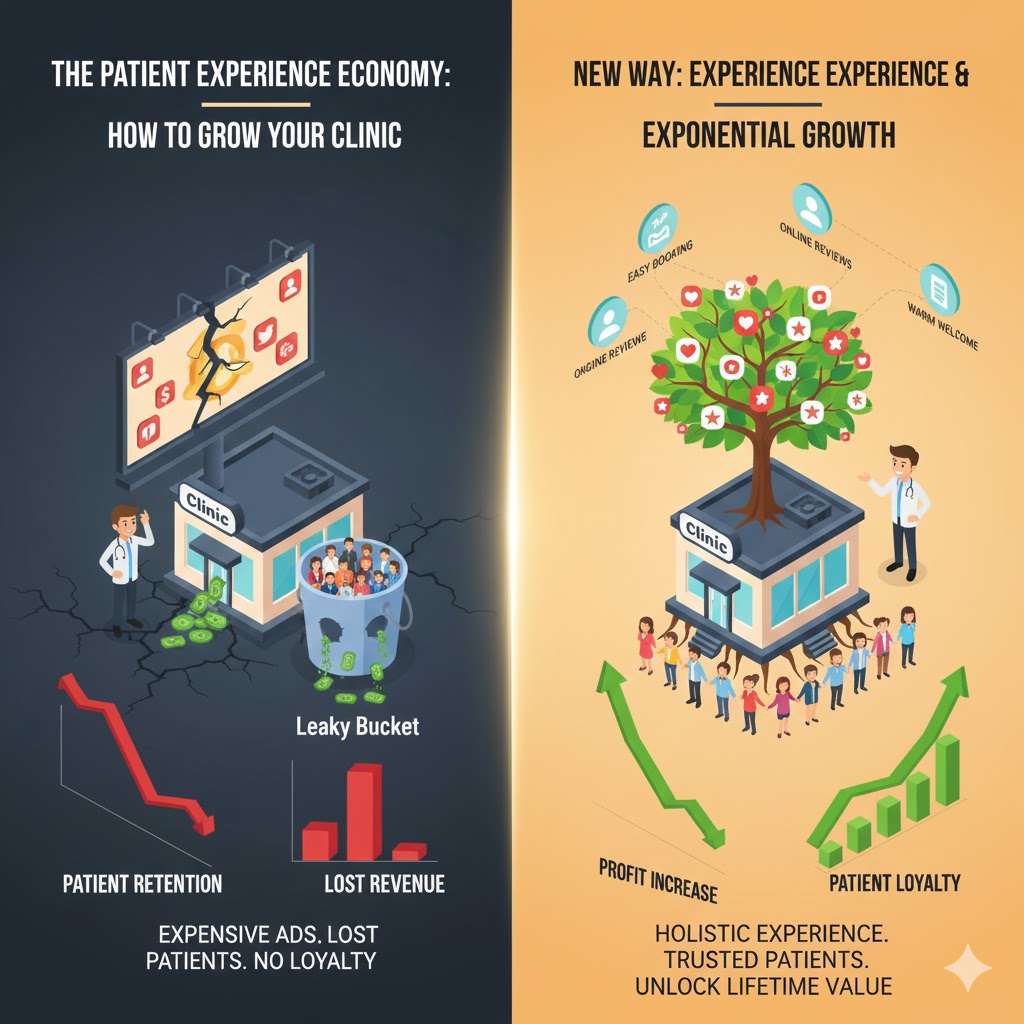
5 Small Changes in Patient Experiece that improves the Revenue I used to think that growing my clinic meant spending more money on advertising. I believed that more ads would bring more patients through my door. But I was wrong. The real growth came from something much simpler and much more powerful. It came from how I treated the patients who already walked into my clinic. The truth hit me when I looked at my numbers carefully. 92% of patients rate a good experience as extremely or very important. This meant that almost every patient who came to me cared deeply about how I treated them. Their experience mattered more than I realized. Nearly half of patients believe that their experience directly influences their health outcomes. When patients feel good about their visit, they actually get better faster. I discovered something surprising about patient experience and money. Better patient experience is associated with higher revenue and lower costs for hospitals. When I improved how patients felt during their visits, my income went up. My costs went down at the same time. This seemed too good to be true but the research proved it. High patient satisfaction scores lead to improved patient loyalty, increased referrals, and enhanced hospital visibility. Happy patients came back to see me again. They brought their family members with them. They told their friends about my clinic. This was free marketing that I did not have to pay for. The connection between experience and revenue became clearer to me. Satisfied patients are more likely to return for future treatments, recommend the hospital to others, and leave positive online reviews. Every good experience turned into more patients and more income. Every bad experience pushed patients away to my competitors. Hospitals with better experience levels earn disproportionately more than they spend compared to those with lower ratings. This meant that investing in patient experience gave me more money back than what I spent. Higher patient experience scores are associated with increases in revenue per patient as well as in expenses. But the length of the effect is stronger for revenue. My revenue grew faster than my costs when I focused on experience. I learned that small changes could make a big difference. I did not need to spend lakhs of rupees on fancy equipment or renovations. I did not need to hire dozens of new staff members. The changes that mattered most were simple. They were easy to do. They needed consistent effort every single day. Studies show that while 60 to 70% of patients will return to the same provider for their next visit after receiving quality care, 30 to 40% may switch providers. This scared me at first. It meant I was losing 3 or 4 out of every 10 patients because their experience was not good enough. That was money walking out my door to other clinics. The financial impact became impossible to ignore. Healthcare consumers will select facilities that offer smooth access and payment options over those that do not. My patients wanted simple things. They wanted easy booking. They wanted clear communication. They wanted respect and care. When I gave them these things, they chose me over other doctors. One of the most common reasons why patients choose one health system over another is the digital front door experience. The first impression I made online mattered as much as the care I gave in person. If my online presence was weak, patients would not even give me a chance. I realized that patient experience was not separate from my income. They were connected. Every smile at my front desk, every short wait time, every follow up message, every easy booking system added rupees to my revenue. Patient satisfaction is one of the most critical factors in hospital profitability. My clinic’s financial health depended on how my patients felt about me. The message became crystal clear. Better experiences led to better business. Happier patients meant higher income. Small changes in how I treated patients created big changes in my bank balance. I stopped chasing new patients through expensive ads. I started taking care of the patients I already had. That simple shift changed everything for my clinic. 1. First Impressions Start Before the Appointment A clean profile, friendly message, or quick reply online can win trust before the first visit My patients decide about me before they even walk through my clinic door. 77% of patients conduct an online search before scheduling an appointment with a healthcare provider. They search for me on Google. They check my clinic profile. They read what others say about me. All of this happens before they ever call to book an appointment. I learned something surprising about how patients choose their doctors. 92% of healthcare seekers read a clinician’s bio before booking an appointment. My profile picture and description matter more than I thought. Patients want to know who I am before they trust me with their health. They study my photo. They read about my education and experience. They form opinions about me from what they see online. Visual elements play a bigger role than I realized. 77% of patients rely on visual cues such as a professional headshot to build confidence in their choices. My profile photo is not a small detail anymore. It is often the first thing patients see about me. A clear, friendly photo helps them feel comfortable. A missing or poor quality photo makes them doubt me before we meet. More than half of all patients care deeply about knowing my background. 55% of patients say that understanding a medical professional’s background and experience directly influences their decision to book. They want to know where I studied. They want to see how long I have been practicing. They want to understand what makes me qualified to treat them. When my online profile has all this information, patients feel more confident about choosing me. Reviews have become the silent voice that speaks for … Read more

How to Build Trust With Patients Before They Even Visit Your Clinic

HOW TO BUILD TRUST WITH PATIENTS BEFORE THEY EVEN VISIT YOUR CLINIC Every day, millions of patients search online for healthcare providers across India. They scroll through websites, read reviews, and judge doctors they never met. This digital first meeting shapes trust before any clinic visit happens. Trust gets built or broken within those first few seconds online. Patients want confidence about their healthcare choices. They need proof they picked the right doctor for their family. Your online presence bridges the gap between doubt and trust. Research shows that 71% of patients use online reviews to see and select new doctors. Studies also reveal that 37% of patients depend on Google reviews when they choose healthcare providers. These facts tell us something critical about modern healthcare decisions. Think about your own buying habits when searching for services online. What makes you trust one business over another instantly? The same thinking applies to healthcare choices. Patients scan for signs of skill, care, and reliability online. Your website, social media, and patient reviews work together building this trust. They create the base of your clinic’s good name. This base must stay strong because patients make fast choices. Within seconds, they decide if your clinic looks trustworthy. The healthcare scene in India changed completely in recent years. India’s digital health market was valued at $8,794 million in 2024 and expects to reach $47,806 million by 2033. This growth shows how patients now prefer digital health solutions. Over 50 million Indians used teleconsultation services during the pandemic. This number proves that Indian patients embrace online healthcare research and services. They check symptoms online before visiting doctors. They compare treatments and read about medical procedures. Digital trust building starts with knowing what patients truly want today. They seek clear facts, honest talks, and proof of medical skills. They want to see other patients have good experiences. Most important is that they need to feel genuine care for their health. Your online reputation becomes your most valuable business tool in competitive healthcare. It works around the clock, bringing new patients while you rest. Every good review, helpful blog post, and patient story builds this trust. 1. Your Online Presence is Their First Appointment Your patients are finding you before they even call. This happens every day in Indian healthcare. Most patients conduct online searches before making appointments with doctors. This means your first meeting happens on their phone screen, not in your waiting room. When you need anything important, you search online first. Your patients do the same thing. They type “best doctor near me” or “diabetes specialist in Mumbai” into their phone. What they see in those first few seconds changes everything. About 78% of Indian patients research symptoms and treatments on social media before visiting the doctors. This is huge for your practice. Every patient walks through your digital door before they walk through your real one. Your internet site turns into your first impression. Your Google listing becomes your first greeting. Your social media pages become your first conversation. These moments matter more than any expensive equipment or fancy furniture. Here’s what happens when patients search for you online. They see your name in search results. They click on your website link. They scan your Google reviews. They look at your clinic photos. They read about your services. All these happen in under two minutes. About 71% of patients use online reviews as their first step to find new doctors. Your online reputation often creates their first impression of you. This happens before they know your qualifications or experience. When your online presence looks professional, patients feel confident. When your website loads fast and looks clean, they trust you more. When your Google profile shows good reviews, they want to book appointments. But when your online presence looks outdated or missing, patients worry. They think about other options. They might even choose a less qualified doctor who has better online presence. About 72% of patients trust reviews with 4 stars and higher. This shows how much online impressions matter to patient decisions. Your digital presence directly affects your patient numbers. The good news is simple. You can control your first impression. You can make sure patients see exactly what you want them to see. You can build trust before they ever call your clinic. This starts with understanding a basic truth. Your online presence is not marketing. It’s patient care. It’s the beginning of their healing journey. It’s where trust starts or stops. When you get your online presence right, amazing things happen. Patients call feeling confident about you. They arrive at appointments already trusting your expertise. They refer friends and family more often. They leave better reviews because their expectations were set correctly from day one. 2. Shine Where Patients Are Searching Your patients are not waiting for you to find them. They are actively looking for you right now. Every day, 5% of all Google searches are health related and 65% of patients search online before contacting a doctor. This means millions of people in India are typing symptoms, treatments, and doctor names into their phones every single hour. Think about your last medical search. You probably opened Google, typed your question, and expected quick answers. Your patients do the same thing. They want to know where you are, what you treat, and if other patients trust you. Search engines provide 350% more website traffic than social media for healthcare websites. The Indian digital health market was valued at Rs. 75,658 crore in 2024 and is expected to reach Rs. 4,11,275 crore by 2033. This growth shows patients are moving online faster than ever before. Your clinic needs to be where they are looking. Most patients start their search on Google. They type things like “best cardiologist near me” or “diabetes specialist in Mumbai.” Google then shows them a list of doctors and clinics. If your name is not on that list, you are missing potential patients every single day. … Read more

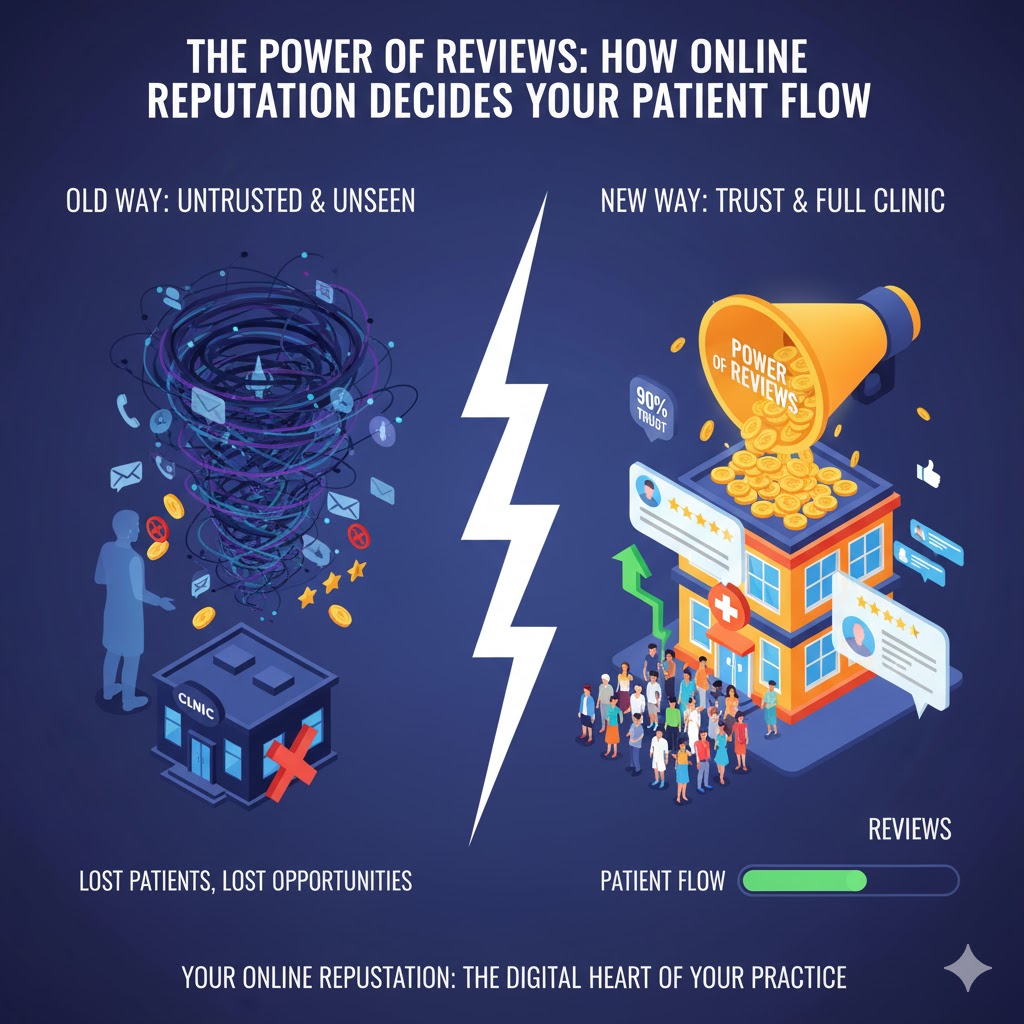
The Power of Reviews: How Online Reputation Decides Your Patient Flow

Reputation

The Power of Reviews: How Online Reputation Decides Your Patient Flow Your Patients Are Choosing You Before They Meet You. Think about when you need to buy something new. What do you do first? You go online. You read what other people say. You check the stars and ratings. Your patients do the same thing when they need a doctor. This is your new reality as a healthcare provider. Today, your reputation lives online. It talks to patients 24 hours a day. Even when your clinic is closed. Even when you are sleeping. Here are facts that will change how you think about your practice: Nearly 75% of patients turn to online reviews as the first step when searching for a new physician. This means 3 out of every 4 patients read about you online before they call your clinic. 84% of patients confirmed they check online reviews before choosing new healthcare providers. And 50 percent of participants read ten or more reviews, and 23 percent read 20 or more reviews. The most shocking part? 61% of patients now prioritize online reviews over referrals from friends and family members. Your online reviews now matter more than what their relatives tell them. Healthcare is different. When people choose a restaurant and it disappoints them, they just don’t go back. But when they choose a doctor, they are trusting you with their life and health. This makes them extra careful. They want to be sure. They want to read what other patients experienced. They want to know if you really care. They want to feel safe before they even step into your clinic. 84% of consumers trust reviews as much as personal recommendations. Your patient reviews now carry the same weight as a personal recommendation from their best friend. Healthcare in India is changing fast. Indian Digital Health Market was valued at Rs. 75,658 crore (US$ 8,794.4 million) in 2024 and is expected to reach Rs. 4,11,275 crore (US$ 47,806.9 million) by 2033. More patients are going online to find doctors. They are booking appointments online. They are reading reviews online. They are making decisions online. If you are not part of this online conversation, you are invisible to new patients. How Patient Trust Is Built Before They Meet You Your online reviews do three important things: First, they show patients you exist. 65% of general practitioners have no online reviews. If you have no reviews, you look like you don’t exist online. Second, they show patients you are trustworthy. 80 percent of respondents expect five or more reviews before they deem a provider to be trustworthy. Third, they show patients what to expect. Reviews tell them if you are kind, if you listen, if your staff is helpful, if your clinic is clean. The Simple Truth About Reviews and Patient Flow More positive reviews equals more patients. It is that simple. Reviews work like digital word of mouth. But they are more powerful than regular word of mouth because: They stay online forever They reach thousands of people They work even when you are not there They answer patient questions you never hear What This Guide Will Teach You We will show you exactly how online reviews control your patient flow. We will give you simple steps to get more positive reviews. We will teach you how to handle negative reviews without making things worse. Most importantly, we will help you turn your happy patients into your best marketing team. Your online reputation is not just about marketing anymore. It is about the survival and growth of your practice in today’s digital world. 1. The First Impression Is Online Today, your clinic competes in a world where patients use their phones before they use their feet. 72% of internet users seek health related information online. And this number keeps growing every year. Think about your own life. When you want to try a new restaurant, buy a phone, or book a hotel, what do you do first? You search online. You read reviews. You check ratings. Your patients do exactly the same thing when choosing a doctor. The Search Happens Long Before The Visit 90% of patients search online before making a decision about which practice to visit. And almost 75% of patients turn to online reviews as the first step when searching for a new physician. This means most patients have already decided if they want to visit you before they even pick up the phone. Here is what happens in a typical patient journey: Step 1: Patient feels unwell or needs medical care Step 2: Patient opens Google and types “best doctor near me” or “good pediatrician in my area” Step 3: Patient sees your clinic name in search results Step 4: Patient clicks on your Google listing to check reviews and ratings Step 5: Patient decides whether to call you or look for another doctor Notice something important here? Steps 2, 3, and 4 all happen online. Your reputation on the internet shapes their choice before they even know your address. In the past, patients chose doctors based on recommendations from family and friends. Today, online reviews serve the same purpose, but they reach thousands more people. 88% of patients trust online reviews as much as personal recommendations. Your Google reviews become your digital word of mouth. They tell stories about your clinic to people who have never met you. Good reviews work 24 hours a day, 7 days a week, convincing new patients to choose you. The Mobile Revolution Changed Everything Most people now search for doctors on their phones. They might be sitting at home feeling worried about symptoms, or they may need to find a clinic quickly while out of town. When they search on mobile, they see: Your clinic name Your star rating (the golden stars next to your name) How many reviews you have Your location and phone number This small screen space is your first chance to make a good impression. … Read more