class="archive category category-healthcare-marketing category-1 wp-custom-logo wp-embed-responsive wp-theme-generatepress ehf-template-generatepress ehf-stylesheet-generatepress right-sidebar nav-float-right separate-containers header-aligned-left dropdown-hover elementor-default elementor-kit-797" itemtype="https://schema.org/Blog" itemscope>

Why Boosting Posts is Killing Your Budget (Do This Instead in 2026)
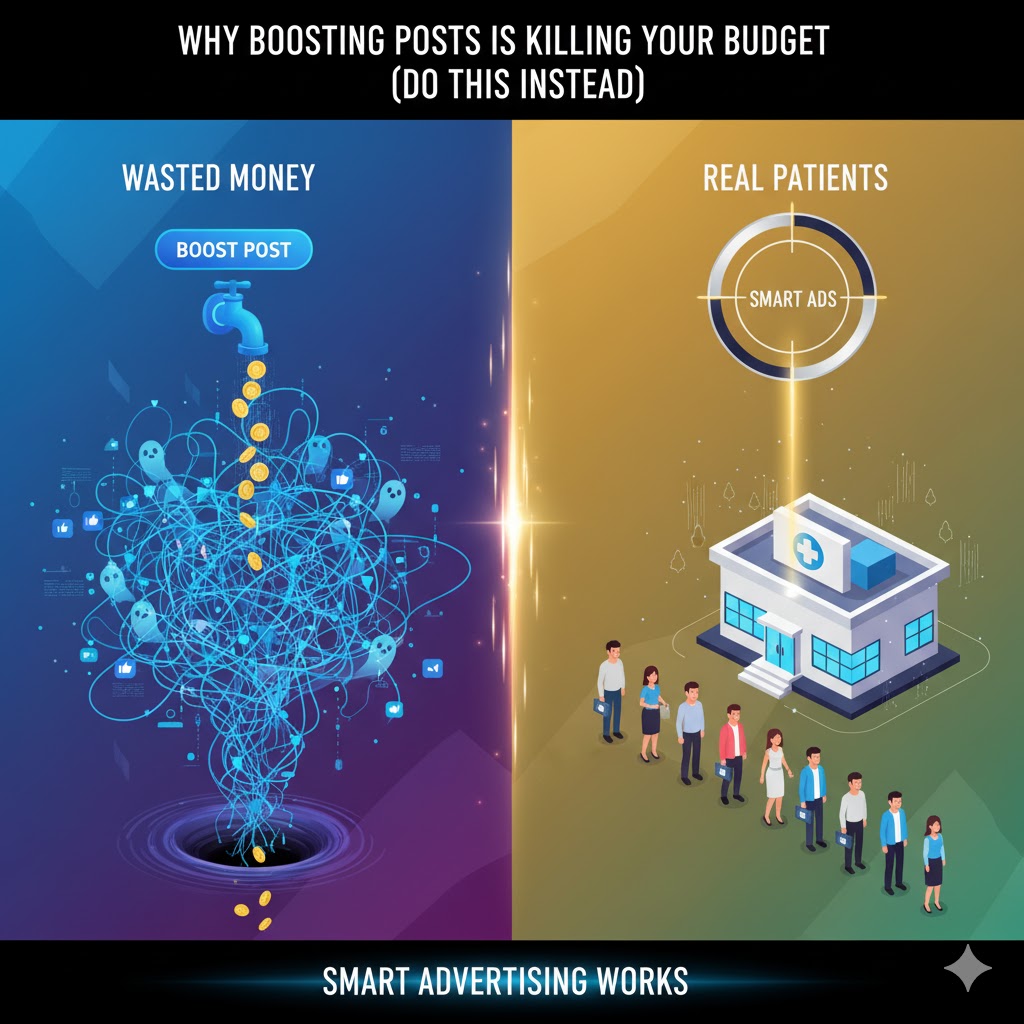
Why Boosting Posts is Killing Your Budget (Do This Instead in 2026) You open your phone between patients. You see that blue button on your clinic’s post. It says Boost Post. You think it will bring more patients to your clinic. You click it. You spend money. Days pass. You get some likes and comments. But your appointment book stays the same. Your phone does not ring more than before. New patients do not walk through your door. This happens to doctors every single day across India. You are not alone in this. The boost button feels like an easy answer to grow your practice. It promises to show your post to thousands of people. It tells you that more eyes mean more patients. But that promise breaks when you check your bank statement at month end. Here is what happens when you boost a post. Your money goes out to show your clinic to random people. These people might live far from your area. They might not need your services right now. Some might not even need a doctor at all. They scroll past your post while watching cooking videos or checking cricket scores. They might tap like because your post looks nice. Then they forget about you in three seconds. Your budget disappears into thin air. You spent real money. You got fake growth. Likes do not book appointments. Shares do not fill your waiting room. Comments do not pay your clinic bills. You need actual patients who call you and visit you and trust you with their health. Most doctors think boosting posts means doing digital marketing. It does not. Boosting is like throwing pamphlets from a moving car. Some papers land on people. Most papers fall on empty roads. Nobody reads them properly. Nobody acts on them. Your message gets lost before it reaches the right person. Real advertising works very differently. It finds people who actually search for your services. It speaks to patients in your neighborhood who need your expertise right now. It turns your budget into measurable results. It brings appointments that you can count and track. That is the difference between boosting and actual marketing. This guide will show you why boosting kills your budget slowly. You will learn where your money goes when you click that button. You will understand why smart doctors stopped boosting years ago. More importantly, you will discover what works instead. This is how proper advertising brings real patients without wasting a single rupee. Your time matters. Your money matters. Your practice deserves marketing that actually works for you. a.) Stop Hitting “Boost”. Start Getting Real Results You see a post doing well on your clinic page. Maybe it got 20 likes or a few shares. Then you spot that bright blue button saying “Boost Post.” You think it will help more people see your clinic. So you pay 500 rupees or maybe 1000 rupees. You wait. You hope. But what happens next? Your post reaches more people. The number goes up. You feel good for a moment. Then you check your appointment book. Nothing has changed. No new patients called. No one walked in asking about your services. The likes went up, but your patient list stayed the same. This happens to doctors every single day. They spend money on boosting posts because it feels easy. The platform makes it look like the right choice. You click one button and your post goes out to thousands of people. It sounds perfect. But here is the truth that most doctors learn too late. Boosting a post does not bring you the right people. It shows your content to anyone and everyone. Someone in another city sees it. A student with no money sees it. People who will never visit a clinic see it. Your money gets spread across all these random people. None of them become your patients. Think about it this way. You run a dental clinic in Pune. You boost a post about teeth whitening. The platform shows your post to people in Delhi, Mumbai, Bangalore. They see it, they scroll past it. Some might even like it. But they will never book an appointment with you because they live too far away. Your 1000 rupees paid to show your work to people who cannot use your services. Now compare this to a patient who actually needs you. She lives 3 kilometers from your clinic. She has been searching online for a good dentist nearby. She types “best dentist near me” into her phone. But she never sees your boosted post. Why? Because boosting does not target people based on what they search for or what they need right now. It pushes your post out randomly. This is where most clinic owners lose money month after month. They keep hitting that boost button hoping something will change. They see the reach numbers grow and think it means success. But reach does not equal results. Seeing your post does not make someone pick up the phone and book a consultation. Let me share what happened with a dermatologist we worked with last year. She had been boosting posts for eight months. Every time she shared something about skin treatments or monsoon skincare tips, she would spend 800 to 1200 rupees boosting it. Her page followers grew from 400 to 1100. Sounds good, right? But when we asked her how many new patients came from those boosted posts, she went quiet. She could not name even five people. She spent over 70000 rupees in eight months. The return? Almost nothing. Her reception desk did not get busier. Her appointment slots did not fill up faster. She got likes and comments from people she would never meet. We stopped her boosting habit immediately. Instead, we set up proper ad campaigns. We focused only on people within 10 kilometers of her clinic. We targeted women aged 25 to 50 who had shown interest in skincare, beauty treatments, and … Read more

Case Study: How One Clinic Tripled Patient Flow With Digital Ads

Case study

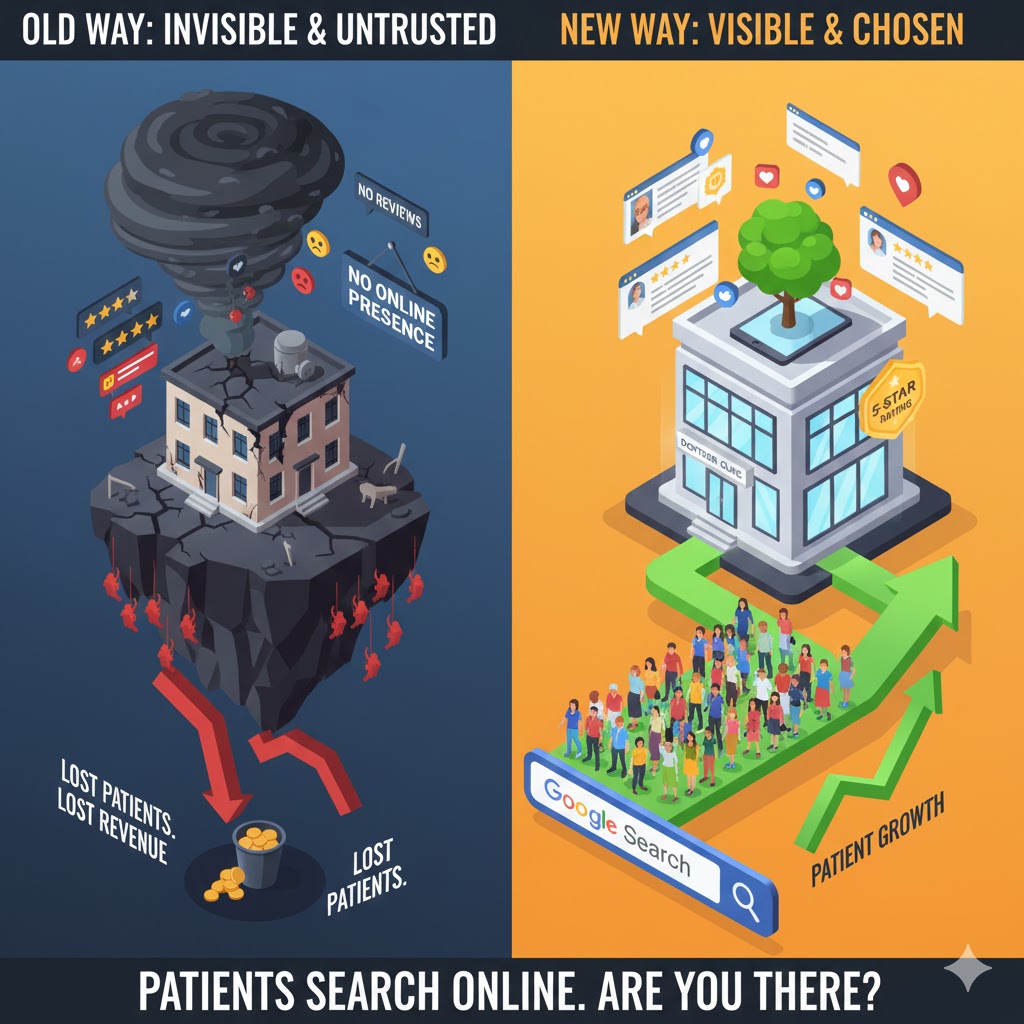
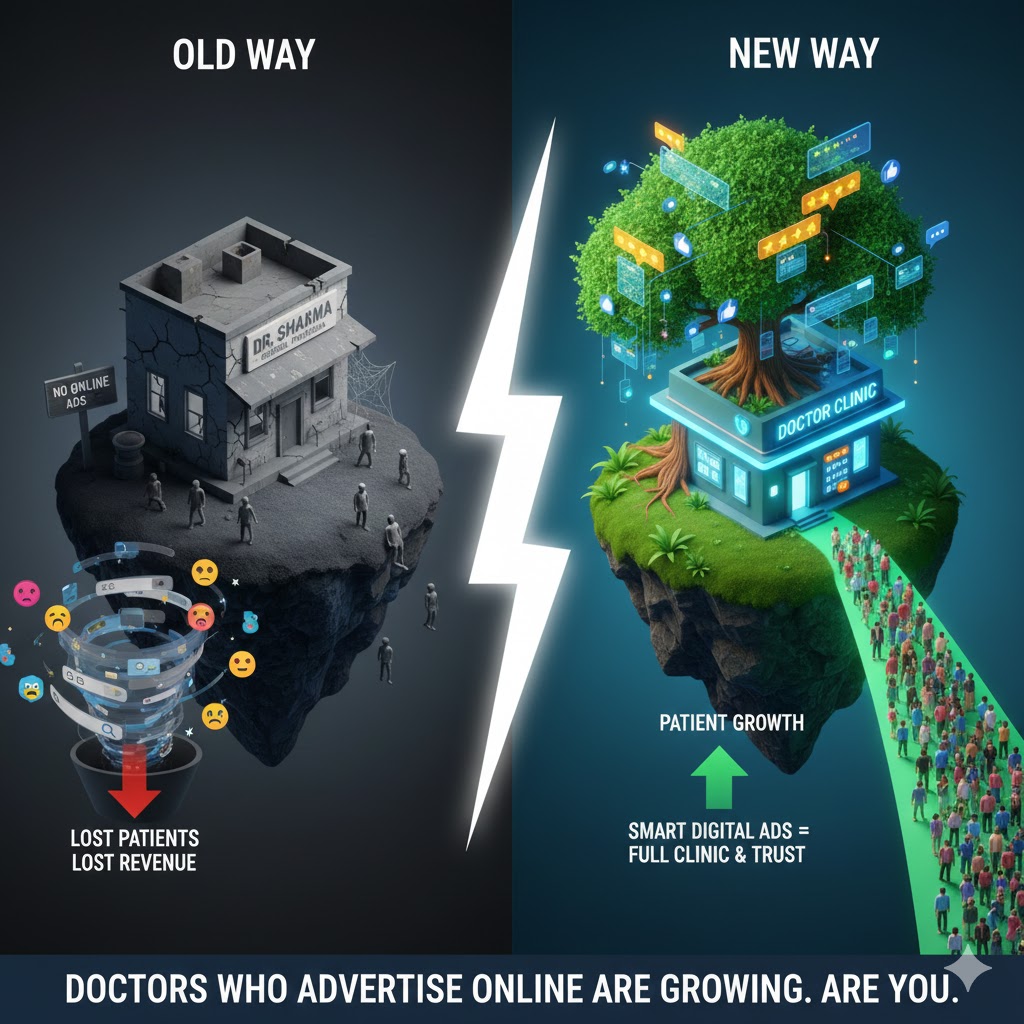
Case Study: How One Clinic Tripled Patient Flow With Digital Ads Dr. Sharma ran a good clinic in Pune. He had years of experience treating patients. His clinic was clean and the staff was friendly. But something was wrong. Every day he saw many empty appointment slots. The waiting room stayed quiet most mornings. He knew he could help more people. But those people were not coming through his door. This is a real problem many doctors face today. You have the skills to treat patients. You have good equipment and a caring team. But your clinic stays half empty while you wait. The problem is not your medical knowledge. The problem is that patients cannot find you when they need help. Years ago, doctors got patients through word of mouth. One happy patient told ten friends. Those friends came to your clinic. That was enough to keep you busy. But things have changed now. People do not ask neighbors for doctor recommendations anymore. They pick up their phone and search online. They type their health problems into Google. They look for clinics near their home. If your clinic does not show up in those searches, patients will never know you exist. This case study shows how one clinic fixed this problem. They did not change their medical practice. They did not hire expensive consultants or redesign their clinic. They made one simple change. They started using digital ads to reach patients who were already looking for help. The results came slowly but they were real. Month by month, more patients started calling. Appointment slots began to fill up. Within one year, the clinic was treating three times more patients than before. The best part is that any clinic can do this. You do not need to be in a big city. You do not need a huge budget. You only need to understand where your patients are looking. Then you need to show up there with a clear message. This story will show you exactly how it happened. And how your clinic can grow the same way. 1. The Clinic Was Doing Everything Right Good Doctor, Clean Rooms, But Something Was Still Missing Dr. Sharma ran a small clinic in a busy part of Pune. He had studied medicine for years and cared deeply about his patients. His clinic was clean and well kept. The staff was polite and helpful to everyone who walked in. Patients who visited him always left happy. They got better after taking his medicines. Many of them told him that he was a good listener. He never rushed through appointments. He explained every health problem in simple words. Parents trusted him with their children. Old people felt safe under his care. The clinic had all the right equipment. The waiting area had comfortable chairs. There was clean drinking water for visitors. The bathroom was always tidy. Medicines were stored properly and bills were clear. Everything inside the clinic worked well. Dr. Sharma followed all the rules. He kept patient records updated. He attended medical seminars to learn new things. He read about new treatments and medicines. His knowledge was current and his intentions were honest. There was no reason for patients to complain. But something strange was happening every day. The appointment book had too many empty slots. Some days only five or six patients came in. The clinic could handle thirty patients easily. But the rooms stayed quiet for hours. The staff had free time they did not need. Dr. Sharma could not understand why this was happening. He knew he was a skilled doctor. His patients got results. His prices were fair and reasonable. The location was good with enough parking space nearby. There was a bus stop only two minutes away on foot. He tried to think about what was going wrong. Maybe people did not like the clinic color. Maybe the signboard was too small. Maybe he needed to offer discounts. He even thought about changing his clinic timings. But none of these felt like the real answer. Other clinics in the area seemed busier. Some of them did not even have good reviews. Their doctors were not more qualified than him. Yet their waiting rooms were always full of people. This made Dr. Sharma feel confused and a bit sad. He started asking his current patients how they found him. Most of them said they lived nearby. A few said their relatives told them about the clinic. Some had walked past the building and saw the name board. Almost no one had searched for him online or seen any information before visiting. The truth was becoming clear but he had not seen it yet. His clinic was doing everything right on the inside. But the outside world did not know he existed. Being good at your work is important. But people need to know about you first. That was the one thing missing from his perfect clinic. 2. The Hidden Problem No One Saw Nobody knew the clinic was there, even though it was right in their neighborhood Dr. Sharma ran a good clinic in a busy part of town. His patients always left happy. The treatment was good and the staff was kind. But something strange was happening every single day. The waiting room stayed half empty most mornings. The phone barely rang during lunch hours. Evening slots went unfilled week after week. Dr. Sharma could not understand why this kept happening to him. He checked everything he could think of. The clinic was clean and bright. The fees were fair and reasonable. Patients who came once always came back again. Reviews on Google were mostly positive and encouraging. So what was going wrong here? The answer was hiding in plain sight. People in the area did not know the clinic existed at all. They walked past the building every day going to work. They lived only two streets away from the clinic. But they never noticed … Read more

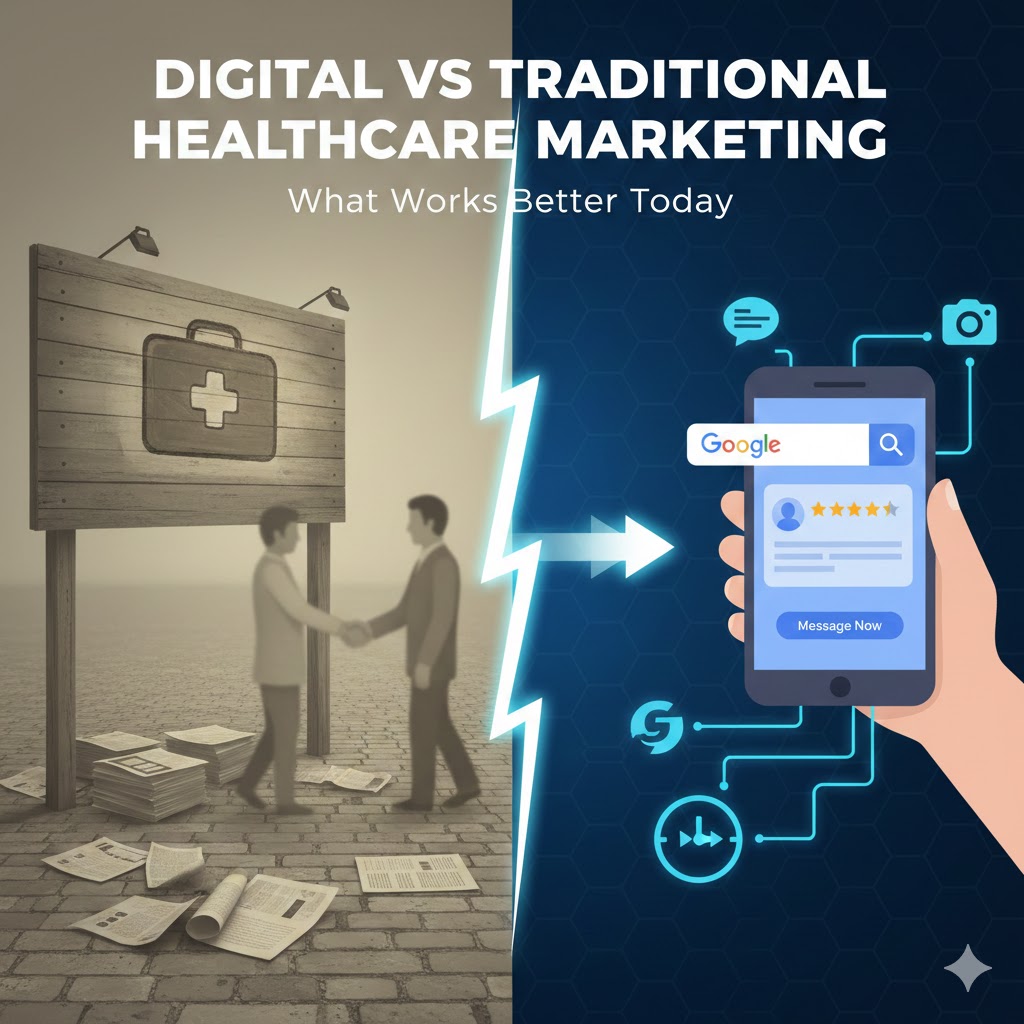
Digital vs Traditional Healthcare Marketing: What Works Better Today (2026)

Digital vs Traditional Healthcare Marketing

Digital vs Traditional Healthcare Marketing: What Works Better Today (2026) The way patients find doctors has completely changed. Ten years ago, a patient would ask their neighbor or family member for a clinic recommendation. They would walk past a billboard on the main road. They would pick up a pamphlet at a local shop. That was how healthcare reached people back then. Today, a patient feels unwell and picks up their phone. They type their symptoms into Google. They read reviews about doctors near them. They check clinic photos and timings on a website. They book an appointment through a message or call. All of this happens in less than ten minutes. This shift is not small. It has changed everything about how clinics and doctors must present themselves. The old ways have not disappeared completely. But they no longer work alone. Patients now expect to find information fast. They want to see proof before they trust. They compare options before they decide. Traditional marketing was built for a slower world. It relied on memory and word of mouth. Digital marketing works for today’s world. It meets patients where they already are. It answers questions before they are even asked. It builds trust through visibility and speed. For doctors and clinics between the ages of 31 and 55, this change brings both pressure and opportunity. You have built your practice with care. You have earned trust through good treatment. But now, that trust needs to be visible online too. Patients will not wait for referrals anymore. They will search, and if they do not find you, they will find someone else. This article will walk you through both sides. We will look at what traditional marketing did well. We will see why it is slowing down. We will explore how digital marketing fills the gap. And we will show you how using both together can bring steady growth without losing the personal touch that makes your practice special. The goal is simple. Help you understand what works today. Help you see where your efforts should go. And help you reach more patients without wasting time or money on methods that no longer deliver results. Digital vs Traditional Healthcare Marketing 1. The Way Patients Choose Has Changed Your patients now start their search on Google, not at your reception desk Ten years ago, a patient would ask their neighbor about a good doctor. They would walk into the clinic nearest to their home. They trusted the doctor their family had visited for years. That system worked because people had fewer choices and less information. Today, things are different. Patients open their phones when they feel unwell. They type their symptoms into Google. They look for doctors who treat their specific problem. They read reviews left by other patients. They check clinic timings and services before calling. They compare two or three options before booking an appointment. This change happened slowly but it changed everything. The internet gave patients power to choose. They no longer depend only on what their family tells them. They want to see proof that a doctor is good at their job. They want to know if other patients were happy with the treatment. They want to feel sure before they spend money and time. A clinic in Mumbai recently shared their experience. They had been running for fifteen years with good word of mouth. But new patients stopped coming. When they checked, they found that people were searching for their services online. The clinic had no website. Their phone number was wrong on Google. Patients could not find them even when they were looking. The clinic lost patients not because their treatment was bad. They lost patients because they were invisible online. Another example comes from a dentist in Pune. He relied on newspaper ads and pamphlets. He spent money every month on printing and distributing them. But the response was weak. Then he started getting calls from people asking if he did root canals. He realized patients were searching online for specific treatments. He created a simple profile on Google with his services listed clearly. Within three months, his appointments doubled. Patients today behave like shoppers. They research before they buy. They want information fast. They want to see photos of your clinic. They want to read what others say about you. They want to contact you without making a phone call first. If they do not find you online, they assume you do not exist. If your information is outdated, they move to the next name on the list. This shift is not only happening in big cities. Patients in smaller towns also use smartphones now. They search for specialists when local doctors refer them. They look for second opinions. They want doctors who explain things clearly and update them daily. The old methods of building trust through slow word of mouth still matter. But they do not work fast enough anymore. The way patients choose doctors today is based on what they can see and verify fast. If you are not part of that process, you miss out on patients who are actively looking for care. The first impression now happens online. It happens before the patient walks into your clinic. That first impression decides whether they will call you or call someone else. 2. Traditional Marketing Had Its Time Boards, Pamphlets, and Referrals Worked Earlier There was a time when patients found doctors through simple methods. They walked past clinic boards on busy streets. They picked up health pamphlets from waiting rooms. They asked neighbors and family members for recommendations. This was how healthcare marketing worked for decades. Back then, patients had fewer choices and less information. They trusted what they saw around them. A clean board outside your clinic meant you were serious. A well designed pamphlet showed you cared about details. Word of mouth from a satisfied patient brought in new families. Doctors did not need to do much to … Read more

7 Proven Digital Strategies to Get More Patients

Digital Strategies

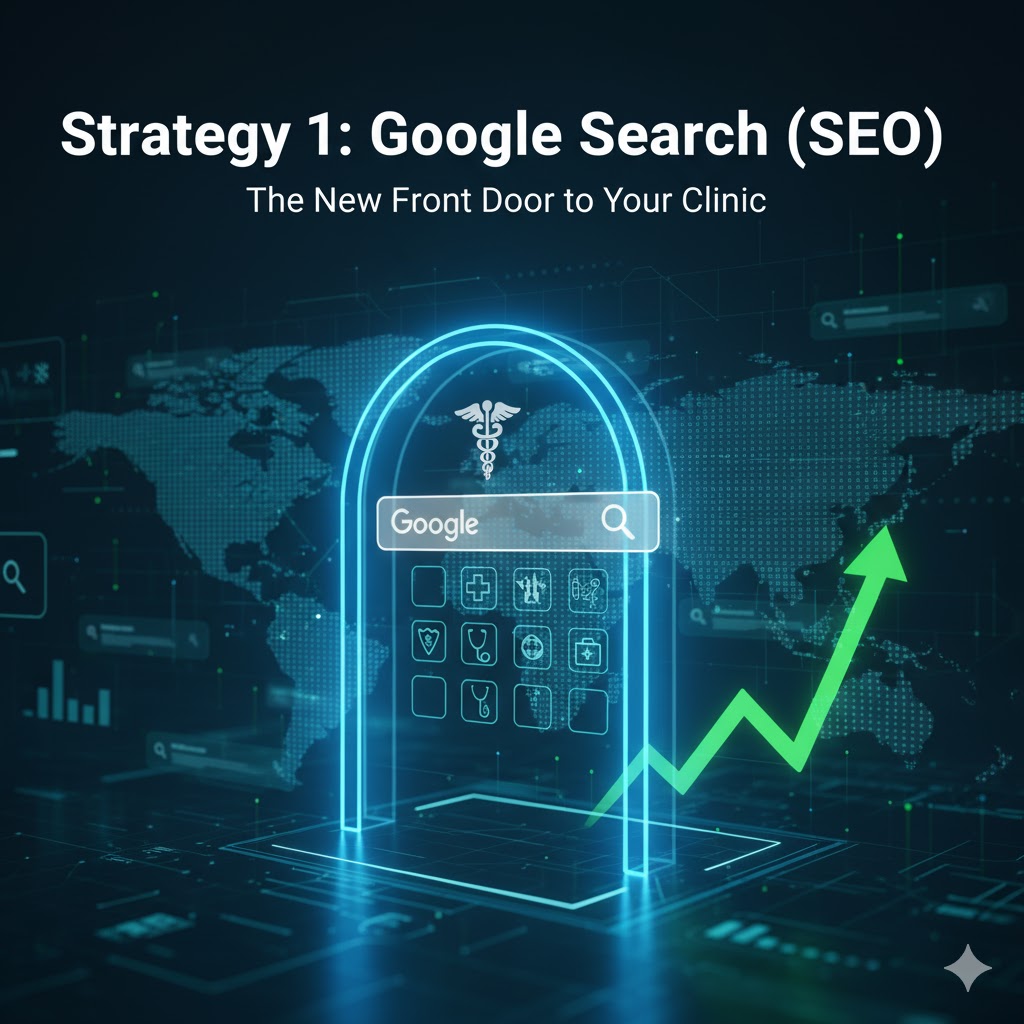
7 Proven Digital Strategies to Get More Patients Digital Marketing is important nowadays. Doctors and clinics cannot only depend on word of mouth. Patients today search online first. If you are not visible, they will go to another clinic. Below are 7 digital strategies that work. Strategy 1: Google Search (SEO): The New Front Door to Your Clinic The Facts: More than 7% of daily searches on Google related to healthcare That’s  amounts to over 1 billion health questions every day 77% of people use search engines before booking an appointment Search engines bring 350% more visitors compared to social media What This Means for Me: I need to find when patients search online. Most of my new patients will search for me before calling or visiting. Simple Steps I Can Take for this strategy: This will involve setting up Google Business Profile, which is free and shows my clinic for searches of “dentist near me” Use the right words on my website to write about problems my patients have using simple words. Later they can search for it. Get patient reviews by asking happy patients to write reviews on Google Keep my website updated by adding new content every month about common health questions Why This Works: 79% of healthcare providers say website optimization and SEO are their main ways to attract new patients Digital Strategies Strategy 2: Social Media: Where First Impressions Become Lasting Trust The Facts: More than 80% of people aged 18-49 seek health information on social media 64% of older adults seek health advice online before visiting a doctor What This Means for Me: My patients are already on social media looking for health answers. I can be there to help them and show them I care. Simple Steps I Can Take for this strategy: Post helpful health tips – easy tips that patients can apply at home Let my team and office be shown. Let people see who I am and where they’ll come Answer common questions: Make short videos answering questions that patients always ask Share success stories – With patient permission, show how I’ve helped others Why This Works: People trust doctors who take the time to educate and help them for free. Strategy 3: Online Appointment Booking: Easy Scheduling, Happy Patients The Facts: 72% of patients are ready to book appointments online, but only 10% actually do 88% of healthcare appointments are still scheduled by phone What This Means for Me: There’s a huge gap. Patients want to book online, but most clinics don’t offer it. I can get ahead by making booking easy. Simple Steps I Can Take for this strategy: Add online booking to my website – Use simple booking software that connects to my calendar Put booking buttons everywhere – On every page of my website and social media Make the process simple – Ask for only the most important information Send automatic reminders – Reduce no-shows with text and email reminders Why This Works: When I make it easier for patients, more patients will choose me over competitors who only take phone calls. Clickniti Digital Strategy 4: Content Marketing – Become the Expert Patients Trust The Facts: 72% of healthcare marketers believe that content creation is the most effective SEO strategy 62% of healthcare organizations outsource content creation to publish more material What It Means For Me: When I share helpful information, I show patients I know what I’m doing. This way, it builds trust before they ever meet me. Simple Steps I Can Take for this strategy: Write blog posts: Answer the top 10 questions that patients ask me every week Make simple videos showing patients what to expect during procedures Create patient guides: The student will create easy-to-read handouts about common conditions Email newsletters – sending monthly tips to patients and people who are interested in my services Why This Works: When clients see I take the time to educate them, they trust me more and prefer me over other doctors. Strategy 5: Online Reviews Management: Let Patient Smiles Speak Louder Than Ads The Facts: 77% of people use search engines to research healthcare providers before booking The first thing that people come across while searching for my clinic are the reviews What this means for me: Good reviews bring in new patients, bad reviews or no reviews cost me patients every day. Simple Steps I Can Take for this strategy: Ask every happy patient: Send a simple text or email asking for a review Make it easy: Give patients direct links to review sites Respond to all reviews: Thank patients for good reviews and fix problems from bad ones Track my reputation: Check what people are saying about me online every week Why This Works: New patients see all the good reviews and trust me before they even call. Strategy 6: Email Marketing: Your Care Shouldn’t End at the Door The Facts: Email marketing has one of the highest returns on investment in healthcare It costs much less to keep current patients than to find new ones What this means for me: My past patients are my best source of new appointments. I must keep in contact with them. Simple Steps I Can Take for this strategy: Collect email addresses: Ask every patient for their email when they visit Appointment Reminders: Reduce no-shows and last-minute cancellations Share health tips: Send out monthly emails related to seasonal health advice Announce new services: Inform my existing patients about new treatments I provide Why This Works: When patients hear from me daily, they remember to book their next appointment.They also refer friends to me. Strategy 7: Make Your Clinic the Talk of the Town The Facts: Most patients want a doctor close to home or work “Near me” searches are growing every year What This Means for Me: I don’t need to compete with every doctor in the state. I need to be the best choice in my local area. Simple Steps I Can Take for this … Read more

How Patients Choose Doctors Online: What You’re Missing Right Now

How Patients Choose Doctors Online: What You’re Missing Right Now a.) Patients Search for Everything Online I need to know this: 90% of patients do online research before deciding which practice to visit. They look for doctors “near me” or by my specialty. 72% of patients view online reviews when selecting a new provider. If I don’t show up on Google Maps or search results, they will choose someone else. What this means for me: If my clinic has no strong online presence, patients may never find me. Why This Is Important Right Now Here are the facts I need to understand: 61% of users now schedule appointments online 47% have looked online for information about doctors or other health professionals 71% of patients use online reviews to check and select a new doctor 7% of Google searches each day are healthcare-related This means millions of people are searching for doctors like me every single day. What My Patients Are Doing Online When my patients need a doctor, this is what happens: They search Google first. They type “doctor near me” or “heart doctor in my city.” They read reviews. 88% of patients trust online reviews as much as personal recommendations. They look at Google Maps. They want to see where I am located and how to get there. They check my website. They want to know about my services and how to book. They call or book online. If everything looks good, they contact me. What I’m Missing If I’m Not Online If patients can’t find me online, I am losing them to other doctors. Here’s what’s happening: Lost appointments: Patients book with doctors they are easy to find Lost trust: Patients think I am not modern or updated Lost money: Each missed patient means less income for my practice Simple Steps I Can Take Right Now Step 1: Get on Google Business Profile I need to create my Google Business Profile (it’s free) I must add my clinic address, phone number, and hours I should upload photos of my clinic and myself I need to keep my information updated Step 2: Ask for Reviews I should ask happy patients to leave reviews 37% of patients use Google Reviews Good reviews help me show up higher in searches I must respond to all reviews (good and bad) Step 3: Update My Website My website needs to load fast on phones I should use keywords like “doctor near me” and my specialty I need to show my address and phone numberI should add an online booking system if possible Step 4: Use the Right Keywords I need to think about what patients type in Google Examples: “family doctor [my city]”, “pediatrician near me” I should use these words on my website and Google profile This helps Google show my clinic to the right patients What Happens When I Do This Right When I have a strong online presence: More patients find my clinic Patients trust me before they visit I get more appointments My clinic grows My patients are online looking for me right now. If I’m not there, they will find another doctor who is. I need to start today by setting up my Google Business Profile and asking patients for reviews. The internet is where patients make their healthcare choices. I need to be there when they search. b.) Reviews Matter More Than Ads My practice was emptying. Good doctors down the street were getting my patients. I found out why when I checked online. My reviews were terrible. Patients were writing about long waits. They complained about rude staff. One bad review said I rushed through appointments. I had no idea patients were reading these reviews. I focused on treating people, not managing my online reputation. The Numbers That Shocked Me Here’s what I discovered about how patients choose doctors: 9 out of 10 patients read online reviews before picking a doctor. 90% of healthcare consumers use online reviews as part of their decision-making process. That means almost every patient who might come to my practice checks reviews first. 3 out of 4 patients start with online reviews. 71% to 75% of patients use online reviews as the very first step to finding a new doctor. My online reputation was often the first impression I made on potential patients. Patients trust reviews like personal advice. Almost half of patients trust online ratings and review many doctor’s recommendations. 80% trust online reviews as much as personal recommendations. Bad reviews push patients away fast. 61% of patients now see online reviews over referrals from friends and family members. Even when friends recommended me, patients would not come if they found poor online reviews. What This Means For My Practice I realized I needed to treat online reviews like patient care. Here’s what I learned: Every review matters. Patients don’t count stars. They read what other patients wrote about their experience. One angry patient’s review could stop ten new patients from booking. I needed to respond to reviews. When I left bad reviews without answers, patients thought I didn’t care. Now I respond to every review in a professional way and fast. Good reviews help me compete. 72% of patients prefer choosing providers rated four out of five stars or higher. My good reviews now help patients pick me over other doctors. Reviews are my new marketing. I used to spend money on ads. Now I ask happy patients to write reviews. It works better and costs less. Simple Steps I Take Now I ask patients to review my practice. After good appointments, I give patients a simple card with links to review sites. Many patients want to help but forget to review later. I respond fast to all reviews. Good reviews get a thank you. Bad reviews get a professional response and an offer to talk personal about their concerns. I track my online reputation. I check review sites weekly. I use Google Alerts to know when someone … Read more

Why Doctors Who Delay Digital Are Losing the Race to Hospitals

doctors

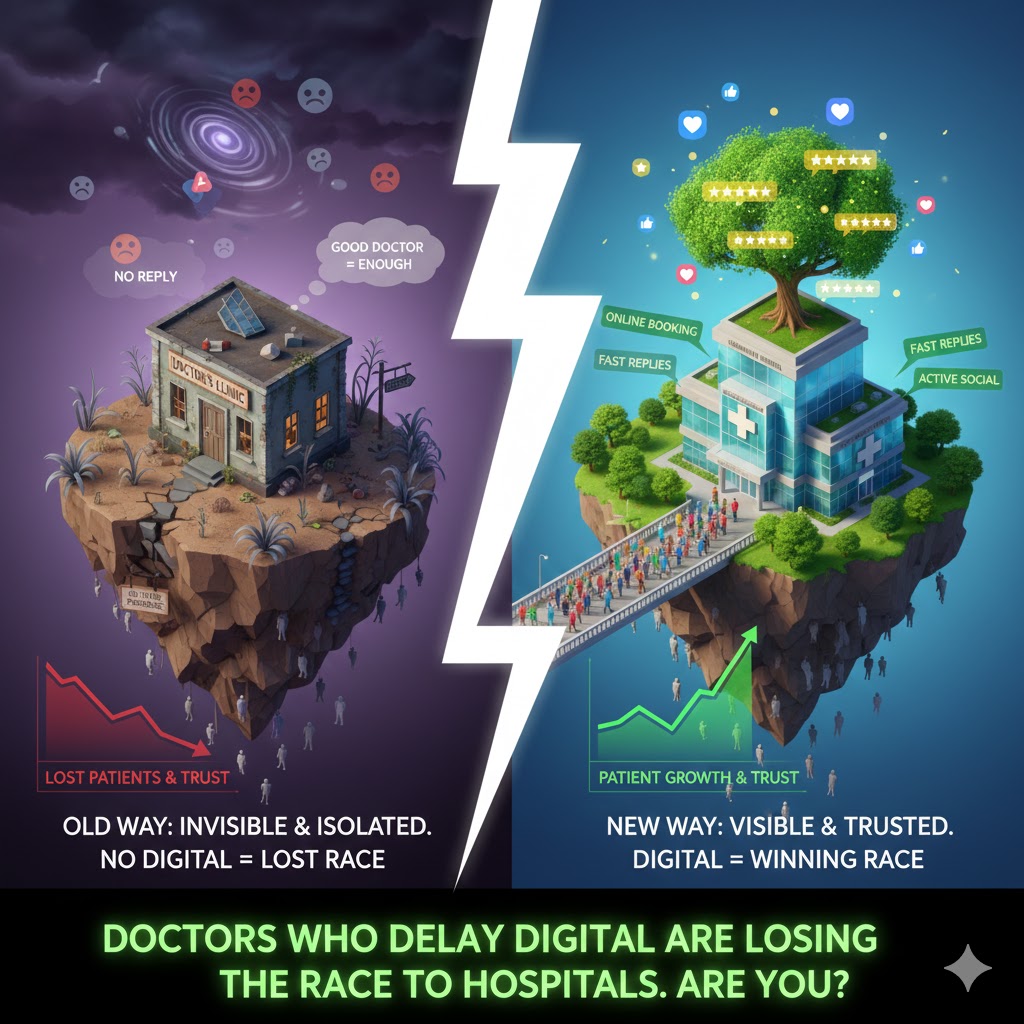
Why Doctors Who Delay Digital Are Losing the Race to Hospitals Healthcare is changing fast and the way patients find doctors has changed too. Ten years back, patients would ask friends or family for doctor names. Today they search on their phones first. When a patient feels sick, they go online before they visit anyone. This is how the world works now. Hospitals understood this change early. They built their presence online and made it strong. Patients can see the websites, read about the doctors, and book appointments with a few clicks. Small clinics and individual doctors stayed quiet online. They thought good work alone would bring patients. That was their biggest mistake. The gap between hospitals and small clinics is growing wider every month. Patients choose what they see first. If a hospital shows up on their phone screen first, that is where they go. A doctor who has no online presence becomes invisible. For many patients, no online presence means the doctor does not exist at all. This is not about being technical or complicated. This is about being seen. This is about being found. This is about staying in the game when the game has moved online. Doctors and clinics that understand this are winning. Those who wait and watch are falling behind. 1. Hospitals Are Seen First When People Search Online, They Find Big Hospitals Before Small Clinics A person gets sick and opens their phone. They search for a doctor in their area on Google. What do they see? Big hospitals show up on the first page. Small clinics and private doctors appear much later or not at all. This happens because hospitals spend money to be visible online. They have websites that work well. They post updates on social media every week. They answer questions when people call or message them. When your clinic does not have a strong online presence, patients do not find you. They find the hospital instead. The hospital gets the patient first. Your clinic loses the chance before you even know someone was looking for help. Think about your own life. When you need something, do you search on Google? Most people do this today. Patients are the same. They search for doctors when they need one. If your clinic does not show up in that search, the patient goes to the hospital. The hospital gets busy with more patients. Your clinic stays quiet. This is not about being better at medicine. This is about being found when people need you most. 2. Silence Online Looks Like Closed Doors When Your Clinic Stays Quiet, Patients Think You’re Not There A patient searches for a doctor at 9 PM on a Tuesday. They want to know your clinic timings. They want to see your photos. They want to read what other patients say about you. But your clinic website shows nothing new. Your social media has posts from three months back. Your phone number is hard to find. What does the patient think? They think your clinic is closed. They think you don’t see new patients anymore. They think you are not interested in helping them. So they search for another doctor. They find a hospital that has fresh photos. They find a hospital that answers their questions online. And that is where they go. Hospitals post something new every single day. They share patient stories. They show their doctors working hard. They answer questions fast. People see all this and feel that the hospital is active and ready to help. They feel that this hospital cares about them. Your clinic can be the best in town. Your doctor can have 20 years of experience. But if nobody sees your name online, nobody will come to you. A patient will never know how good you are. They will never know that you treat people with kindness. They will never know that you have the latest machines. Silence online sends a wrong message. It tells patients that you don’t want their business. It tells them that you are too busy or too tired to reach out. It tells them that other doctors are more active and more ready to help. When you post nothing, you lose before you even get a chance to meet your patient. 3. Patients Trust What They Can See When a patient looks for a doctor online, they want to see proof that the clinic is real and active. Hospitals show their work on the internet. They post pictures of their rooms and equipment. They write about their doctors and their skills. They share stories from people who got better. They answer questions on their websites. They show their timings and location clearly. Patients read all this and feel safe. They feel the hospital is trustworthy and strong. Your small clinic might be better than the hospital near them. Your doctors might have more skill and care. But if patients cannot see this online, they will never know. When they search on Google, hospitals show up with big offices and many pictures. They show their doctors in white coats. They show happy patients who got cured. They show clean rooms and modern machines. Patients see all this and think the hospital must be good. Now think about your clinic’s website. Is it empty and quiet? Does it have old pictures from five years back? Is there no news about what you do? Patients think that silence means the clinic is closed or not busy. They think maybe you are not a good doctor. They think maybe you don’t care about telling people about your work. This is not fair, but it is what happens when you stay quiet online. Hospitals win because they show what they do. They post every day. They talk about their success stories. They reply fast when someone asks a question. Patients see this activity and believe the hospital is the right choice. You need to do the same thing. Post pictures … Read more

How Young Patients Are Choosing Doctors Differently in 2025

young patients

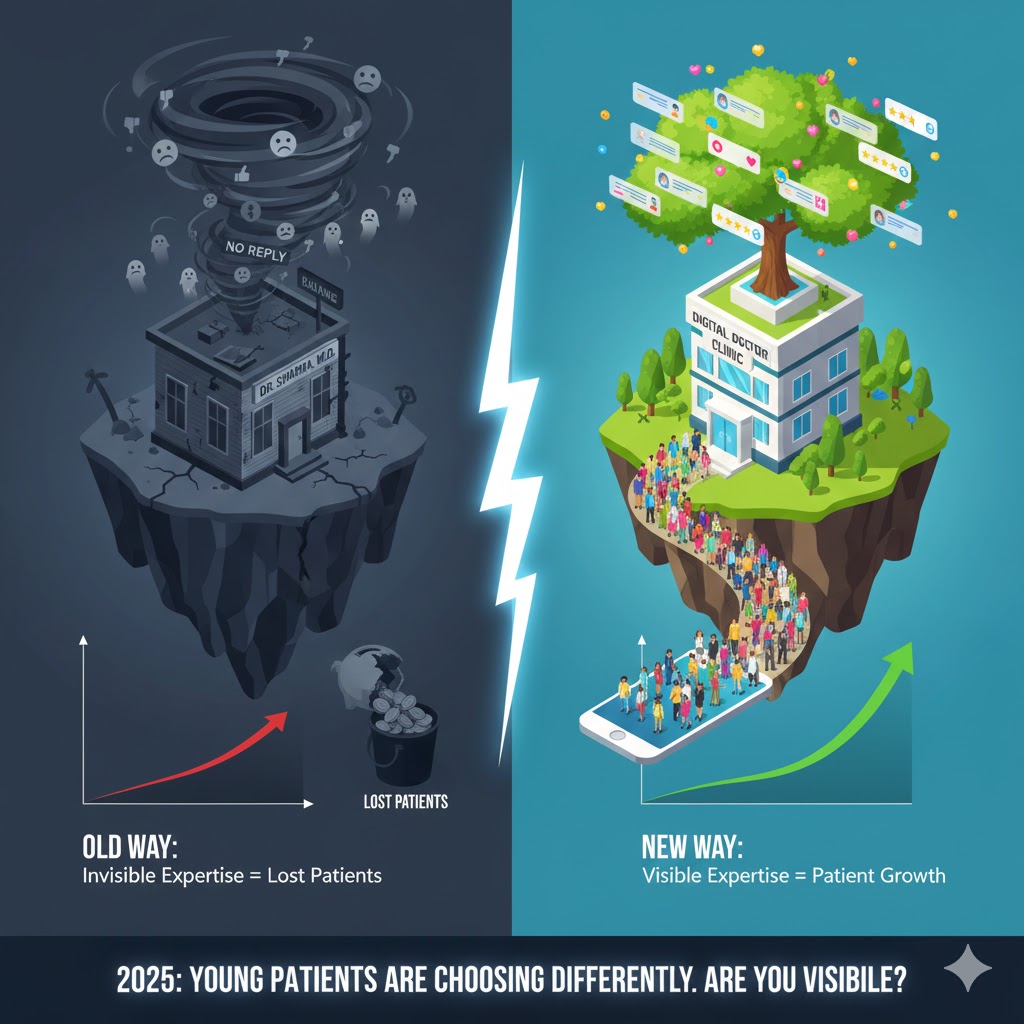
How Young Patients Are Choosing Doctors Differently in 2025 Five years ago, a young person who needed a doctor would ask their mother or friend. Today, they open their phones and search. This change is not coming in the future. It is happening right now in your city. Your young patients are making choices in a way you may not understand yet. The young people of India have become the largest group of patients searching for doctors online. They are between 18 and 40 years old. They live in cities and towns. They have smartphones and the internet. They do not think like the older generation of patients. They do not wait weeks for an appointment. They do not accept bad phone calls from clinic staff. They do not trust big clinic names without proof. Why Doctors Need to Pay Attention to This Change Your clinic may be full today. But tomorrow, you may lose young patients without knowing why. They came to your clinic page online. They saw something that did not feel right. They closed the page. They called another doctor instead. You never knew they visited. You lost them in five seconds. This is not a problem that will go away. It will grow bigger. More young people will move to your city. More of them will search online. More of them will read what other patients wrote. More of them will want to book without calling. If your clinic is not ready for this, your waiting room will have empty seats soon. What Doctors Are Learning From Young Patient Behavior Young patients think fast and choose faster. They have choices. Many doctors are now offering services to them. They have apps. They have simple websites. They reply to messages in one hour. They show real patient reviews. They make booking so simple that a person can do it while sitting in a coffee shop. These doctors are getting more young patients. Their clinics are busy. Their reputation is growing. The young patients tell their friends. The friends come too. One smart choice about how to talk to young patients brings ten more patients to the clinic. The Truth About What Young Patients Want Young patients want something simple. They want respect for their time. They want honesty about fees before they come. They want to feel that the doctor cares about them. They want a doctor who speaks in words they understand. They want fast replies to their questions. They do not want to feel pushed or fooled. When a young patient finds a doctor who gives them these things, they stay. They come back again. They tell their friends and family about the doctor. They write good reviews. They become loyal to that clinic. But if they do not find these things, they search for another doctor. It takes them two minutes to switch. Why Your Clinic Needs to Understand This Now You have built your clinic over many years. You have helped thousands of patients. You have a good name in your area. But your good name may not reach young patients if you are not where they search. Your clinic can be the best clinic in the world. If young patients cannot find you online or cannot book an appointment easily, they will never come. The good news is that this change is not hard to make. You do not need to change your way of treating patients. You do not need to spend a lot of money. You need to understand how young patients think. You need to show up where they search. You need to speak to them in a way they feel comfortable. You need to make every step simple. What This Guide Will Show You In the next sections, you will learn why young patients search the way they do. You will learn what makes them click on one clinic and ignore another. You will learn what they think when they see your clinic page. You will learn why they call or why they do not. You will learn how other doctors are winning their trust. You will learn what small changes can make a big difference to your practice. This is not about becoming a different doctor. This is about becoming a doctor that young patients can find. It is about showing them that you are real and that you care. It is about making their path to your clinic smooth and clear. When you do this, your clinic will grow. Your young patient list will grow. Your reputation will spread to the people they know. The time to make this change is now. Your young patients are searching today. They are choosing doctors today. Let us see how to make sure they choose you. 1. Young Patients Search Before They Step Out The Phone Comes Before the Clinic Door Now A young patient gets a headache. What do they do first? They pick up their phone. They search for a doctor online. They read reviews from other young people. They check the clinic address. They see the appointment cost. Only then do they decide to come to your clinic. This happens every single day in 2025. The old way is gone now. In the past, patients asked their parents or neighbors for a doctor’s name. They called the clinic without knowing anything. They came in and hoped for the best. Young patients do not do this anymore. They want to know everything before they arrive. Why Young Patients Search Online First Young people grew up with phones in their hands. Google is their first friend. They trust the internet more than a stranger’s phone call. When they feel sick, they want answers fast. They want to know if other patients had a good experience. They want to see real photos of the clinic. They want to know the doctor’s name. They want to see what other patients wrote. This is not only in big cities like … Read more

The New Digital Divide: Doctors Who Act vs Doctors Who Wait

digital divide

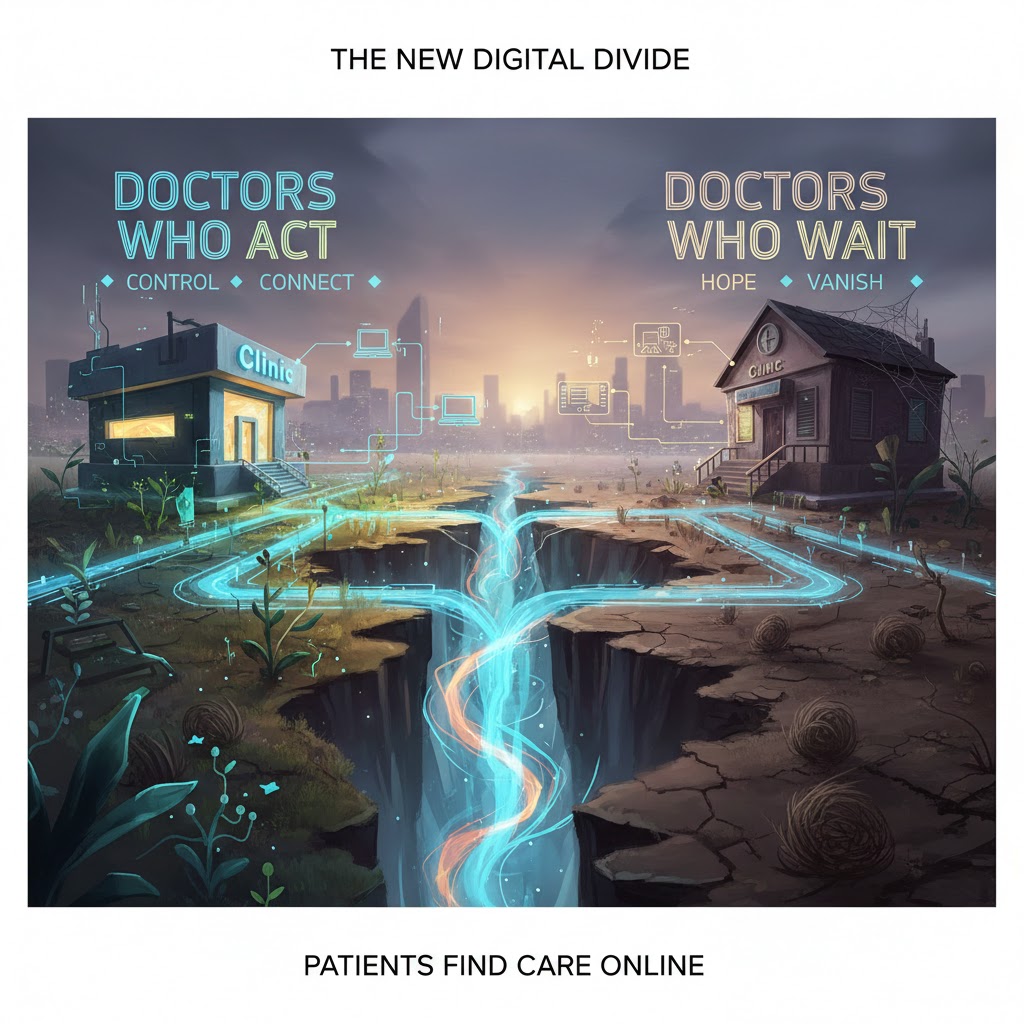
The New Digital Divide: Doctors Who Act vs Doctors Who Wait Something big has changed in how people pick their doctors today. Patients no longer wait for word of mouth or ask neighbors about clinics. They open their phones and start searching before they step out of their homes. This shift has split doctors into two clear groups. One group takes action and shows up where patients are looking. The other group waits and hopes patients will somehow find them on their own. The doctors who act are building trust before the first appointment even happens. They answer questions online and share helpful updates about their clinics. Patients see them as open and caring because they stay visible and reachable. The doctors who wait are losing patients without even knowing it. Their silence makes people think the clinic is closed or not interested in new patients. When patients cannot find basic information about a doctor online, they simply move on. This gap between acting and waiting is growing wider every single day. Patients now expect to see something online before they book an appointment anywhere. If your clinic does not show up in their search, someone else will take your place. The digital divide is not about fancy websites or expensive ads at all. It is about showing up when patients are looking and giving them a reason to choose you. Small actions like replying to messages or posting clinic timings can change everything for your practice. Doctors who act are not doing anything complicated or hard to copy. They are simply present where patients search and they respond when patients reach out. This builds comfort and trust long before the patient walks through the clinic door. Doctors who wait are not bad at their job or less skilled than others. They only have not realized how much patient behavior has changed in recent years. People want proof that a doctor is active and available before they book any visit. The choice is simple but the impact is huge for every practice. Acting means you control how patients see you and decide to trust your care. Waiting means you leave that choice to chance and let others take your patients away. This divide will only grow as more patients turn to their phones for answers. The doctors who understand this shift and take small steps forward will win. The doctors who keep waiting will keep wondering why their patient count is falling down. Your patients are already online and they are searching for care right now. The question is whether they will find you or find someone else who acted first. 1. Two Types of Doctors Today One moves ahead, the other stays unsure. The medical world is splitting into two groups right now. One group of doctors is taking steps online while the other group is watching from the side. This gap is growing bigger every single day. Doctors who act are building their presence on the internet. They share updates about their clinic and connect with patients through social media. These doctors understand that patients now search online before booking appointments. They know people read reviews and check websites before making health decisions. On the other side, doctors who wait are hoping things will stay the same. They believe good medical skills alone will bring patients to their door. These doctors think word of mouth will keep working like it did twenty years ago. But the truth is that patients are changing how they find doctors. The acting doctor posts about common health problems on social media. He answers questions that people ask in the comments. He shares tips about staying healthy during different seasons. His clinic website has clear information about services and appointment booking options. Patients see him as someone who cares about helping people even before they visit. The waiting doctor keeps his practice traditional. He does not have an active online presence. His clinic information is outdated or hard to find. Potential patients search for him but find very little. They move on to find another doctor who has more visible information. This divide is not about being tech savvy or young. Many senior doctors are taking action online and seeing great results. It is about recognizing where patients are looking for help today. Patients spend hours on their phones searching for health solutions. They want to know who their doctor is before they meet in person. The acting doctor controls his story. He decides what patients learn about him online. He shares his approach to treatment and his values as a healthcare provider. This builds trust before the first appointment even happens. The waiting doctor leaves his reputation to chance. Other people write reviews and share opinions about him. He has no control over what potential patients find. Sometimes false information spreads because he is not there to correct it. Both types of doctors work hard in their clinics. Both care deeply about patient health. But only one type is meeting patients where they are today. The digital space is not replacing good medicine. It is becoming the first step in the patient journey. Parents now search online when their child has a fever at midnight. Young professionals look up doctors during their lunch break at work. Elderly patients ask their grandchildren to find good specialists nearby. All these searches happen online first. The acting doctor shows up in these searches. His clinic appears with good ratings and recent updates. Patients feel confident about booking an appointment with him. The waiting doctor remains invisible during these crucial search moments. Patients cannot find him so they choose someone else instead. This is not about spending huge amounts of money on advertising. Acting doctors start small with simple steps. They claim their clinic listing on search engines. They ask happy patients to leave honest reviews. They post one helpful health tip each week on social media. The digital divide will only grow wider in … Read more

Global Healthcare Marketing Trends Doctors Should Copy in India

healthcare marketing

Global Healthcare Marketing Trends Doctors Should Copy in India The way people find doctors has changed everywhere. A patient in New York thinks like a patient in Mumbai now. They go online first. They read what other people say about doctors. They want fast answers. They want to book appointments in seconds. They do not wait for phone calls anymore. Indian doctors are missing out on these new ways patients search for them. While clinics in America and Europe are getting more patients through smart online methods. Many Indian doctors are still relying on old ways. They think word of mouth is enough. They think their reputation alone will bring patients. But patients have moved on. Patients today search on Google. They read reviews on websites. They watch videos to understand treatment options. They choose clinics that reply fast to their questions. This is the real story now. Medicine is the same everywhere. Trust is the same everywhere. But how doctors show themselves to patients has become very different. Doctors in India can learn from what works globally. These methods are not difficult. These methods do not need big money. What they need is understanding and daily work. This guide shows Indian doctors what global clinics are doing right. It shows real examples of how patients think and choose. It shows what Indian clinics can do starting today. The doctors and clinic owners who read this can start copying these ideas tomorrow. Your clinic can grow. Your patients can trust you more. Your schedule can fill up faster. Let us see how. 1. Patients Around the World Think the Same Way Now How Modern Patients Search and Decide Everywhere, Including Your City Today, a patient in Mumbai works the same way as a patient in New York. They do not visit your clinic first. They visit Google first. They search for symptoms, read what others say, and then make a choice. Your Indian patients are doing this right now. When someone feels sick or needs health care, they type their problem into their phone. They look for clinics near them. They read the reviews from past patients. They check if your clinic has a website. They want to know your fees, your timing, and if you are real or fake. This happens in every country now. In America, in Europe, in Australia, and in India, patients follow the same path. A patient will spend time online before they even call you. They will check your Google page. They will look at your WhatsApp status. They will see what you post on social media. If you are not there, they think you are not modern. If you are not there, they go to another doctor. Your Indian patients think this way too. They are not different from patients in other countries anymore. The world has become smaller. Information moves fast. Patients talk to each other across cities and countries. What works for clinics in Delhi works for clinics in Bangalore. What patients want in London is what they want in Kolkata. They want speed, they want proof, and they want to feel safe before they come to you. Your job now is to meet patients where they search. You need to be where they look. You need to show them that you are real, that you care, and that they can trust you. This is not a choice anymore. This is how health care works in the modern world. Your Indian patients expect this from you. 2. Trust Is Built Before the First Visit Your Clinic’s Online Face Makes the First Impression When a patient searches for a doctor in your city, they see your website or social media first. They do not walk into your clinic. They read what you have written online. They look at photos of your clinic. They check what other patients have said about you. This happens before they call or visit you in person. Global clinics around the world know this truth. They spend time making their online presence clean and helpful. They understand that patients form their first feeling about a doctor through a screen. Not through a handshake. This is how modern patients think now. Indian patients think the same way too. Your Website Tells Patients You Are Real and Careful A good website does three things for you. First, it shows that your clinic is professional and open. Second, it tells patients what you offer and how you help them. Third, it makes them feel safe to contact you. When your website looks new and organized, patients believe you run your clinic the same way. Write clear information about your services. Tell patients what problems you solve. Use simple words. A patient who is worried about their health does not want to read hard medical terms. They want to know if you can help them feel better. Your website should answer this in plain language. Photos and Videos Build Confidence Before They Meet You Patients want to see where they will go. They want to see your clinic chairs, your waiting room, your staff. Show them real photos of your clinic. Not expensive pictures, but honest ones. When patients see a clean clinic and friendly staff online, they feel less fear about their first visit. Videos of you speaking help even more. You do not need fancy production. Record yourself explaining one health topic in simple words. Talk about a problem you see often in your patients. A two minute video of you speaking feels real and builds trust. Patients feel like they already know you before they arrive. Patient Reviews Are Your Strongest Marketing Tool When one patient writes good things about you online, ten other patients read it. This is more powerful than any ad you can pay for. People trust other people. They trust strangers who have visited your clinic more than they trust what you say about yourself. Make it simple for happy patients to write reviews. … Read more

Why Every Month You Delay Digital, You Lose Patients Quietly

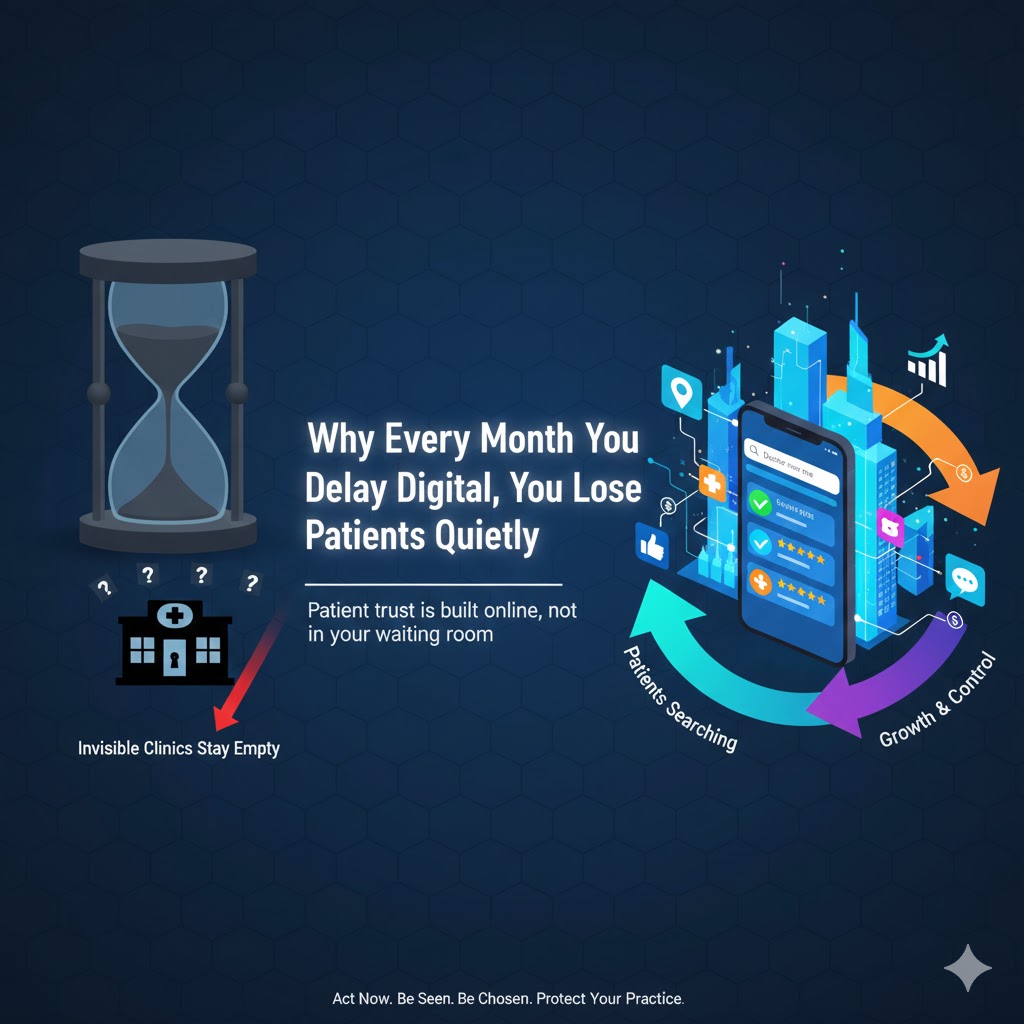
Why Every Month You Delay Digital, You Lose Patients Quietly (2026) Digital marketing is important nowadays. Your clinic treats people well. Your patients leave happy. But new patients are not walking in like before. You wonder why the phone stays silent most mornings. The truth is simple. People are not finding you online. They search for doctors on their phones now. When your name does not appear, they pick someone else. This happens every single day without you knowing. Digital presence is not about fancy websites or social media trends. It is about being visible when people need you. Right now, patients in your area are typing symptoms into Google. They are looking for a doctor they can trust. If your clinic does not show up, they will book an appointment with another doctor within minutes. This loss is quiet. No one complains. No one calls to tell you they went somewhere else. Patients simply choose the doctor they can see online. And once they visit that other clinic, they rarely come back to you. Every month you wait, more patients slip away. They form new habits with other doctors. Your clinic becomes less visible while others grow stronger. This problem grows bigger as time passes. But here is the good news. You can stop this loss. Small digital steps can bring patients back to your door. You do not need to become a computer expert. You only need to be present where patients are already looking. The patients are searching. The question is whether they will find you or your competitor. Every month matters because patient trust is built before they ever step into your clinic. And that trust begins online, not in your waiting room. 1. Patients Are Searching Every Day If they don’t find you, they find someone else Every morning, someone in your city wakes up with a health problem. Maybe their knees hurt. Maybe their child has a fever. Maybe they need a checkup. The first thing they do is pick up their phone. They open Google. They type something simple. “Doctor near me.” Or “best clinic for knee pain.” They scroll through the results. They look at photos. They read reviews. They check if the clinic is open today. This happens thousands of times across India every single day. People search for doctors while sitting at breakfast. They search during lunch breaks at work. They search late at night when something worries them. Here is what matters most. These people are ready to visit a doctor. They have a real need right now. They want to book an appointment today or tomorrow. They are not only browsing. They are ready to become your patient. But here is the problem. If your clinic does not show up in those search results, you become invisible. The patient never knows you exist. They never see your name. They never read about your experience. They never find your phone number. Instead, they see other clinics. Clinics that have websites. Clinics with good Google reviews. Clinics that show up on maps with clear directions. And these patients call those clinics. They book appointments there. They become someone else’s patient. This is not a one time thing. This happens again and again. Every single day, potential patients search for doctors. Every single day, some of them could choose your clinic. But only if they can find you first. Think about your own life. When you need a plumber, what do you do? You search online. When you want to order food, you check an app. When you plan a trip, you look at reviews. Your patients do the same thing when they need medical care. The younger generation does this even more. People between 25 and 40 years old almost never ask for doctor recommendations anymore. They trust Google more than they trust their neighbors. They want to see everything before they visit. Photos of your clinic. Your qualification details. What other patients say about you. Even older patients are changing. More people above 50 are now comfortable using smartphones. They search for doctors too. Their children search for them. Someone in every family knows how to find clinics online. Here is a real situation that happens often. A patient has back pain. They search and find three clinics nearby. The first clinic has a website with the doctor’s photo and timings. The second clinic has 47 good reviews on Google. The third clinic has nothing online. Only a name and old address. Which clinic do you think gets the call? The first or second one. Almost never the third one. Even if the third clinic has the most experienced doctor. Even if it has better equipment. None of that matters if the patient cannot see it. Every day you stay offline, dozens of potential patients search for help. They need exactly what you offer. But they cannot find you. So they go somewhere else. They become loyal to another doctor. And you never even know they were looking. This silent loss adds up fast. Ten patients this week. Forty patients this month. Almost 500 patients in one year. All of them could have chosen your clinic. All of them went elsewhere because you were not visible online. The gap keeps growing. While you stay quiet, other clinics keep attracting these searching patients. They build their patient base. They grow their reputation. They fill their appointment slots. Meanwhile, your waiting room stays emptier than it should be. Your medical skills have not changed. Your care quality is still strong. But none of that reaches the patients who need you. Because they search online first. And when they search, you are missing. This is not about being the best doctor anymore. This is about being a doctor that people can actually find. You can be excellent at your work. But if patients cannot discover you during their search, your excellence stays hidden. The good news is this. These patients are … Read more