class="archive paged author author-shaniya_clickniti author-2 wp-custom-logo wp-embed-responsive paged-4 author-paged-4 wp-theme-generatepress ehf-template-generatepress ehf-stylesheet-generatepress right-sidebar nav-float-right separate-containers header-aligned-left dropdown-hover elementor-default elementor-kit-797" itemtype="https://schema.org/Blog" itemscope>

Google vs Word of Mouth: Which Actually Brings Patients
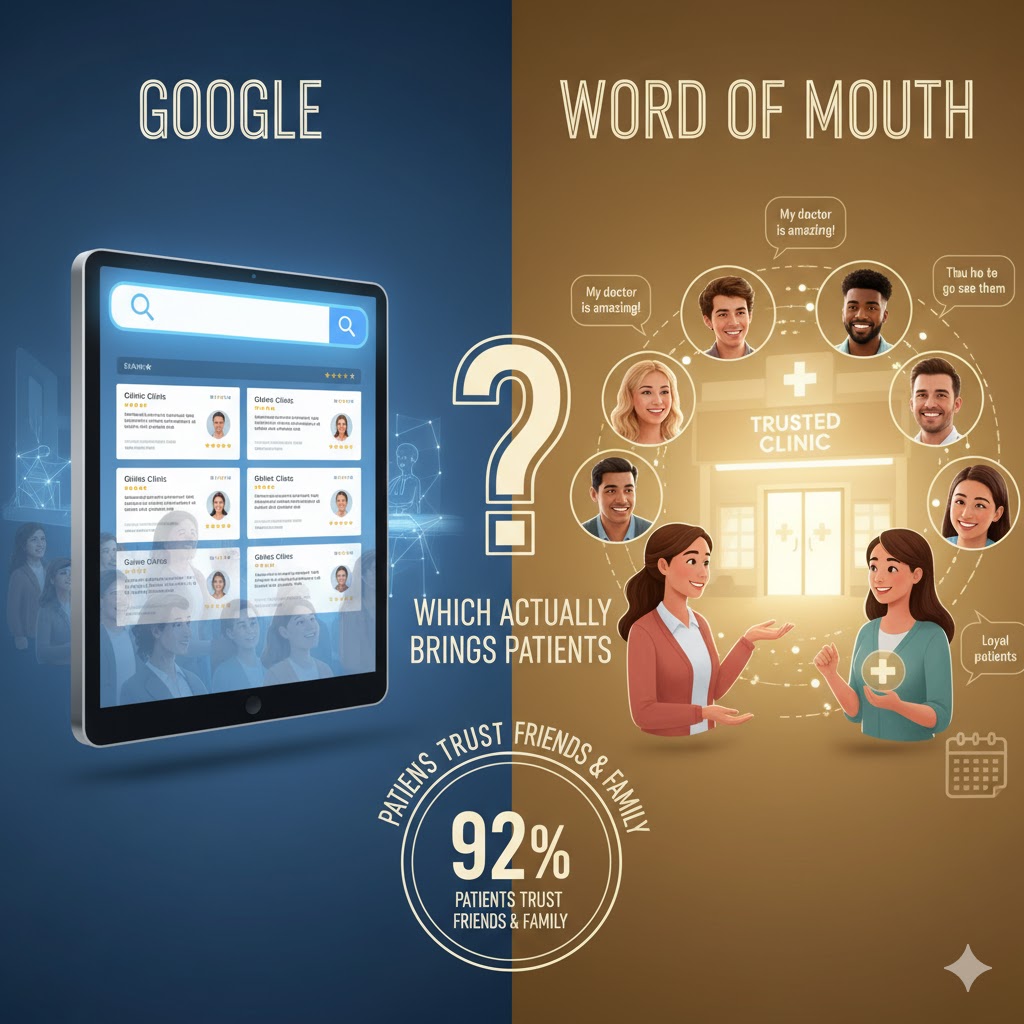
Google vs Word of Mouth: Which Actually Brings Patients If you are a doctor or run a clinic, you want new patients to find you fast.But what works better: Google or Word of Mouth (WOM)? Let’s break it down in simple words. What Is the Word of Mouth? Word of mouth is when your patients tell their friends and family about you. They share their good experiences. They tell others to visit your clinic. Why It Works So Well I see that 92% of patients trust recommendations from friends and family. This trust is very strong. Patients believe what their loved ones tell them. When someone I trust tells me about a good doctor, I listen. This is natural. We trust people we care about. The Good Things About Word of Mouth Patients trust it more than ads. When my friend tells me about a great doctor, I trust them. I don’t trust TV ads the same way. It costs me nothing. I don’t pay for ads. My happy patients do the talking for me. It brings loyal patients. Referred patients are 50% more likely to make a second purchase. They stay with my practice longer. It keeps working. One happy patient tells others. Those new patients tell more people. It keeps growing.   The Problems With Word of Mouth It is slow. One person can only tell a few friends. It takes time to reach many people. I can’t control it. I can’t make patients talk about me. I can’t choose what they say. Bad news spreads too. If one patient has a bad time, they might tell others. This can hurt my practice. It’s hard to track. I don’t always know how patients heard about me. I can’t measure it easily. Facts About Word of Mouth in Healthcare 97.9% of patients will recommend their family doctor to friends and family. This shows how powerful word of mouth is in healthcare. 84% of patients used recommendations from other patients when searching for their doctor. This means most patients ask others before choosing a doctor. Research shows that word-of-mouth referrals are effective due to their inherent trust. Patients believe other patients more than they believe ads. What This Means Word of mouth is still very important. Even in our digital world, patients trust what other patients say. I need to focus on making patients happy. Happy patients talk about good experiences. They bring me new patients without me paying for ads. But I can’t rely only on word of mouth. It’s too slow. I need other ways to bring patients faster too. What is Google Search Marketing? I use Google to help patients find my practice when they search online. When someone types “doctor near me” or “dentist in my city,” Google shows them results. My practice needs to show up in these results. How Fast Does Google Work? Google is very fast. When I put my practice online and within minutes hundreds of people can find me in minutes. It is 24/7. I don’t have to wait for people to tell their friends about me. The Real Numbers Here are the facts about how patients use Google: 65% of patients search online before contacting a doctor Two-thirds of all patients search the internet prior to a health consultation 76% of patients go online to seek out information on an individual provider 81% of people research businesses using Google Reviews Google Reviews Are Important Reviews on Google matter a lot. Here’s what I need to know: 73% of patients consider online reviews when selecting a healthcare provider 72% of patients only choose doctors with 4-star reviews or higher Over 34% of Google reviews are for healthcare services Google maintains dominance at 84.03% awareness in 2025 What This Means When patients need a doctor, they go to Google first. They don’t ask friends anymore. They type what they need and pick from the results they see. If my practice is not on Google, patients cannot find me. They will pick another doctor who shows up in their search. The Hurdle Every Clinic Sees The bad news is simple. If I don’t show up on Google, I don’t exist to new patients. 65% of general practitioners have no online reviews. This means many doctors are invisible to patients who search online. From Search to Appointment in Minutes Google is always working. It shows my practice to people who are ready to book an appointment right now. They already decided they need a doctor. They need to find the right one. Word of mouth takes time. Google works today. What I Need To Do I need to make sure: My practice shows up when people search I have good reviews from happy patients My information is correct on Google I respond to patient questions fast The numbers are clear. Most patients will find me on Google or they won’t find me at all. Speed: Who Wins? Google Wins for Speed When people need a doctor, they search online right away. Google gets more than 1 billion health questions every day – that’s about 70,000 searches per minute. Here’s what studies show: 89% of people use Google Search for health needs, only 11% use word of mouth or direct go to websites . 58.5% of adults search online for health information Two-thirds of all patients search the internet before visiting a doctor Google: The Shortcut to Patient Flow When someone feels sick or has pain, I’ve noticed they don’t wait to ask friends. They grab their phone and search right away. Search brings 3 times more visitors to hospital websites than to people who don’t search. Google works fast because: People search when they need help now Results show up in seconds They can book appointments the same day Word of Mouth Takes Time, But Its Value Lasts Word of mouth takes time. A patient must: Feel happy with their care Talk to friends and family Friends must need the same type of … Read more
Building Authority as a Specialist Doctor: What Works Online

Introduction

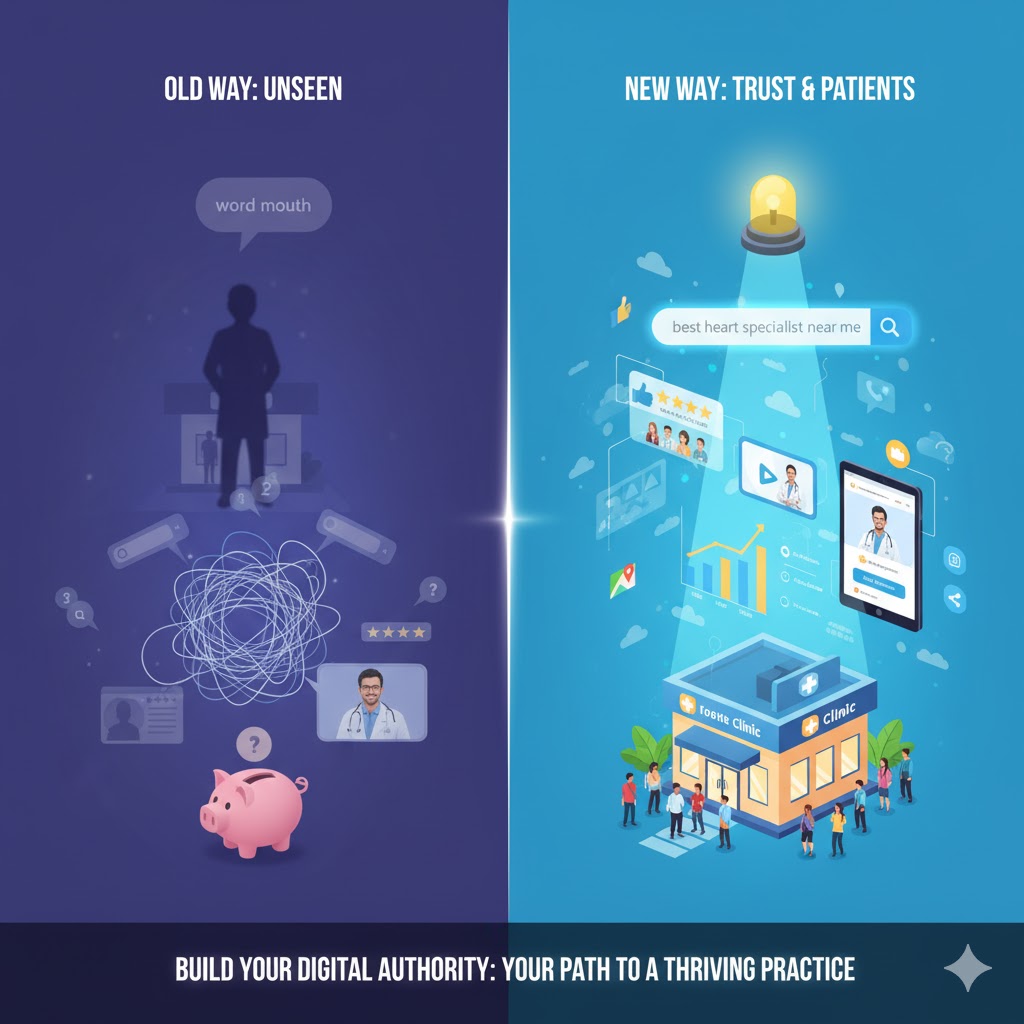
Being a good doctor is not enough anymore. Today’s patients search for doctors online before they even step into a clinic. 74% of patients say online reviews are very important when choosing their doctor. This means your online presence decides if patients will trust you. Gone are the days when patients only relied on word of mouth. Now they turn to Google first. They read reviews, check websites, and look at social media pages. 84% of people trust online reviews just like personal advice from friends. Your digital footprint becomes your first handshake with every new patient. Digital authority means patients see you as an expert online. It means your name appears when they search. Your content answers their questions. Your reviews show you care about patients. When you build authority online, patients choose you over other doctors in your area. India has a huge need for good doctors. With millions of people looking for healthcare, the online space is where patients meet doctors first. This growth means more patients are comfortable finding doctors online. Patients became used to finding everything online, including their healthcare. They expect doctors to be available digitally. They want to see your expertise before they book an appointment. Missing out on digital presence means missing out on patients who need your help. This guide shows you exactly how to build your authority as a specialist doctor online. You will learn simple steps that work. Each method is tested and proven. The language is simple because building authority should not be complex. By the end, you will know how to attract more patients through your digital presence. Building authority online does not require complex skills. It needs consistency and the right approach. When you follow these steps, patients will find you easily. They will trust you quickly. Your practice will grow steadily. The digital world is waiting for doctors who want to help patients. And also show their expertise clearly. 1. Why Authority Matters in Healthcare In today’s world, patients choose their doctors differently than before. Most people search online first. 94% of healthcare patients use online reviews as a first step in choosing a doctor. This means your online presence decides who walks into your clinic. Trust Equals More Patients for Your Practice When patients trust you online, they trust you in person too. 88% of patients trust online reviews as much as personal recommendations. Think about it this way. When your friend suggests a good restaurant, you believe them. Online reviews work the same way for choosing doctors. Strong online authority brings real results. Nearly 75% of patients turn to online reviews as the first step when searching for a new physician. This means three out of four new patients will check your online reputation before calling your clinic. Your Online Image Speaks Before You Do Patients form opinions about you before meeting you. Roughly 84% wouldn’t go to a referred physician if that doctor had fewer than four stars. Even if another doctor sends them to you, they will still check your online ratings first. Authority Builds Patient Confidence Fast When you look like an expert online, patients feel safer choosing you. They worry less about their health problems. They ask fewer questions during appointments. They follow your treatment plans better. This makes your job easier and your patients happier. Doctors with strong online authority get more patients. More patients mean a busier practice. A busier practice means better income. It also means you can help more people with their health problems. This creates a positive cycle for your medical practice. Modern Patients Research Everything Online 90% of patients conduct online research before making a decision about which practice to visit. These patients read about symptoms online. They check doctor profiles online. They compare treatment options online. If your authority looks weak online, they will choose someone else. Your clinic closes at night, but your online presence works all day. Patients search for doctors at midnight. They read reviews on weekends. They check your website while sitting at work. Good online authority brings patients even when you are sleeping. Trust Gaps in Healthcare Are Growing A decrease in trust in health care institutions was highlighted between April 2023 and April 2024. People trust doctors less than before. This makes building personal authority more important than ever. When patients trust you as an individual doctor, they feel better about getting treatment. Trust in doctors swings differently among generations. Ranging from 40% among ages 18-24 compared to 84% among consumers 65 and older. Younger patients need more proof that you are good at your job. Online authority helps convince younger patients to choose your clinic. More doctors are building an online presence every day. If you don’t show your expertise online, patients will choose doctors who do. Building authority online is not optional anymore. It is necessary to stay competitive in healthcare today. 2. Your Website is Your Clinic Online First Things That Matter Most Your website is where patients meet you first. They check you out before they walk into your clinic. Make this first meeting count. A good website wins patients. A bad one loses them. Today, over 60% of website traffic comes from mobile devices. Your patients use phones to find doctors. They search while waiting at bus stops. They look up symptoms during lunch breaks. They book appointments while watching TV. If your website does not work well on phones, you lose these patients. They will find another doctor whose website works better. Simple Rules That Bring More Patients Keep Everything Easy to Read Use big fonts. Short sentences work best. Break up long paragraphs. White space helps eyes rest. Dark text on light backgrounds reads easier. Write like you talk to patients in your clinic. No big medical words unless you explain them right away. Remember, scared patients want clear answers, not complex explanations. Load Fast or Lose Fast Patients wait 3 seconds maximum. After that, they leave. Slow … Read more