Case Study:
How One Clinic Tripled Patient Flow With Digital Ads
Dr. Sharma ran a good clinic in Pune. He had years of experience treating patients. His clinic was clean and the staff was friendly. But something was wrong. Every day he saw many empty appointment slots. The waiting room stayed quiet most mornings. He knew he could help more people. But those people were not coming through his door.
Table of Contents
ToggleThis is a real problem many doctors face today. You have the skills to treat patients. You have good equipment and a caring team. But your clinic stays half empty while you wait. The problem is not your medical knowledge. The problem is that patients cannot find you when they need help.
Years ago, doctors got patients through word of mouth. One happy patient told ten friends. Those friends came to your clinic. That was enough to keep you busy. But things have changed now. People do not ask neighbors for doctor recommendations anymore. They pick up their phone and search online. They type their health problems into Google. They look for clinics near their home. If your clinic does not show up in those searches, patients will never know you exist.
This case study shows how one clinic fixed this problem. They did not change their medical practice. They did not hire expensive consultants or redesign their clinic. They made one simple change. They started using digital ads to reach patients who were already looking for help. The results came slowly but they were real. Month by month, more patients started calling. Appointment slots began to fill up. Within one year, the clinic was treating three times more patients than before.
The best part is that any clinic can do this. You do not need to be in a big city. You do not need a huge budget. You only need to understand where your patients are looking. Then you need to show up there with a clear message. This story will show you exactly how it happened. And how your clinic can grow the same way.

1. The Clinic Was Doing Everything Right
Good Doctor, Clean Rooms, But Something Was Still Missing
Dr. Sharma ran a small clinic in a busy part of Pune. He had studied medicine for years and cared deeply about his patients. His clinic was clean and well kept. The staff was polite and helpful to everyone who walked in.
Patients who visited him always left happy. They got better after taking his medicines. Many of them told him that he was a good listener. He never rushed through appointments. He explained every health problem in simple words. Parents trusted him with their children. Old people felt safe under his care.
The clinic had all the right equipment. The waiting area had comfortable chairs. There was clean drinking water for visitors. The bathroom was always tidy. Medicines were stored properly and bills were clear. Everything inside the clinic worked well.
Dr. Sharma followed all the rules. He kept patient records updated. He attended medical seminars to learn new things. He read about new treatments and medicines. His knowledge was current and his intentions were honest. There was no reason for patients to complain.
But something strange was happening every day. The appointment book had too many empty slots. Some days only five or six patients came in. The clinic could handle thirty patients easily. But the rooms stayed quiet for hours. The staff had free time they did not need.
Dr. Sharma could not understand why this was happening. He knew he was a skilled doctor. His patients got results. His prices were fair and reasonable. The location was good with enough parking space nearby. There was a bus stop only two minutes away on foot.
He tried to think about what was going wrong. Maybe people did not like the clinic color. Maybe the signboard was too small. Maybe he needed to offer discounts. He even thought about changing his clinic timings. But none of these felt like the real answer.
Other clinics in the area seemed busier. Some of them did not even have good reviews. Their doctors were not more qualified than him. Yet their waiting rooms were always full of people. This made Dr. Sharma feel confused and a bit sad.
He started asking his current patients how they found him. Most of them said they lived nearby. A few said their relatives told them about the clinic. Some had walked past the building and saw the name board. Almost no one had searched for him online or seen any information before visiting.
The truth was becoming clear but he had not seen it yet. His clinic was doing everything right on the inside. But the outside world did not know he existed. Being good at your work is important. But people need to know about you first. That was the one thing missing from his perfect clinic.
2. The Hidden Problem No One Saw
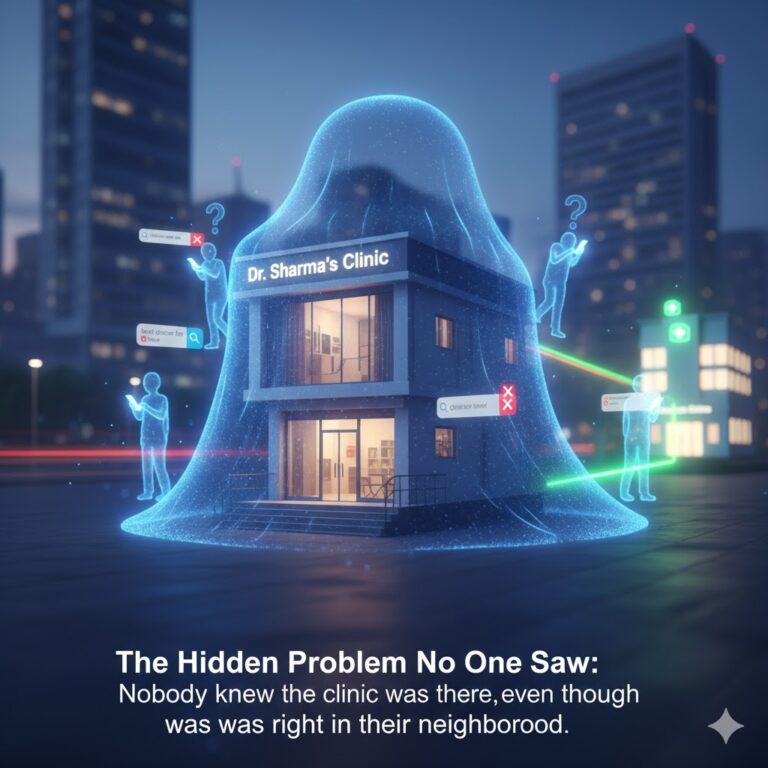
Nobody knew the clinic was there, even though it was right in their neighborhood
Dr. Sharma ran a good clinic in a busy part of town. His patients always left happy. The treatment was good and the staff was kind. But something strange was happening every single day.
The waiting room stayed half empty most mornings. The phone barely rang during lunch hours. Evening slots went unfilled week after week. Dr. Sharma could not understand why this kept happening to him.
He checked everything he could think of. The clinic was clean and bright. The fees were fair and reasonable. Patients who came once always came back again. Reviews on Google were mostly positive and encouraging. So what was going wrong here?
The answer was hiding in plain sight. People in the area did not know the clinic existed at all. They walked past the building every day going to work. They lived only two streets away from the clinic. But they never noticed it was even there.
When someone in the family fell sick, they searched online for doctors. The clinic did not show up in those search results. They asked friends for suggestions about good doctors nearby. Nobody mentioned Dr. Sharma because they had never heard of him either.
The clinic had no digital presence anywhere online. No Facebook page where people could find basic information. No Google listing that showed up when patients searched. No ads that appeared when someone typed health problems on their phone.
This is the problem that kills many good clinics slowly. Being good at your work is not enough anymore. People need to find you first before they can trust you. If they cannot see you online, they think you do not exist.
The clinic was losing patients to other doctors every single day. Not because those doctors were better or more experienced. But because those doctors were visible when patients looked for help. Their names appeared first in search results and local listings.
Dr. Sharma believed that good work would bring patients automatically. He thought word of mouth would always fill his clinic. That used to work twenty years ago when choices were limited. Today people have too many options and too little time.
Every missed patient was money lost from the clinic. Every empty slot was a family that got help somewhere else. The problem was real but the solution was also quite simple. The clinic needed to be seen by people who needed it.
3. Walk-ins Were Not Enough
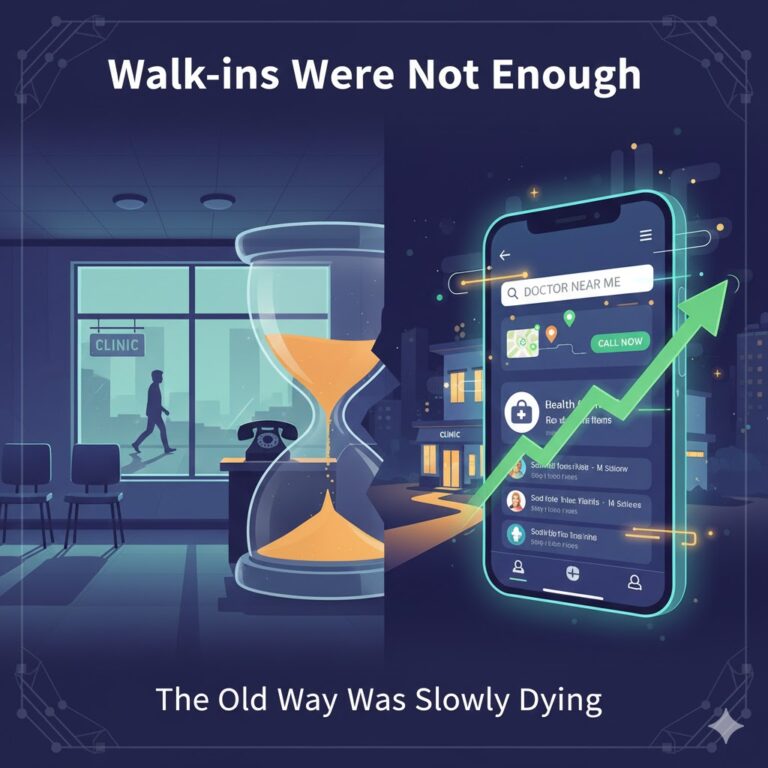
The Old Way Was Slowly Dying
Dr. Sharma ran his clinic the same way for years. He opened the doors every morning and waited. Some patients walked in from the street. A few came because their neighbor told them. Others saw the signboard outside and stepped in.
This worked fine ten years ago. But things changed. People stopped walking around looking for clinics. They started using their phones instead. When someone felt sick, they searched online. When they needed a doctor, they checked Google first. The street traffic did not bring patients anymore.
Dr. Sharma noticed the difference. His waiting room stayed empty most mornings. The afternoon slots had big gaps. He saw maybe eight to ten patients on a normal day. His rent stayed the same. His staff salaries stayed the same. But the income dropped month after month.
He tried keeping the clinic open longer. He put up a bigger sign outside. He told his happy patients to spread the word. Nothing changed much. The walk-ins became fewer and fewer. Word of mouth brought one or two patients a week. That was not enough to keep the clinic running well.
The problem was clear. People were not finding him. They did not know he existed. They searched online and found other clinics. Those clinics showed up on their phone screens. Dr. Sharma did not. So patients went somewhere else. They booked appointments at clinics they could see and trust online.
The old methods stopped working. The world moved to digital. Patients changed how they looked for doctors. Dr. Sharma needed to change too. Waiting for walk-ins was not a plan anymore. It was only hoping. And hope does not fill appointment slots.
4. A Simple Change Was Made
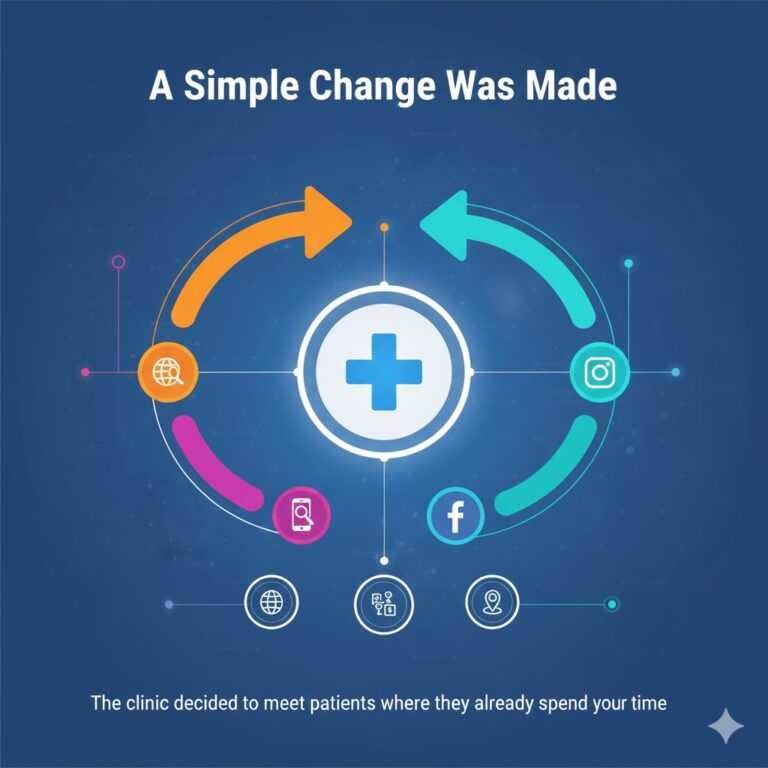
The clinic decided to meet patients where they already spend their time
Dr. Mehta had tried everything he could think of inside his clinic. The walls were painted fresh. The waiting room had new chairs. His staff smiled at every patient who walked in. But the problem was simple. Not enough people were walking in at all.
One afternoon, he sat with his accountant. They looked at the empty appointment book together. The accountant asked a basic question. Where do people go when they need a doctor these days? Dr. Mehta thought about it. His own daughter used her phone for everything. His wife searched online before buying anything. Even his patients who did come in mentioned finding things on Google or Facebook.
That was the moment things became clear. The clinic was doing everything right inside its four walls. But those four walls were invisible to the people who needed help. The clinic had no presence where patients were actually looking.
Dr. Mehta called Clickniti the next day. He explained his problem in simple words. Good clinic, empty chairs, bills piling up. The team at Clickniti did not promise magic. They explained something basic instead. Your patients are online every single day. They scroll through their phones during lunch breaks. They search for health problems late at night when something hurts. But when they do that, they cannot see your clinic anywhere.
The change was not complicated. The clinic would start appearing on Google when people searched for doctors nearby. It would show up on Facebook when parents looked for child specialists. It would be there on Instagram when someone needed advice about back pain or fever.
Clickniti did not ask Dr. Mehta to change how he treated patients. They did not ask him to buy expensive equipment. They simply made sure that when someone in his area typed words like “clinic near me” or “good doctor for fever,” his clinic appeared in front of them.
The first ad went live on a Monday morning. It was not fancy. It did not use difficult medical words. It only said that the clinic was open, the doctor was experienced, and patients could book a slot today. The phone number was right there. The address was clear. No confusion. No extra steps.
By Wednesday afternoon, the receptionist told Dr. Mehta something surprising. Three people had called after seeing the ad online. One of them booked an appointment for the same evening. It was a small start. But it was something new. Something that had not happened in months.
The clinic did not change its treatment. It did not change its location. It only changed where it showed up. And that made all the difference.
5. Ads Focused on Patient Problems
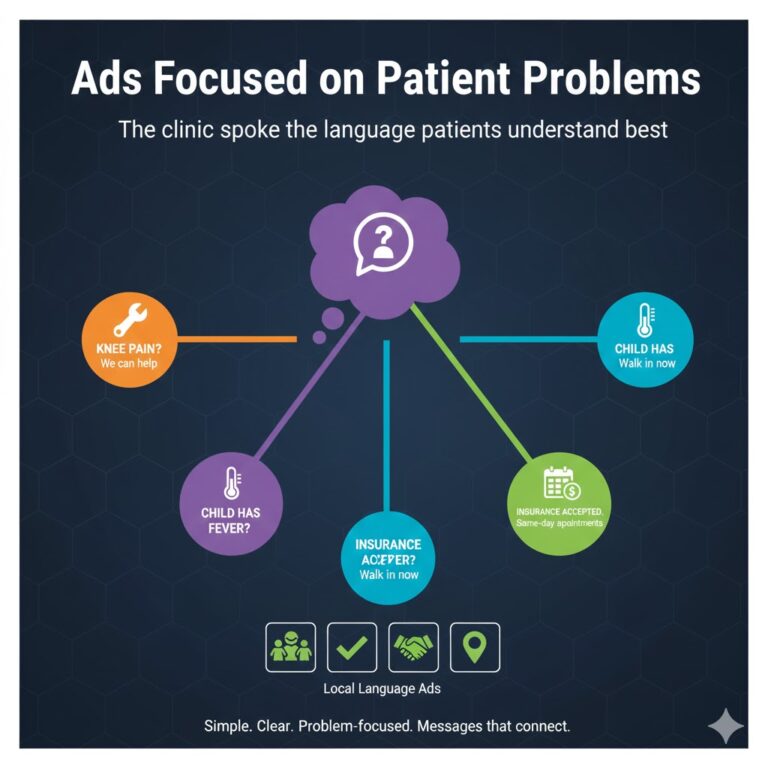
The clinic spoke the language patients understand best
The doctor knew his clinic could help people. But his ads were not working. They talked about medical degrees and fancy equipment. Patients did not care about those things.
People search online when they have a problem. They type things like “knee pain near me” or “fever clinic open now”. They want quick answers. They want to know if someone can solve their pain today.
The clinic changed how it talked to patients. The new ads stopped using big medical words. They stopped showing pictures of doctors in white coats. Instead, the ads showed real problems that real people face every day.
One ad said “Back pain stopping your work? We can help today.” Another said “Child has fever? Walk in now, no appointment needed.” The words were short and clear. Any person could read them and understand them in three seconds.
The ads also answered the questions patients ask silently. Questions like “Will this cost too much?” or “Do I need to wait long?” The clinic added lines like “Insurance accepted” and “Same day appointments available”. This removed fear before patients even called.
Each ad focused on one problem only. No long lists. No confusing details. Only one pain point and one clear solution. This made it easy for patients to decide fast.
The clinic also used local language in some ads. Words that people in that area use every day. This made the ads feel close and familiar. Patients felt like the clinic understood them and their community.
The images changed too. Instead of showing medical tools, the ads showed smiling families. They showed people getting back to normal life. This gave patients hope. It showed them what life could look like after treatment.
The tone was warm but honest. The clinic did not promise magic cures. It did not say “best” or “number one”. It only said “we listen” and “we care”. Patients trusted this more than big claims.
When someone clicked the ad, they landed on a simple page. The page repeated the same problem from the ad. Then it showed three easy steps to get help. This kept the message clear from start to finish.
The clinic also tested different ads for different problems. Diabetes care ads went to people searching for sugar tests. Child care ads went to parents looking for pediatricians. Each group saw only what mattered to them.
This focus on real patient problems made all the difference. People stopped scrolling past the ads. They stopped and read. Then they called. The phone started ringing more because the message finally connected with what patients needed most. Help that made sense.
6. Easy Contact Brought Faster Calls
One tap and patients could talk to someone real
Dr. Sharma ran a good clinic in Pune. His patients loved him. But new patients had trouble reaching his team. The phone number was buried on the website. Sometimes it took three clicks to find it. Other times people gave up and called another clinic instead.
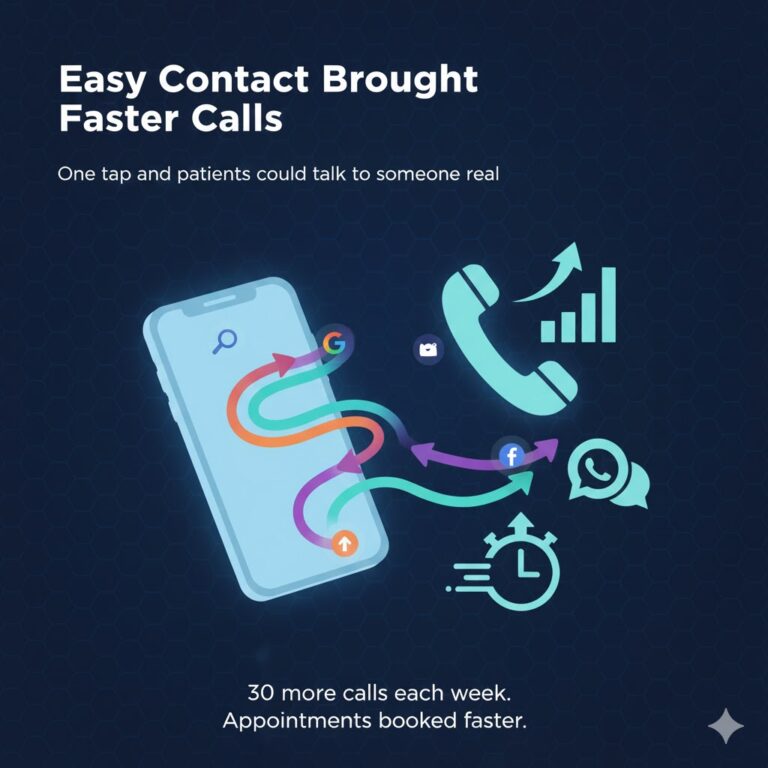
The digital ads changed this completely. Every ad showed the clinic phone number right at the top. Patients did not need to search for it. They did not need to scroll down. One tap on their phone screen connected them directly to the front desk.
This small change made a big difference. Calls started coming in faster. More people booked appointments on the same day. The receptionist noticed something new. Patients were calling within minutes of seeing the ads. Before this, most people would visit the website first. They would look around for a while. Then maybe they would call the next day. But now the process was quick and simple.
The ads also had a WhatsApp button. Many patients prefer texting over calling. They can send a message anytime. They can ask about timings or services without waiting on hold. The clinic staff could reply when they had time. This helped during busy hours when phone lines were full.
Booking became less stressful for patients. They did not have to remember the number. They did not have to write it down. Everything was ready in front of them. One click did the job. This removed small barriers that stop people from taking action.
The clinic team also noticed another change. Fewer people were asking basic questions on the phone. The ads included clear information about services and timings. So when patients called, they were ready to book. This saved time for both the staff and the patients.
Within two months, the clinic was getting thirty more calls each week. Most of these turned into real appointments. The front desk became busier. But the work felt more organized. People were not confused anymore. They knew what they wanted before calling.
This taught the clinic an important lesson. Making contact easy is not only about having a phone number. It is about putting that number where people can see it fast. It is about giving them options like WhatsApp or direct call buttons. When patients feel that reaching out is simple, they do it without hesitation.
7. Trust Grew Before the Visit
Patients Felt Safe Even Before Stepping In
The clinic knew something important. People want to feel comfortable before they book an appointment. They want to know the place is real and the doctors care about them.
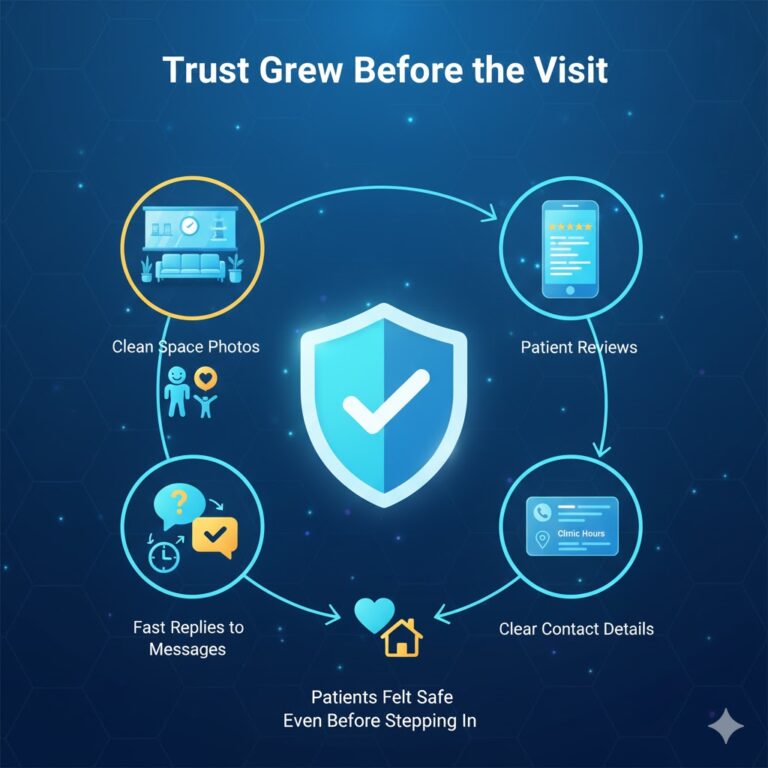
So the ads showed real things. Photos of the clean waiting room. Pictures of the consultation desk. Simple videos of staff greeting patients with a smile. Nothing fancy. Only honest and warm.
The clinic also shared helpful posts online. Tips about common health problems. Advice on when to see a doctor. Easy answers to questions people search for late at night. This content did not sell anything. It only helped people feel less worried.
Patients started reading these posts. They saw the clinic understood their problems. They felt the clinic wanted to help, not only earn money. This built a quiet confidence in their minds.
The ads also included patient reviews. Real words from real people. No long paragraphs. Only short lines like “The doctor listened to me” or “I got better care here.” These reviews made new patients feel less nervous.
Contact details were always visible. Phone number. Location. Clinic hours. No one had to search hard to find this information. When people see clear details, they trust the place more.
The clinic replied fast to messages. Within an hour, sometimes even faster. When someone asked a question on the ad, they got a kind and clear answer. This made patients feel important even before their first visit.
Slowly, something good started happening. People began talking to their family about this clinic. They shared the posts. They told friends the doctors here are good and the staff is kind. Word started spreading again, but this time faster.
New patients walked in less scared. They already knew what the clinic looked like. They had read about the doctors. They felt like they were visiting a familiar place, not a stranger’s office.
This feeling of safety made them stay longer with the clinic. They came back for follow ups. They brought their children and parents. Trust turned visitors into regular patients.
The clinic did not spend extra money to build this trust. They only stayed honest and helpful in their ads. They showed their real face to the world. And people liked what they saw.
8. Appointments Started Filling Up
Empty chairs became a thing of the past
The clinic began to see something different. The phone rang more often. Messages came through their website. People wanted to book time with the doctor.
Before the ads, the morning slots stayed empty. The afternoon had gaps too. The staff would sit and wait. Now they were busy answering calls and setting dates.
The doctor noticed the change fast. More patients walked in with real health problems. They came because they saw the ad at the right time. They did not waste time looking at other clinics.
The booking book became fuller each week. Monday mornings had patients waiting. Tuesday afternoons were not empty anymore. Even Thursday evenings started to fill up.
The staff felt better about their work. They had more to do. The clinic felt alive again. No more sitting around hoping someone would walk in.
Patients liked that they could book fast. The clinic answered their calls fast. They got a date within two or three days. No long waiting time. No confusion about when to come.
The clinic also noticed something else. Patients came for different reasons. Some needed regular checkups. Others had pain that needed care. A few wanted help for their children. The ads brought in all types of people.
The doctor could plan the day better now. Full slots meant steady work. No more wasted hours. No more empty rooms. The clinic ran like it should.
More patients also meant more people told their friends. Good care gets shared. Happy patients bring their family members next time. This helped even more.
The numbers went up slowly but kept going up. One month had five new patients. The next month had eight. Then twelve. The growth was real and steady.
The empty feeling was gone. The clinic felt busy but not rushed. There was flow in the day. The staff smiled more. The doctor felt useful again.
This change came from being seen online. Patients found the clinic when they searched for help. They saw clear words about what the clinic could do. They felt safe enough to book.
The ads did not promise magic. They did not say the clinic was the best. They only showed up when people needed help. That was enough.
Filling up the appointment book changed everything. The clinic earned more. The staff stayed happy. The doctor treated more people. Everyone won.
9. Patient Count Tripled Slowly and Steady
Growth came month by month, not overnight
The clinic did not see magic results on day one. That is not how real growth works. During the first month, only three new patients booked appointments through the ads. The doctor felt unsure. He wondered if this plan would even work. But the team asked him to wait and watch.
By the second month, seven more patients called. They had seen the ads many times. Some of them checked the clinic’s contact details twice before calling. Trust takes time to build. People do not rush when it comes to their health. They think, they compare, and then they decide.
In the third month, the number rose to twelve new patients. The clinic staff noticed something different. Patients were coming with clear questions. They already knew what services the clinic offered. The ads had prepared them. This saved time during the first visit. The doctor could focus more on treatment and less on explaining basic things.
By month four, the flow became steady. Around fifteen to eighteen new patients visited every month. The clinic started seeing familiar faces too. Some patients brought their family members. Others told their friends about the clinic. Digital ads opened the door. But good care made people stay and spread the word.
After six months, the total count had crossed ninety new patients. The clinic’s appointment book looked full most days. Morning slots filled up fast. Evening times became busy too. The doctor had to hire one more staff member to manage phone calls and bookings.
What stood out was the pattern. Growth did not jump or drop suddenly. It moved in small steps every month. This kind of progress is healthy. It gives the clinic time to adjust. The staff learned how to handle more patients without losing quality. Systems improved. Processes became smoother.
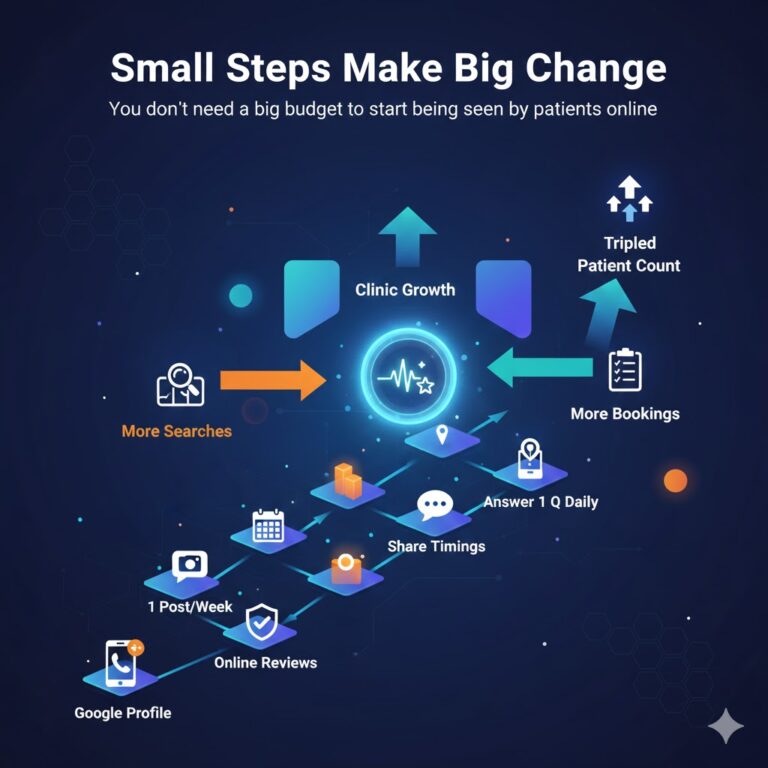
By the end of nine months, the clinic had tripled its patient count. But it happened slowly. No sudden rush. No chaos. Only steady progress that the team could manage well. The doctor now trusted the process. He saw that being patient with digital marketing brings lasting results.
This teaches one important lesson. Real business growth does not happen in one week. It builds over time. If a clinic keeps showing up in front of patients with helpful messages, people will respond. Some respond fast. Some take months. But the result adds up if you stay consistent.
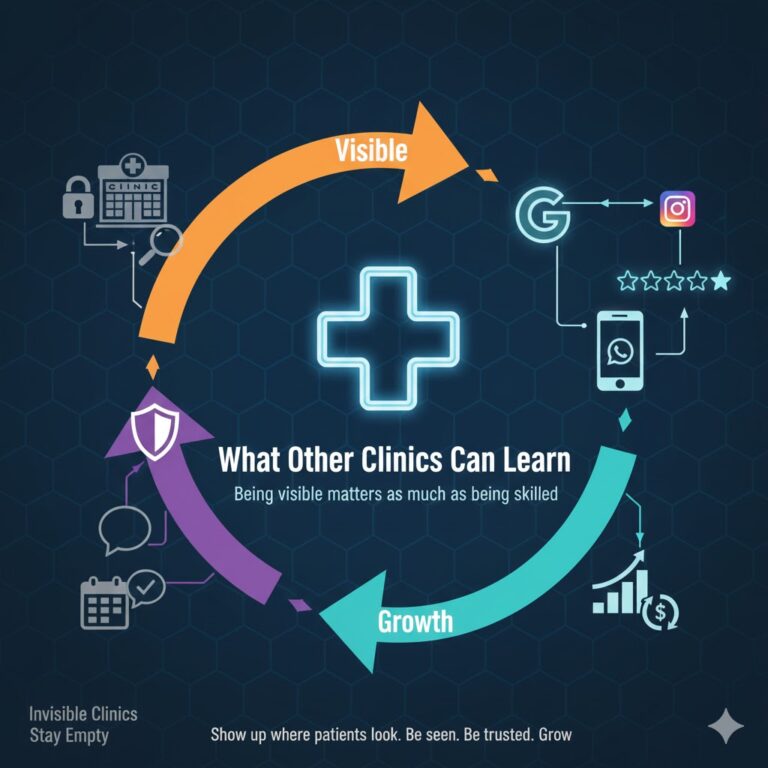
What Other Clinics Can Learn
Being visible matters as much as being skilled
Many doctors think patients will come because they are good at their work. That is true to some point. But today people search online before they visit any clinic. If your clinic does not show up online, patients will not know you exist. They will go to someone else who appears first on their screen. This is the reality now.
Good treatment alone does not fill appointment slots anymore. Patients need to find you first. They type symptoms or clinic names on their phone. They look at photos and read reviews. They check if you are nearby. They want to see your contact number fast. If all this is missing, they move to the next clinic. You lose them before they even think about visiting.
This clinic learned that being good is not enough. They had to be seen. So they started running simple ads that appeared when people searched for help. The ads spoke about common health problems. The language was easy. There were no big medical words. Patients understood the message right away. The clinic became visible and people started calling.
Another lesson is that trust starts before the first visit. When patients see your clinic online many times, they feel familiar. They see your clean space in photos. They read how you help others. They notice your contact details are clear. All this builds comfort. By the time they call, they already feel safe. That is how digital presence works.
Waiting for walk-ins is risky now. Foot traffic has gone down in many areas. People plan their visits after checking online. If you are not there, someone else will take your spot. This clinic stopped depending on chance. They took control by showing up where patients look every day.
Spending money on ads may feel scary at first. Doctors worry about wasting money or not seeing results fast. But this clinic saw results because they did it the right way. They used the right words. They targeted the right people. They showed ads to those who lived nearby. There was no random spending. Every rupee had a purpose.
Small clinics often think ads are only for big hospitals. That is wrong. Even a small clinic can reach hundreds of patients with the right strategy. This clinic did not have a huge budget. They started small and grew slowly. The key was being consistent. They did not stop after one month. They kept going. That is how the patient count tripled over time.
The most important lesson is this. You cannot expect people to find you by luck. You have to go where they are. Today that place is online. Patients are searching for help every single day. If your clinic is not showing up, you are invisible to them. And invisible clinics stay empty.
Other clinics can do the same thing. Start by making your presence clear online. Use simple ads that speak to patient problems. Make it easy for people to contact you. Show them you care before they step inside. Do this every month without stopping. Slowly your appointment book will fill up. You will see more patients. Your clinic will grow. That is what happens when you are visible and trusted. Trust Clickniti for it.
FAQs-
It is real. The growth came from small, steady steps done the right way.
It was a clinic like many others, not a hospital, not a chain.
No. The focus was on spending smart, not spending more.
Some changes showed in weeks. Strong results came with regular effort.
Yes. More genuine patients came, not just random calls.
Yes. The method works across specialties when done correctly.
No. With the right support, the doctor stayed focused on patients.
Yes. Many existing patients returned because of better follow-ups.
The clinic was invisible online. Patients simply couldn’t find it.
We plan, run, and guide ads in a way that fits clinics: simple, honest, and effective.