Digital vs Traditional Healthcare Marketing:
What Works Better Today (2026)
The way patients find doctors has completely changed. Ten years ago, a patient would ask their neighbor or family member for a clinic recommendation. They would walk past a billboard on the main road. They would pick up a pamphlet at a local shop. That was how healthcare reached people back then.
Table of Contents
ToggleToday, a patient feels unwell and picks up their phone. They type their symptoms into Google. They read reviews about doctors near them. They check clinic photos and timings on a website. They book an appointment through a message or call. All of this happens in less than ten minutes.
This shift is not small. It has changed everything about how clinics and doctors must present themselves. The old ways have not disappeared completely. But they no longer work alone. Patients now expect to find information fast. They want to see proof before they trust. They compare options before they decide.
Traditional marketing was built for a slower world. It relied on memory and word of mouth. Digital marketing works for today’s world. It meets patients where they already are. It answers questions before they are even asked. It builds trust through visibility and speed.
For doctors and clinics between the ages of 31 and 55, this change brings both pressure and opportunity. You have built your practice with care. You have earned trust through good treatment. But now, that trust needs to be visible online too. Patients will not wait for referrals anymore. They will search, and if they do not find you, they will find someone else.
This article will walk you through both sides. We will look at what traditional marketing did well. We will see why it is slowing down. We will explore how digital marketing fills the gap. And we will show you how using both together can bring steady growth without losing the personal touch that makes your practice special.
The goal is simple. Help you understand what works today. Help you see where your efforts should go. And help you reach more patients without wasting time or money on methods that no longer deliver results.
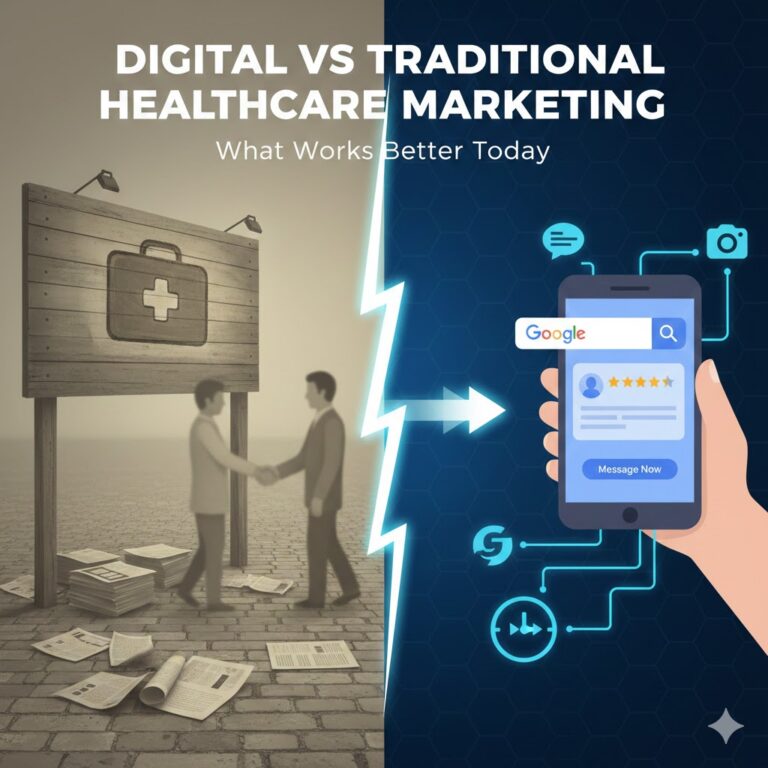
1. The Way Patients Choose Has Changed
Your patients now start their search on Google, not at your reception desk
Ten years ago, a patient would ask their neighbor about a good doctor. They would walk into the clinic nearest to their home. They trusted the doctor their family had visited for years. That system worked because people had fewer choices and less information.
Today, things are different. Patients open their phones when they feel unwell. They type their symptoms into Google. They look for doctors who treat their specific problem. They read reviews left by other patients. They check clinic timings and services before calling. They compare two or three options before booking an appointment.
This change happened slowly but it changed everything. The internet gave patients power to choose. They no longer depend only on what their family tells them. They want to see proof that a doctor is good at their job. They want to know if other patients were happy with the treatment. They want to feel sure before they spend money and time.
A clinic in Mumbai recently shared their experience. They had been running for fifteen years with good word of mouth. But new patients stopped coming. When they checked, they found that people were searching for their services online. The clinic had no website. Their phone number was wrong on Google. Patients could not find them even when they were looking. The clinic lost patients not because their treatment was bad. They lost patients because they were invisible online.
Another example comes from a dentist in Pune. He relied on newspaper ads and pamphlets. He spent money every month on printing and distributing them. But the response was weak. Then he started getting calls from people asking if he did root canals. He realized patients were searching online for specific treatments. He created a simple profile on Google with his services listed clearly. Within three months, his appointments doubled.
Patients today behave like shoppers. They research before they buy. They want information fast. They want to see photos of your clinic. They want to read what others say about you. They want to contact you without making a phone call first. If they do not find you online, they assume you do not exist. If your information is outdated, they move to the next name on the list.
This shift is not only happening in big cities. Patients in smaller towns also use smartphones now. They search for specialists when local doctors refer them. They look for second opinions. They want doctors who explain things clearly and update them daily. The old methods of building trust through slow word of mouth still matter. But they do not work fast enough anymore.
The way patients choose doctors today is based on what they can see and verify fast. If you are not part of that process, you miss out on patients who are actively looking for care. The first impression now happens online. It happens before the patient walks into your clinic. That first impression decides whether they will call you or call someone else.
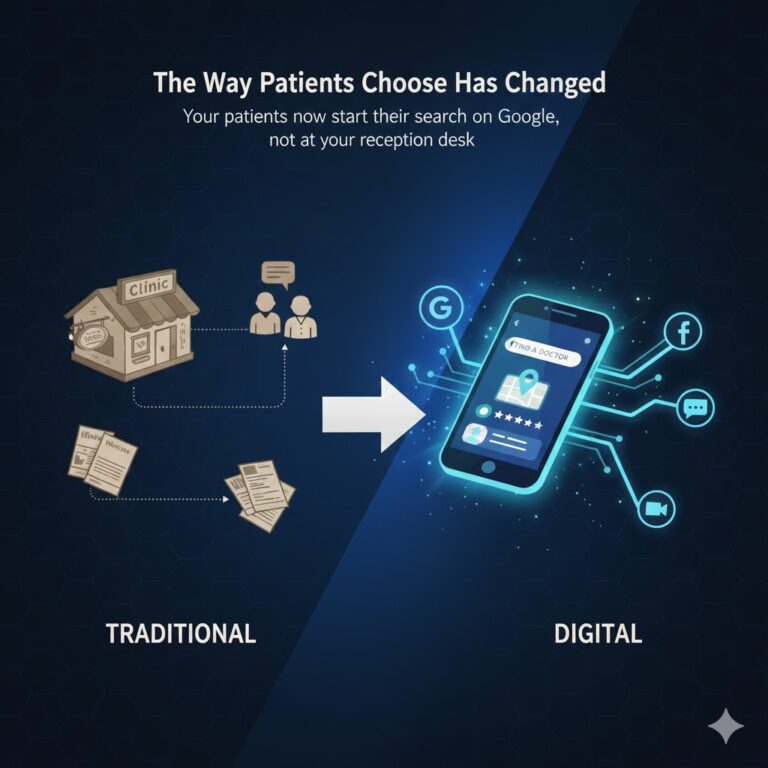
2. Traditional Marketing Had Its Time
Boards, Pamphlets, and Referrals Worked Earlier
There was a time when patients found doctors through simple methods. They walked past clinic boards on busy streets. They picked up health pamphlets from waiting rooms. They asked neighbors and family members for recommendations. This was how healthcare marketing worked for decades.
Back then, patients had fewer choices and less information. They trusted what they saw around them. A clean board outside your clinic meant you were serious. A well designed pamphlet showed you cared about details. Word of mouth from a satisfied patient brought in new families.
Doctors did not need to do much to attract patients. Being present in the community was enough. Attending local health camps helped build recognition. Putting up posters at pharmacies reminded people you existed. These methods worked because patients relied on what was near them.
Referrals from other doctors were gold. When a general physician sent a patient to you, that patient came with trust already built. This network of professional relationships kept practices running smoothly. You did not have to explain your skills. Someone else did it for you.
Print ads in newspapers reached thousands of homes every morning. People read them with their tea. They cut out ads and saved them for later. A small box ad in the health section could bring calls for weeks. Radio spots during evening shows reached families together at home.
Traditional marketing was slow but steady. You invested once and the results trickled in over time. The board stayed up for years. A pamphlet passed from hand to hand. Patients remembered you because they saw you in their daily lives.
But this approach needed patience. You could not track who saw your board or read your pamphlet. You did not know if your newspaper ad reached the right people. Results took months to show up. There was no way to measure what worked and what did not.
The cost was high for small returns. Printing thousands of pamphlets meant most went unread. Newspaper ads charged by size and placement. Radio spots needed repeated booking to stay memorable. You spent money hoping it would bring patients through your door.
Competition was local and limited. There might be three or four clinics in your area. Patients chose based on distance and convenience. Your reputation spread through conversations at tea stalls and apartment lobbies. If you were good, people talked. If not, they still came because options were few.
Traditional methods built trust through presence. Patients saw your clinic every day on their way to work. Your name became familiar without them trying. This repeated exposure created comfort. When they needed care, they thought of you first.
These methods worked well when life moved slower. Patients had time to ask around before making decisions. They valued personal recommendations over quick searches. Healthcare was about relationships built over years of service to the same community.
But the world started changing fast. Patients got busier and less patient. They wanted answers now, not next week. Technology gave them new ways to find information. The old methods could not keep up with these new expectations.
Today, those boards still stand outside clinics. Pamphlets still sit in waiting rooms. But fewer people notice them. Fewer people pick them up. The methods that worked for decades are losing their power. They are not wrong, just not enough anymore.
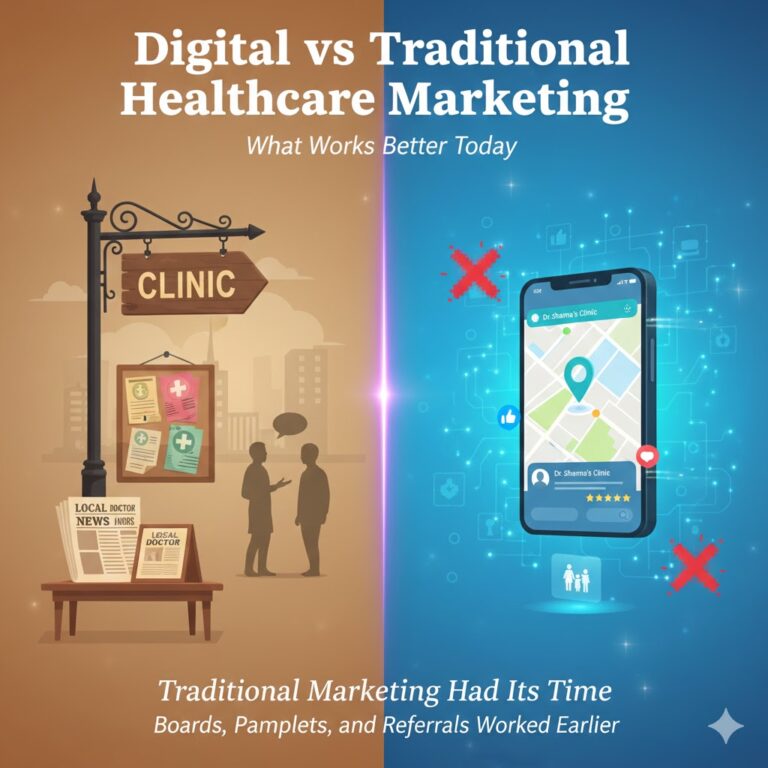
3. Why Old Methods Are Slowing Down
Patients don’t wait for word to spread anymore
The way people look for medical help has changed completely in the past few years. A patient no longer depends on what their neighbor says about a good doctor. They do not wait for someone to tell them where to go for treatment. Most of them pick up their phone and search online before making any choice.
Traditional marketing used to work because patients had limited options to find information. They would see a board on the street or read a pamphlet at a shop. Sometimes a friend would suggest a clinic after visiting it themselves. This took time and the information often came late.
Today that delay does not work well for most patients. They want answers fast and they want to compare options before deciding. If your clinic is not showing up when they search, they will pick someone else who does. The old methods cannot keep up with how fast patients now make decisions.
Printed materials like brochures also have a short life. A patient might pick one up but forget about it by the time they need care. There is no way to update a printed ad once it goes out. If your phone number changes or you add a new service, the old material still spreads wrong information.
Word of mouth still matters but it moves too slow now. A patient might hear about your clinic from a relative but then they will go online to check reviews. If they do not find you there or see bad feedback, they will not visit. The recommendation loses its power without a strong online presence backing it up.
Newspaper ads and local radio spots also reach fewer people than before. Many patients do not read physical newspapers daily anymore. They get their news from apps and websites instead. Radio ads play when people are driving or busy, so the message does not stick long enough.
Referrals from other doctors used to bring steady patients to specialists. That still happens but even referred patients now search online before booking an appointment. They want to see your credentials, read what other patients say, and check if you are easy to reach. A referral alone does not guarantee they will show up.
Traditional methods also cost more when you look at how many patients actually come in. Printing banners, placing newspaper ads, and sending out flyers need money upfront. You cannot track how many people saw your ad and then visited your clinic. Most of that spending does not bring clear results anymore.
Patients now expect fast replies when they have a question or want to book a visit. A phone call during working hours is not enough for many of them. They send messages late at night or early in the morning and want responses fast. Old marketing methods do not help you stay connected with patients this way.
The competition has also moved online and that makes a big difference. If five clinics near you are active on search and social media, patients will see them first. Your clinic might offer better care but patients will not know that if you are not visible online. The old methods do not give you the reach needed to compete fairly today.
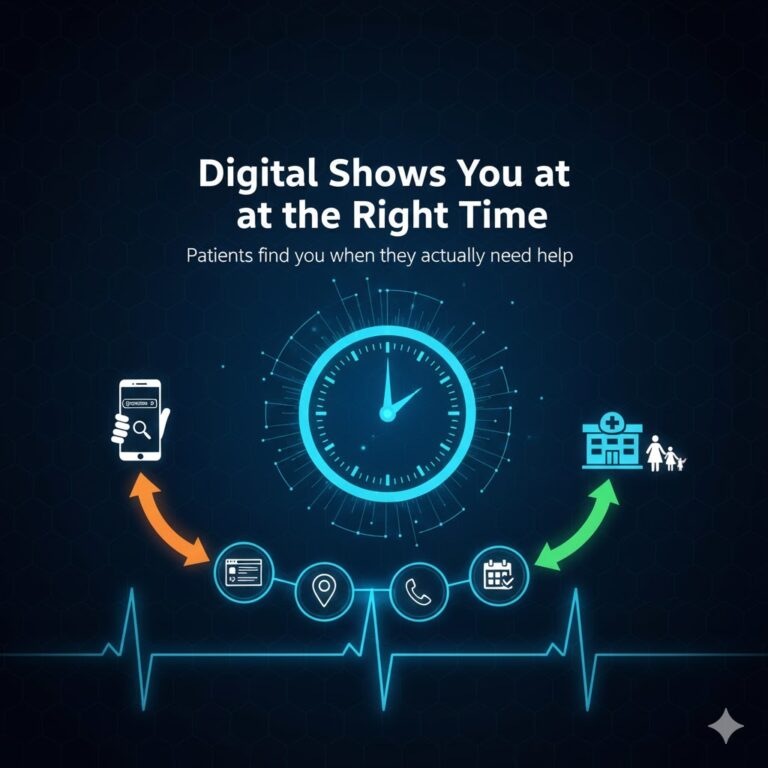
4. Digital Shows You at the Right Time
Patients find you when they actually need help
Think about how people look for medical care now. Someone wakes up with chest pain at 2 AM. They pick up their phone. They type symptoms into Google. They want answers right away. They need a doctor fast.
This is where digital marketing changes everything for your clinic. You show up exactly when patients are searching. Not a week later. Not when they pass your board. Right at that moment of need.
A mother notices her child has fever and rash. She searches for pediatricians near her home. Your clinic appears in the results. She sees your timings and contact number. She calls you within minutes. The appointment gets booked before lunch.
Traditional marketing cannot do this. A newspaper ad sits there for days. A pamphlet stays in a drawer. Nobody remembers the hoarding they saw last month. But digital puts you in front of patients at the exact second they need you.
Search engines work all day and night. Your Google listing never sleeps. Your Facebook page stays active on holidays. Patients can find you anytime they have a health worry. Morning or midnight does not matter.
Studies show that 77 percent of patients use search before booking an appointment. They look for doctors online before making any decision. They read about your services. They check your location. They compare your clinic with others nearby.
When someone searches for a diabetes specialist in your city, your name can appear first. When a person types knee pain treatment near me, your clinic shows up with directions. This kind of timing brings real results.
One doctor in Mumbai started appearing in local searches. His patient inquiries jumped by 60 percent in three months. He did not open a new clinic. He did not hire more staff. He only made sure patients could find him online when they searched.
Digital marketing connects you with people who are ready to take action. They are not only browsing. They have pain or worry. They want solutions today. Your clinic becomes their answer because you are there at the right time.
Timing decides everything in healthcare. Patients do not wait anymore. They expect quick information and fast solutions. Digital marketing makes sure you never miss that critical moment when someone needs your help the most.
5. Visibility Beats Location Today
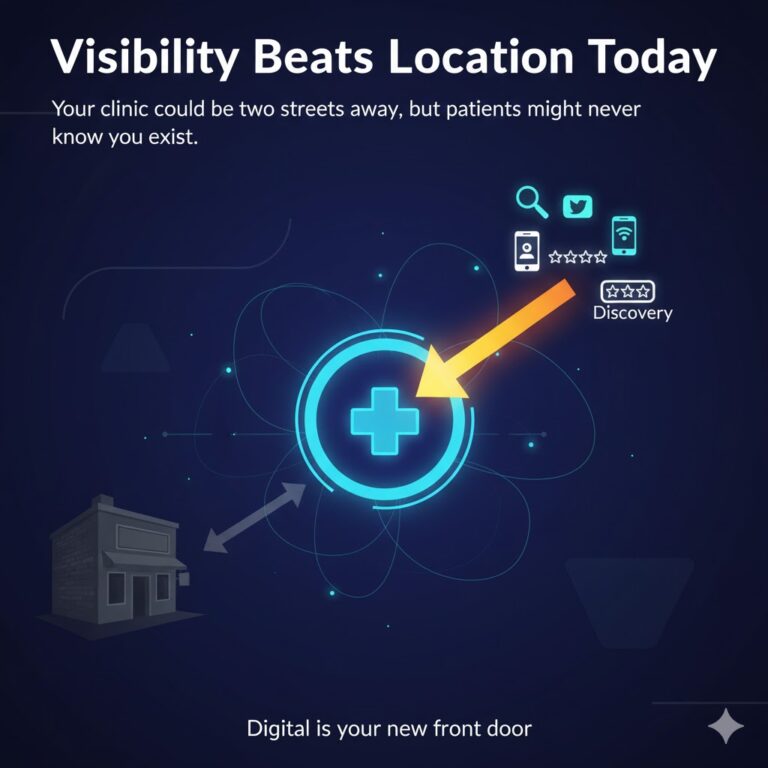
Your clinic could be two streets away, but patients might never know you exist
There was a time when location decided everything. A clinic on a busy road got more patients. A hospital near the market always stayed full. People walked past, saw the board, and walked in.
That was how it worked. But not anymore.
Today, a patient sits at home with a phone. They type a chest pain doctor near me or a child specialist in the area. Google shows them a list. The first few names get the clicks. The rest get ignored.
If your clinic is not on that list, you are invisible. It does not matter if you are the best doctor on the street. It does not matter if you have been there for twenty years. If patients cannot find you online, they will find someone else.
Location still matters, but only after discovery. A patient will check your address only after they see your name online. They will visit only after they read your reviews. They will call only after they trust what they see.
This is the new reality. Visibility comes first. Location comes second.
A clinic in a quiet lane with a strong online presence will get more patients than a clinic on the main road with no digital footprint. That is not a guess. That is what is happening right now in cities across India.
Patients do not explore neighborhoods anymore. They explore search results. They scroll through clinic pages. They compare ratings. They watch videos. They read posts. All of this happens before they step out of their home.
Your competitors know this. Many doctors are already building their presence online. They post health tips. They share patient stories. They reply to questions. They update their timings. They show up when someone searches.
And patients notice. They choose clinics that feel reachable, responsive, and real. Even if that clinic is farther away.
You might have the best equipment. You might have years of experience. But if a patient cannot see that online, it does not count. Digital visibility is your new front door. It is your new signboard. It is your first impression.
Being near a patient is good. Being seen by a patient is better. Because today, people do not walk around looking for doctors. They search sitting down. And if you are not visible in that search, you lose before you even start.
This does not mean you abandon your location. It means you stop depending only on it. Your address should support your digital presence, not replace it.
Patients will travel for good care. But first, they need to know you offer it. And the only way they will know is if you show up where they are looking. That place is not the main road anymore. It is the screen in their hand.
6. Trust Is Built Before the Visit
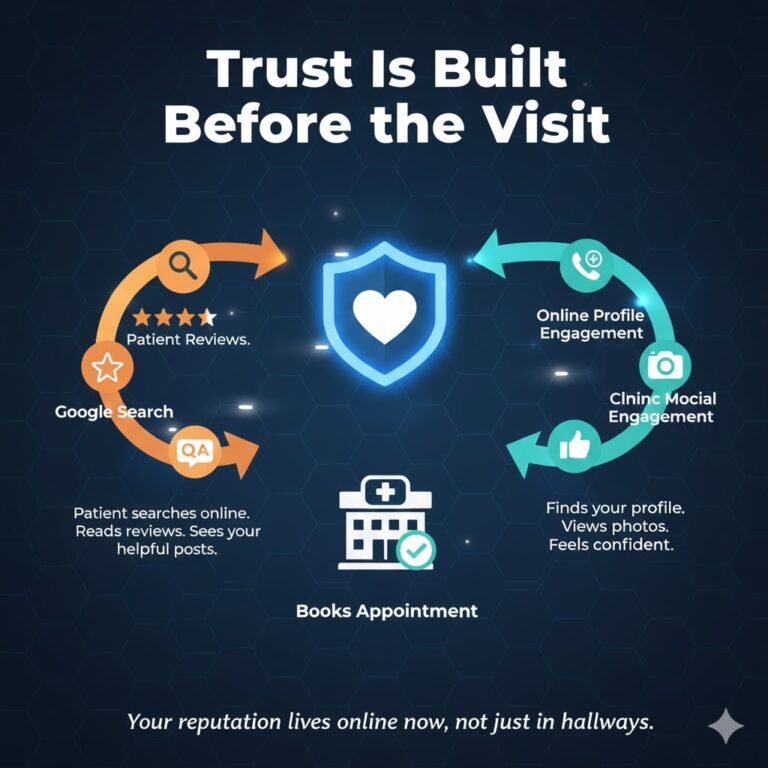
Your reputation lives online now, not just in hallways
Patients used to trust doctors because their neighbor said good things. A family member told them about a caring doctor. A friend shared their recovery story. That trust grew slowly through direct conversations and personal recommendations.
Today patients do something different before choosing your clinic. They open their phone and search your name. They look for your clinic online. They read what other patients wrote about you. This happens even before they dial your number.
A patient may feel sick at night. They search for doctors near them. Your name appears in the results. They click and see your profile. Then they scroll down to read reviews. Five star ratings catch their attention first. Good comments make them feel safe about calling you.
Another patient wants surgery. They feel scared and unsure. They search for surgeons in their city. Three names show up. Two doctors have many positive reviews. One doctor has no online presence at all. The patient books with a doctor who has strong reviews. The other surgeon loses a patient without knowing why.
Your clinic may have the best doctors. Your staff may treat everyone with care. But if nobody talks about this online, new patients will never know. They cannot see your kindness through a locked door. They need proof before they walk in.
Reviews work like digital word of mouth now. One happy patient writes about their experience. Ten other people read it while searching for care. Those ten people feel more confident about choosing your clinic. Written words reach more people than spoken ones today.
Patients also check if you share helpful health tips. They look at your social media pages. They want to see if you post regularly. A clinic that shares useful information feels more trustworthy. It shows you care about patient education.
Your online presence tells patients you are real and active. A complete profile with your photo builds connection. Details about your experience show your expertise. Contact information makes reaching you simple. All these small things add up to create trust.
Some doctors think good work speaks for itself. They believe patients will find them somehow. But patients have too many options now. They choose doctors who are visible and reachable. Silent expertise does not win patients anymore.
When your clinic has no online reviews, patients worry. They wonder why nobody talks about you. They question if you are experienced enough. Silence creates doubt in their minds. Even one or two honest reviews can change this.
Building trust online is not about bragging. It is about being present where patients look for help. It means letting satisfied patients share their stories. It requires showing up consistently with useful content. Small efforts create big confidence in patient minds.
Patients want to feel sure before spending money and time. Healthcare decisions feel serious and personal. Nobody wants to make a wrong choice. Online trust signals help them feel safe. Your digital reputation becomes your introduction.
A clinic with twenty good reviews feels safer than one with zero. A doctor who answers questions online seems more approachable. A facility that posts health tips appears more caring. These details shape patient perception before any appointment happens.
You cannot force patients to trust you instantly. But you can give them reasons to believe in your care. Share patient success stories with permission. Post about your team and approach. Reply to questions people ask online. Every interaction builds a small brick of trust.
Think about how you choose a restaurant today. You read reviews before going. You check photos of the food. You see what others say about service. Choosing a doctor works the same way now. Patients research before they commit.
The first visit has not happened yet. But the patient already feels they know you. They read about your clinic. They saw your qualifications. They noticed how you respond to patient concerns. Trust started forming during their research time.
This early trust makes the first appointment smoother. Patients walk in feeling less anxious. They already believe you will take care of them. Your job becomes easier when patients arrive with confidence. Everyone benefits from this advanced trust building.
Doctors who ignore online trust building lose patients daily. Other doctors gain those patients by being visible and credible. The gap between these two groups keeps growing. One side grows while the other wonders why footfall decreases.
You worked hard to become a skilled doctor. You spent years learning and practicing. That expertise deserves to be known widely. Digital presence makes sure patients discover your skills. It turns your hidden talent into public knowledge.
Trust building online does not replace good medical care. It works alongside your treatment quality. Both matter equally now. Great care keeps patients coming back. Online trust brings them through the door first.
Patients will continue searching online before visiting clinics. This behavior will only grow stronger. Doctors must adapt to this new reality. Building trust online is not optional anymore. It has become a necessary part of healthcare practice.
Your reputation should reflect your actual care quality. Online presence simply makes that reputation visible. It connects your good work with people who need it. Think of it as opening windows so sunlight reaches inside.
Start simple if this feels new. Ask happy patients to leave honest reviews. Create basic profiles on medical directories. Share one helpful health tip each week. These small steps begin building the trust patients seek before visiting you.
7. Faster Replies Mean Faster Decisions
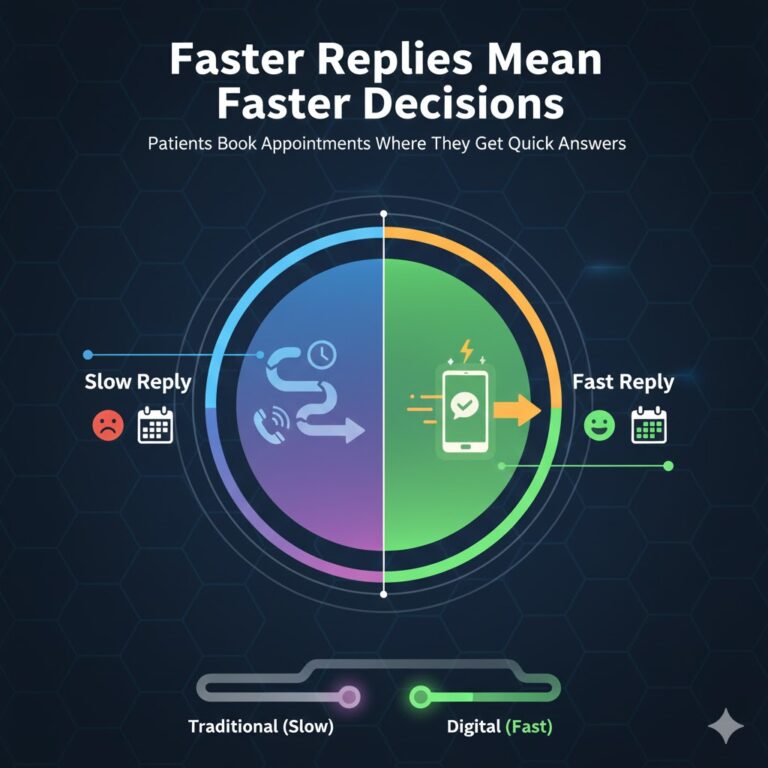
Patients Book Appointments Where They Get Quick Answers
A patient calls your clinic at 11 AM. No one picks up. They leave a message. Hours pass. By evening, they have already booked with another doctor.
This happens every single day in healthcare. Patients do not wait anymore. They move to the next option fast. Speed decides who gets the patient. The clinic that responds first usually wins the appointment. It does not matter if you have better equipment or more experience. If you are slow, you lose.
Traditional marketing never focused on response time. A pamphlet does not answer questions. A billboard does not reply. Word of mouth takes days to reach someone. By the time a patient hears about you, their problem might have gotten worse.
Digital marketing changes this completely. A patient sends a message on WhatsApp at midnight. Your automated reply tells them you will respond in the morning. They feel heard. They wait. Another patient comments on your Facebook post asking about consultation fees. You reply in 30 minutes. They call your clinic the same day.
When patients search for doctors online, they compare based on how fast they get information. One clinic has a phone number that rings but no one answers. Another clinic has a chatbot that instantly shares timings and services. The second clinic gets more bookings. Not because they are better doctors. But because they were faster.
Patients today expect instant answers. They are used to ordering food in minutes. They stream movies without waiting. They get cab updates every second. Healthcare is the last place they want delays.
A study done across Indian cities showed something clear. When clinics replied to inquiries within one hour, 60% of patients booked appointments. When replies took more than 24 hours, only 15% booked. The difference is huge.
Social media makes speed even more important. A patient posts a question on your clinic page. If you reply in two hours, others see it too. They notice your clinic cares. They feel confident reaching out. But if the question stays unanswered for days, it sends a bad message. People assume you are too busy or do not care.
Email is another example. A patient fills a contact form on your website. They want to know if you treat a specific condition. If your reply comes the next morning, they appreciate it. If it takes three days, they have already visited another doctor.
Phone calls still matter a lot in healthcare. Many patients prefer talking to someone. But clinics often miss calls during busy hours. Digital tools help here too. Missed call services send automatic messages. Patients get basic information right away. They know someone will call back soon. This small step keeps them connected to your clinic.
Google My Business listings also affect speed. When patients search for doctors near them, they see your contact details. If they message you through Google, a quick reply boosts your ranking. Google notices when businesses respond fast. It shows your clinic higher in search results. More visibility means more patients.
Appointment booking systems make decisions faster too. Patients see available slots online. They pick a time that works for them. They confirm in seconds. No back and forth calls. No waiting for the receptionist. The process is smooth and quick.
Patients also check reviews before deciding. If someone asks a question in the review section and you reply fast, others notice. It shows you listen. It builds trust before the first visit even happens.
Traditional referrals worked when patients had time. A friend would recommend a doctor. The patient would call after a few days. Things moved slowly. Today, patients search online the moment they feel unwell. They want answers now. They want appointments soon. Slow responses push them away.
Clinics that use digital tools respond faster without working harder. Automated messages handle common questions. Chatbots share basic details. Appointment links let patients book directly. Staff can focus on patient care instead of answering the same questions repeatedly.
Speed also reduces patient anxiety. When someone has a health concern, waiting feels terrible. A quick reply calms them. It tells them help is coming. Even if the appointment is a few days away, knowing they are confirmed makes a difference.
Many doctors worry that digital replies feel cold. But patients do not see it that way. They care more about getting information than how it arrives. A fast automated message beats a slow personal reply every time.
Clinics in smaller towns benefit the most from fast digital responses. Patients there have fewer options. If your clinic is quick to answer, they stay loyal. They do not look elsewhere. In bigger cities, competition is tough. Speed becomes the main way to stand out.
Private clinics compete with hospitals and big chains. Those places have large teams answering calls and messages. A single doctor cannot match that manually. But with digital tools, a small clinic can respond as fast. It levels the playing field.
Faster replies also mean fewer missed opportunities. A patient inquires about a health package. You reply in 20 minutes. They ask two more questions. You answer both the same day. By evening, they have paid and booked. Without fast replies, that entire conversation might never happen.
Digital marketing makes speed simple. Traditional methods cannot do this. A newspaper ad cannot answer questions. A radio spot cannot book appointments. A referral cannot respond at midnight. Digital tools work all the time. They help you stay connected with patients without extra effort.
Patients make healthcare decisions faster than before. Your response time directly affects those decisions. Clinics that reply fast grow faster. Patients trust them more. Bookings increase. Word spreads. Growth becomes steady.
Speed is not about rushing patient care. It is about making the first contact smooth and fast. Once patients reach your clinic, you give them the time and attention they deserve. But getting them there starts with how fast you respond.
8. Traditional Still Helps, But Not Alone
Offline trust works better when backed online
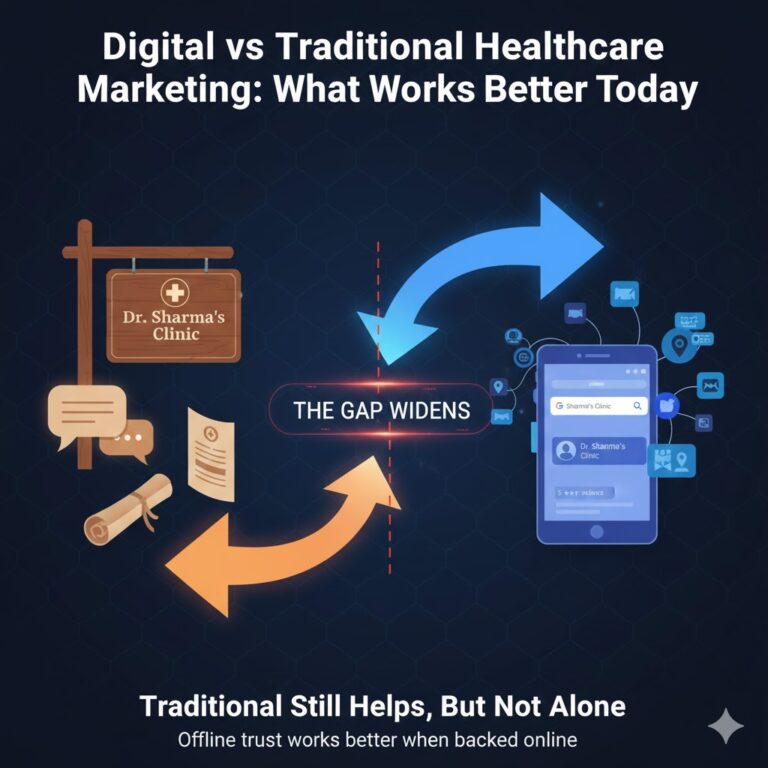
Traditional marketing methods are not dead. They still create value for your clinic. Patients remember the board outside your clinic. They keep your pamphlet for later. They trust a friend who tells them your name. These methods worked before and they work now too. But today they cannot stand alone. They need digital support to bring real results.
A patient sees your clinic board while passing by. They feel curious about your services. But they do not walk in right away. Instead they pull out their phone. They search your clinic name on Google. They look for your website or social media page. They want to see reviews from other patients. If they find nothing online, they lose trust. They think your clinic might be outdated or not active. The offline impression dies without online proof.
The same thing happens with pamphlets. You hand out brochures at health camps or community events. People take them home and read them. They feel interested in your services. But before booking an appointment, they want to confirm your details. They search online to check if you are real. They want to see your address, timings, and contact number. If your clinic does not appear on search results, they drop the idea. The pamphlet alone cannot close the deal.
Referrals from friends and family still matter a lot. When someone recommends your clinic, patients feel safer. But even after hearing good words, they go online. They want to see photos of your clinic. They want to read recent reviews from other patients. They check if you have updated contact details. If your online presence is weak, the referral loses its power. The patient may choose another clinic with a stronger digital footprint.
Traditional methods create the first spark of interest. Digital methods turn that spark into action. A patient sees your newspaper ad about a health checkup camp. They remember your clinic name. Later they search for you online to book an appointment. If your website loads fast and shows clear information, they call you. If your social media has recent posts, they trust you more. The offline ad started the journey but the online experience completed it.
Local events like health talks or free checkup camps build strong connections. Patients meet you in person and feel comfortable. They see your face and hear your voice. This creates trust that no digital post can replace. But after the event, they want to stay connected. They look for your Facebook page or Instagram account. They want to follow your health tips and updates. If you are not active online, they forget you over time. The personal connection fades without digital reminders.
Traditional marketing also helps you reach older patients. Many people above fifty years old still trust newspapers more than social media. They read health columns and look at clinic ads. They feel more comfortable with print materials. But even these patients have children or grandchildren who search online. The younger family members check your clinic details before taking the elders to you. So even when your target is older patients, you need a digital presence for their families.
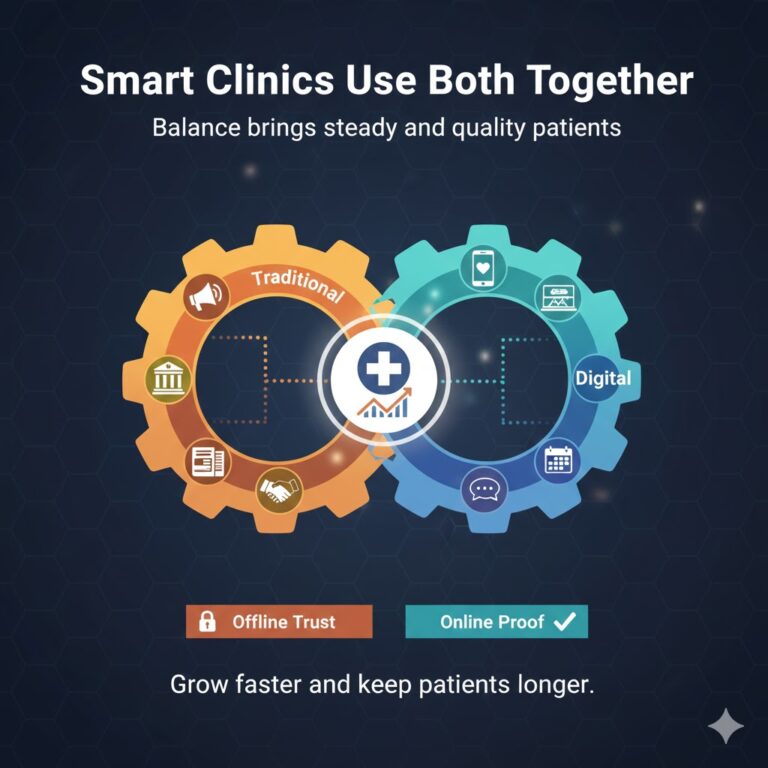
Combining both methods gives you the best results. You put up a board outside your clinic. You also claim your Google Business Profile. You distribute pamphlets at events. You also share the same information on your Facebook page. You attend local health camps. You also post about them on Instagram with photos. This way your message reaches people through many channels. They see you offline and confirm you online. This double exposure builds stronger trust.
Patients today want options and confirmation. They do not make decisions based on one source alone. They collect information from different places before choosing a clinic. If you are only offline, you miss half the audience. If you are only online, you miss the personal touch. Smart clinics use both together. They let traditional methods create awareness and digital methods create action.
Your clinic board brings attention from people passing by. Your Google listing brings attention from people searching online. Your pamphlet explains your services clearly. Your website does the same with more details and photos. Your word of mouth brings personal trust. Your online reviews bring public trust. When all these work together, your clinic grows faster. Patients feel confident about choosing you because they see you everywhere.
Traditional marketing creates local roots. Digital marketing creates a wide reach. Together they give your clinic both depth and scale. You become the trusted name in your area and the visible choice online. Patients who see your board remember you. Patients who search online find you. Both groups end up calling you because your presence is complete.
This balance matters more than ever today. Patients are moving between offline and online worlds all the time. They talk to neighbors about health issues. Then they search online for solutions. They see clinic boards while driving. Then they check Google Maps for directions. Your marketing must follow them in both worlds. When you appear in both places, you win their attention and trust.
So keep using traditional methods that work for you. But do not stop there. Add digital layers to support them. Let your offline efforts drive people online. Let your online presence confirm what they saw offline. This is how modern clinics grow steadily. This is how you stay relevant to patients of all ages. Traditional marketing still helps, but it needs digital backup to truly work today.
9. Smart Clinics Use Both Together
Balance brings steady and quality patients
The best clinics today do not pick one side and forget the other. They use both digital and traditional methods to grow their patient base. This approach works because different patients come from different places. Some find you on Google while others hear about you from a neighbor.
A good clinic might run ads on Facebook and also put up a small banner near a busy market. Both work at the same time. The banner catches the eye of someone walking by. The Facebook ad reaches someone searching for a solution at midnight. Together they cover more ground than using only one method.
Traditional methods still create trust in local communities. When a patient sees your clinic board every day on their way to work, your name stays in their mind. When they need a doctor, they remember you. But if that same person searches online and cannot find you, they might go to another clinic that shows up first.
Digital methods help you stay connected after the first visit. You can send appointment reminders through messages. You can share health tips on social media. Patients feel cared for even when they are not sitting in your clinic. This keeps them coming back and also brings their friends and family to you.
Some doctors worry that using both will cost too much. But it does not have to be expensive. You do not need to spend lakhs every month. A small budget for online ads combined with a few printed flyers can work well. The key is to start small and see what brings results.
Clinics that use both methods also handle changes better. If one channel slows down, the other keeps working. During festivals, people may not check their phones as much. But they are out in the streets where they can see your banners. During monsoons, fewer people go out. But they spend more time online looking for nearby clinics.
Patients today expect both. They want to see your board when they pass by your area. They also want to check your Google reviews before visiting. If you only focus on one, you miss the other half of patients. The smart move is to give them both options.
The mix does not have to be equal. You can put more effort into what works best for your clinic. A busy urban clinic might focus more on digital because their patients are always online. A clinic in a smaller town might use more traditional methods because people still rely on word of mouth. But both should exist in some form.
Using both together also builds a stronger brand. When patients see your name online and offline, it sticks better. They feel like you are everywhere, and that creates confidence. A clinic that only exists online can feel less real. A clinic that only uses boards can feel outdated. Together, you feel modern and trustworthy.
Training your team to handle both channels is important. Your front desk should know how to reply to messages and also greet walk in patients warmly. Your staff should update your social media and also hand out brochures at local events. When everyone knows the plan, the mix works smoothly.
The goal is not to compete with big hospitals. The goal is to stay visible and trusted in your community. Big hospitals have large budgets, but they cannot match the personal touch of a local clinic. Use digital to show your expertise and traditional to show your presence. Together, they make you the first choice.
Clinics that balance both methods grow faster and keep patients longer. They do not depend on one source of patients. They build relationships online and offline. This makes the clinic stable even when trends change or competition increases.
Clickniti Helps You Choose What Works
We build your growth plan using what patients need
Many doctors feel confused about where to spend their marketing budget. Should you print more pamphlets or run Facebook ads? Should you sponsor a local event or boost your Google ranking? These questions create stress because every choice costs money and time.
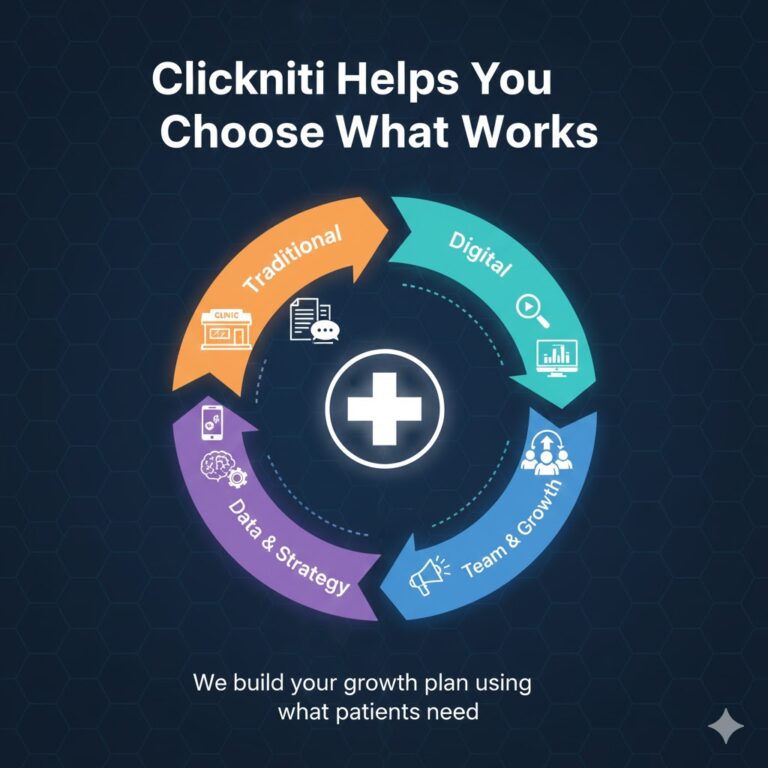
Clickniti takes away that confusion for you. We study your clinic location and see how patients search in your area. We check what your competitors are doing online and offline. We look at your current patient flow and understand where new patients come from.
Then we create a plan that mixes both methods in the right amount. If your clinic is in a busy market area, we suggest local banners along with Google ads. If you treat senior patients, we focus on referral programs and WhatsApp campaigns. If you serve young families, we build your Instagram presence and organize health camps.
We do not force every doctor to use the same strategy. A pediatrician needs different tools than an orthopedic surgeon. A new clinic needs more visibility than an established hospital. We respect these differences and design plans that match your reality.
Our team tracks results every month and shows you clear numbers. You see how many calls came from your website. You know how many appointments started from your Facebook page. You understand which banner location brought more walk-ins. This transparency helps you make better decisions for the next month.
We also train your staff to handle online inquiries properly. Your receptionist learns to reply to Google reviews. Your nurse knows how to share health tips on WhatsApp groups. Your manager understands how to track which marketing channel works best. This training turns your whole team into a marketing force.
Clickniti believes that good marketing is not about choosing digital or traditional. It is about choosing what brings the right patients to your clinic. We guide you through that choice with data, experience, and practical thinking. Your growth becomes our success story.
FAQs-
No. Boards and referrals still help. But alone, they are not enough anymore.
Because patients search on their phones first before visiting any clinic.
Yes. Many ask their children or family to check online for them.
No. It supports it. Online presence makes word of mouth stronger.
No. It can be done in a planned way without wasting money.
Because new patients compare options online before walking in.
Yes. Clinics win with personal care and clear communication.
No. When done right, it builds trust and respect.
Some changes show results within weeks, not years like traditional methods.
We help clinics balance digital and traditional methods in a simple, safe way.