Why Doctors Who Delay Digital Are Losing the Race to Hospitals
Healthcare is changing fast and the way patients find doctors has changed too. Ten years back, patients would ask friends or family for doctor names. Today they search on their phones first. When a patient feels sick, they go online before they visit anyone. This is how the world works now.
Table of Contents
ToggleHospitals understood this change early. They built their presence online and made it strong. Patients can see the websites, read about the doctors, and book appointments with a few clicks. Small clinics and individual doctors stayed quiet online. They thought good work alone would bring patients. That was their biggest mistake.
The gap between hospitals and small clinics is growing wider every month. Patients choose what they see first. If a hospital shows up on their phone screen first, that is where they go. A doctor who has no online presence becomes invisible. For many patients, no online presence means the doctor does not exist at all.
This is not about being technical or complicated. This is about being seen. This is about being found. This is about staying in the game when the game has moved online. Doctors and clinics that understand this are winning. Those who wait and watch are falling behind.
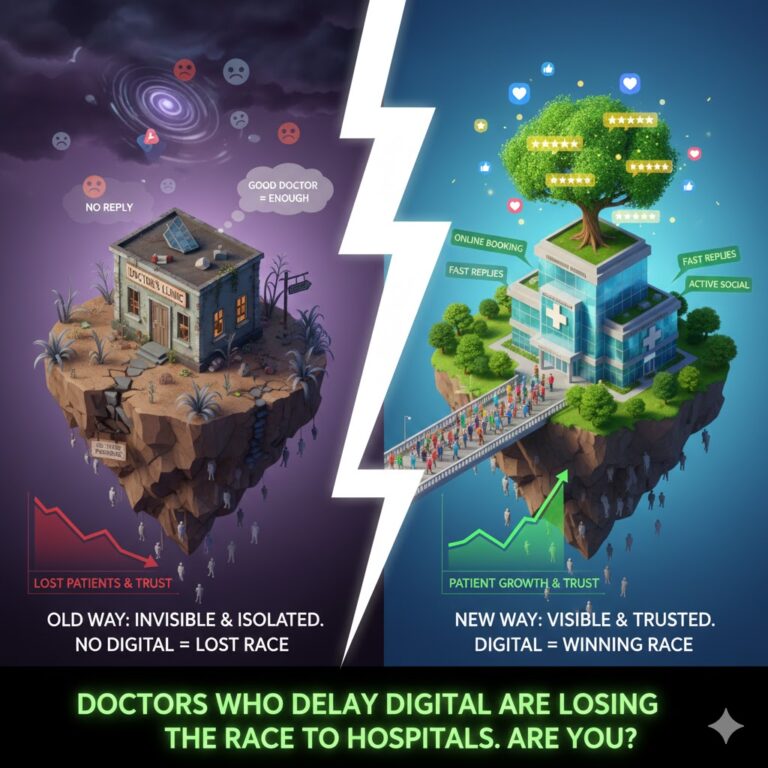
1. Hospitals Are Seen First
When People Search Online, They Find Big Hospitals Before Small Clinics
A person gets sick and opens their phone. They search for a doctor in their area on Google. What do they see? Big hospitals show up on the first page. Small clinics and private doctors appear much later or not at all. This happens because hospitals spend money to be visible online. They have websites that work well. They post updates on social media every week. They answer questions when people call or message them.
When your clinic does not have a strong online presence, patients do not find you. They find the hospital instead. The hospital gets the patient first. Your clinic loses the chance before you even know someone was looking for help.
Think about your own life. When you need something, do you search on Google? Most people do this today. Patients are the same. They search for doctors when they need one. If your clinic does not show up in that search, the patient goes to the hospital. The hospital gets busy with more patients. Your clinic stays quiet. This is not about being better at medicine. This is about being found when people need you most.
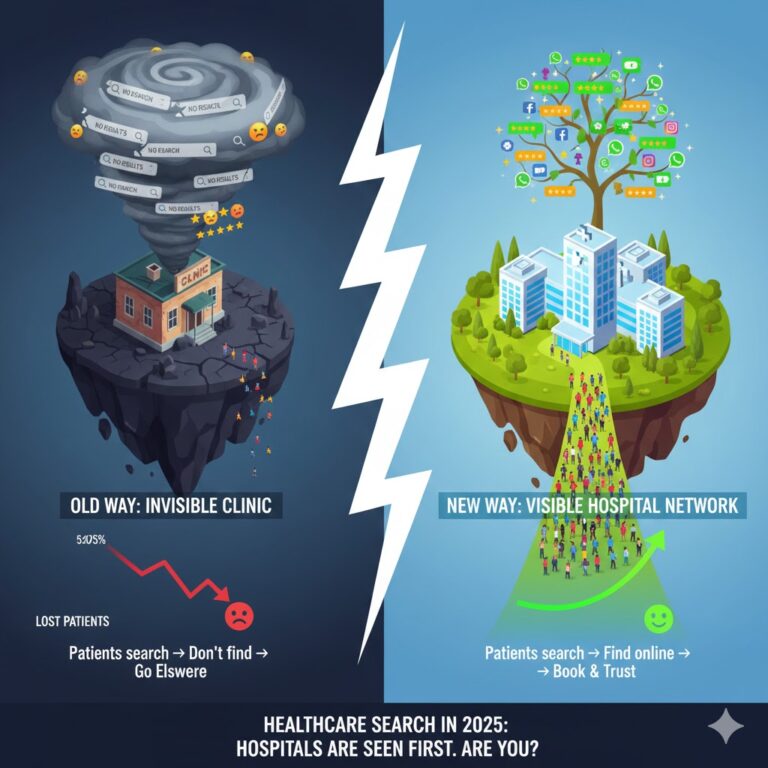
2. Silence Online Looks Like Closed Doors
When Your Clinic Stays Quiet, Patients Think You’re Not There
A patient searches for a doctor at 9 PM on a Tuesday. They want to know your clinic timings. They want to see your photos. They want to read what other patients say about you. But your clinic website shows nothing new. Your social media has posts from three months back. Your phone number is hard to find.
What does the patient think? They think your clinic is closed. They think you don’t see new patients anymore. They think you are not interested in helping them. So they search for another doctor. They find a hospital that has fresh photos. They find a hospital that answers their questions online. And that is where they go.
Hospitals post something new every single day. They share patient stories. They show their doctors working hard. They answer questions fast. People see all this and feel that the hospital is active and ready to help. They feel that this hospital cares about them.
Your clinic can be the best in town. Your doctor can have 20 years of experience. But if nobody sees your name online, nobody will come to you. A patient will never know how good you are. They will never know that you treat people with kindness. They will never know that you have the latest machines.
Silence online sends a wrong message. It tells patients that you don’t want their business. It tells them that you are too busy or too tired to reach out. It tells them that other doctors are more active and more ready to help.
When you post nothing, you lose before you even get a chance to meet your patient.
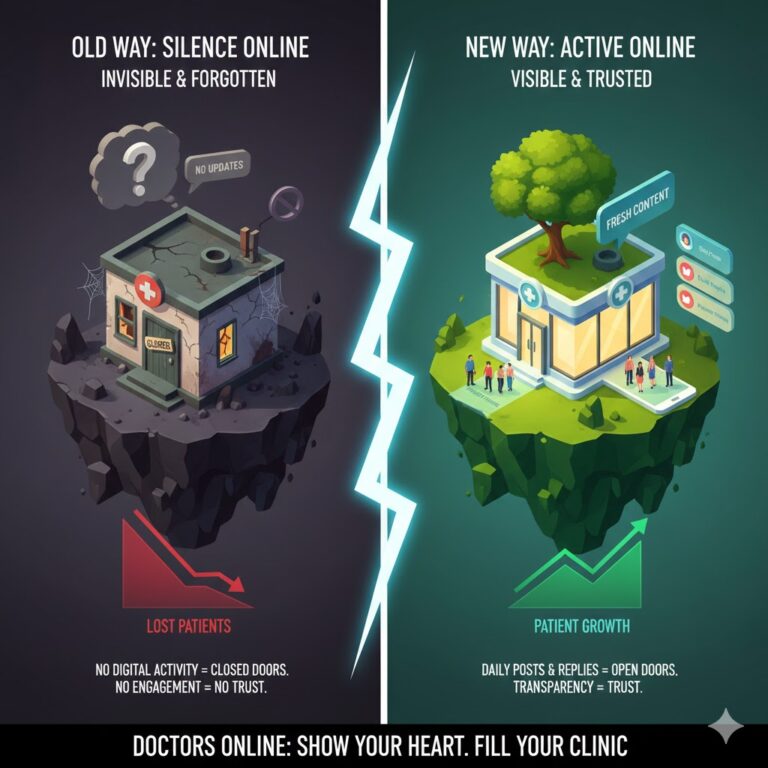
3. Patients Trust What They Can See
When a patient looks for a doctor online, they want to see proof that the clinic is real and active. Hospitals show their work on the internet. They post pictures of their rooms and equipment. They write about their doctors and their skills. They share stories from people who got better. They answer questions on their websites. They show their timings and location clearly. Patients read all this and feel safe. They feel the hospital is trustworthy and strong.
Your small clinic might be better than the hospital near them. Your doctors might have more skill and care. But if patients cannot see this online, they will never know. When they search on Google, hospitals show up with big offices and many pictures. They show their doctors in white coats. They show happy patients who got cured. They show clean rooms and modern machines. Patients see all this and think the hospital must be good.
Now think about your clinic’s website. Is it empty and quiet? Does it have old pictures from five years back? Is there no news about what you do? Patients think that silence means the clinic is closed or not busy. They think maybe you are not a good doctor. They think maybe you don’t care about telling people about your work. This is not fair, but it is what happens when you stay quiet online.
Hospitals win because they show what they do. They post every day. They talk about their success stories. They reply fast when someone asks a question. Patients see this activity and believe the hospital is the right choice. You need to do the same thing. Post pictures of your clinic. Tell people about how you help them. Share stories from your patients. Answer their questions on your website or social media. When patients see you are active and sharing, they will trust you more than a big hospital.
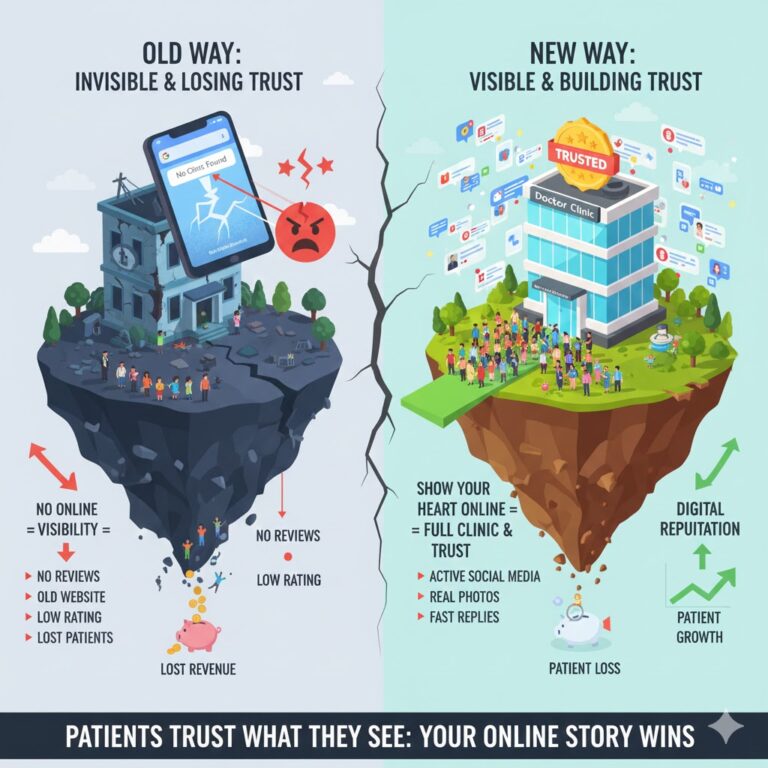
4. One Search Changes the Choice
When a Patient Types, Your Clinic Can Win or Lose
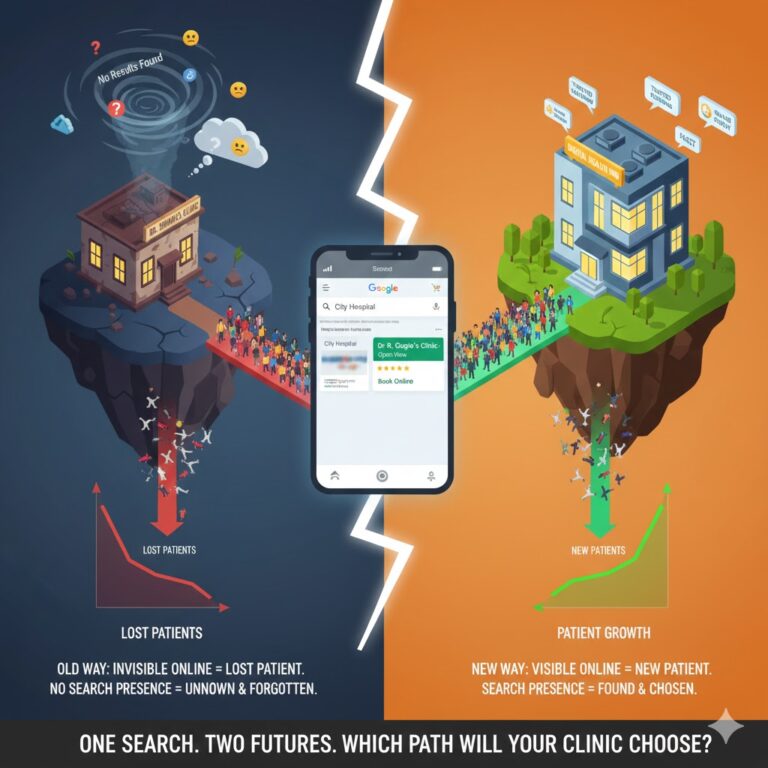
Your patient wakes up with chest pain or their child has a fever at night. What do they do first? They pick up their phone and search for a doctor nearby. This single moment decides everything. In that search, they will see either your clinic or a hospital. That search result controls their choice.
A mother in Mumbai searches for a pediatrician because her son has a cough. She types in Google. Within seconds, she sees five options. A big hospital appears first. A clinic website appears sixth. She clicks on the hospital. She books an appointment there. Your clinic never gets a chance. She did not even know your clinic existed.
This happens thousands of times every day. A person feels sick. They search online. They see hospitals. They book there. Your small clinic stays empty while hospitals fill their appointment books. The search result is the first meeting with your patient. If you are not there in that search, you lose before the real game starts.
A man needs a heart checkup. He searches for a cardiologist in his area. The hospital shows up with reviews, photos, and appointment links. Your clinic shows nothing. He books at the hospital. Later, he tells ten friends about that hospital. Your clinic loses not just one patient but word of mouth from that patient too.
Every search is a door that opens or stays closed. When your clinic name does not appear in search results, that door stays shut. The patient walks into the hospital door instead. Hospitals understand this power. They spend money to appear first in searches. They create websites that Google likes. They put their name everywhere online. Small clinics do this much less. This gap between effort creates a gap in patient flow.
Think of search as a bridge between a sick person and a doctor. Hospitals built strong bridges. Patients cross those bridges easily to reach hospitals. Your clinic has no bridge. Patients do not even know the path to your door. They go to the hospital because the path is clear and bright. Your clinic sits invisible in the dark.
The choice happens in seconds, not hours. A patient does not spend time comparing ten doctors. They see the first three results. They pick one. They move forward. If your clinic is not in those first three, you are not in the race at all. The hospital wins the race before you even start running.
This is the power of being online when patients search. One search changes everything. One search brings a new patient. One search takes a patient away. Your choice today decides your tomorrow. Stay behind online and hospitals will stay ahead in patients. Move forward online and your clinic gets the chance to compete and win.
5. Hospitals Reply Faster
When Patients Call, Quick Answers Win the Game
A patient wakes up with back pain. They search online for a doctor nearby. They find two options: a big hospital and a small clinic. Both look okay online. So what makes them choose?
The patient sends a message to both. They want to know about appointment times. The hospital replies in two hours. The clinic replies the next day. By then, the patient has already booked at the hospital.
This happens every single day. Hospitals have more staff. They have people who answer phones and messages all the time. When a patient asks a question, someone replies fast. The patient feels happy. They feel like someone cares about them.
Small clinics often have only one or two doctors. The doctor is busy with patients in the room. They cannot reply to messages right away. A patient waits for hours. Sometimes they wait for a full day. By that time, they lose interest. They go to the hospital instead.
Speed matters more than you think. A patient’s mind moves fast. If nobody replies, they think the clinic is closed. They think the doctor is not interested. They think the hospital is better. Fast replies show that you are open. Fast replies show that you care. Fast replies bring patients to your door.
Hospitals understand this. They have teams ready to answer. They have systems that work all day. Your small clinic can do the same thing. You do not need a big team. You only need to make sure someone checks messages every few hours. You only need to reply before the patient forgets they asked.
6. Delays Mean Lost Appointments
When Answers Come Late, Patients Look Elsewhere
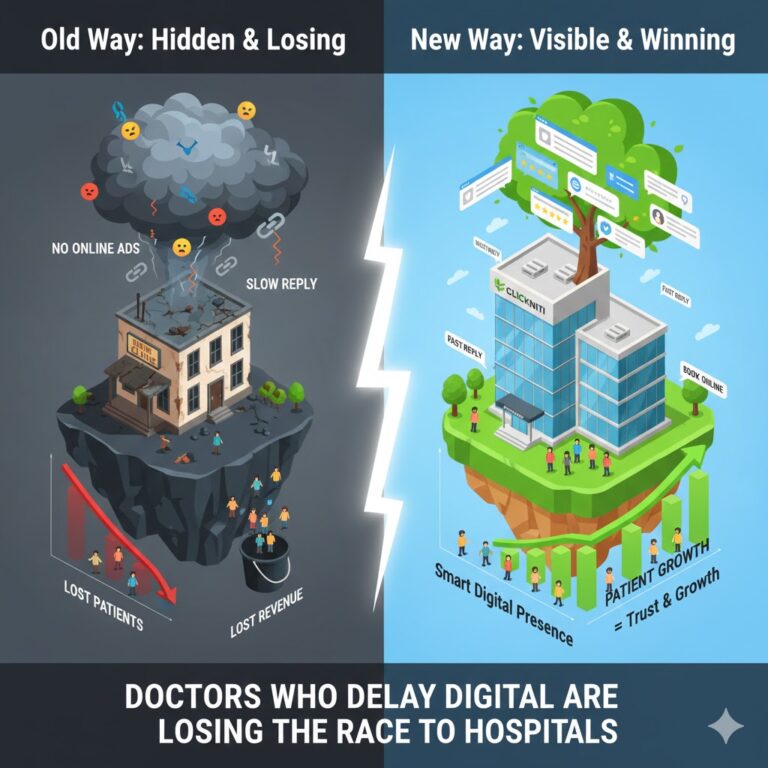
A patient calls your clinic phone at 10 in the morning. They want to book an appointment for their child’s fever. Your staff is busy with other patients. The call goes unanswered. The patient waits. By afternoon, they still have not heard back. So they do what most people do now. They search online for another doctor who answers faster.
This happens every single day in small clinics across India. A patient tries to reach out but gets no quick reply. They do not wait long. They have work to do. Their child needs help now. So they click on the next clinic’s website. That clinic has a form where they can book online. Or a WhatsApp message gets a reply in minutes. The patient books there instead. Your appointment slot stays empty.
Hospitals know this truth very well. They have teams ready to answer calls and messages. When someone asks for an appointment, they get a response within an hour. Sometimes even faster. The patient feels heard and important. They book their slot right away. The hospital fills its calendar. Your clinic loses that patient.
Think about the last time you needed something fast. You wanted someone who could answer you back fast. If one shop did not reply, you called another one. The same thing happens when people look for doctors now. They are not patient anymore. They want quick answers. If you do not give them that, they move to someone who will.
This delay costs you real money. Every patient who walks into another clinic’s door is money that could have come to you. Over one month, ten patients leave. Over six months, fifty patients pick another doctor. That is lost income. That is lost trust. That is lost business.
The answer is simple. Make sure someone on your team checks messages and calls every two hours. Set up an online booking form on your website. Reply to WhatsApp messages on the same day. This small change keeps patients coming back to you instead of going somewhere else.
7. Experience Starts Before the Visit
Your Patients Form Their First Opinion Online, Not at Your Clinic Door
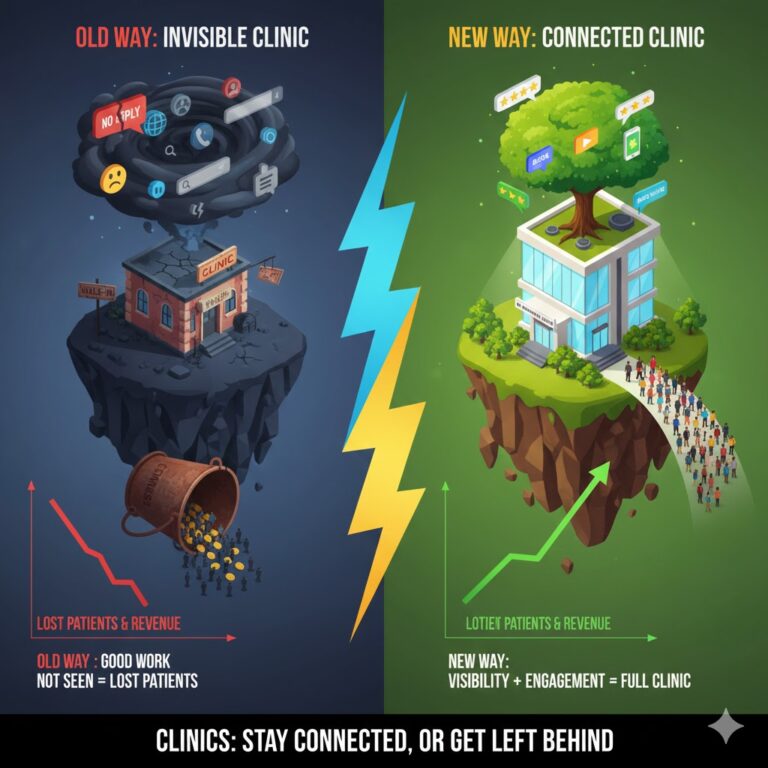
When a patient gets sick or needs medical help, they do not walk into your clinic first. They open Google on their phone. They look for a doctor near them. They check what other people say about you. They see your clinic’s website or social media page. This happens before they ever meet you in person.
Big hospitals understand this very well. They show nice pictures of their clean rooms online. They post stories about happy patients. They answer questions on their website. They make videos showing how they treat people. When someone searches for medical help, the hospital appears first with a welcoming face. The patient feels safe even before entering the hospital doors.
Your small clinic might have the best doctors and the warmest staff. But if your patient cannot see this online, they will never get the chance to know you. When they search for a doctor, if they find nothing from your clinic, they think you are not there. They think you do not care about reaching new patients. They move toward the hospital that smiles at them through their screen.
The online experience is like the first handshake. A hospital with a strong online presence gives that handshake before the patient arrives. You make them feel valued. You show your care through your website. You respond to their messages. You share helpful health tips. You show real photos of your clinic. All of this tells the patient that you are professional and that you want to help them.
Your patient will feel more confident walking into your clinic when they have seen your friendly online presence first. This confidence makes them trust you faster. It makes the visit better. This is why hospitals are winning. They shape how people see them before the first visit happens.
8. Clinics Have the Personal Touch
Small Practices Win When They Show Their Heart Online
Big hospitals feel cold and busy. Patients walk through long corridors and wait in crowded rooms. No one remembers their name. Every visit feels like a number on a screen.
Small clinics are different. Doctors know their patients by face. They remember the children and ask about family health. The waiting room feels warm. People trust the doctor because they see the same caring face each time.
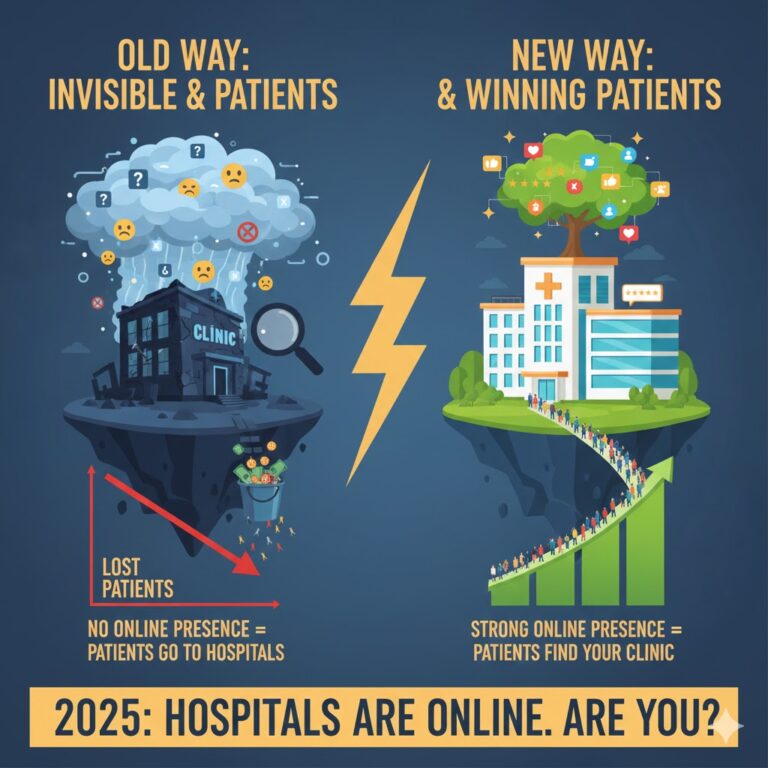
But this warmth stays hidden when clinics avoid going online. Patients searching for help cannot feel that personal care through a screen. They only see hospital websites with clean designs and active social pages. The clinic stays invisible even though the care is better.
When a clinic shares its story online, everything changes. A simple post showing the doctor talking to a patient tells people this place is different. A video of the clean clinic or a photo of smiling staff makes patients feel safe. They start to see the human side before they even visit.
Hospitals cannot match this personal connection. They have too many doctors and too many departments. No single face represents their care. Small clinics have one doctor or a small team that patients can recognize and trust.
Posting patient success stories builds this trust even more. When people read how a local doctor helped someone recover, they feel connected. They think this doctor will care for them the same way. Hospitals post general health tips but clinics can share real moments of healing.
Responding to messages and comments also shows the personal touch. When a patient asks a question online and the clinic replies fast, they feel heard. Big hospitals take days to respond or send automated messages. Small clinics can reply in minutes and use a friendly tone.
Patients want to feel valued, not processed. They want a doctor who listens, not one who rushes. When clinics show this care online. They win patients who value relationships over facilities. The personal touch becomes the biggest advantage.
But staying offline means this advantage disappears. Patients never discover the warmth and care waiting for them. They choose hospitals because that is all they find online. The clinic loses not because the care is poor but because no one knows about it.
Clinics do not need expensive campaigns or big budgets. They need to show their true strength, which is the personal bond with patients. A few posts each week, some replies to comments, and honest stories create a powerful online presence.
When clinics finally go digital, they stand out from hospitals immediately. Patients see the difference between corporate care and human care. They choose the clinic because they want to be treated like people, not cases. The personal touch wins every time when it is visible to those searching for help.
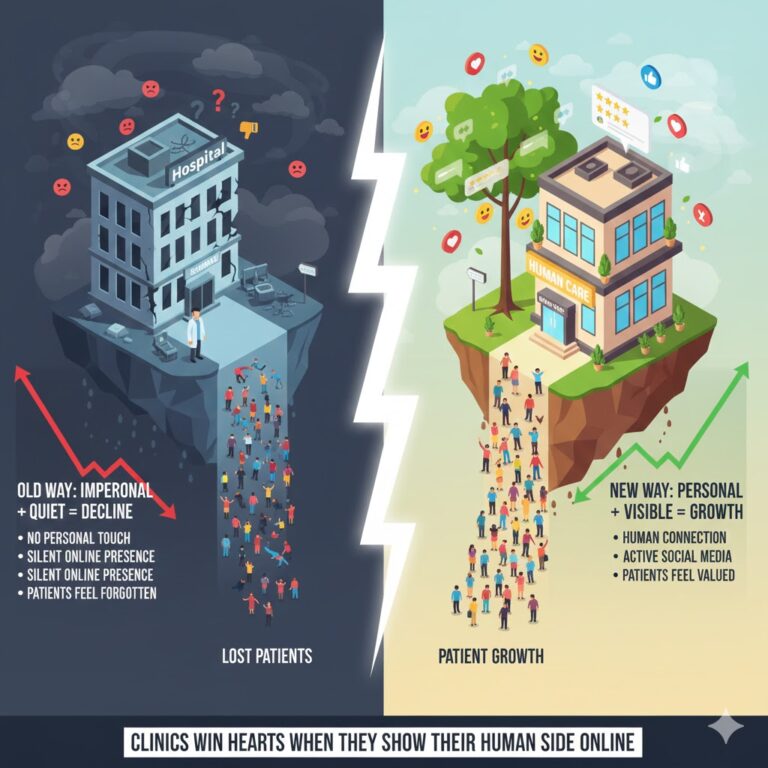
9. Every Month You Wait, Hospitals Get Three Steps Ahead
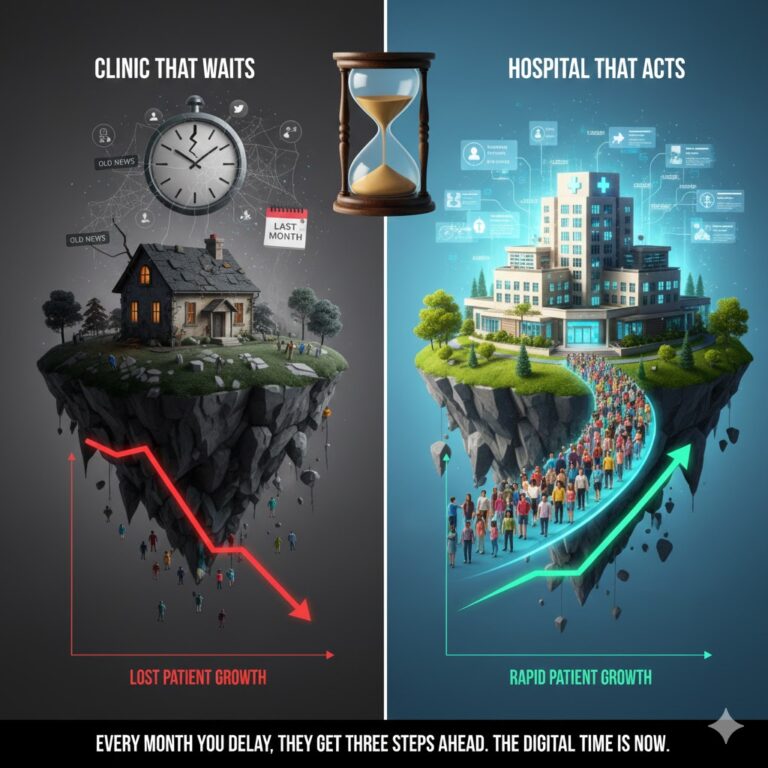
Time moves fast in the digital world. When your clinic waits another month to go online, hospitals are not sitting still. They are posting new content every single day. They are answering patient questions within minutes. They are showing up in search results that your clinic cannot even reach yet.
Think about what happens in only thirty days. A hospital updates its website five times. It posts twenty pictures on social media. It answers fifty patient messages. It gets found by two hundred new people searching for doctors. Your clinic during this time stays invisible. No posts. No updates. No replies. The gap between you and them gets wider every week.
Patients remember who helped them first. When someone searches for a doctor at night, they find the hospital that was posted yesterday. They do not find your clinic that was last updated two years ago. The hospital becomes the trusted name. Your clinic becomes the forgotten option. This happens not because you are a bad doctor. It happens because you were not there when the patient looked.
Research shows that seventy two percent of patients now search online before booking an appointment. They compare options. They read reviews. They check how recent the information is. If your last update was months ago, they think you are too busy or not accepting new patients. They move to the next name on the list. That next name is usually a hospital with fresh content from this week.
Hospitals have teams working on their digital presence every day. They have people replying to comments. They have staff scheduling posts. They have systems sending appointment reminders through messages. Your clinic might have you trying to do everything alone after a long day of seeing patients. The hospital has already replied to ten patients while you are still thinking about what to post.
The cost of waiting is real. Every patient who cannot find you online goes somewhere else. Every person who sees old information thinks you are closed. Every question left unanswered becomes trust given to your competitor. These small losses add up fast. One month becomes three months. Three months becomes a year. By then, the hospital has built a relationship with hundreds of patients who could have been yours.
Patients today expect speed. They want answers now, not tomorrow. They want to book appointments through their phone, not wait for office hours to call. They want to see your clinic is active and caring before they visit. Hospitals give them all of this. If your clinic does not, the choice becomes easy for them.
Starting late is harder than starting now. When you finally go online after waiting, you have more catching up to do. The hospital has more followers, more reviews, more trust. Your clinic starts from zero while they are already at one thousand. The effort needed grows bigger with each passing month.
But here is the truth that matters most. Every single day you delay is a day patients are making decisions without knowing you exist. They are choosing hospitals because those names show up first. They are trusting places that reply fast. They are going where the digital door is open and welcoming.
Clickniti helps clinics stop losing this race. We build your online presence so patients can find you. We create content that shows your care and expertise. We set up systems that reply quickly and book appointments smoothly. We help you compete with hospitals without needing a big team or endless hours. Your personal touch and medical skill deserve to be seen by the patients searching for exactly what you offer.
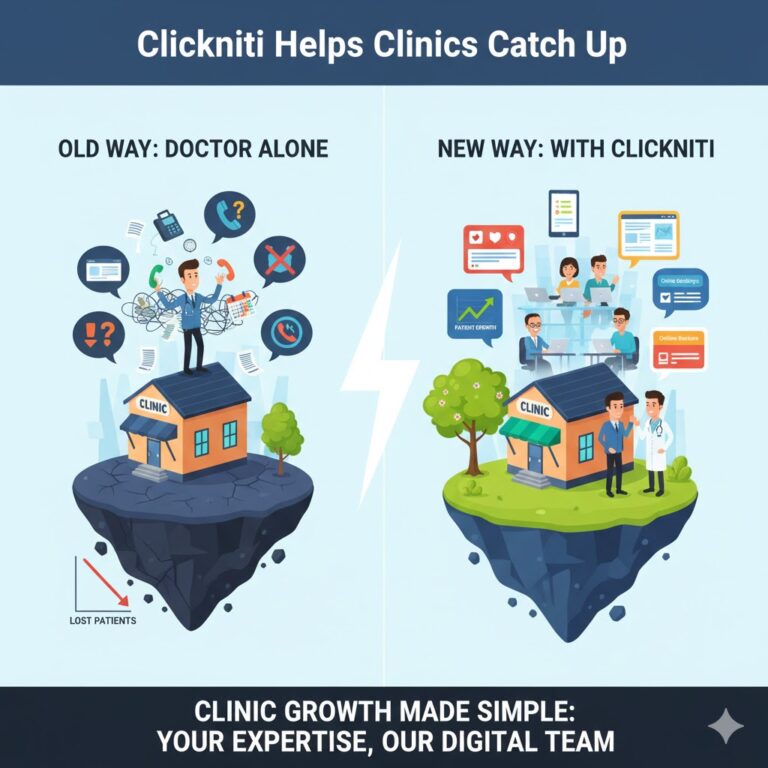
10. Clickniti Helps Clinics Catch Up
We Build Your Digital Presence While You Focus on Patients
You became a doctor to heal people. You did not sign up to learn about websites and social media. That is where we step in. Clickniti works with small clinics and solo practitioners across India. We understand that you are busy seeing patients all day. You do not have time to post online or reply to messages. We do that work for you.
Our team creates a simple website that shows your clinic timings and services. We add your contact details so patients can call you directly. We make sure your clinic appears when someone searches for doctors in your area. This happens through something called local search optimization. It means your name shows up on Google Maps when patients look nearby.
We also manage your social media accounts on Facebook and Instagram. We post health tips and clinic updates twice a week. When patients send messages asking about appointments, we reply within one hour. We do not use complicated medical terms that confuse people. Everything we write is simple and clear.
Many doctors worry about the cost of digital marketing. They think it requires a huge budget like what hospitals spend. That is not true. We offer packages starting at small monthly fees. You can start with basic services and add more later. There is no long contract that locks you in for years.
One doctor from Mumbai told us he was getting only two new patients per month. After three months with us, he started getting fifteen new patients. He did not change anything about his practice. He only became visible online. Patients could finally find him when they searched for skin specialists in their neighborhood.
Another clinic in Pune was struggling because a big hospital opened nearby. The hospital had a fancy website and active social media. Our client felt left behind. We created fresh content showing the personal care his clinic provides. We posted patient testimonials with permission. Within six months, his appointment book filled up again.
We also help with online reviews. Good reviews matter because patients read them before choosing a doctor. When you get a positive review, we thank the patient publicly. If someone leaves a negative review, we respond politely and try to solve their concern. This shows other patients that you care about feedback.
Our work does not stop after setting things up. We send you a simple report every month. It shows how many people visited your website and called your clinic. You can see which posts got the most attention. This helps you understand what patients want to know.
You do not need to understand technology to work with us. We explain everything in plain language. When we suggest something new, we tell you exactly why it helps. You make all the final decisions about your online presence. We only handle the daily tasks that take too much of your time.
Some doctors ask if they can do this themselves. Yes, it is possible. But it takes hours every week to post content and reply to messages. Those hours could be spent with patients instead. We take that burden off your shoulders. You stay focused on medical care while we handle your digital presence.
Hospitals have entire teams working on their online image. You cannot compete with that alone. But with Clickniti, you get a dedicated team at a fraction of the cost. We level the playing field so small clinics can stand strong against big hospitals.
The digital world moves fast. Patients expect quick replies and updated information. If you delay another month, more patients will choose hospitals over your clinic. They will not know about the personal care you provide. They will not see the years of experience you bring. All they will see is a hospital with a strong online presence.
We help you catch up without stress or confusion. You do not need to learn new skills or change your daily routine. We work quietly in the background while you continue healing patients. Your clinic gets the digital presence it deserves. Patients find you when they search online. Your appointment book stays full. That is what Clickniti does for doctors across India.
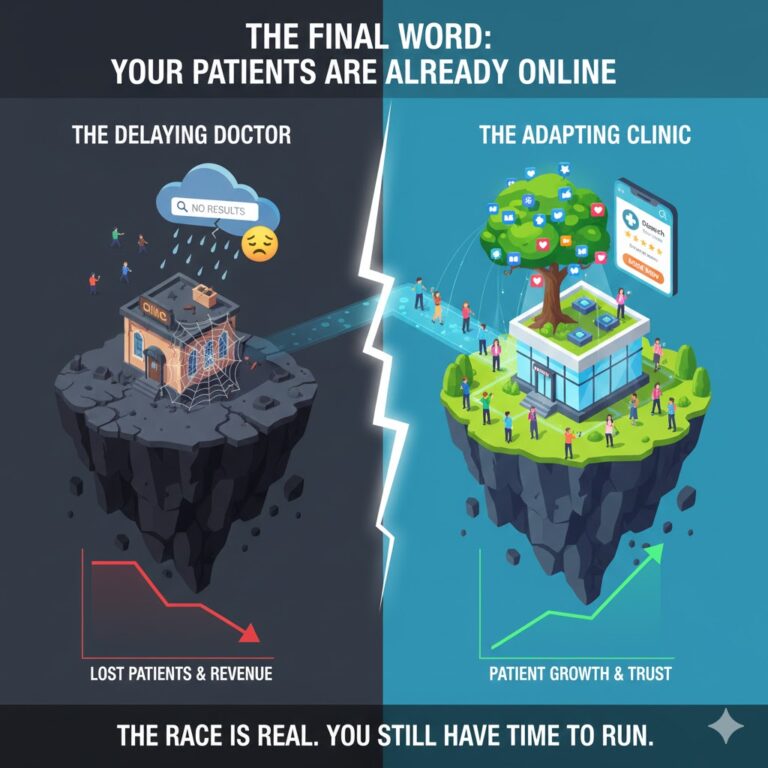
The Final Word: Your Patients Are Already Online
The truth is simple. Patients are searching right now. They need help today, not tomorrow.
Every hour you wait, someone else gets found instead. That someone is often a hospital with a strong online presence. They show up first. They answer fast. They win trust before your clinic even gets a chance.
This is not about fancy technology. It is about being present where your patients are looking. Most people start their search on their phones. They type a question. They expect answers. If your clinic stays silent, they move to the next option.
Hospitals understand this shift. They have teams working every day to stay visible. They post updates. They reply to questions. They build trust through screens before patients walk through doors.
Small clinics have something hospitals can never match. You know your patients by name. You remember their families. You give care that feels personal and warm. But if people cannot find you online, they never discover this strength.
The gap grows wider each month. Patients form opinions based on what they see online. No website means no trust. No updates make them think you are closed. Slow replies push them toward faster options.
This race is not lost. Far from it. Clinics that start now can catch up fast. The steps are clear. Build a simple online presence. Share your story. Answer patient questions. Show the care you already give every day.
Waiting will not make things easier. The digital world moves fast. Patients expect more each year. Starting today means you control how people see your clinic. You shape their first impression. You build the trust that brings them to your door.
Your skills as a doctor have not changed. But the way patients find doctors has changed completely. Those who adapt will thrive. Those who delay will keep losing patients to competitors who showed up online first.
The choice sits in your hands. Keep waiting and watch others grow. Or take one step forward today and let your patients find the care you have always provided. The race is real. But you still have time to run.
FAQs-
Because new patients are choosing online first. Hospitals are visible there. Clinics are not.
No. When done right, it saves time by reducing repeat calls and confusion.
No. Patients of all ages use phones now. Even older patients ask their families to search online.
Word of mouth still matters. But today it starts online, not on the street.
No. It shows care, clarity, and presence. Patients respect doctors who guide them well.
You don’t need to be. You only need the right support and simple systems.
Yes. When choices look unclear, patients choose the bigger name.
Yes. Clinics win with personal care but only if patients can see it.
The gap grows. Hospitals get stronger. Patients stop checking smaller clinics.
We help clinics show their care, build trust, and stay visible without stress or waste.