5 Tools Every Doctor Must Use to Stop Losing Patients in 2025
Every week, your clinic loses patients. Not because of bad treatment. Not because of high fees. They leave because staying connected feels too hard.
Table of Contents
ToggleA patient needs a follow-up appointment. She calls your clinic three times. Nobody picks up. She gives up and finds another doctor.
Another patient forgets his appointment date. No reminder comes. He misses the visit. He feels embarrassed to call back.
One more patient recovers after surgery. Nobody checks how she’s doing. She feels forgotten. Next time, she tries a different clinic.
The Cost of Losing Patients Adds Up Fast
When patients stop coming back, your practice suffers. Empty appointment slots mean less income. Your reputation weakens when patients switch to competitors.
Research shows that keeping an existing patient costs five times less than finding a new one. Yet most clinics spend all their energy attracting new patients. They forget about the ones they already have.
Indian healthcare data reveals something alarming. About 40% of patients never return after their first visit. They don’t complain. They don’t give feedback. They simply disappear.
The Real Problem Is Not Your Medical Skills
You are a good doctor. Your patients get better under your care. The problem is everything that happens outside the treatment room.
Booking an appointment feels difficult. Getting reminders never happens. Follow-up care gets forgotten. Sharing feedback seems impossible.
These small gaps push patients away slowly. One missed call here. One forgotten follow-up there. Over months, your patient list shrinks.
Technology Can Fix What Your Staff Cannot
Your team works hard already. They answer phones. They manage files. They handle billing. Adding more tasks will only burn them out.
This is where smart digital tools come in. They handle the boring, repetitive work. Your staff focuses on caring for patients face to face.
These tools work 24 hours a day. They never take breaks. They never forget. They cost less than hiring more people.
Five Simple Tools That Change Everything
The right digital tools stop patients from slipping away. They keep your schedule full. They make your clinic run smoother. They help you earn more without working harder.
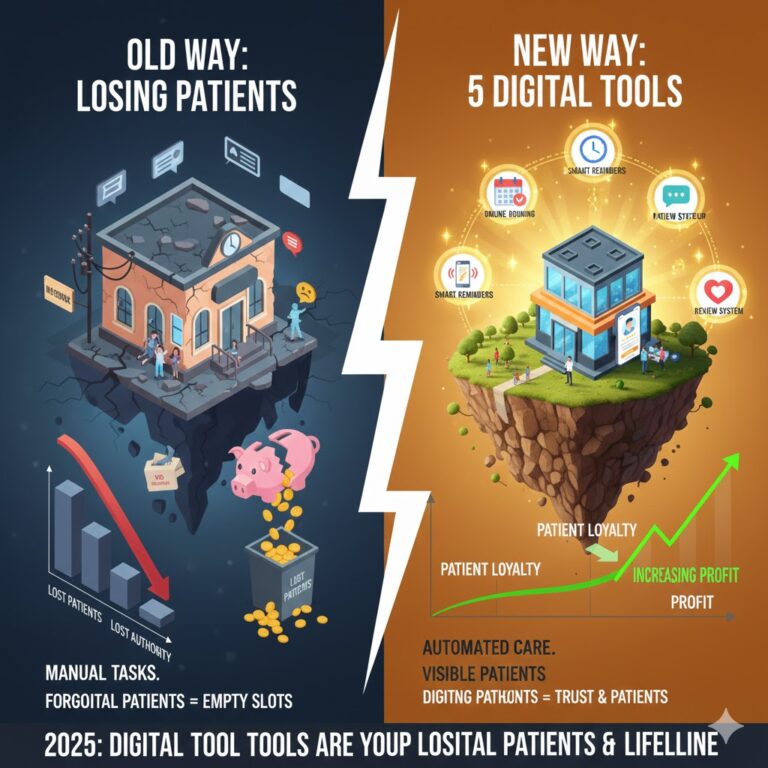
In 2025, these five tools are not optional anymore. They are necessary for survival. Clinics using them grow faster. Clinics ignoring them fall behind.
Let’s look at each tool. Understand what it does. See how it saves your practice. Learn why you need it starting today.
1.) Online Booking Made Simple
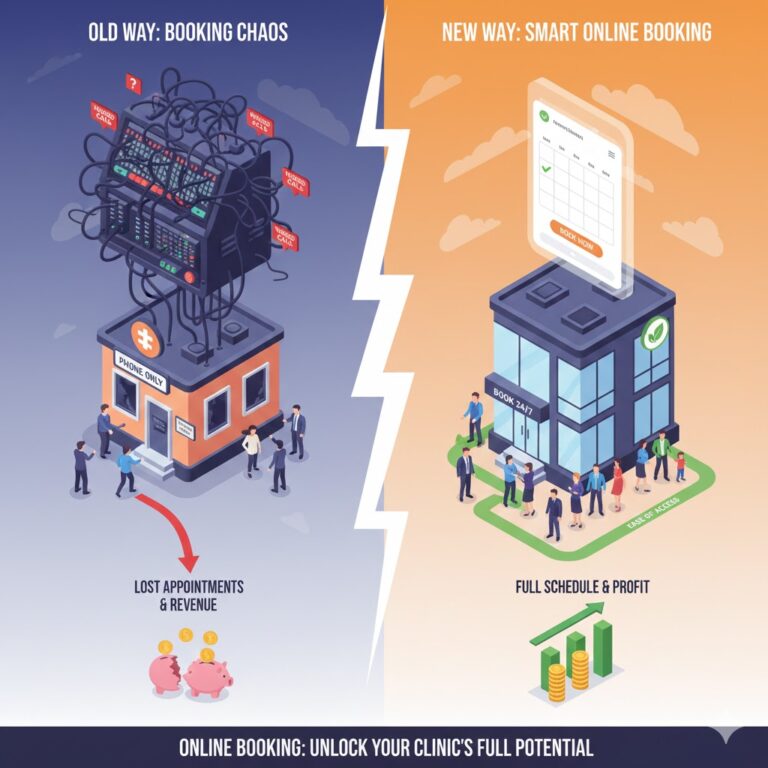
Your patients want to book appointments when it suits them. Not when your clinic is open. Not when your staff can answer phones.
Let Patients Book Anytime They Want
Think about your busiest patients. They work during the day. They have meetings. They cannot call during your clinic hours. By evening, your phones are off.
Online booking solves this problem completely. Patients can book at 11 PM while lying in bed. They can book at 6 AM before work starts. Your calendar fills up even when you sleep.
Data shows 67% of patients prefer booking appointments online over phone calls. They want control. They want speed. They want convenience.
Your Phone Stops Ringing All Day
Phone calls interrupt your staff constantly. Your receptionist answers the same questions twenty times daily. What are your timings? Which slots are free? Do you treat this condition?
Online booking systems handle all these questions automatically. Your staff can focus on patients who actually visit. They can manage files better. They can give attention to people in front of them.
Clinics report 50% fewer phone calls after adding online booking. That means less stress for your team. Better service for everyone.
Fill More Slots Without Extra Effort
Empty appointment slots mean lost money. Every unfilled hour is income you cannot recover. Traditional booking methods leave gaps in your schedule.
Smart booking tools show patients all available slots in real time. They pick what works for them. Your calendar stays packed. Your income stays steady.
Studies reveal clinics with online booking see 25% more appointments monthly. More patients mean more revenue. Your practice grows faster.
Patients Book Faster Than Ever Before
The old method takes time. The patient calls your clinic. Staff checks the register. They suggest times. The patient thinks and calls back later. Slot might be gone by then.
The new method takes two minutes. The patient opens your booking page. They see free slots. They pick one. Done. Confirmation arrives on their phone immediately.
Speed matters in healthcare. When patients need help, they want quick action. Online booking gives them that power. They feel satisfied. They trust your clinic more.
Works on Every Device Patients Use
Your patients carry smartphones everywhere. They check WhatsApp. They browse Facebook. They shop online. Your booking system should work on these devices too.
Good booking tools work on phones, tablets, and computers. The screen adjusts to any size. Buttons are big and clear. Even older patients can use them without confusion.
Mobile booking is crucial in India where 85% of internet users browse on phones. Your system must match how patients live their daily lives.
Stop Losing Patients to Competitors
Other clinics in your area are going digital. They offer online booking. They look modern and professional. Patients compare before choosing.
If your clinic still relies on phone calls only, you fall behind. Young families pick clinics with easy booking. Working professionals choose convenience over everything else.
Market research shows 40% of patients switch doctors due to booking difficulties. You cannot afford to lose patients over something this simple.
Set It Up Once and Forget About It
Many doctors worry about technical setup. They think online systems are complicated. They fear managing another platform daily.
Modern booking tools need minimal setup. You enter your working hours once. You mark your off days. The system handles everything else automatically. It updates in real time. It sends confirmations. It manages cancellations.
You check your schedule like always. Patients keep booking. Your clinic keeps growing. Technology works silently in the background.
Start Booking Smarter Today
Online booking is not a luxury anymore. It is a basic need for any growing clinic. Your patients expect it. Your competitors offer it. Your practice deserves it.
The cost is lower than hiring one extra receptionist. The results last much longer. Your clinic becomes accessible 24 hours daily. Patients feel respected and valued.
Make the switch now. Give your patients the freedom to book when they want. Watch your appointment calendar fill up. See your practice reach new heights.
2.) Easy Reminders That Work
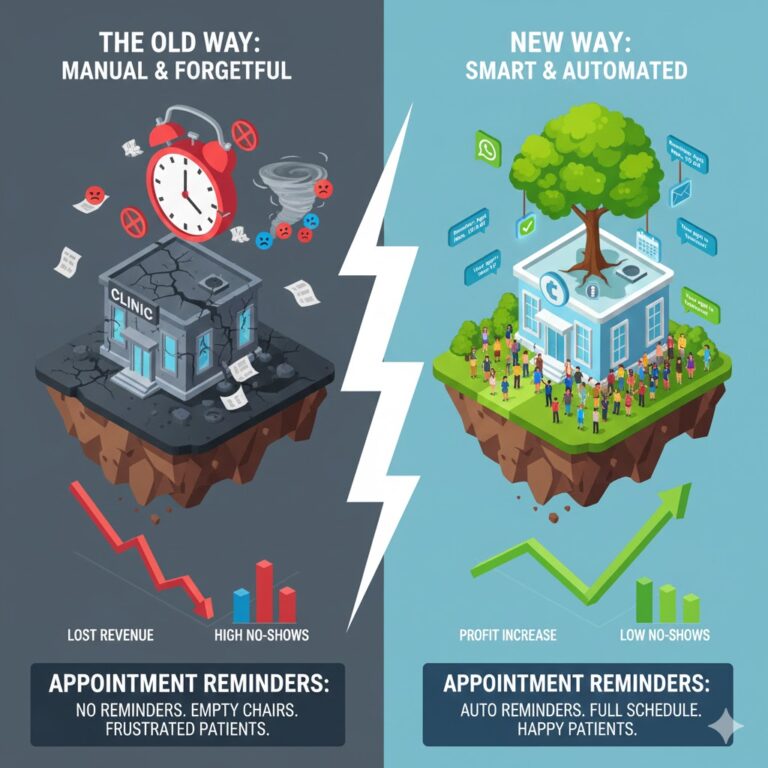
Patients forget their appointments. This happens every single day in clinics across India.
A patient books a visit for next Tuesday. They write it down somewhere. Life gets busy with work and family. Tuesday arrives. They completely forget about their appointment.
Your clinic has an empty chair. You lose that time slot forever. The patient misses important treatment. Both sides lose.
The Real Cost of No-Shows
Every empty appointment costs your practice money. You reserved that time for a patient. Your staff prepared for the visit. The room stayed ready. But nobody came.
Studies show that 20 to 30 patients out of 100 miss their appointments. These numbers hurt your clinic income. They also hurt patient health.
When patients miss appointments, their health problems get worse. Small issues become big problems. Treatment takes longer and costs more.
How Digital Reminders Help
Digital reminder systems send messages to patients before their appointments. These messages go through text or WhatsApp. Patients get a gentle reminder about their upcoming visit.
The reminder includes the date, time, and location. Patients can see all details in one message. They can save it or forward it to family members.
Research shows that reminders cut no-shows by 40 to 50 percent. That means more patients show up. Your schedule stays full. Your income stays steady.
Text Messages Work Best
Text messages reach patients instantly. Almost every patient has a mobile phone today. They check their phones many times each day.
A simple text arrives three days before the appointment. Another reminder comes one day before. The patient sees both messages right on their phone.
These texts are short and clear. They tell the patient exactly what they need to know. No confusion, no complex language.
WhatsApp Makes It Personal
WhatsApp is now the most popular messaging app in India. Patients trust messages on WhatsApp. They respond faster than emails or phone calls.
You can send appointment cards through WhatsApp. These cards look professional and clean. They include your clinic name, address, and contact details.
Patients can reply directly on WhatsApp. They can confirm, reschedule, or ask questions. This two-way communication builds better relationships.
Set It and Forget It
Modern reminder systems work automatically. You set them up once. They run by themselves after that.
When a patient books an appointment, the system adds it to the schedule. The reminder system starts counting down. It sends messages at the right times.
You don’t need to remember anything. Your staff doesn’t need to make phone calls. Everything happens behind the scenes.
What Good Reminders Include
A strong reminder message has five important parts.
First, it greets the patient by name. This makes the message feel personal and caring.
Second, it states the appointment date and time clearly. No room for confusion or mistakes.
Third, it mentions the type of visit. Is it a checkup, a follow-up, or something else?
Fourth, it gives the clinic address and phone number. Patients can call if they need to change plans.
Fifth, it asks for a simple confirmation. Patients can reply with “yes” or “confirm” to lock in their visit.
Many Reminders Work Better
One reminder is good. Many reminders work even better for preventing no-shows.
The first reminder goes out seven days before. This gives patients time to plan their day around the appointment.
The second reminder arrives three days before. Patients can still reschedule if they have conflicts.
The third reminder comes one day before. This final nudge catches anyone who might have forgotten.
Voice Calls for Older Patients
Some older patients prefer phone calls over text messages. They may not use smartphones regularly. A friendly voice call works better for them.
Automated voice calls can deliver appointment reminders. The call speaks the appointment details in Hindi or the local language. Patients can press buttons to confirm or reschedule.
This option respects different comfort levels with technology. It makes sure everyone gets reminded in their preferred way.
Reduce Phone Load on Staff
Reception staff spend hours calling patients to confirm appointments. These calls take time away from other important tasks. Staff get tired of making the same calls repeatedly.
Automated reminders handle this work instead. Your staff can focus on greeting patients who walk in. They can help with paperwork and answer questions.
This change makes your clinic run smoother. Staff feel less stressed. Patients get better service when they arrive.
Track Who Confirms and Who Ignores
Digital systems show you which patients confirmed their appointments. You can see who opened the message and who ignored it.
If a patient hasn’t been confirmed two days before, you can follow up. A quick call from your staff can secure that appointment. This targeted approach saves time and fills empty slots.
You can also spot patterns. Maybe some patients always confirm late. Others never confirm but always show up. This data helps you understand your patient habits better.
Language Matters in India
India has many languages. Patients feel more comfortable reading messages in their mother tongue.
Good reminder systems can send messages in Hindi, Tamil, Telugu, Bengali, or other regional languages. The patient chooses their preferred language during registration.
Messages in familiar language get better responses. Patients understand clearly. They feel your clinic respects their culture and preferences.
Make Rescheduling Simple
Sometimes patients need to change their appointment. Life throws surprises at everyone. Kids get sick, work deadlines arrive, or transport breaks down.
Your reminder message should include an option to reschedule. Patients can click a link or reply with “reschedule.” The system shows available slots. Patients pick a new time that works better.
This flexibility keeps patients connected to your clinic. They don’t feel guilty about missing an appointment. They simply pick another time and stay on track with their health.
Free Up Slots Fast
When a patient cancels, you know immediately through the system. That slot becomes available right away.
You can offer that slot to patients on a waiting list. Some patients need urgent care but couldn’t find appointments earlier. They will appreciate the short-notice availability.
This quick adjustment maximizes your clinic schedule. No time goes wasted. More patients get the care they need.
Build Patient Responsibility
Regular reminders teach patients to take their appointments seriously. They know you are organized and professional. They feel accountable for showing up on time.
Over time, your patient base develops better habits. They mark calendars, plan ahead, and respect appointment times. Your no-show rate drops even further.
This cultural shift benefits everyone. Patients get better health outcomes. Your practice runs more efficiently.
Cost Savings Add Up
Implementing a reminder system costs much less than losing patients. Most systems charge between 500 to 2000 rupees per month. Some charge based on message volume.
Compare this to the income lost from empty appointments. If ten patients miss appointments each week, you lose significant revenue. That money could cover the reminder system many times over.
The return on investment appears within the first month. Your schedule fills up. Income stabilizes. The system pays for itself quickly.
Choose the Right Tool
Many reminder systems exist in the Indian market. Look for these features when choosing one.
The system should integrate with your existing appointment software. Data should flow automatically without manual entry.
It should support many languages and message types. Text, WhatsApp, and voice options cover all patient preferences.
The interface should be simple to use. Your staff shouldn’t need special training to operate it.
Customer support should be available in India during your clinic hours. Problems need quick solutions.
You don’t need to put everything at once. Start with basic text reminders for all appointments. See how patients respond. Watch your no-show rate drop.
Add WhatsApp reminders after a few weeks. Expand to voice calls for older patients next. Build the system step by step.
This gradual approach lets your staff adjust comfortably. Patients get familiar with the new communication style. You can troubleshoot small issues before they become big problems.
Measure Your Success
Track your no-show rate before and after implementing reminders. The improvement will be clear within one month.
Count how many patients confirm their appointments. Look at how many reschedule versus cancel completely. These numbers tell you how well the system works.
Survey patients about their experience. Ask if they find the reminders helpful. Get feedback on message timing and frequency.
Use this data to fine-tune your approach. Maybe you need reminders at different times. Perhaps some patient groups need more or fewer messages.
Empty chairs hurt your practice financially and hurt patient health outcomes. Appointment reminders solve both problems at once.
The technology is affordable and proven to work. Implementation takes minimal effort. The results show up immediately in your schedule and income.
Stop losing patients to forgetfulness. Start using smart reminder systems today. Your clinic will be fuller, your income will be steadier, and your patients will be healthier.
This is not about adding more work. This is about working smarter with tools that handle repetitive tasks. Your time becomes free for actual patient care.
Digital reminders are not optional anymore in 2025. They are necessary tools for running a modern, successful medical practice in India.
3.) Keep Patients Close: Follow Up the Smart Way
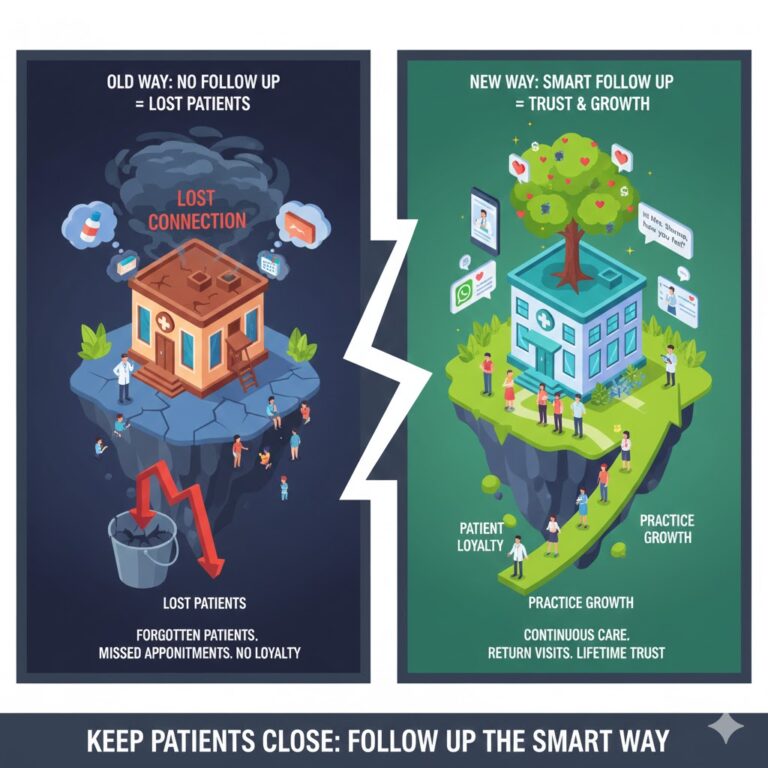
Your patient walked out after treatment. What happens next? Most doctors do nothing. They wait. They hope the patient returns. But life gets busy. Patients forget. They move on. You lose them forever.
Why Following Up Saves Your Practice
Think about your last hospital visit. Did anyone call to check on you? Probably not. Most clinics treat patients and never speak again. This is a big mistake. Patients need care after they leave your clinic. They have questions. They feel worried. They want to know someone cares.
When you follow up, something special happens. Patients feel valued. They remember you. They come back when sick again. They tell friends about you. One simple message can turn a one time visit into years of trust.
What Happens Without Follow Up
Mrs. Sharma visited your clinic last month. She had stomach pain. You gave her medicine. She felt better and went home. Three months have passed. Her pain returns. Does she call you? No. She forgot your name. She goes to another doctor near her house.
You lost a patient. Not because of bad treatment. You lost her because you never stayed in touch. She did not feel connected to you. There was no bond. No reminder that you care.
This happens every single day in thousands of clinics. Good doctors lose patients simply because they stop talking after treatment ends.
How Smart Follow Up Works
Modern tools make staying connected very simple. No extra staff needed. No long hours on the phone. The system does the work for you.
After a patient visits, the tool sends a message automatically. It can be a text message or WhatsApp note. The message asks how they feel. It reminds them about medicine timings. It tells them when to come back for a checkup.
Patients see your name on their phone. They feel cared for. They remember you exist. When they need a doctor again, your name comes to mind first.
Messages That Make Patients Return
Day One: Thank you for visiting today. Take your medicine as we discussed. Call us if you need help.
Day Three: Checking in. How are you feeling now? Any problems with the medicine?
Day Seven: Your recovery is important to us. Time for a quick follow up visit soon.
One Month Later: Hope you are staying healthy. Remember your next checkup in two weeks.
These small touches build big relationships. Patients feel you care beyond just taking their money. Trust grows with every message.
Real Results from Real Clinics
One clinic in Mumbai started sending follow up messages six months ago. They had 200 patients monthly before. Now they see 340 patients. Same location. Same doctors. Only one change: they stayed in touch.
Another clinic in Pune was losing diabetic patients. These patients needed regular checkups. But they forgot to come back. The clinic started sending monthly reminders. The patient return rate jumped from 30% to 75% in four months.
A small clinic in Bangalore had trouble with surgery patients. After surgery, patients needed follow up visits. Most never returned. The clinic started WhatsApp follow ups. Return visits increased by 60%. Patients felt safer knowing someone was watching their recovery.
What to Send in Your Messages
Keep messages short and caring. Patients are busy. They will not read long paragraphs. Make every word count.
Talk about their health, not your business. Ask how they feel. Remind them about medicine. Share simple health tips. Make them feel the message is personal, not a sales pitch.
Use their name. Nothing sounds better than hearing your own name. Generic messages feel cold. Personal messages feel warm.
Send at good times. Morning messages work best. People check phones after waking up. Evening messages often get ignored. Never send after 9 PM. That feels disturbing.
Different Patients Need Different Follow Ups
Diabetic patients need monthly medicine reminders. Blood pressure patients need diet tips. Surgery patients need recovery checkups. Children need vaccination schedules. Pregnant women need regular visit reminders.
Good follow up tools let you group patients. You create different message plans for different health needs. Diabetic patients get diabetic care tips. Heart patients get heart health advice. Everyone gets what they need.
This makes your practice look professional. Patients see you understand their specific problems. Generic messages make you look lazy. Targeted messages make you look expert.
Following Up Builds Long Term Patients
Quick fixes bring quick money. Long term care builds long term success. When patients trust you, they become family. They visit you for everything. A small cold. Big surgery. Everything.
Their children become your patients. Their parents become your patients. One good relationship creates ten more relationships. This is how the best practices grow. Not from advertisements. From patients who cannot stop talking about you.
Follow up is how you create those talking patients. Every message says: I care about you. I remember you. I want you to be healthy. Patients rarely find this kind of care. When they do, they never let go.
Getting Started Is Simple
You do not need technical knowledge. Most follow up tools are built for doctors, not computer engineers. You enter patient details once. The system remembers forever.
You choose message templates or write your own. You decide when messages go out. You set it up once. Then it runs automatically. Patients get messages. You get results. Everyone wins.
The cost is very affordable. Most tools charge between 500 to 2000 rupees monthly. That is less than one patient visit. But it brings back hundreds of patients over time. The return is huge compared to investment.
Common Worries Doctors Have
“Will patients find messages annoying?” Not if messages are helpful. Patients love feeling cared for. They hate spam. Send valuable health information. They will appreciate every message.
“Will this take too much time?” No. Setup takes two hours. After that, everything runs on its own. You spend zero daily time. The system does everything.
“What if patients do not respond?” Most will not reply. That is okay. The goal is not conversation. The goal is staying present in their mind. Silent readers become returning patients.
The Trust Factor That Changes Everything
Healthcare is personal. People want doctors who care, not doctors who treat. Follow up messages prove you care. They show treatment did not end when the patient walked out.
This emotional connection matters more than medical degrees. Patients choose doctors they trust, not doctors with the most certificates. Trust comes from consistent care. Follow up delivers that consistency.
When medical emergencies happen, patients call doctors they trust. When friends ask for recommendations, patients suggest doctors who stayed in touch. Trust turns patients into promoters.
Stop Losing Patients Starting Today
Every day without follow up is money walking out your door. Patients you treated last month are visiting other doctors today. Not because you treated them bad. Because you never reminded them you exist.
The solution is simple. Start following up. Use tools built for this exact purpose. Let technology handle the boring work. You focus on treating patients. The system focuses on bringing them back.
Your competitors are already doing this. Modern clinics understand patient relationships need constant care. Clinics that ignore follow up will slowly disappear. Clinics that embrace it will grow bigger every year.
The choice is yours. Keep losing patients silently. Or start keeping them through simple, caring follow up. The tool is ready. The patients are waiting. What are you waiting for?
4.) Reviews That Grow Your Practice
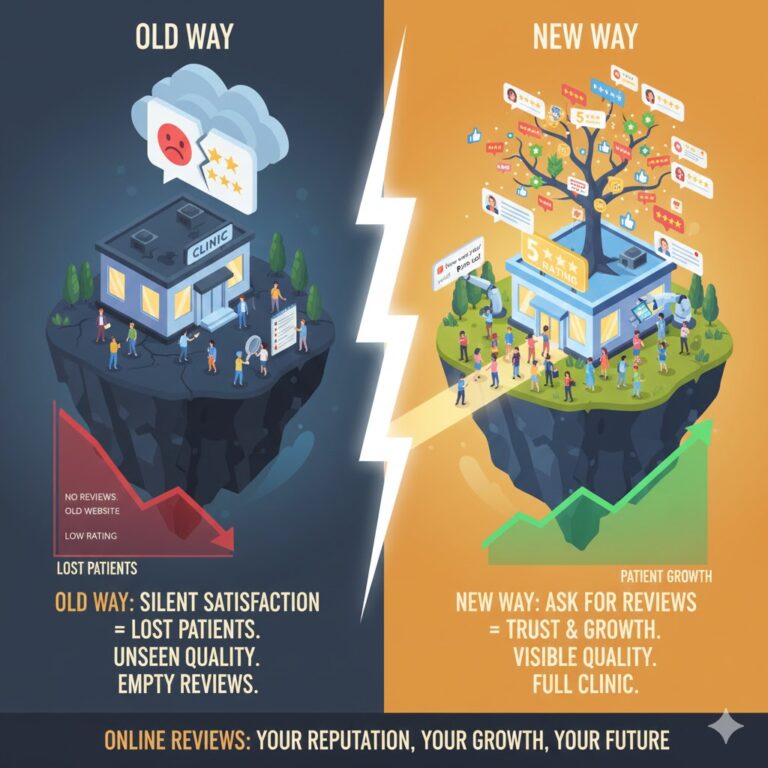
Your future patients read reviews before booking appointments. Studies show that 84% of people trust online reviews as much as personal recommendations. When someone searches for a doctor in your city, they look at ratings first.
Good reviews bring new patients to your clinic every week. Bad reviews or no reviews make people scroll past your name. This happens even when you provide excellent care.
The Real Problem Most Doctors Face
Many doctors treat hundreds of patients each month. Most patients feel happy with the care they receive. But those happy patients never leave reviews online.
They go home and forget about it. Meanwhile, one unhappy patient writes a long negative review. This single review sits on top of your Google listing for months.
New patients see this and call your competitor instead. You lose business not because of bad service but because of silent satisfaction.
How Review Systems Change Everything
Modern review tools help you collect feedback in simple ways. After each visit, the system sends a message to your patient. This message goes through WhatsApp or text within hours of their appointment.
The message thanks them and asks for their experience. It takes them 30 seconds to rate your service. Happy patients click and share their thoughts right away.
The system knows where to send these reviews. Google My Business gets priority because that is where most people search. Facebook and Practo also receive reviews automatically.
What Happens When You Ask at the Right Time
Patients feel most grateful right after good treatment. They want to thank you in some way. A review request at this moment gets responses fast.
One clinic in Bangalore started using automated review requests. In three months, they collected 140 new five star reviews. Their phone calls doubled without spending money on ads.
Another practice in Delhi had only 12 reviews in two years. After using a review system, they gained 89 reviews in six months. New patients mentioned the reviews during their first visit.
The Trust Factor That Brings Patients Through Your Door
People choose doctors they can trust with their health. Reviews build that trust before the first meeting. When potential patients see 50 positive reviews, they feel confident about calling.
They read about other people who had similar problems. They see how you helped those patients recover. This creates comfort and removes fear.
Parents looking for pediatricians read every review carefully. They want to know if the doctor is patient with children. Reviews answer these questions without a single phone call.
Reviews Help You Rank Higher on Google
Google loves businesses with recent, positive reviews. The search engine shows these clinics first when people search. More reviews mean better visibility for your practice.
A clinic with 80 reviews appears above a clinic with 15 reviews. This happens even if both offer the same services. Google sees active review collection as a sign of quality care.
Every new review signals to Google that patients trust you. The algorithm rewards this trust with higher rankings. You get more visibility without paying for ads.
Responding to Reviews Builds Stronger Connections
When patients leave reviews, they expect acknowledgment. A simple thank you response shows you care about their feedback. This small action creates loyalty.
Negative reviews need responses too. A calm, professional reply shows future patients how you handle problems. Many people judge doctors by how they respond to criticism.
One clinic owner responds to every review within 24 hours. Patients started mentioning this in their reviews. They felt valued and returned for follow up visits.
How to Start Collecting Reviews This Week
Pick a simple review management tool that works with your current system. Many platforms connect to your appointment software. They send automatic requests after each visit.
Train your front desk team to mention reviews politely. A gentle reminder at checkout helps. Staff can say: “We would love to hear about your experience today.”
Make the process mobile friendly. Most patients use phones to leave reviews. The fewer steps they take, the more reviews you collect.
Tracking Results That Matter
Good review systems show you data. You can see how many requests went out and how many became reviews. This helps you understand what works.
View your star rating across platforms. Watch how it changes month by month. Rising ratings mean your efforts are working.
Count how many new patients mention reviews when they call. This number tells you the real impact of your collection system.
The Long Term Benefit for Your Practice
Reviews work while you sleep. New patients read them at night when researching doctors. Those reviews convince people to choose your clinic before you open the next morning.
Unlike paid ads that stop when you stop paying, reviews stay forever. They keep bringing patients month after month. The value compounds over years.
Clinics with strong review profiles weather difficult times better. During slow seasons, reviews continue attracting new patients. Your reputation becomes your best marketing tool.
5.) Patient Records in One Place
Your Files, Your Control, Always Ready
Paper files get lost. Old folders tear apart. Finding one report takes forever. Your staff wastes hours searching through cabinets. Patients wait longer than needed. This creates frustration for everyone in your clinic.
Digital patient records solve this problem completely. Everything stays in one safe system. You can find any detail in seconds. No more digging through piles of paper. No more asking patients to repeat their medical history. All information appears on your screen instantly.
How This Helps Your Practice Daily
When a patient walks in, you open their file right away. You see their last visit date. You check what medicines they are taking. You review their past test reports. All of this happens before they sit down. This saves at least 5 to 10 minutes per patient.
Your staff stops running around looking for files. They answer patient questions faster. They schedule follow ups without confusion. The whole clinic runs smoother than before. Everyone feels less stressed during busy hours.
Real Benefits You Will Notice
Studies show that digital records reduce medical errors by 30%. Doctors make better decisions when they see complete patient history. You spot patterns in symptoms faster. You avoid prescribing wrong medicine combinations. Patient safety improves significantly in your practice.
Your patients feel more confident in your care. They see you remember their health journey. They trust you more when you recall details. This builds stronger relationships that last for years. Happy patients tell their friends about your clinic.
Data That Proves This Works
Over 75% of private clinics in metro cities now use digital records. These clinics report 40% faster patient processing. They handle more appointments each day. Their revenue grows by 25% within one year. The return on investment shows positive results quickly.
Clinics using digital systems lose fewer patients to competitors. When patients change their phone numbers, you still have their records. When they visit after months, you continue their treatment smoothly. Nothing gets forgotten or misplaced over time.
Starting Your Digital Record System
Choose software that works on phones and computers. Look for Indian companies that understand local medical needs. Check if the system follows government healthcare data rules. Make sure your team can learn it in one week.
Start by adding new patients to the digital system first. Keep old paper files as backup for now. Train one staff member to become the system expert. Let them help others when questions come up. Move slowly until everyone feels comfortable with the change.
Most good systems cost between 500 to 2000 rupees monthly. This depends on your clinic size and features needed. The investment pays back within three to six months. You save money on paper, printing, and storage space. Your clinic becomes more professional and modern looking.
What Your Team Gains
Your nurses spend less time on paperwork. They focus more on patient care instead. Your reception staff answers calls faster. They book appointments without checking multiple registers. Everyone finishes their work on time each day.
You can work from home when needed. Access patient records from anywhere safely. Review reports before reaching the clinic. Plan your day better with morning preparation. This flexibility improves your work life balance greatly.
Security That Keeps Information Safe
Good digital systems protect patient privacy completely. They use passwords and encryption for data safety. Only authorized staff can open sensitive files. The system tracks who viewed what information. This prevents any misuse of medical records.
Automatic backups happen every day. Your data stays safe even if computers break down. Cloud storage keeps copies in secure online locations. You never lose years of patient information. This gives you peace of mind.
Growing Your Practice With Confidence
Digital records help you expand without chaos. Opening a second clinic becomes much easier. Both locations share the same patient database. You see updates from anywhere in real time. Managing many branches feels simple and organized.
Insurance companies prefer clinics with digital records. They process claims faster for your patients. This makes your clinic more attractive to working professionals. More people choose you because paperwork feels hassle free.
The healthcare industry is moving digital fast. Patients expect modern facilities from their doctors. Staying updated keeps you competitive in 2025. Your practice grows while others struggle with old methods. This tool gives you a clear advantage today.
Wrapping It All Up
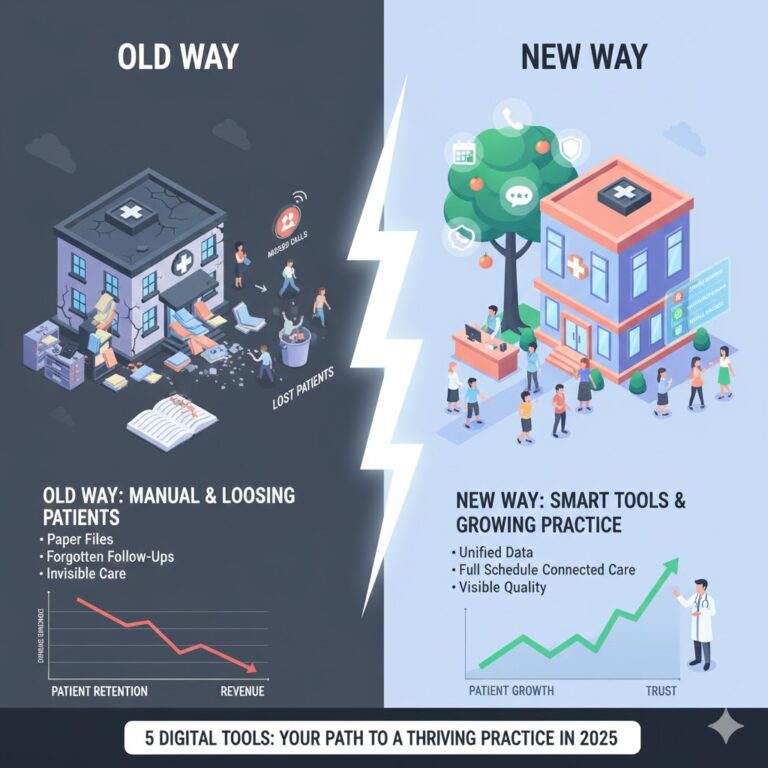
The medical world is changing fast. Patients want quick answers and easy booking options. They expect reminders on their phones. They look for reviews before choosing a doctor.
Your competitors are already using these digital tools. They are getting more patients every month. Meanwhile, practices without these systems keep losing people to busy phone lines and forgotten appointments.
Think about this. Every missed call is a lost patient. Every no-show is empty revenue. Every patient who forgets their follow-up visit might never come back.
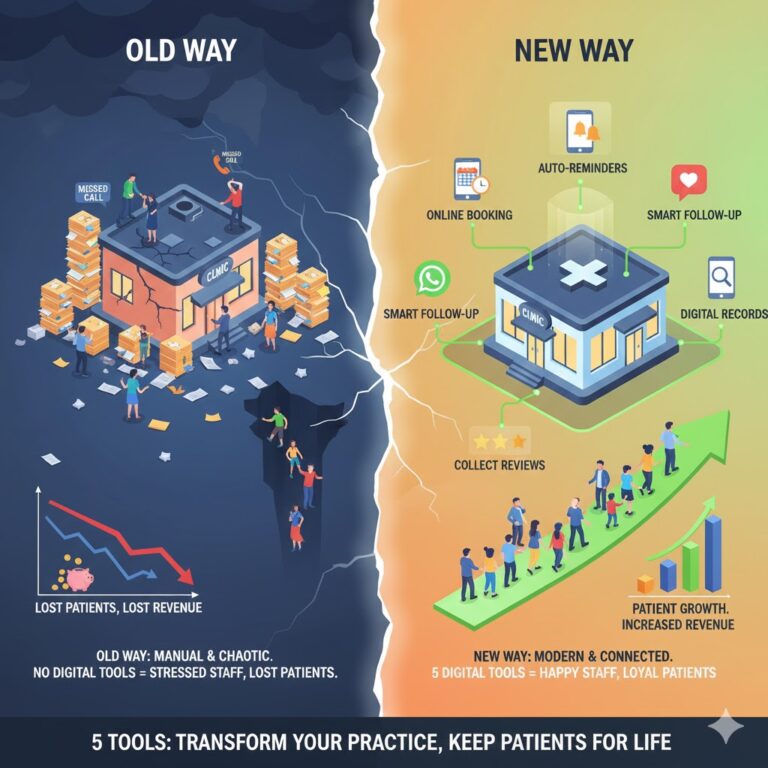
These five tools solve real problems you face daily. Online booking works while you sleep. Automated reminders fill your schedule. Follow-up systems keep patients connected to your care. Review requests bring new people through your door. Digital records save precious time during consultations.
You spent years learning medicine. Now spend a few hours setting up these systems. The investment pays back quickly through more patients and better retention rates.
Start with one tool this month. Pick the biggest pain point in your practice. Maybe it’s the phone ringing all day. Maybe it’s too many no shows. Maybe you can’t find patient records fast enough. Fix that one problem first. Then add the next tool. Within three months, your practice will run smoother than ever before.
Your patients will notice the difference. They will appreciate the convenience. They will tell their friends and family about your modern practice. The choice is simple. Adopt these tools and grow your practice. Or watch patients go to clinics that make their lives easier.
FAQs-
Yes. Your clinic may be fine today, but patients now expect quick booking, reminders, and follow-up. If you don’t give it, they may go to another clinic that does.
No. They will make your staff’s job easier. Your team will spend less time on calls and paperwork, and more time caring for patients.
Not at all. They are simple and made for doctors, not tech people. Most clinics start using them in just a few days.
Yes. Most patients, even older ones, are already used to phone calls, texts, or WhatsApp. It’s simple and feels natural to them.
No. These tools save money by reducing no-shows, lost patients, and extra work. Even small clinics see fast returns.
That’s the best part. Once set, these tools work on their own. Your clinic saves time, and you focus on patient care.
Yes. When your clinic is easy to reach, sends reminders, and collects good reviews, more patients choose you over others.