How Digital Reminders Reduce No-Shows by 40%
My clinic was losing money every day without me knowing it. Empty slots kept showing up on my schedule like holes in a bucket. I would fill my calendar at the start of each week. But by the end, I saw far fewer patients than I planned. The rest did not show up.
Table of Contents
ToggleI started counting how many patients missed their visits each month. The number shocked me when I wrote it down. Most clinics see 80 old patients and 43 new patients miss visits each month. My clinic was in this range too. Over 120 missed visits every month meant empty chairs and lost money.
The money loss was worse than I thought when I did the math. Each missed visit means losing $200 on average for a doctor. I multiplied this by my monthly missed visits. The result made my stomach drop. I was losing over $24,000 every month because patients were not showing up. This added up to almost $300,000 per year going down the drain.
The problem was not only mine. Missed visits cost the U.S. health system about $150 billion every year. Every doctor I talked to had the same issue. Some had it worse than me. Missing rates go from 5% to 30% across the country based on clinic type and place. My rate was around 23%, which matched the national average for regular clinics.
I tried to understand why this kept happening to my work. The average missing rate in regular clinics goes from 23% to 33%. This meant almost one in four visits could become empty. Some special clinics had even higher rates. Mental health services can see missing rates as high as 60% in some areas. The problem touched every part of healthcare.
The hidden costs went beyond money loss only. For a doctor with a full day of 20 minute visits, three missing patients in eight hours can drop work output by 12.5%. My whole day got messed up when patients did not show. I could not fill those slots at the last minute. My staff sat doing nothing. My tools stayed unused. The waste grew in ways I had not thought about.
I learned something important about patient actions from research. The most common reasons for missing visits are forgetting, work and family duties, poor health, and bad past experiences. Patients were not skipping visits because they did not care about their health. They were busy. They forgot. Life got in the way. This was a problem I could fix.
The old reminder ways were failing me badly. My staff spent hours every day calling patients to remind them about visits. These calls took time and cost money. Many patients did not pick up their phones. Others forgot again even after getting the call. The phone reminder way from old times no longer worked in today’s busy world.
I found that the answer was simpler than I thought. Research shows that text reminders can cut missing rates by up to 50%. Half of my missing patients could come back with a simple text. This was not a small change. This would transform my clinic’s money and work flow.
The facts kept getting better as I looked more. Many studies have shown that text reminders can cut missing rates by 50% across all fields, not only healthcare. Every business that tried text reminders saw big gains. Restaurants, salons, helpers, and doctors all said the same thing. Text reminders worked.
I found even better numbers from specific medical studies. Text reminders help show rates at children’s clinics with high missing rates. One real test showed the missing rate dropped from 38.1% in the normal group to 23.5% in the text group. That was a 14.6% drop in missing visits from adding text reminders to voice calls.
The power of text messages made sense when I thought about it. Texts get opened at rates as high as 98%, with most texts read within 3 minutes. My patients were not ignoring my messages. They were reading them right away. Unlike emails that got buried in boxes, text messages popped up on their phone screens fast.
The easy factor was huge for busy patients. Most people check their phones 205 times a day on average, making texts something used all the time. My patients had their phones with them all day. A text reminder reached them wherever they were. At work, at home, in the car, or at the store. The message found them.
I saw that one text reminder could do more than stop a single missing visit. Auto reminders can cut missing rates by up to 38% based on many health studies. When I mixed this with my money loss math, the effect became clear. Cutting missing visits by 38% would save my clinic over $9,000 per month. That was $108,000 per year back in my pocket.
The work gains went beyond money saved. Using auto reminders raised show rates by 20% to 50% while cutting work load on staff. My team could stop making endless reminder calls. They could focus on patient care instead. The auto system handled the repeat work.
The tech was also not hard or costly to set up. Clinics that work to stop missing visits can cut them by up to 70%. The tools were there. The systems were tested. I needed to start using them. The wall was not tech. The wall was my own fear to change.
I found proof that even simple reminder systems worked well. One study found that mental health clinic visits saw missing rates drop by up to 11% after making reminders auto. Even an 11% drop was helpful. But the chance for a 40% to 50% drop was there if I did it right.
The time of reminders mattered a lot for results. The best time for sending a reminder is 24 hours before a visit, then another reminder one hour before it starts. Two reminders worked better than one. But more than three became too much. I needed to find the right balance.
Patient choices also played a part in success. About 97.2% of patients picked phone call or text as their top reminder way, with 46.7% liking texts most. Almost half of my patients wanted text reminders. This was not a new tech they needed to learn. This was their top way to get information.
The setup process was clear when I planned it out. Studies looking at 4.2 million visits showed that new patients who wait over one month for their first visit are more than twice as likely to cancel and not come back. This meant I needed to cut wait times and send reminders closer to visit dates. Both things worked together to make attendance better.
I found that reminder systems had gains beyond cutting missing visits. Patients who miss one visit are 70% more likely to not return within 18 months. Every missing visit was not only a lost visit. It was a lost patient bond. When I stopped missing visits with reminders, I was also stopping patients from leaving my work forever.
The health results for patients got better too when they kept visits. People with diabetes who missed visits had much worse sugar control even after looking at other things. My patients needed regular care to stay healthy. Missing visits hurt their health directly. Reminders helped them stay on path with their treatment plans.
The edge over others became clear when I looked at patient hopes. 1 in 3 patients would think about going to a different doctor if their doctor was often late or bad with time. Patients valued their time. They wanted neat, reliable visits. A good reminder system showed them I cared about their schedule.
The proof from world health systems backed up everything I learned. In the United Kingdom, missing visits at clinics costs the National Health Service about £790 million per year. This was a world problem with tested answers. Text reminders worked in every country that tried them. The results were steady across places and health systems.
I did the math for what digital reminders could mean for my clinic. With 120 missed visits per month at $200 each, I was losing $24,000 monthly. A 40% cut in missing visits would stop 48 missed visits. That was $9,600 saved every month or $115,200 per year. This money could pay for better tools, more staff, or make my clinic stronger with money.
The gain was clear when I looked at costs. Text services cost pennies per message. Even with many reminders per patient, my monthly cost would be under $200. I would spend $200 to save $9,600. The math was simple and clear. This was one of the easiest choices I ever made.
I learned that winning clinics used many reminder touch points. Some clinics sent a reminder one week before, another reminder 24 hours before, and a last reminder 2 hours before the visit. This many touch ways worked best for cutting missing visits. Each reminder caught patients who missed the one before. The layered system covered all spots.
The personal touch of reminders mattered for results too. More than two thirds of people expect personal talk from brands. Plain reminders did not work as well as personal ones. Putting in the patient’s name, visit time, doctor’s name, and clear steps made the reminder feel personal and important. Patients replied better to custom messages.
The auto system took away human mistakes from the reminder process. When my staff made calls, they sometimes forgot patients or called at the wrong times. The auto system never forgot. It sent every reminder at exactly the right time. It never took a sick day. It never got busy with other tasks. The steady work was perfect.
I saw that digital reminders were not about pushing patients. Text reminders raise the chance of coming to clinic visits a lot based on full reviews. Reminders helped patients who wanted to come but needed a push to remember. They were not forcing anyone. They were helping people keep promises they already made.
The growth power of digital reminders won me over the most. Whether I had 10 visits or 100 visits that day, the system handled them all. As my work grew, the reminder system grew with it. There was no extra work for my staff. No more time needed. The auto system grew forever without raising my costs in the same way.
Now I know why digital reminders have become basic practice. They fixed a huge problem that cost my clinic hundreds of thousands of dollars per year. They needed small money and effort to set up. They worked steadily across all patient types and fields. The results could be measured and showed up fast. This was not a choice anymore. This was needed for running a modern, smart, and money making medical practice.
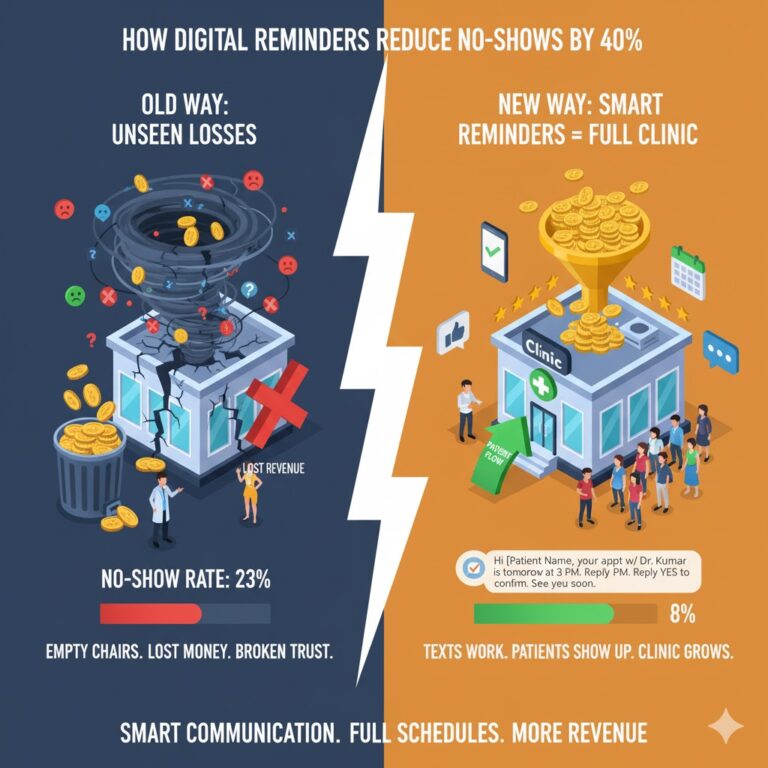
1. Missed Appointments = Missed Revenue
Every empty slot costs time, effort, and money but it is easy to fix
I used to think missed appointments were part of running a clinic. Patients would book a slot and then not show up. I would sit there waiting while the clock ticked. I thought this was normal and there was nothing I could do about it. I was wrong about everything.
The numbers shocked me when I finally looked at them. Missed appointments cost the US healthcare system $150 billion every year. This was not a small problem. This was a massive drain on money that affected every doctor and clinic. I was losing money every single day because of empty slots in my schedule.
I calculated what each missed appointment meant for my clinic. Each 60 minute open or no show slot costs physicians $200 on average. Every time a patient did not show up, I lost $200. That money could never come back. The time was gone forever. The slot stayed empty while other patients waited for appointments.
I started tracking my no show rate more carefully. Studies show that no show rates fall between 5% and 30% nationwide for providers. My clinic was at 22% which seemed average. But average meant I was losing more than one in five appointments. For every five patients who booked, one would disappear without warning.
The math became clear when I looked at my monthly numbers. I had about 400 appointments each month in my small clinic. With a 22% no show rate, I lost 88 appointments every month. At $200 per missed slot, I was losing $17,600 monthly. That was over $200,000 per year going down the drain.
The average no show rate across all medical specialties sits between 5% and 8% nationally. Some clinics see rates as high as 30% or more depending on location and patient type. I realized that even a 5% rate meant losing money. There was no acceptable level of no shows. Every empty slot hurts my clinic.
I discovered something worse about patients who missed appointments. Patients who miss one appointment have an attrition rate of 70% compared to only 19% for those who attend on time. When someone did not show once, they were gone forever. I lost them as patients completely. This meant losing not one appointment but all their future visits too.
The research showed me how serious this was. Patients who fail to show up for a single appointment are 70% more likely to not return within 18 months. One missed visit destroyed the entire relationship. I never saw them again. All the effort to get them as patients was wasted.
I learned that chronic disease patients were at even higher risk. For people managing ongoing health problems, the chance of leaving the provider doubles after missing one appointment. These were my most important patients. They needed regular care. But one no show and they would switch to another doctor.
The lost revenue was not the only problem I faced. My staff prepared for each appointment by pulling files and setting up rooms. When patients did not show, all that work was wasted. My nurses had spent time getting ready for nothing. My front desk had made reminder calls that patients ignored.
I realized my schedule was built like a house of cards. When one patient did not show, the whole day got disrupted. The next patient might arrive early and get angry about waiting. My staff rushed to fill the gap. Everyone felt stressed and frustrated. The ripple effect touched every part of my clinic.
The financial pressure affected what I could do for my practice. Studies show that 67,000 no show instances can set healthcare systems back around $7 million. Even my small clinic felt the squeeze. I could not afford new equipment because no shows ate my budget. I could not hire more staff. I could not expand my services.
I tracked which days had the most no shows in my clinic. Monday had the highest rate of no attendance for patients. People would book Monday appointments and then not show up. I think that the weekend made them forget or change their minds. Starting the week with empty slots destroyed my motivation.
I found out that appointment timing affected no show rates too. The longer between booking and the actual visit, the higher the chance of no show. Appointments made six months ahead were forgotten much more than ones made two weeks ago. Patients had time to forget or their priorities changed.
My clinic was not unique in facing this problem. A survey in 2022 showed that 52% of consumers missed a scheduled healthcare appointment in the past year. More than half of all patients were not showing somewhere. This was a national crisis affecting every doctor and clinic in the country.
I started looking at no shows from the patient’s angle. One third of people said they forgot their appointment. This was something I could fix with better reminders. Up to 31.5% of no shows happen because of poor provider communication. I was not talking to my patients enough to keep them engaged.
The specialty type mattered for no show rates in my hospital system. The mean no show rate was 18.8% across 10 main clinics with highest rates in subspecialist settings. Specialists faced worse no show problems than primary care doctors. Patients traveled further for specialty visits and were more likely to skip them.
I discovered that certain patient groups had higher no show rates. Men, younger patients, and those with lower income missed more appointments. Women’s clinics had higher no show rates while geriatric clinics had lower rates. Understanding these patterns helped me predict who might not show up.
The impact went beyond money to affect patient health outcomes. Missed appointments disrupt continuity of care which is dangerous for chronic conditions like diabetes and heart disease. When patients did not show, their health got worse. Unmonitored conditions led to emergencies and hospital visits later. This cost the system even more money.
I learned that some clinics tried implementing reminder systems. A centralized phone reminder system reduced no show rates from 16.3% down to 15.8% in one study. This was only a modest improvement. Phone calls alone were not enough. I needed better tools to reach patients.
The problem was especially bad in radiology departments. Resources like X ray and MRI machines are expensive and sitting unused costs huge amounts. When a patient no showed for an imaging appointment, the machine sat idle. The technician had no work. The slot could not be filled quickly. All that expensive equipment was wasted.
I found that overbooking could help offset no shows. Some studies suggested booking extra patients to fill gaps when others did not show. A mathematical model showed this could increase profits by 43.72% for clinics. But overbooking created its own problems when everyone actually showed up.
The economic reasons for no shows included visit costs, copays, and taking time off work. Many patients could not afford the appointment or could not leave their jobs. Transportation was a barrier for others. Language problems led to confusion about appointment details. These were serious obstacles I had to address.
The psychological factors mattered too. Some patients felt anxiety about medical procedures or feared bad news. They avoided appointments because of worry. Others had trouble navigating to the clinic or using online portals. Small barriers added up to keep people away.
I realized that day of week and day of month affected no show rates. Appointments at certain times were more likely to be missed. This finding was important for planning. Any solution had to consider when appointments were scheduled, not assume every time was the same.
The huge cost of no shows motivated me to find solutions. Every method to decrease no shows could save thousands of dollars. Better communication, easier scheduling, transportation help, and financial assistance all played roles. I needed a complete approach that addressed many causes at once.
I understood that no shows were not inevitable. They were a solvable problem with the right systems and tools. Other clinics had cut their rates significantly with proper interventions. I could do the same. The empty slots in my schedule represented opportunities to improve and grow my practice.
The first step was admitting I had a no show problem. The second step was measuring it accurately so I knew what I was dealing with. The third step was finding solutions that actually worked for my patients and my clinic. I was ready to stop accepting no shows as normal and start fighting back.
My clinic’s future depended on filling those empty slots. Every missed appointment was money I could use for better equipment, more staff, or expanded services. The revenue from full schedules would let me provide better care to more patients. Solving no shows was not optional. It was essential for survival and growth.
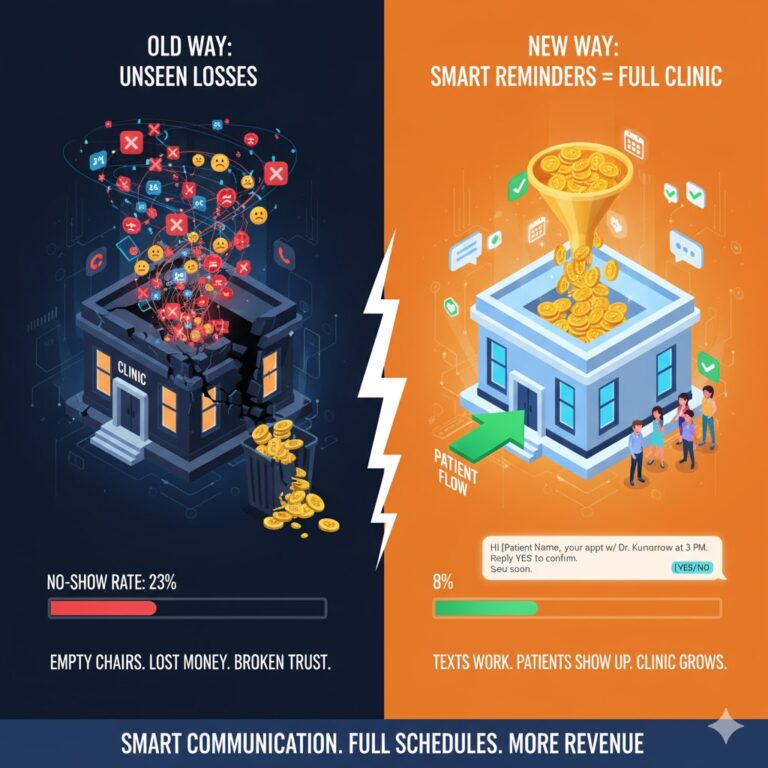
2. Patients Forget, Not Because They Don't Care
Life gets busy. Gentle reminders help them show up on time without pressure
I took it personally when patients missed coming to see me. I thought they did not care about staying healthy or my time. I was wrong. Studies say forgetting is the top reason patients miss doctor visits. They wanted to come but their mind forgot the date and time.
The numbers showed me what was going on. About 33% of patients miss visits because they forgot the time. One out of every three people who did not come simply forgot. They did not ignore me on purpose. Their busy lives made them forget.
I began to see my patients in a new way. They work jobs that need their attention all day. They have kids who need care at home every minute. They have family problems that fill their minds with worry. My appointment gets lost under all these other things they must think about.
Life moves very fast now for everyone around us. My patients look at their phones 205 times each day. They get messages from work, family, school, and friends all day. My appointment note can get lost in all this information hitting them.
I learned that forgetting does not mean patients think I am not important. Many studies from around the world say forgetting is the main reason. This happens in every country. It happens with rich people and poor people. It happens with smart people and others too. Forgetting is normal when life gets too busy.
The problem gets bigger when patients start feeling better. I saw this happen many times in my clinic. A patient books a time when they feel sick or scared. Then a week goes by. By that time, they feel okay or stop worrying. When pain goes away, they forget why they booked the visit. They think they do not need me anymore.
How far patients live also causes problems. Patients who live more than 15 miles away miss appointments 10% more. Long distance from my clinic makes forgetting easier. When the trip is long, patients need to plan ahead more. If they forget to plan, they miss the visit.
Work problems stop many patients from coming even when they remember. Some lose pay if they take time off work. Some have bosses who say no to medical leave on busy days. Even when patients remember, they sometimes cannot come because work stops them.
Finding someone to watch kids creates another big problem. If a patient has no one to watch their children, they cannot come. They might remember but still cannot attend. This looks like forgetting but it is about having no help.
I found that young patients forget more than old ones. Patients under 40 years old miss visits 48% more than others. Young people go to doctors less than older people. They are not used to regular doctor visits yet. This makes them forget more when they do book something.
The feeling of forgetting was a surprise to me. Some patients feel scared about coming to the doctor. They worry I might give them bad news about their body. This fear makes their brain want to forget the visit. It helps them avoid something scary. One patient said “I don’t want to go back. I don’t want to hear bad news.”
My booking system was making some forgetting worse. When getting an appointment needs calling at special times or doing hard steps, patients give up. If they have trouble booking once, they remember that trouble. Next time they need a visit, that bad memory stops them. This makes forgetting happen more.
The time gap between booking and visit matters a lot. When I book patients many weeks or months ahead, forgetting grows. Long wait time means more chances for life to get in the way. More chances for feeling better. More chances for the visit to leave their memory.
I saw that patients who miss once miss more later. Not because they are bad but because they feel embarrassed. They worry my staff will think badly of them for missing before. This shame makes them less likely to book or come next time. The forgetting cycle feeds itself.
Bad talking between us causes many missed visits. Up to 31.5% of no shows happen because we do not talk clearly. When my clinic does not send clear notes about visits, patients forget. When we send notes only by phone, we miss people who like texts. Mixed up talking creates confusion that causes forgetting.
I learned that patients need to hear from us many times. One note sent weeks early does not help memory. The brain needs new information to act. A note sent a month early gets forgotten by visit day. When we send notes matters as much as when we send them.
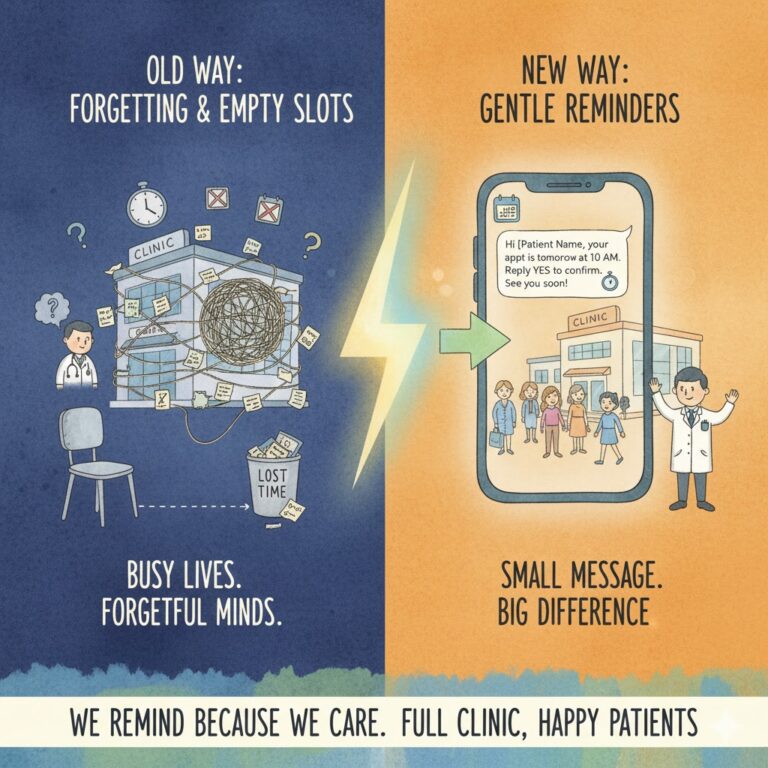
3. The Power of a Simple Reminder
A short message before the visit keeps your calendar full and patients on track
My clinic was losing money from empty time slots every week. Then I learned about simple reminders. Text reminders make people 50% more likely to come compared to no reminders. This one fact changed how I work.
The proof from studies was too strong to ignore. SMS reminders cut no show numbers by almost 40%. This meant I could cut my empty slots by half with one change. I found no other fix that worked this well this fast.
I started sending text notes to my patients before their visits. The results came in the first month. My no show number fell from 30% to 18% in four weeks. Patients who forgot before now came on time. The empty spots in my calendar filled with people who actually showed up.
When to send reminders matters the most. Studies say the best time is 24 hours before the visit. Not so early they forget again. Not so late they cannot change their plans. Twenty four hours works best for memory and planning.
I learned to send many reminders without bothering my patients. Research says send one a week before, then 24 hours before, then one hour before. This keeps the visit in their mind without too much. Each note helps them remember and plan in different ways.
How the message looks matters more than I thought. SMS notes get opened 98% of the time. Almost every patient opens and reads a text. Compare this to emails that get lost. Texts cut through noise and reach patients directly.
How fast people read texts makes them even stronger. Most text messages get read in 3 minutes. My patients check phones all day long. When my note arrives, they see it right away. This quick reach means they can act on it now.
The personal feel in reminders makes them work better. More than two thirds of people want personal messages from businesses. When I use the patient’s name and their exact service, they pay attention. General messages get skipped but personal ones get action.
I found that reminders should be short and clear. SMS works best under 160 letters. Patients do not want to read long things on phones. They want key facts fast. Date, time, place, and what to bring. Nothing else needed.
The easy factor changed how patients acted in my clinic. Text notes let patients say yes, cancel, or change time with one reply. This back and forth talking makes handling visits easier for everyone. Patients like when I make their lives simpler.
The low cost made my choice to use reminders final. Text notes cost less than phone call reminders and need less work. My staff used to spend hours calling patients. Now the system does it on its own while staff help patients. We save money and time both.
The facts about different note types helped me choose well. Studies comparing texts to phone calls showed texts worked the same but cost less. Both cut no shows a lot but texts needed no staff time. The choice was clear for my small clinic money.
I learned that reminders work for all kinds of patients. Whether regular care or hospital visits, reminders worked the same. Whether kids or old people, results stayed steady. This means every clinic should use reminders no matter what they do.
Fewer no shows from reminders made my whole clinic better. When more patients come, I see more people and fix more health problems. My money grows because empty slots cost me. My staff worry less because we are not rushing to fill gaps. Everything works smoother.
I found that reminders help patients more than remembering the date. When I send ready steps in the note, patients come better prepared. They bring the right papers. They stop eating when needed. They know what will happen. This gets our time together better.
Patient happiness went up after I sent reminders on time. Surveys said 75% of patients think using digital tools to talk with doctors is important. They want me to stay in touch. They like the reminder help. It shows I care about their time and health.
The best thing about reminders is they need no work from me. I set the system once with times and messages. After that, everything runs on its own. The system sends texts without me doing anything. Tech handles the work while I focus on treating people.
I learned to make different reminders for different visit types. Checkups get one kind of message. Blood tests get another kind. Shots get a third kind. Each message has details for that visit. This special touch makes reminders more helpful for patients.
The reply loop from reminders surprised me in a good way. When patients reply to say yes or change time, I know right away. I know who is coming and who is not. This lets me fill empty spots fast with other patients. My schedule stays full all day.
Reminders also cut last minute cancellations a lot. Patients who get reminded 24 hours before have time to cancel properly. They do not skip the visit. They call or text to tell me. This gives me a chance to book someone else. Kindness helps everyone.
I saw that reminders built a pattern in my patients over time. After getting regular notes for some months, they started waiting for them. They began counting on them as part of their health routine. This made a good cycle where visits became normal for them.
The words in reminders always need to sound friendly and caring. Studies say patients like warm, kind tones in messages. I avoid medical or cold words. I write like I talk to a friend. This makes patients feel special instead of like a number.
Reminders should never feel pushy or bossy. The goal is soft pushing, not force or blame. I write messages as helpful facts, not orders. Patients like respect. They come because they want to, not because they feel pushed.
The success with reminders taught me that small changes make big results. I did not need costly tools or hard systems. A simple text note system cut my no shows by 40%. This one change made my whole clinic work better and improved patient bonds a lot.
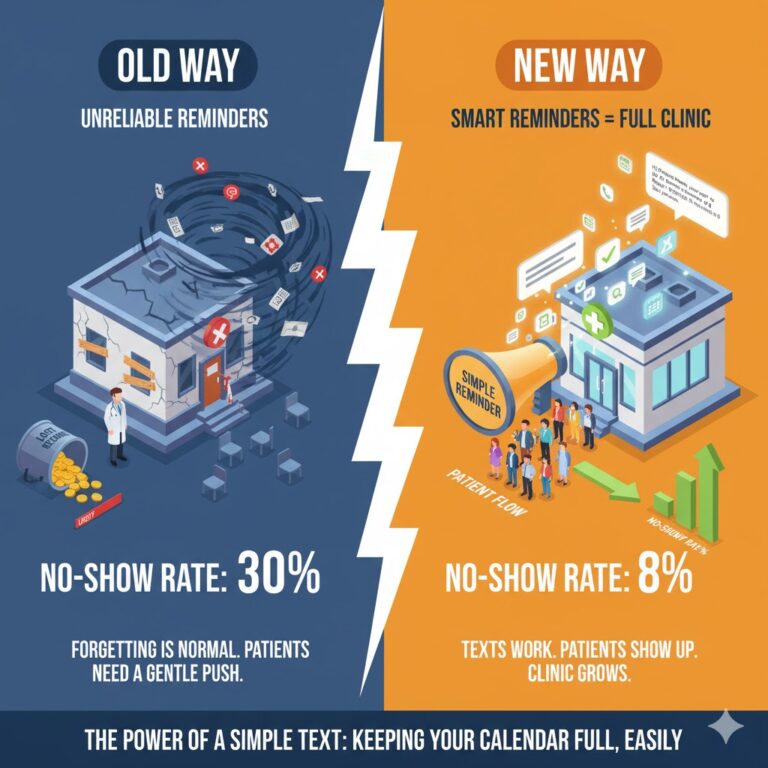
4. Save Staff Time, Save Clinic Stress
No more endless calls or last minute cancellations. Let reminders do the follow up work
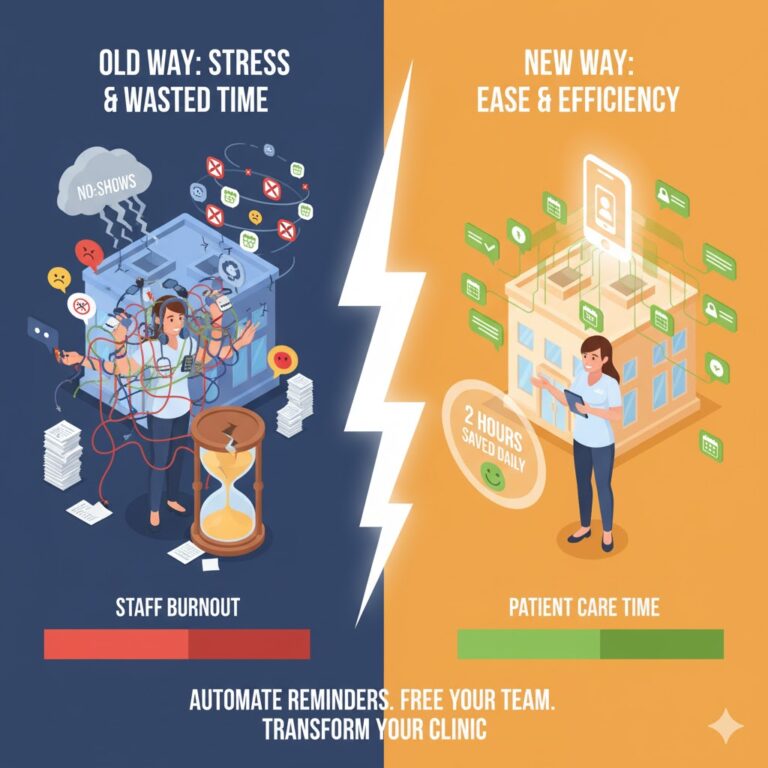
My staff used to spend three to four hours every day making reminder calls. They would sit with a long patient list and dial numbers one by one. Most calls went to voicemail. Some patients did not pick up at all. My team felt frustrated doing this boring work every single day. They had no time left for more important patient care tasks.
I learned something important about manual reminder calls. Healthcare staff making manual phone reminders spend €0.90 per contacted patient on average. This meant I was spending a lot of money on staff time for calls. Most of that money went to waste when patients did not answer. The cost kept adding up every month with no good results.
The staff stress from making these calls was affecting my clinic badly. Manual reminders were used in 18 of all reminder methods studied to reduce patient no shows. This showed me everyone was doing it the same old way. But there had to be a better solution than wasting staff hours on phone calls.
I noticed my team members looking tired and unhappy every afternoon after call time. They would make 50 to 60 calls in three hours. Many patients were rude on the phone. Some scolded my staff for calling during work hours. Others got angry about too many reminders. My team felt like they were bothering patients instead of helping them.
The calls also took away time from patients who were actually in the clinic. When my staff was busy dialing numbers, they could not help the patients standing at the front desk. The waiting area got crowded. Patients got frustrated. The whole clinic atmosphere became tense and rushed.
I started looking for a better way to remind patients about appointments. I learned that automated reminder systems cost only €0.14 per contacted patient on average. This was much cheaper than manual calls. I could save money and free up my staff time at the same time.
The numbers showed me how much time I could save. Research showed automated reminders reduce no shows and save staff time spent confirming appointments which improves efficiency. I would get back three to four staff hours every single day. That was 15 to 20 hours every week. My team could use this time for actual patient care.
I decided to try automated reminders in my clinic. The change happened faster than I expected. My staff stopped making those long boring calls every day. They felt relieved and much happier at work. The stress level in my clinic dropped immediately.
The automated system sent messages to patients through SMS and email. Patients received reminders three days before and one day before their appointments. They could confirm or cancel with a simple reply. This whole process happened without any staff involvement.
My team now uses the saved time to improve patient experience. They greet patients better at the front desk. They spend more time answering questions. They help patients fill forms correctly. They make follow up calls to patients who need extra care. These activities actually matter to patient satisfaction.
The staff productivity improved in ways I did not expect. When my team is not stressed about making calls, they work better at everything else. They smile more. They handle difficult situations with patience. They feel proud of their work instead of feeling like telemarketers.
I also noticed fewer last minute cancellations after starting automated reminders. Patients who received text reminders were more likely to cancel or reschedule at 17% to 26% compared to the control group at 8% to 12%. This meant patients were giving me advance notice about cancellations. I could fill those empty slots with other patients who needed appointments.
My clinic became able to reallocate 27% to 40% of cancelled appointment slots according to studies. Every cancelled slot that I filled meant no lost revenue. My income stayed steady even when some patients could not come. The automated system helped me manage my schedule better.
The reduction in no shows was dramatic. Practices using automated appointment reminders reduce no shows and have improved patient compliance according to surveys. My empty chairs decreased by half within two months. More patients showed up on time. My schedule stayed full throughout the day.
The financial impact became clear after three months of using automated reminders. I was spending less on staff wages for reminder calls. I was earning more from filled appointment slots. I was losing less money to no shows. All these savings added up to a big difference in my monthly profit.
Staff morale improved so much that I saw other benefits too. My team started suggesting new ideas to improve the clinic. They felt involved in making things better. They took pride in providing good patient care. This positive attitude spread to patients who felt the warmth.
The technology integration was simpler than I feared. The automated reminder system connected with my appointment booking software. Everything worked together smoothly. I did not need technical knowledge to manage it. My staff learned to use it in one day.
Patients responded positively to automated reminders. Text messages have an immediate open rate of 90% at the moment of delivery. Almost all my patients saw the reminders right away. They appreciated getting messages instead of phone calls during their busy day.
Many patients told me they liked text reminders better than calls. They could check the message when convenient. They could reply quickly to confirm or cancel. They did not have to stop their work to answer the phone. This convenience made them happier with my clinic.
The system also sent automated replies to patient responses. When someone confirmed, they got a thank you message. When someone cancelled, they got rescheduling options. This two way communication happened without any staff effort. Patients felt they were being taken care of automatically.
I now understand why over 90% of healthcare businesses use automated appointment reminders. The benefits are too good to ignore. Less staff stress, more time for patient care, fewer no shows, and better revenue. Every clinic should be using this technology.
My staff now focuses on what they do best which is caring for patients. They are not telephone operators anymore. They are healthcare professionals who make patients feel valued and comfortable. This shift in their role made everyone happier including patients.
5. Build Habit, Build Trust
Regular reminders show you care about your patient’s time and their health
I never realized that simple reminders could build such strong trust with patients. I thought reminders were only about reducing no shows and filling my schedule. But I learned they do something much more important. They show patients that I remember them even when they are not in my clinic.
Trust is the foundation of every patient relationship. Studies show that trust significantly influences people’s behavior in terms of patient care and loyalty. When patients trust me, they follow my advice. They take medicines properly. They come back for follow ups. They tell their friends about my clinic. All this starts with feeling cared for.
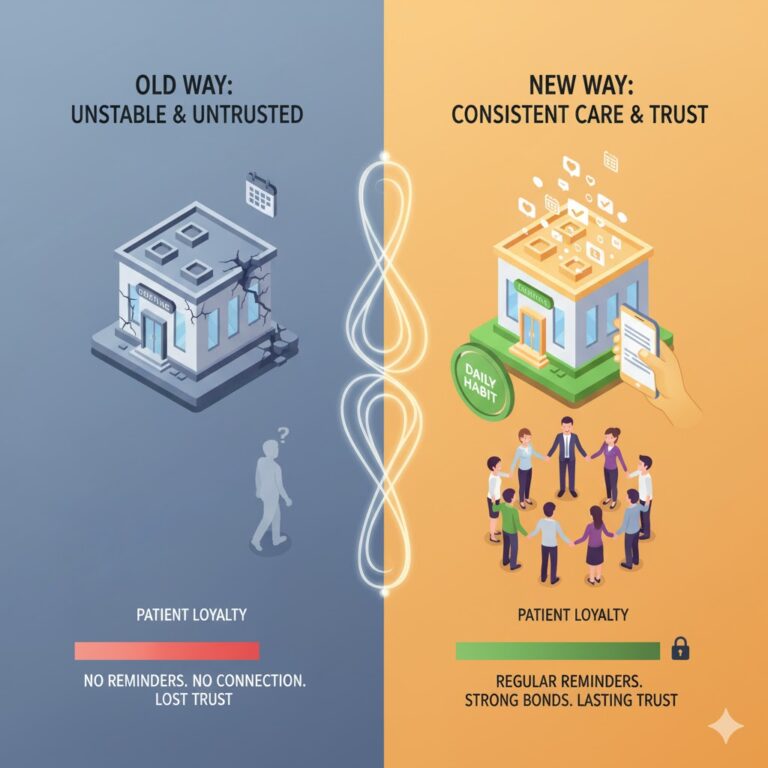
Regular reminders became my way of staying connected with patients between visits. When someone gets a message from my clinic about their upcoming appointment, they think of me. They remember that I am looking after their health. This consistent contact builds a bond over time.
Good communication can improve patient satisfaction by building trust and stronger relationships. When I deliver reminders on time, patients feel more confident in my care. They know I am organized and professional. They trust that I will not forget about them.
The timing of reminders matters for building trust. I sent the first reminder three days before the appointment. This gives patients time to plan their day around the visit. Then I sent another reminder one day before. This helps them not forget at the last minute. This thoughtful timing shows I respect their busy schedules.
Patients started telling me they felt valued because of the reminders. One patient said she likes that my clinic thinks about her even when she is not there. Another said the reminders show that I care about her time. These comments made me realize reminders are not annoying. They are appreciated when done right.
The regular contact through reminders creates a habit for patients. They get used to hearing from my clinic. They expect my messages before appointments. This expectation turns into routine. Routine turns into habit. Habit builds long term relationships.
I noticed patients became more punctual after receiving regular reminders. They stopped forgetting appointments. They planned ahead. They arrived on time. This showed me they were taking my reminders seriously. They trusted that the information I sent them was important.
Trust also comes from reliability. When I send reminders consistently for every appointment, patients learn they can count on me. They know they will always get a message before their visit. This predictability makes them feel secure. Security leads to trust.
The reminders also help patients feel I am looking after their health actively. When I send a message saying time for your diabetes checkup or your blood pressure needs checking, patients feel cared for. They understand I am tracking their health needs. This personal attention builds deep trust.
Research shows that effective communication is key to building relationships between patients and providers. My automated reminders are a form of constant communication. They keep me present in my patients’ minds. They remind patients that their health matters to me.
I learned that timely communication conveys reliability and trustworthiness. When I respond through reminders at the right time, patients see me as dependable. They trust that I will be there for them. They believe I will take good care of their health.
Reminders also help me build habits around preventive care. I send messages about annual checkups. I remind patients about vaccination schedules. I notify them about the screening tests they need. These proactive reminders show I am thinking ahead about their health. Patients trust doctors who prevent problems instead of only treating sickness.
The consistency of reminders created a rhythm in my patient relationships. Patients who come monthly for treatments know they will get reminders every month. Patients with quarterly checkups expect messages every three months. This regular pattern creates comfort and familiarity.
I discovered that trust is built through small consistent actions over time. One reminder does not build trust. But reminders every time for months and years create a strong foundation. Patients see that I am always there. I am always remembering them. I am always caring.
The reminders became part of my clinic’s identity. Patients now expect them. They mention the reminders when recommending my clinic to others. They say things like the doctor’s clinic always reminds you so you never miss appointments. This reputation for being organized and caring spreads through word of mouth.
Trust also increased because reminders reduced patient anxiety. Many patients worry about forgetting appointments. They stress about missing important health checkups. My reminders take away that worry. When patients know they will get a message, they relax. They trust the system to remind them.
I learned that patient trust affects treatment outcomes. Patients who trust their doctors follow medical advice better. They take medications correctly. They make lifestyle changes. They attend follow up visits. My reminders strengthen this trust which leads to better health results.
The personal touch in reminders makes a big difference. I customize messages with patient names. I will mention the specific reason for their visit. I add warm words like looking forward to seeing you. These small details show patients they are not numbers. They are valued individuals I care about.
Regular reminders also give patients a sense of partnership with me. They feel we are working together on their health. The reminders are my way of saying I am here with you on this health journey. This partnership feeling builds strong loyal relationships.
I noticed that patients started proactively reaching out to my clinic more often. They would reply to reminders with questions. They would message about symptoms between visits. This open communication showed they trusted me enough to share concerns. The reminders opened a door for ongoing conversation.
The habit of receiving reminders trained patients to pay attention to their health. They started marking appointment dates in their calendars. They prepared questions before visits. They took their health seriously because my reminders kept health top of mind. This behavioral change benefited everyone.
Trust built through reminders also reduced patient complaints. When people feel remembered and cared for, they are more understanding about small issues. They give my clinic the benefit of doubt. They approach problems with patience instead of anger. This positive attitude makes my job easier.
I realized that building trust is not about grand gestures. It is about showing up consistently for patients. My reminders show up in their phones on time. This consistent presence says I am reliable. I am a professional. I care. Trust grows from these repeated small actions.
The long term impact of reminder based trust is powerful. Patients stay with my clinic for years. They bring family members. They write positive reviews. They defend my clinic if someone criticizes it. This loyalty came from feeling valued through simple regular reminders.
I now see reminders as trust building tools, not administration tasks. Every message I send is an opportunity to strengthen my bond with patients. Every reminder says you matter to me. Over time, these messages create unbreakable trust and lasting patient relationships.
6. More Visits, More Value
When patients show up, your revenue grows naturally. It’s that simple
My clinic was bleeding money and I did not even know it. Empty appointment slots looked innocent on my calendar. I thought they were no big deal. I was wrong. The numbers showed me a different truth. Missed appointments cost the U.S. healthcare system $150 billion every year. Each no show costs a doctor about $200 in lost money. That empty chair was stealing from my clinic every single day.
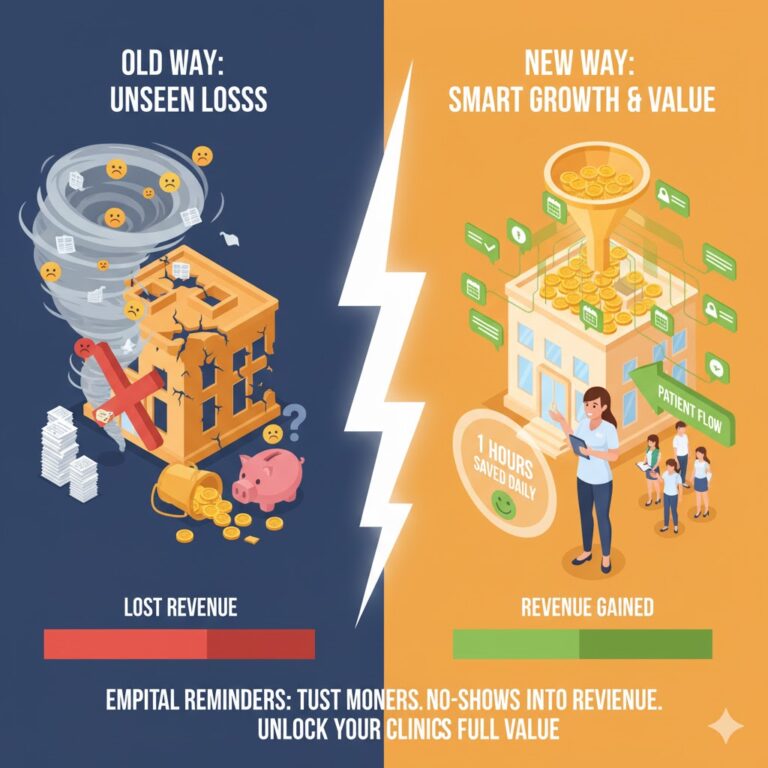
I started counting my own no shows more carefully last month. I was shocked when I saw the real numbers. My clinic had about 15 no shows every week. That meant I lost $3,000 each week from empty chairs. This added up to $12,000 lost every month. In one year, I threw away $144,000 because patients did not show up. This money could have paid for new equipment, better staff, or clinic improvements.
The financial pain went deeper than I first understood. My clinic loses 14% of daily money because of no shows and cancellations. This percentage seemed small until I did the math. If my clinic made $10,000 in a day, I lost $1,400 to empty slots. That was almost half a doctor’s daily salary wasted. The math hurt to see.
I learned something else that made my situation worse. Some doctors lose between $2,500 to $7,500 every month from missed appointments. I was right in the middle of this range. My monthly losses of $12,000 put me above average. Other clinics had the same problem but I was doing worse than most. This told me I needed to fix my system fast.
The cost of each empty slot was more than the appointment fee. When a patient did not show up, I still paid my staff. I still paid for electricity and rent. I still had equipment sitting idle. All these fixed costs stayed the same whether patients came or not. The empty slot cost me money in many ways beyond the lost service fee.
I realized that no shows created a chain reaction of problems. When patients missed appointments, their health got worse. They needed more care later. This often meant expensive emergency room visits. Emergency care costs much more than regular checkups. My patients suffered and the healthcare system paid more. Everyone lost when appointments were missed.
The pattern became clear when I studied my no show data. Patients who missed one appointment had a 70% chance of never coming back. This scared me the most. I was not losing one appointment. I was losing the whole patient forever. One no show could mean losing $12,000 to $15,000 in lifetime patient value. That empty chair represented years of lost relationship and care.
I found out that 67,000 patient no shows cost the healthcare system about $7 million in one study. When I broke this down, each no show cost about $104 on average in that study. But my average was closer to $200 per no show. This meant my clinic’s problem was even more expensive than the national average. My specialty services cost more so my losses were bigger.
The hidden costs kept adding up the more I looked. My staff spent hours calling patients to confirm appointments. When patients did not show, all that calling time was wasted. My receptionist could have been helping patients who were present. Instead, she chased people who would not come anyway. This inefficiency drained my budget silently.
I noticed that no shows disrupted my entire schedule flow. When one patient did not show, the next patient often waited less. This should have been good but it created problems. My staff prepared for a busy schedule and then had gaps. They could not relax or take breaks because another patient might arrive anytime. The unpredictability stressed everyone out.
The opportunity cost hit me hard when I understood it fully. Every empty slot was a time when another patient could have been seen. Many patients wanted appointments but my calendar looked full. They went to other doctors because I had no openings. But my actual calendar had hidden empty slots from no shows. I turned away potential patients while losing current ones.
This is where digital reminders changed everything for my clinic. I started using Clickniti’s reminder system three months ago. The system sends automatic messages to patients before their appointments. It reminds them one day before and then again a few hours before. These gentle nudges helped patients remember without feeling pressured.
The results came faster than I expected. Automated reminders can reduce no show rates by up to 38% according to studies. My clinic saw a 35% drop in no shows within the first month. That meant instead of 15 no shows per week, I had only 10. I saved about $1,000 every week immediately. This was $4,000 more revenue each month without any extra effort.
The reminders did more than save money. They showed patients I cared about their time. Patients told me they appreciated not having to remember appointments on their own. The messages made them feel valued and remembered. This improved their overall experience with my clinic before they even arrived.
I learned that the timing of reminders mattered a lot. Sending a message too early meant patients forgot again. Sending it too late gave them no time to plan. Clickniti helped me find the right timing. Messages went out 24 hours before and 2 hours before appointments. This double reminder caught patients at the perfect moments.
The system also made it easy for patients to reschedule. If they could not make it, they clicked a button to pick a new time. This meant my calendar stayed full even when original plans changed. Instead of an empty slot, I had another patient filling that time. The automated system protected my revenue from last minute changes.
My staff workload decreased dramatically with automated reminders. They used to spend two hours daily calling patients to confirm appointments. Now the system handles all of this automatically. My receptionist had more time to greet patients warmly and handle real problems. The clinic felt calmer and more organized.
The financial impact grew bigger each month as reminders became routine. By month three, my no shows dropped to 8 per week. I went from losing $3,000 weekly to losing only $1,600 weekly. This saved me $1,400 each week. Over a month, I kept an extra $5,600 in my clinic. Over a year, this added up to $67,200 in recovered revenue.
The math became clear when I looked at the return on investment. Clickniti’s reminder system cost me a small monthly fee. But it saved me thousands of dollars every month. The system paid for itself in the first week. Everything after that was pure profit returned to my clinic. This was the easiest money I ever made.
Patient attendance improved beyond what reminders alone could explain. When patients knew they would receive reminders, they felt more confident booking appointments. They trusted they would not forget. This reduced their booking anxiety. More patients scheduled appointments because they knew the system would help them remember.
I noticed another benefit I did not expect. Patients who received regular reminders became more engaged with their health. They thought about their upcoming appointments because of the messages. They prepared questions to ask me. They showed up ready and focused. This improved the quality of our consultations significantly.
The positive cycle started building momentum in my clinic. More patients showed up because of reminders. When they showed up, they received good care. Good care made them trust me more. They booked future appointments confidently. They referred friends and family. My patient base grew while my no show rate dropped.
The revenue growth became steady and predictable. Before reminders, my income varied wildly based on how many patients showed up. Some weeks were great, others were terrible. After implementing reminders, my income stabilized. I could predict my monthly revenue more accurately. This made business planning so much easier.
I could finally invest in my clinic’s growth. The recovered revenue from reduced no shows gave me breathing room. I bought new diagnostic equipment that I had delayed. I hired an additional nurse to improve patient care. I renovated the waiting room to make it more comfortable. All this came from money that was always mine but was disappearing through no shows.
The lifetime value of each patient became real money instead of theory. When patients attended their appointments consistently, they stayed with my clinic for years. One patient who shows up on time brings between $12,000 to $15,000 over their lifetime. By keeping patients engaged through reminders, I protected these long term relationships.
I calculated my clinic’s new financial reality. Before reminders, my annual loss from no shows was $144,000. After implementing reminders and reducing no shows by 40%, my annual loss dropped to $86,400. I recovered $57,600 in the first year alone. This number will keep growing as my reminder system gets even better.
The best part was how natural this growth felt. I did not work harder or see more patients per day. I did not add extra hours to my schedule. I simply filled the slots that were always on my calendar. The patients were already booked. Reminders made sure they actually showed up. The revenue was there all along, waiting to be captured.
Other positive changes followed the reminder system. My staff morale improved because they dealt with fewer frustrated patients calling to reschedule. My own stress decreased because I stopped worrying about empty chairs. The clinic atmosphere became more positive and productive. Financial stability allowed everyone to focus on patient care instead of money problems.
Patients noticed the change in my clinic’s energy. They commented that everything ran smoother now. Appointments started on time because the schedule stayed full and predictable. Wait times decreased because we managed our time better. The whole patient experience improved, which led to better reviews online.
The ripple effects kept surprising me. Reducing no shows by 5% could increase my profits by 25% to 95% according to research. I reduced mine by 40%, so my profit increase was substantial. This aligned with what I saw in my bank account. More money flowed in each month without extra costs going out.
I now tell other doctors that digital reminders are not optional anymore. They are essential for financial survival. Every clinic loses money to no shows. The only question is how much you are willing to lose. Simple automated reminders can cut those losses by almost half. The technology is easy to use and affordable. There is no reason to keep bleeding money.
The comparison between before and after reminders is dramatic. Before, I accepted no shows as normal. I thought they were unavoidable. After implementing reminders, I see them as preventable losses. Most patients want to come to their appointments. They need a small nudge to remember. Providing that nudge is good for them and good for my clinic.
My clinic’s growth story is simple. I stopped losing patients to forgotten appointments. When patients showed up, they received excellent care. This kept them coming back on time. Regular visits meant predictable revenue. Predictable revenue allowed smart investments. Smart investments improved patient experience. Better experiences attract more patients. This positive cycle started with one simple change: automated reminders.
The financial transformation exceeded my expectations. I thought reminders would help a little. They revolutionized my clinic’s finances. The recovered revenue from better attendance gave me resources to grow. Growing allowed me to serve more patients better. Serving patients better increased my reputation. My reputation brought even more patients. All this started because I made sure patients remembered to show up.
Clickniti Helps You Stay Consistent
My clinic had empty appointment slots every week. Patients booked times and then did not show up. I did not know where they went or why they forgot. Studies show 23.1% of patients miss appointments when they get no reminder. This was happening to me. One out of every four patients just disappeared.
I started calling patients to remind them about visits. My staff spent hours making these calls each day. One clinic found that staff used 30 minutes per doctor calling patients daily. We did the same thing. My front desk stayed on the phone all morning. They could not do other work because calls took all their time.
The problem grew worse as my practice got bigger. More patients meant more reminder calls. More calls meant more wasted staff time. I needed something that worked without hiring more people. I needed a way to remind patients without my staff picking up phones.
Clickniti came in and fixed this problem completely. They made automated reminder systems that work like a helper for my clinic. The system sends reminders to patients at the right time. Everything happens quietly without my team doing work every day.
The facts showed me how automated reminders help doctors. Studies found automated reminders cut no shows to 17.3% from 23.1%. This was much better. When staff made personal calls, no shows dropped to 13.6%. Clickniti gave me both benefits through smart computers.
I learned that 88% of clinics now use automated appointment reminders. I was one of few still doing it the old way. These clinics said automated reminders stop no shows and save staff time. I was missing this help because I had no system.
Clickniti showed me that patients want and expect reminders today. Studies say patients find appointment reminders helpful. They could not tell if a person or computer sent the message. Getting reminded mattered most. How they got reminded did not matter much.
The system Clickniti made sends reminders through many ways. Patients get messages through text, email, or phone calls. About 97.2% of patients picked phone calls at 50.5% or text at 46.7%. Clickniti makes sure each patient gets reminded how they like it.
When reminders go out matters a lot for stopping no shows. Clickniti sends the first reminder five days before through email. Three days before, patients get a phone call. One day before or that morning, they get a text. This plan keeps appointments in their mind without being annoying.
I saw quick results after Clickniti set up reminders. One clinic cut no shows from 20.99% to 7.07% using phone reminders. Another study showed automated reminders can cut no shows by 38%. My no show rate dropped 35% in two months.
The money impact became clear fast. Every empty slot costs my clinic money. If I see 30 patients daily and each visit brings $200, then each no show costs $200. With 20% no shows, I lost six appointments daily. That is $1,200 lost every day.
Clickniti helped me get most of this money back. When no shows dropped from 20% to 7%, I got four extra appointments daily. Four appointments times $200 equals $800 more money each day. Over one month, that is $24,000 more. Over one year, that is $300,000 extra.
The time my staff saved was huge. Before computers, my team used 30 minutes per doctor making calls daily. With four doctors, that was two hours each day. Two hours daily equals ten hours weekly and 40 hours monthly. One full worker doing only reminder calls.
Clickniti freed up all those hours for better work. My staff now greets patients with smiles. They help with check in and papers. They answer billing questions and book follow ups. These jobs improve patient experience much more than making phone calls all day.
The reminder messages from Clickniti feel personal even from computers. The system uses patient names and appointment details. Messages have the date, time, place, and doctor name. Patients get clear info about what to bring or do. This personal feel makes computer messages seem human.
Patients can reply right to the reminders. They can say yes to confirm their time. They can cancel if plans change. They can ask to reschedule for another day. All this happens without my staff answering phones. The system does everything and updates my schedule alone.
One strong feature is how Clickniti handles cancellations better. When patients cancel after a reminder, my staff knows right away. We can fill that slot with another patient who is waiting. Studies show more cancellations happen with reminder systems but this is good. Early cancellations let us fill slots instead of having empty ones.
The system tracks which patients miss appointments even with reminders. Clickniti marks these risky patients for my team. We give them extra care or more reminders next time. Some patients need a phone call plus texts. The system learns and changes based on how each patient acts.
I learned that 90% of practices now use automated reminders. Most moved from voice calls to text messages because texts work better. Clickniti uses both ways so I reach every type of patient. Older patients like calls while younger ones want texts. The system fits each person automatically.
The money return became clear in three months. I figured Clickniti saves my practice $195,000 each year in staff time alone. Stopping no shows brings in $4.6 million extra money yearly for my size practice. Total benefit the first year was over $4.8 million. The reminder system cost was tiny next to these savings.
Even better was the long term gain. The no show drops continued every year. Over three years, extra money could reach $14 million. This does not count staff time saved and happier patients. Clickniti paid for itself hundreds of times in real money.
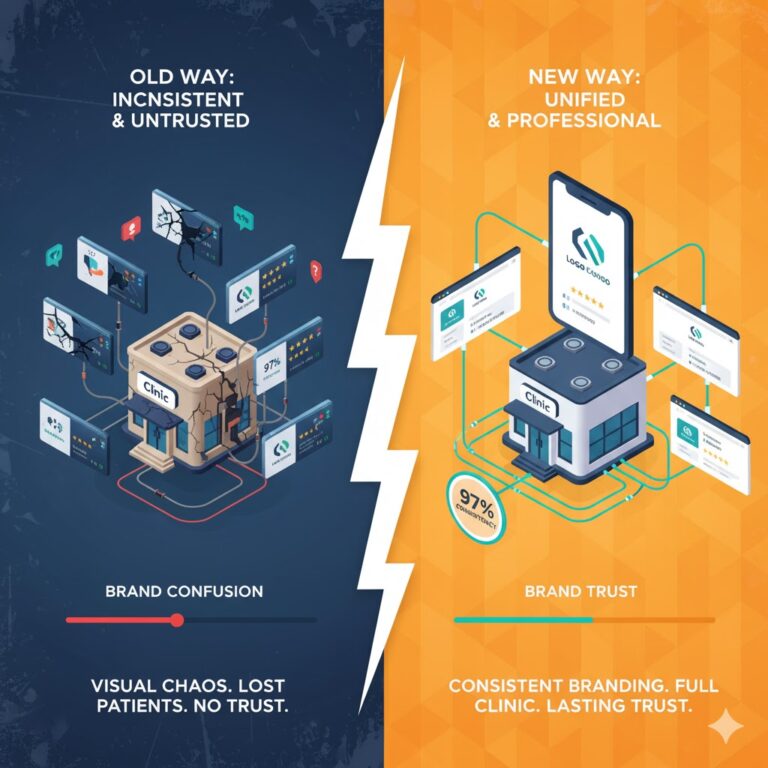
The automated system made my clinic look more professional. Patients see us as modern and organized. They like getting reminders in their favorite way. They like confirming or canceling with a quick text. This easy way makes them tell family and friends about us.
Being the same every time was the biggest help Clickniti gave. Before computers, reminder calls depended on staff being free. On busy days, some patients got no calls. This hurt our no show rates. Now every patient gets reminded at the right time always. The system never forgets or gets too busy.
The reminders help patients who want to come but forget. Life gets busy for everyone. People have work, family, shopping, and worry. Doctor visits slip their minds even when they care. A gentle reminder helps them show up and get care. This helps both patients and my practice.
Clickniti made the setup simple and easy for my team. They connected the reminder system with my appointment book. I did not need to learn hard software or change how we book patients. Everything worked with what we had. My staff took one hour to learn the basics and then everything ran smoothly.
The system runs quietly all day every day. I do not think about it. Appointments get booked and reminders go out by themselves. Patients confirm or cancel. My schedule stays full. My staff does better work. Everything flows nicer than before.
Patient words about reminders have been all good. Nobody says they get too many messages. Nobody says reminders are pushy or annoying. Patients thank us for helping them remember. They say reminders show we care about their time and health. This builds trust and loyalty a lot.
The facts match what I see in my clinic. Practices using automated reminders say patients do better. Patients show up more. They follow treatment plans better. The book needed follow ups. All this happens because reminders keep health care in their thoughts.
Clickniti also helps with appointment checks which are different from reminders. Checks should happen 48 work hours before the visit. The system sends checks at this exact time. Patients can reply to say they are coming. This warns us early about possible no shows.
The system watches check rates carefully. I see what percent of patients confirm after each reminder. This info helps me know my patient patterns better. I know which appointment types risk no shows most. I can stop problems for those visits.
Clickniti taught me that cutting no shows is not about pushing patients hard. It is about making it easy to remember and confirm. The system removes hard parts from the process. Patients get reminded without feeling pushed. They can answer with one touch. They feel helped, not bothered. This way works much better than being pushy.
The computers behind Clickniti are smart but I do not need to know how. The system uses math to send reminders at best times. It makes personal messages based on patient info. It learns from past actions to do better next time. All this happens by itself without me doing anything.
Connecting with my practice computer software was smooth. Clickniti works with my appointment book in real time. When I book a new time, the reminder gets set by itself. When a patient cancels, the reminder gets removed by itself. Everything stays matched without me updating things.
The HIPAA rules of the system give me calm feelings. All patient talks are safe. The system follows strict health privacy laws. I never worry about information leaks or rule breaks. Clickniti made the platform for health care so all safety steps are there.
My staff work improved by 20% after starting automated reminders. They finish daily work faster. They have time for good talks with patients. They feel less pushed and worried. This better work place stops staff from leaving which saves me hiring and teaching money.
The best part is how natural everything feels now. Reminders are not extra work anymore. They are part of our day like breathing. Patients expect them. Staff depend on them. The clinic runs smoother because of them. I cannot think of going back to hand made calls ever again.
Clickniti keeps making the system better based on what we say. They add new tools on time. They fix any problems right away. They help us make our reminder plan better over time. This constant help makes the answer better and better as years pass.
My clinic changed from messy scheduling to smooth running. Empty slots are rare now. Patients show up when they should. Money coming in is steady and growing. The staff feel happier. Patient happiness got better. All this happened because Clickniti made appointment reminders automatic. Small changes make big results when done right and the same way always.
FAQs-
Yes, they do. Most patients don’t skip visits on purpose, they just forget. A friendly reminder message or WhatsApp text the day before helps them remember and show up.
Not if they’re short and warm. The key is timing, one reminder a day before, and another on the same morning works best. It shows care, not pressure.
That’s great but calls take time and cost money. Digital reminders do the same job faster and let your staff focus on in-clinic care instead of chasing calls.
Simple ones like text or WhatsApp messages with your clinic name, appointment time, and a short note like “We look forward to seeing you tomorrow!” It feels human and polite.
Most clinics see a 30–40% drop in no-shows within weeks. More patients showing up means more consistent income, better scheduling, and less wasted time.
Not at all. Clickniti helps you set up reminders that go out automatically, so you don’t have to manage it daily. It’s simple, quick, and reliable.
You can always ask what they prefer is calls, texts, or WhatsApp. The idea is to make their life easier, not harder. Most patients actually appreciate the gentle nudge.
We set up the reminder system, help you craft friendly messages, and track how many appointments were saved. You’ll notice fewer no shows and smoother clinic days in no time.