Why Some Clinics Grow Fast Online While Others Fade Away
You spend good money running ads for your clinic. The phone rings more often now. Your WhatsApp shows new messages every day. Everything looks fine from where you sit. But here is the truth most doctors miss.
Table of Contents
ToggleYour ads are working hard to bring patients to your door. But somewhere between that first call and the actual appointment, patients are slipping away. They are choosing another clinic instead of yours. The problem is not your skills or your services. The problem starts when your team picks up that phone or types that reply.
Think about your last busy morning at the clinic. You had back to back appointments. Your staff was running around managing files and billing. Then a new call came in. Someone wanted to know about your consultation fees. Your receptionist was handling three things at once. She told the caller she would call back later. But later never happened because ten more urgent tasks came up.
That caller did not wait. She moved to the next clinic on her search list. She booked an appointment there within the next hour. You lost a patient without even knowing it. This happens more often than you think. Every single day across clinics in India, hundreds of potential patients get lost this way.
Your team is not doing this on purpose. They work hard and care about the clinic. But managing patient inquiries needs special attention and quick action. Most clinic staff are trained to handle patients who walk in. They know how to manage files and schedule appointments for people standing right in front of them. But handling digital leads is a different skill. It needs speed, the right words, and follow up that never stops until that person books.
Your competition is not sleeping. Other clinics in your area are training their teams better. They reply within minutes. They follow up until they get a yes. They turn every inquiry into a conversation and every conversation into an appointment. Meanwhile, your ads keep running and your budget keeps draining. But the conversion from lead to patient is not happening the way it should.
This gap between getting leads and converting them into appointments is costing you more than you realize. You might think your ads are not working. You might feel like digital marketing is a waste of money. But the real issue is what happens after someone contacts your clinic. That is where the money gets lost or earned.
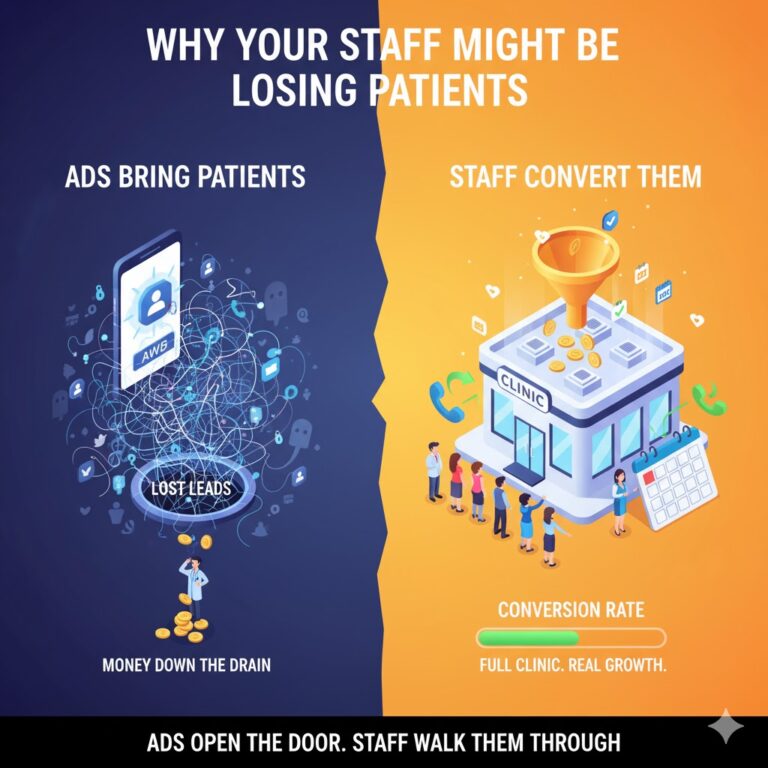
1. You're Great With Patients. But Is Your Team Great With Leads?
Every missed call, late reply, or wrong message could mean one less appointment.
You spend years learning medicine and building your practice. You know how to diagnose problems and treat patients with care. Your patients trust you because you give them your best. But here is something most doctors never think about. The person answering your phone might be losing patients before they ever meet you.
Your front desk receives a call from someone looking for a pediatrician. They put the caller on hold for five minutes. The caller hangs up and dials the next clinic. That patient is gone forever. You never even knew they called.
Someone sends a message on your Facebook page asking about consultation fees. Your receptionist sees it three days later and replies. By that time, the person already booked an appointment somewhere else. Your clinic lost a patient and you had no idea it happened.
These small moments happen every single day in clinics across India. You work hard to bring people to your door. You spend money on ads to get noticed. But when those people reach out, your team might not be ready to handle them well.
Your staff members are good people who care about their work. But they might not understand how important each phone call is. They might think one missed call does not matter much. They do not realize that behind every call is a person who needs help right now.
Most clinic staff handle many tasks at the same time. They manage files, greet patients, and answer phones all at once. When things get busy, some calls go unanswered. Some messages get forgotten. Some follow ups never happen. These gaps seem small but they add up fast.
Think about what happens when a potential patient calls your clinic. They might be worried about their health or their child’s condition. They want answers quickly. They need someone to speak with kindness and give clear information. If your team sounds rushed or confused, that caller feels it immediately.
A patient calls asking about your visiting hours and your staff gives wrong information. The patient shows up at the wrong time and finds the clinic closed. They feel frustrated and embarrassed. They never come back and they might tell others about their bad experience.
Your receptionist forgets to call back someone who left a message. That person waited all day for your call. When it never comes, they feel ignored. They think your clinic does not care about them. They choose another doctor who responds faster.
These situations hurt your clinic in two ways. You lose the new patient who was ready to book. You also lose the chance to build trust with people who could refer others to you. Word of mouth still matters a lot in healthcare. One bad experience can cost you many future patients.
The problem gets bigger when you run ads online. Your ads work hard to get people interested in your clinic. They see your post, read about your services, and decide to reach out. This is the most important moment. Your staff needs to respond fast and professionally.
Research shows that people expect responses within one hour when they contact a business online. If you take longer, they move on to someone else. Your competitors are waiting to grab those patients you worked hard to attract.
Your team might not know how to handle questions that come from online ads. Someone asks about a specific treatment they saw in your ad. Your staff does not have the right answer ready. The caller loses confidence and decides not to book.
Training makes a huge difference here. Your staff needs to know what to say when people call. They need scripts for common questions. They should understand which information matters most to worried patients. They must learn to sound warm and helpful even on busy days.
Every person who contacts your clinic is giving you a chance. They chose to call you instead of ten other doctors nearby. Your team has maybe two minutes to make them feel welcome and confident. Those two minutes decide if they become your patient or someone else’s.
You can have the best ads and the best medical skills. But if your team cannot convert inquiries into appointments. Your clinic will not grow. The gap between getting attention and getting patients is where most clinics lose money.
Most doctors never check how many calls their clinic misses each week. They do not track how long it takes staff to reply to messages. They assume everything is running fine because no one complains directly. But patients who get poor service simply go elsewhere without saying anything.
Start paying attention to these details and you will see the truth. Your clinic might be losing five to ten potential patients every week. That adds up to hundreds of patients every year. Each lost patient means lost revenue and lost opportunities to help people.
Your staff can become great at handling leads with proper guidance and tools. They need to understand that every interaction matters. They should treat each caller like the valuable opportunity it is. Small changes in how they communicate can bring big improvements in patient bookings.
When your team handles inquiries well, your marketing works better. Your ads bring people in and your staff converts them into appointments. Your clinic grows steadily because both parts of the system work together smoothly. That is when your investment in marketing finally pays off the way it should.
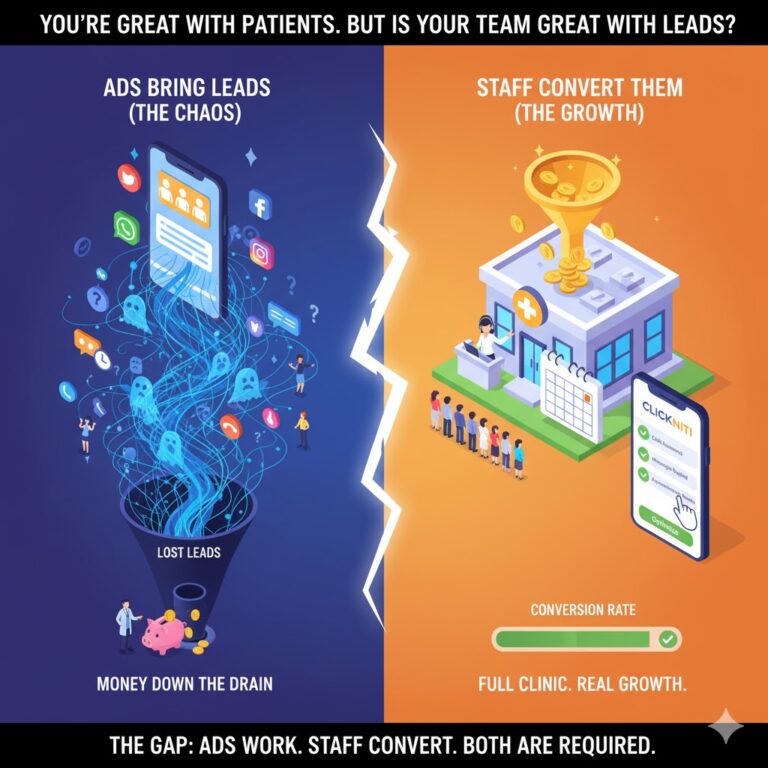
2. Patients Don't Wait, They Move to the Next Clinic
In today’s world, people want quick answers. If your staff delays, someone else gains that patient.
A patient calls your clinic at 11 in the morning with stomach pain. Your receptionist is busy with another patient at the front desk. The phone rings four times and goes to voicemail. That patient hangs up and opens Google again. Within two minutes, they find another clinic that answers on the second ring. Your competitor books that appointment before your lunch break even starts.
This happens more often than you think. People today have zero patience for waiting. Their phones give them instant answers for everything. They can order food in three taps. They can book a cab in five seconds. When they need a doctor, they expect the same speed.
Most patients call at least three clinics before choosing one. The first clinic that responds wins. Studies show that 80 percent of callers will not leave a voicemail. They generally move to the next number on their screen. Your missed call becomes someone else’s new patient.
Think about your own life for a moment. When you call a restaurant and nobody picks up, do you wait and try again? Most people do not. They call the next restaurant that appears in their search. Your patients behave the same way when looking for healthcare.
WhatsApp messages face the same problem. A mother sends a message asking about vaccination timings at 9 PM. She knows your clinic is closed. But she expects a reply by morning. If your staff sees that message at noon and replies at 3 PM, she has already booked an appointment somewhere else. Six hours of delay cost you a patient who might have stayed with your clinic for years.
Social media messages get ignored even more. Someone asks about your consultation fees on Facebook. Your team checks Facebook only twice a week. That person has already visited two other clinics by the time you reply. They are not coming back.
Speed matters more than perfect answers. A quick response saying “We will check and call you in 10 minutes” works better than a detailed reply after three hours. People want to feel heard right away. They want to know someone is there to help them.
Your competition knows this. Clinics across India are training their staff to respond within minutes. They use simple systems to make sure no call goes unanswered. They reply to every WhatsApp message before the patient gets impatient. They are taking your potential patients because they move faster.
Every hour of delay cuts your chances of getting that patient. Research shows that responding within five minutes increases your booking rate by 40%. After one hour, your chances drop by half. After 24 hours, most people have already made their choice.
Your clinic might be better. Your doctors might have more experience. Your treatment might be more affordable. But none of that matters if your staff takes too long to respond. Speed beats quality when patients are making their first contact.
This is not about blaming your team. They are doing their best with the work they have. The front desk handles patients walking in. The phone keeps ringing. Messages pile up on three different apps. One person cannot do everything at once.
But patients do not care about your internal challenges. They care about their health problems. They need help now, not later. The clinic that responds first gets their trust. That trust turns into an appointment. That appointment can become a lifetime patient relationship.
You are losing patients every week without knowing it. These are people who wanted to come to you. They found your clinic online. They took the effort to call or message. But somewhere between their first contact and your response, they disappeared. They went to a clinic that made them feel important by responding fast.
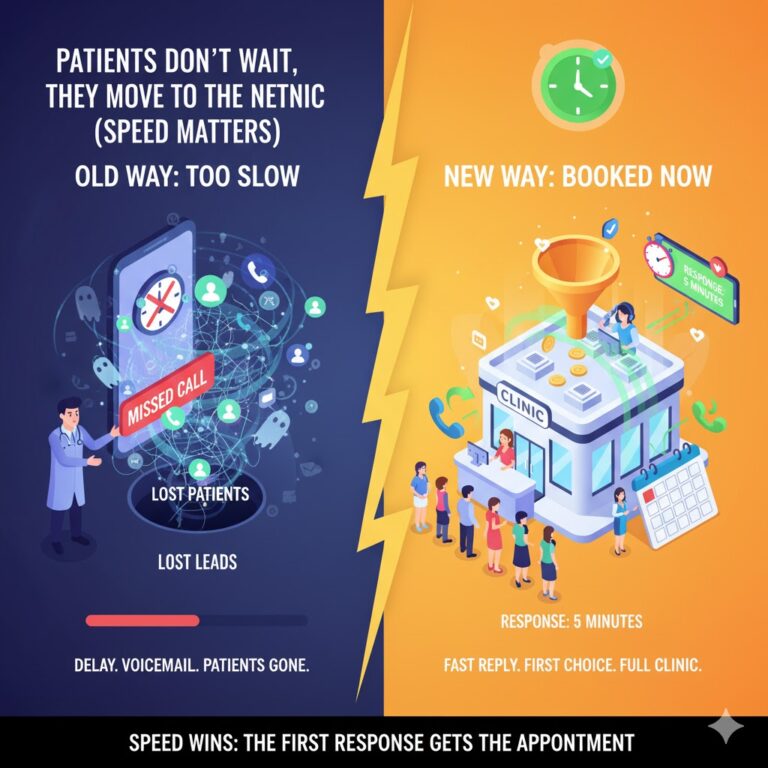
3. Small Gaps, Big Losses
A forgotten message or a missed follow up can quietly hurt your clinic’s growth every week.
Your clinic runs smoothly during the day. Patients come in for appointments. Your staff handles phone calls and messages. Everything looks fine on the surface. But small mistakes are happening that you never see.
A patient sends a WhatsApp message asking about your consultation fees. Your receptionist sees it but plans to reply after lunch. Lunch gets busy and the message sits there for three hours. By that time, the patient had already booked with another doctor who replied in ten minutes.
Another person calls your clinic during a busy morning. Your staff puts them on hold because two other patients are checking in. The caller waits for two minutes and then hangs up. They never called back because they found another clinic that answered immediately.
These moments happen more often than you think. Each one feels small and unimportant. But when you add them up over a week, you lose five to ten potential patients. Over a month, that number becomes twenty to forty lost appointments.
Studies show that 80 percent of people will not call back after one missed attempt. They assume your clinic is too busy or does not care about new patients. They move on and become someone else’s patient instead.
Your staff is not being careless on purpose. They are handling many tasks at once. Answering phones, managing appointments, dealing with walk in patients, and updating records all happen at the same time. Something always slips through the cracks.
A forgotten follow up call hurts even more than a missed inquiry. Imagine a patient visited your clinic last month for a health checkup. Your staff was supposed to call them to share test results. Nobody made that call because the day got too hectic. The patient feels ignored and thinks your clinic does not value them. They choose a different doctor next time.
Every week, these small gaps add up to big financial losses. If your consultation fee is 500 rupees and you lose thirty patients a month, that means 15000 rupees gone. Over a year, you lose 1.8 lakh rupees without even knowing why.
Your team is doing their best with what they have. But without a proper system to track inquiries and follow ups, things get missed. No one keeps count of unanswered messages or callbacks that never happened. The problem stays invisible while your growth suffers silently.
Fixing these gaps does not need firing staff or hiring more people. It requires better systems and clear processes. When every inquiry gets noted down and every follow up gets scheduled, nothing falls through the cracks. Your clinic stops losing patients to avoidable mistakes.
4. Not Every Call Is a Call
That one missed call could have been a new patient searching for you right then.
Your phone rings at 11 in the morning. Your receptionist is busy with a patient at the counter. The call goes unanswered. It rings again at 3 in the afternoon. Your staff is on a lunch break. Another missed call added to the list.
You might think it was nothing important. Maybe someone is asking for directions. Maybe a wrong number. But what if that caller was a mother worried about her child’s fever? What if someone needed urgent dental care and was ready to visit today?
That single missed call could have been worth ten thousand rupees or more to your clinic. Studies show that 80 percent of callers will not call back if nobody answers. They generally move to the next clinic on their search list. Your competitor answers on the second ring and gets that patient instead.
When people search for a doctor online, they are usually in need right away. They have a problem that bothers them enough to pick up the phone. A toothache keeping them awake at night. A skin rash that has been getting worse. Back pain that stops them from working properly. These are not casual inquiries. These are people ready to book an appointment and pay for treatment.
Every missed call represents real money walking away from your clinic. If you miss five calls in a week, that could mean five patients gone. Over a month, that number becomes twenty patients who never got to meet you. In a year, you could be losing hundreds of patients without even knowing it.
Your staff might not realize how urgent each call is. To them, it feels like another task on a busy day. But to the caller, it is their health concern that needs attention now. The difference in urgency creates a gap that costs you patients.
Most clinics in India receive between fifteen to thirty inquiry calls every week. Out of those, about five to eight calls go unanswered during busy hours. That means your clinic could be losing up to ten new patients every single month. These are patients who were already interested in your services. They saw your ad or found your clinic online. They took the effort to call you. All they needed was someone to answer and guide them.
Missing calls also damages your clinic’s reputation without you knowing. When people cannot reach you, they assume you are too busy or do not care about new patients. They share this experience with family and friends. Word spreads that your clinic is hard to contact. Over time, fewer people even bother trying to call.
Think about the effort and money you spend on advertising your clinic. You pay for social media ads. You invest in Google promotions. You create posts and content to attract patients. All that hard work brings people to your phone number. But if nobody answers when they call, your entire marketing budget goes to waste.
Every call is an opportunity. Every ring is a chance to grow your practice. When your team treats each call with urgency and care, you turn more inquiries into confirmed appointments. When calls go unanswered, you give your competition an easy win.
Your clinic cannot afford to lose patients this way. You need a system that makes sure every call gets answered. You need staff who understand that each ring could mean a new patient waiting on the other end. That one missed call is not nothing. It is everything.
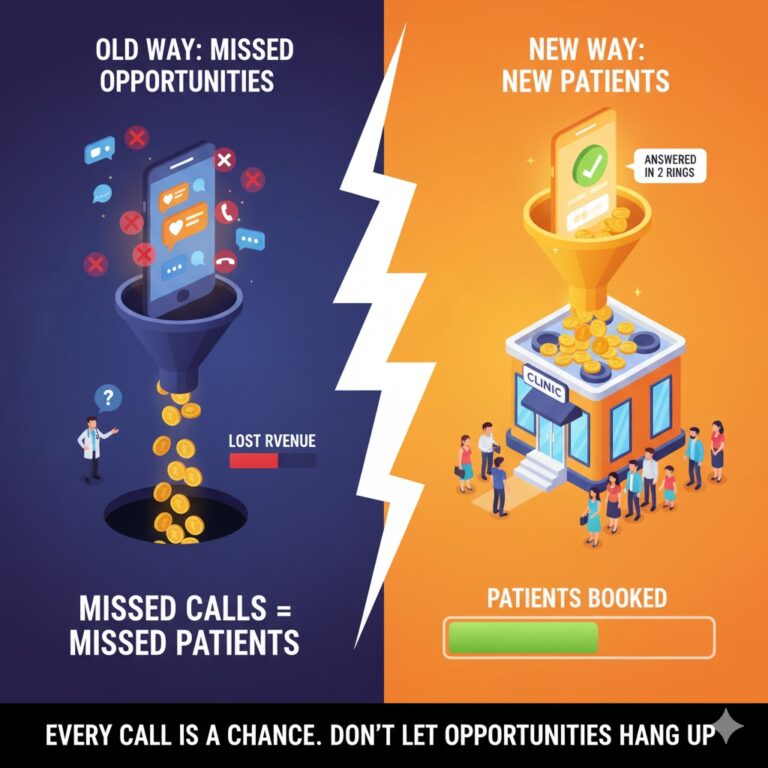
5. Ads Bring Patients, But Staff Converts Them
Even the best ads won’t work if your team isn’t trained to handle patient inquiries fast and right.
Your ads are doing their job. They are showing your clinic to hundreds of people every week. These people click on your ad because they need a doctor. They want to book an appointment with you. But then something goes wrong at the last step.
Your front desk staff picks up the phone. The caller asks about your clinic timings or treatment costs. Your team member gives a short answer and hangs up. The person never calls back. That potential patient goes to another clinic down the road.
This happens more often than most doctors realize. You spend money bringing people to your door. But if your team cannot turn that interest into a confirmed booking, your money disappears. The ad worked. The follow up failed.
Think about your own life. When you call a restaurant to book a table, you want quick answers. You want someone who sounds helpful and clear. If the person on the phone sounds confused or rude, you hang up. You call another restaurant instead.
Your patients think the same way. They call your clinic expecting a warm, helpful voice. They want someone who listens to their concerns. They need clear answers about appointment slots, doctor availability, and treatment options. If your staff sounds busy or uninterested, that caller will never become your patient.
Studies show that almost 30% of people who call a clinic never book an appointment. Many of them move to a competitor because of how they were treated on that first call. Your ad brought them in. Your staff pushed them away without even knowing it.
Training your team is not about making them perfect. It is about teaching them simple skills that make a big difference. They need to answer calls within three rings. They should greet every caller with warmth and patience. They must listen carefully before giving answers.
Your receptionist should know how to handle common questions without putting people on hold for too long. They should understand which information matters most to a new patient. Cost, location, doctor experience, and available time slots are what people ask about first.
When someone messages your clinic on WhatsApp or Facebook, speed matters more than anything else. Research shows that responding within five minutes increases your chances of booking by 40%. After an hour, that chance drops to almost nothing. People moved on because they found another clinic that replied faster.
Your staff needs to understand this urgency. A message sitting unread for two hours means a lost patient. A call that goes to voicemail three times means someone else got that booking. Every delay costs you real money because you already paid for that ad click.
Training your team also means teaching them the right words to use. Saying “the doctor is busy” sounds like a rejection. Saying “the doctor has evening slots available this Thursday” sounds like an invitation. Small changes in how your staff talks can turn a maybe into a yes.
Your front desk should never sound tired or frustrated, even during busy hours. Patients can hear stress in a voice. They will worry that your clinic is too crowded or poorly managed. They want to feel welcomed, not like they are bothering someone with their call.
Role playing helps your team get better at these conversations. Spend 15 minutes each week practicing common patient scenarios. One person pretends to be a nervous first time caller. Another practice giving clear, confident answers. This simple exercise builds real skills that bring more bookings.
Your ads can bring 100 people to your clinic every month. But if your staff converts only 20 of them into patients, you are losing 80 percent of your investment. Better staff training could turn 60 or 70 of those people into confirmed appointments. Same ad cost. Triple the results.
Most doctors never track these numbers. They see ads running and assume everything is fine. But behind the scenes, leads are slipping away because nobody checked how the team handles inquiries. You cannot fix a problem you do not see.
Start listening to how your staff answers calls. Check how long it takes them to reply to messages. Look at appointment booking rates compared to the number of inquiries you receive. These numbers tell the real story of where your patients are going.
Good ads open the door. Good staff walk people through it. Both parts must work together or your budget keeps draining without giving you growth. Your team is the bridge between online interest and real appointments sitting in your calendar.
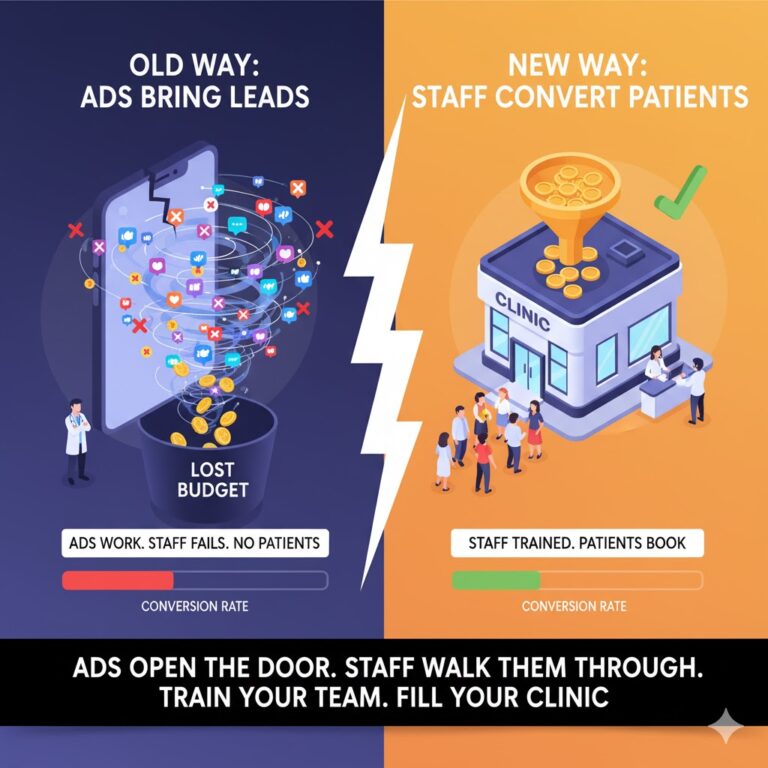
6. Why Most Clinics Don't Realize It's Happening
Busy days and trusting habits make it easy to miss how many leads go unanswered.
Your clinic runs from morning until evening without a single quiet moment. Patients fill your waiting room. Your phone keeps ringing. Appointments get booked one after another. Everything looks normal and successful on the surface.
But here is what you might not see. Between all those confirmed appointments, several calls went unanswered. Three messages on WhatsApp never got replies. Two emails sat in the inbox for days. One person filled your contact form but nobody followed up.
These lost chances happen in the background while you treat patients. Your receptionist handled ten calls but missed three because the line stayed busy. Your assistant meant to reply to messages during lunch but emergencies kept coming. Your front desk staff forgot to check emails because walk-in patients needed attention first.
Nobody reports these misses to you. Your team does not do this on purpose. They work hard and care about the clinic. But they manage too many tasks at once. Taking calls, greeting patients, handling records, and managing payments all happen at the same time.
You trust your team because they have been with you for years. They seem capable and you believe everything runs smoothly. This trust is good but it can hide problems you need to know about.
Most clinic owners never ask how many inquiries came in versus how many got answered. They only count the patients who actually showed up. But the real question is how many wanted to come but never got a response.
Your staff will not tell you about missed opportunities because they do not track them. When someone calls and nobody picks up, that moment disappears forever. There is no record and no reminder. The person simply calls the next clinic on their search list.
Days turn into weeks and weeks into months. Small misses add up into big losses. You could have had twenty more patients this month. Your revenue could have grown by thousands of rupees. But you never knew those chances existed.
Busy schedules create blind spots in every clinic. When everyone stays occupied, problems hide behind the appearance of productivity. You see your team working hard so you assume nothing falls through the cracks.
The truth is that growth happens in those cracks. Every unanswered inquiry represents someone who needed your care. They searched for you, found you, and reached out. Then silence from your end pushed them toward your competitor.
Recognizing this problem is the first step to fixing it. Once you start tracking inquiries and responses, the picture becomes clear. You will see exactly where patients slip away and why your marketing efforts do not convert as they should.
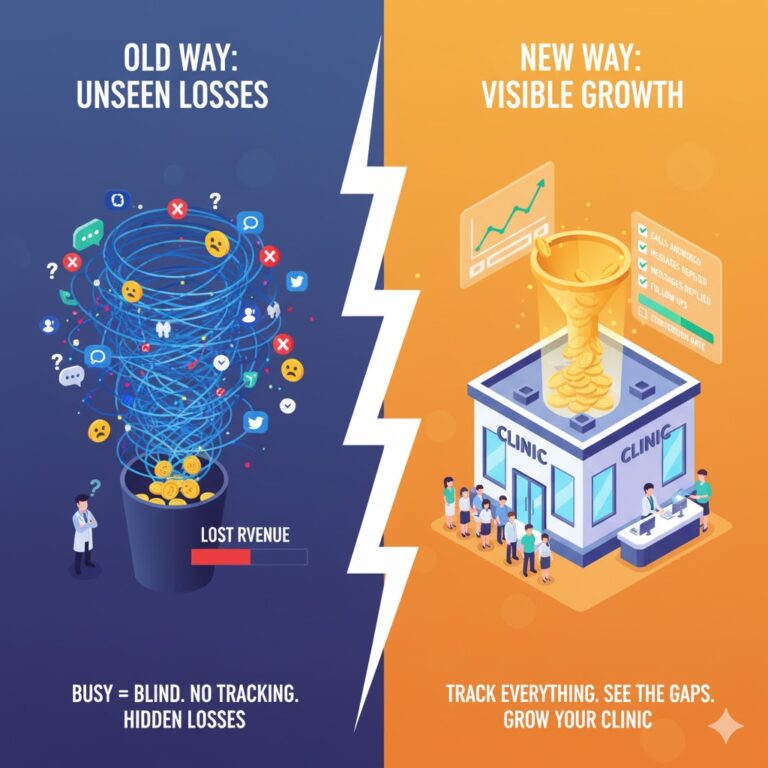
7. You Don't Need More Ads. You Need Better Response
A quick, polite reply can turn one ad click into a long-term patient.
Your ads are working. People are seeing your clinic online. They are clicking your number. They are sending messages on WhatsApp. But what happens after that first contact decides everything.
Most doctors think they need to spend more money on bigger ads. They believe more clicks will bring more patients. But the real problem is not about getting attention. The problem is what happens when someone reaches out to your clinic.
A patient clicks your ad at 9 pm while searching for a skin specialist. They send a message asking about consultation charges. Your staff sees it the next morning at 11 am. By then, that person has already booked an appointment with another clinic. You lost a patient not because your ad failed. You lost them because your response came too late.
Speed matters more than you think. Studies show that people expect a reply within one hour when they contact a business online. After two hours, they start looking at other options. After four hours, they have probably made their choice already. That choice is no longer your clinic.
A polite and helpful reply does more than answer a question. It builds trust from the very first moment. When someone asks about your services, they are also testing how you treat patients. Your response tells them if you care about their time and concerns.
Think about a mother worried about her child’s fever at night. She finds your clinic online and sends a message. A warm reply saying the doctor is available tomorrow morning makes her feel heard. She books the appointment right away. But if no one replies, her worry grows. She calls the next clinic and forgets about yours completely.
Your front desk team needs to understand this power. Every message is a chance to welcome a new patient. Every call is an opportunity to show your clinic cares. Training your staff to respond fast and speak kindly changes everything about your patient growth.
You do not need a huge team for this. You need one person who checks messages every two hours. You need someone who knows how to speak with patience and respect. You need a system that alerts your team when someone reaches out.
Simple tools can help your staff stay on top of every inquiry. Apps can send notifications when a new message arrives. A shared inbox lets your team see who replied and who still needs attention. These small changes make sure no patient falls through the cracks.
The tone of your response matters too. A short and cold reply feels unwelcoming. A detailed and friendly message makes people want to visit your clinic. Your staff should know how to greet people warmly even through text messages.
When someone asks about appointment availability, your team should reply with options and a clear next step. When someone wants to know about treatment costs, your staff should give honest answers without making them wait. This kind of service turns curious clicks into confirmed bookings.
Your ads bring people to your door. Your staff opens that door and invites them inside. If your team responds slowly or sounds uninterested, all your ad money goes to waste. But when your staff replies fast and speaks well, every ad rupee brings better returns.
A better response does not cost you extra money. It costs attention and care. It requires checking messages daily and treating every inquiry like it matters. Because it does matter. That one message could be the start of a relationship that lasts for years.
Many clinics lose patients without even knowing it happened. They see missed calls in their phone log and think nothing of it. They forget that each missed call was a real person who needed help. That person went somewhere else because no one answered.
Your clinic can be different. Your team can be the one that replies when others stay silent. Your staff can be the voice that makes people feel welcome and safe. That is how you turn ad clicks into real patients who keep coming back.
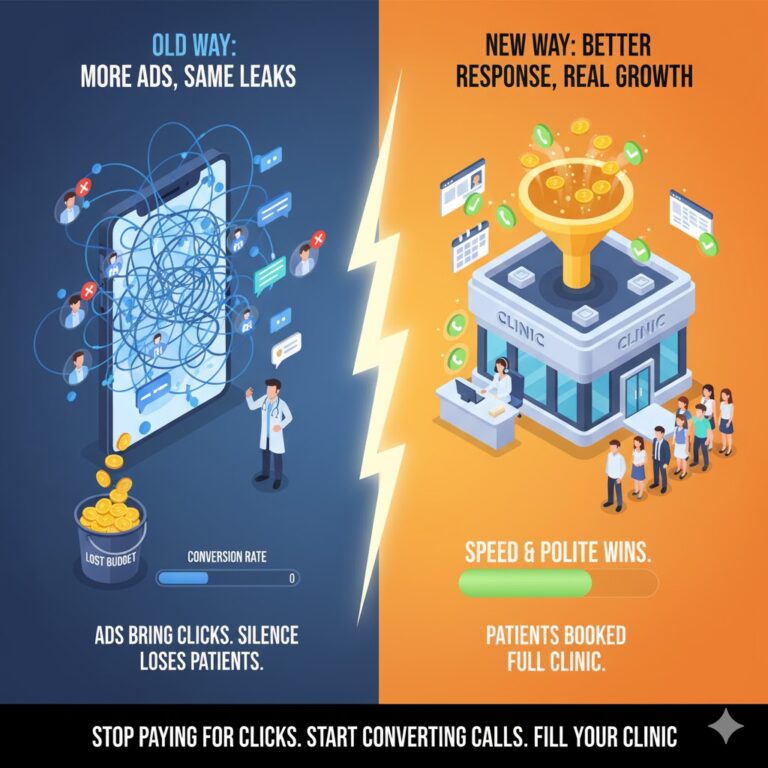
8. Track Every Call, Message, and Missed Lead
Simple tools can help you see what’s happening. No tech knowledge needed.
Most clinic owners have no idea how many patients they lose each week. You trust your staff completely. You believe every call gets answered and every message gets a reply. But the truth often tells a different story.
A patient calls your clinic at lunch time when your front desk is busy. The phone rings but nobody picks up. That person does not call back. They find another clinic within five minutes. You never know this patient existed. You never know you lost that appointment.
Another person sends a message on Facebook asking about your fees. Your staff sees it three days later. By then, that person already booked with your competitor down the street. One more patient gone without any record.
These gaps happen every single day in busy clinics across India. You cannot fix what you cannot see. That is why tracking tools become important for your growth.
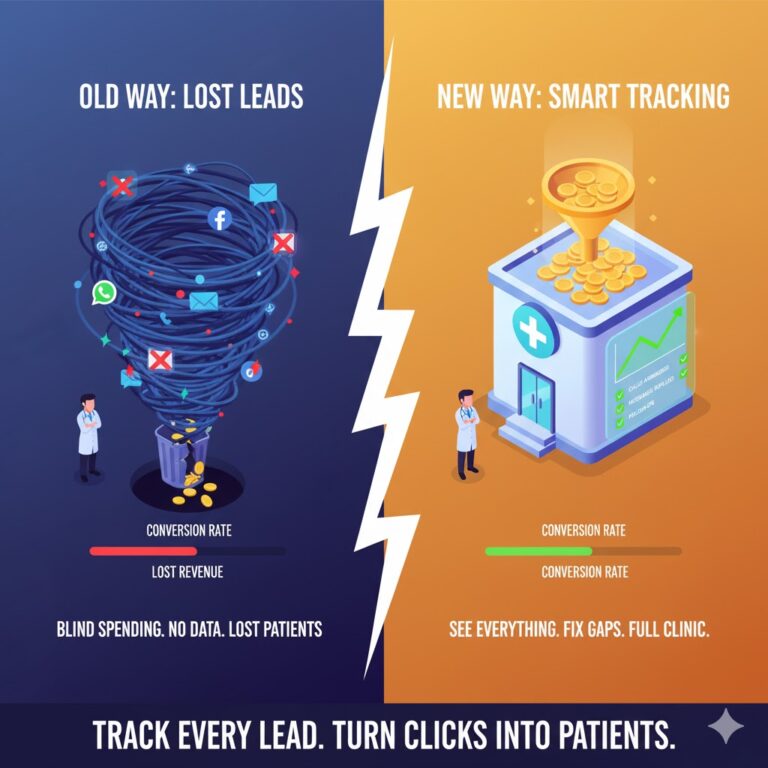
These tools are not complicated computer programs that need an engineering degree. They work like a simple logbook that records everything automatically. Every phone call that comes to your clinic gets logged with the time and date. Every message from Facebook or Instagram gets saved in one place. Every inquiry from your website lands in a clear dashboard you can check anytime.
You can see which calls your team answered and which ones they missed. You can read every message and check how long your staff took to reply. You can spot patterns that cost you patients every week.
Maybe your team misses most calls between two and four in the afternoon. Maybe weekend messages never get replies until Monday. Maybe one staff member forgets to follow up while another does it perfectly. All these details become visible when you start tracking.
The best part is you do not need to sit and watch these tools all day. You get a simple report once a week. It shows you the numbers in plain language. Ten calls missed this week. Fifteen messages took more than 24 hours to answer. Five people asked about appointments but never heard back.
These numbers tell you exactly where your clinic is bleeding patients. You can fix the problem once you know it exists. Maybe you need one more person at the front desk during busy hours. Maybe your team needs a reminder to check messages before lunch and after closing. Maybe you need a simple rule that every inquiry gets a reply within two hours.
When you start tracking, you also see what is working well. You notice that morning calls get answered fast. You see that one team member always follows up within an hour. You can praise good work and fix weak spots at the same time.
Many doctors we work with discover they are losing 20 to 30 patient inquiries every month. They had no clue this was happening. Once they started tracking and made small changes, those lost leads turned into booked appointments. Their patient count went up without spending one extra rupee on advertising.
Tracking also helps you measure if your ads are working. You can see how many people contacted you after seeing your Facebook ad. You can count how many of those contacts became actual patients. This gives you real proof of where your marketing money goes.
You do not need to become a technology expert to use these tools. Most tracking systems work on your phone. You get alerts when someone calls or messages. You can check your dashboard while drinking your evening tea. Everything stays simple and clear.
Stop running your clinic blind and start seeing the full picture. Track every lead that comes your way. Find out where patients are slipping through the cracks. Fix those gaps and watch your clinic grow stronger every single week.
9. Train Your Team to Talk Like Professionals
The right words build trust. A confident tone can turn a doubtful caller into a sure appointment.
Your front desk team is the first voice patients hear when they call your clinic. That first conversation decides whether someone books an appointment or hangs up to try another doctor. Most clinics lose patients here without ever knowing why it happened.
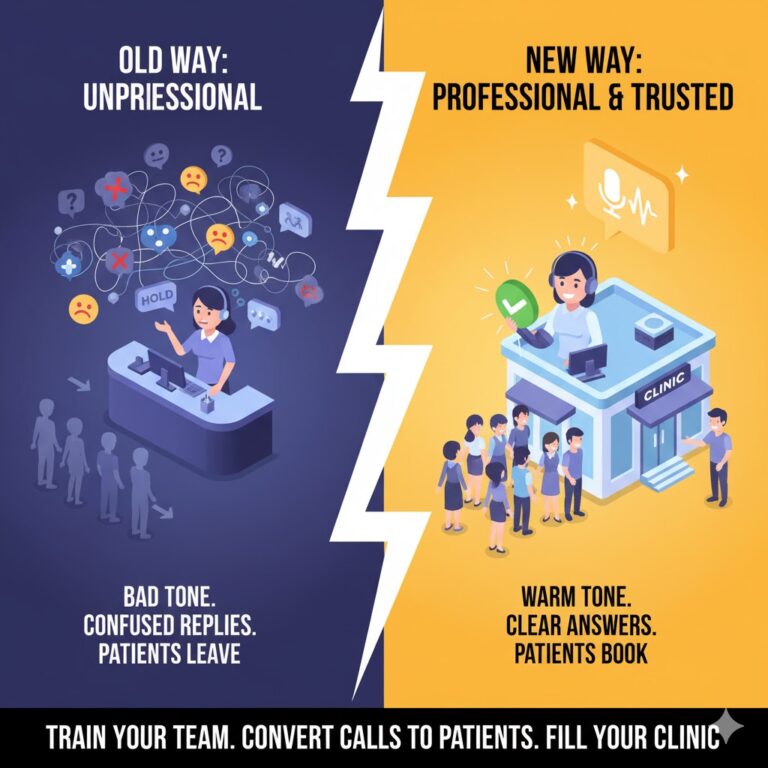
When someone calls asking about treatment costs, your staff needs to answer with confidence and care. A nervous reply makes people doubt your clinic. A rude tone pushes them away forever. But a warm and clear response makes them feel they found the right place.
Training your team does not need months of classes or expensive programs. Simple daily practice can change everything. Teach them how to greet callers properly. Show them what information patients want to hear first. Give them scripts for common questions so they never fumble for words.
Patients calling your clinic are often worried or confused about their health. They need someone who listens and responds with kindness. Your receptionist should never sound bored or hurried. Every caller deserves full attention even during the busiest hours of the day.
Tone matters more than people think. The same sentence can sound helpful or dismissive based on how your team says it. When staff speaks with a smile, patients can hear it over the phone. When they speak with impatience, callers notice that too and they remember it.
Your team should know basic details about your services without putting callers on hold forever. Waiting on hold frustrates people. They want quick answers about appointment slots, clinic timings, and consultation fees. Train your staff to keep this information ready at all times.
Teach them how to handle difficult questions too. Some callers ask about success rates or compare your clinic with others nearby. Your team needs confident answers that highlight your strengths without sounding defensive. Honesty mixed with positivity wins trust faster than anything else.
Role playing helps your staff improve their phone skills. Spend fifteen minutes twice a week acting as pretend patients. Call your own clinic number and see how your team responds. You will spot problems you never noticed before. Then you can fix them before real patients call.
Record sample calls with permission and listen to them later with your team. Point out what went well and what needs work. This shows them real examples instead of vague advice. People learn faster when they hear their own voices and mistakes.
Good communication training also covers WhatsApp and email responses. Many patients now send messages instead of calling. Your team should reply within one hour during working hours. Messages should sound professional but friendly. Short and clear sentences work better than long paragraphs.
Remind your staff that every inquiry is a chance to grow your practice. One good conversation can bring a patient who stays with your clinic for years. That patient will also tell friends and family about the wonderful experience they had.
When your team talks like professionals, your clinic stands out from competitors. Patients feel valued and respected. They stop shopping around for other doctors because they already found someone they trust. Your staff becomes your biggest marketing tool without spending a single rupee on ads.
Clickniti Helps You Find the Gaps and Fix Them Fast
We don’t run ads alone. We make sure your clinic turns every inquiry into a real patient.
Running good ads is only half the battle. The other half happens when someone calls or messages your clinic. That moment decides if your marketing money turns into actual appointments or disappears into thin air.
Most clinics lose patients right at this stage. Your ads work fine. People click and call. But something breaks when your team picks up that phone or reads that message. Maybe the response comes too late. Maybe the tone sounds cold. Maybe nobody follows up after the first contact.
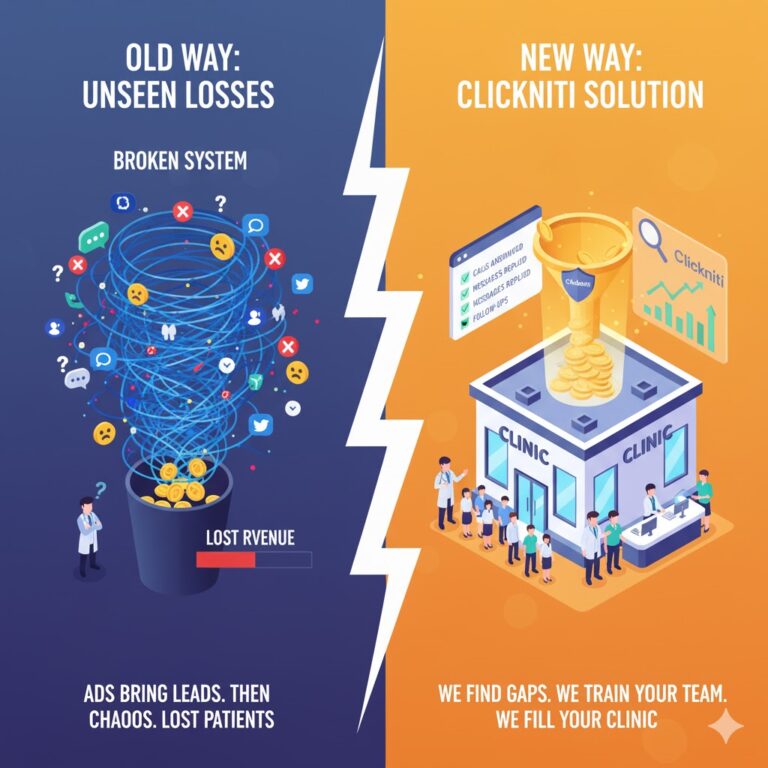
Clickniti Digital help you see these hidden problems before they cost you more patients. Our system tracks every call that comes to your clinic. We check every message your team receives. We note how long it takes to reply. We see which inquiries turn into bookings and which ones fade away.
Then we sit with you and show exactly what is happening. You get a clear picture of where your team is strong and where patients are slipping through. No guessing. No blaming. Only real numbers that tell the complete story.
After finding the gaps, we help you fix them fast. We train your staff to handle patient calls better. They learn how to sound warm and confident. They understand what information matters most to worried patients. They know how to book appointments without making people wait or feel confused.
We also set up simple systems that make your team’s work smoother. Automatic reminders help them follow up with people who showed interest. Quick message templates save time while keeping responses personal and caring. Call tracking tools show which ads bring the best patients to your door.
Your front desk team gets easy scripts they can use during busy hours. Your reception staff learns how to handle many calls without dropping any. Everyone knows what to say when someone asks about costs, timings, or treatment options.
We check back daily to see if things are improving. If call responses are faster now. If more inquiries become confirmed appointments. If patients feel happier when they first contact your clinic. When we spot new problems, we solve them before they grow bigger.
Many doctors tell us they never knew how many patients they were losing until we showed them. One clinic found that half their evening calls went unanswered because staff went home early. Another discovered that rude responses were driving people to competitors nearby. A third realized their team was giving wrong information about doctor availability.
All these problems got fixed within weeks. Patient bookings went up without spending extra money on ads. The same marketing budget started bringing double the results because now every lead got proper attention.
Your clinic already has everything it needs to grow. Good doctors. Working ads. Interested patients. The only missing piece is making sure nothing falls apart between the ad click and the appointment booking. That is exactly what we fix for you.
Stop wondering why your ads are not bringing enough patients. Start seeing where the real problem hides. Let us find those gaps and close them before you lose another potential patient to a competitor down the street.
FAQs-
Many times, calls or messages from new patients go unanswered, delayed, or handled without care. Even one missed reply can push a patient to another clinic.
Training once helps, but things change fast like new tools, new ways patients reach you. Regular checks and refreshers keep your team sharp and ready.
We can help you track every call, message, and ad lead. It’s simple, you’ll see who’s handling what and where you might be losing patients.
Not always. But often, poor follow-up or slow replies are the reason. Most patients choose the clinic that replies first and sounds confident.
Because patients today don’t wait. If your clinic takes hours to answer, they’ll call the next one on Google. Fast replies show care and build trust.
Start by checking how your team handles calls, chats, and DMs. We can set up simple systems so no message or call slips away.
In most cases, better training is enough. When your team learns how to talk to patients kindly and quickly, results change fast.
We don’t just run ads. We help you find where leads drop off, then guide your staff to handle them better, so every inquiry counts.
You’ll stop losing potential patients quietly. The same ads you already pay for will start bringing real, consistent appointments.