Why Some Clinics Grow Fast Online While Others Fade Away
Today, patients search online first before they visit a clinic. The internet is now the new “front door” for healthcare. But why do some clinics get full appointment books while others stay quiet?
Table of Contents
Toggle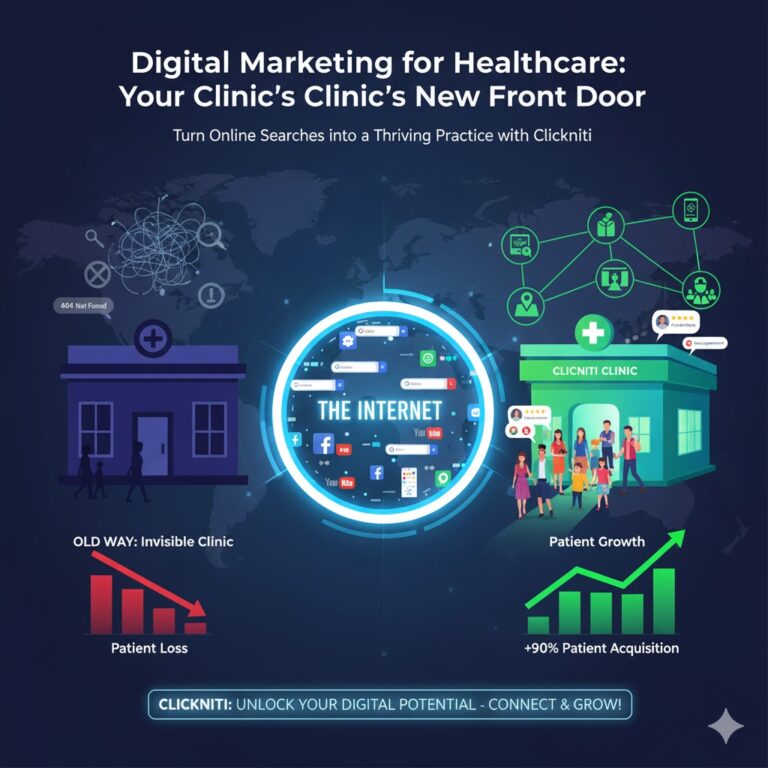
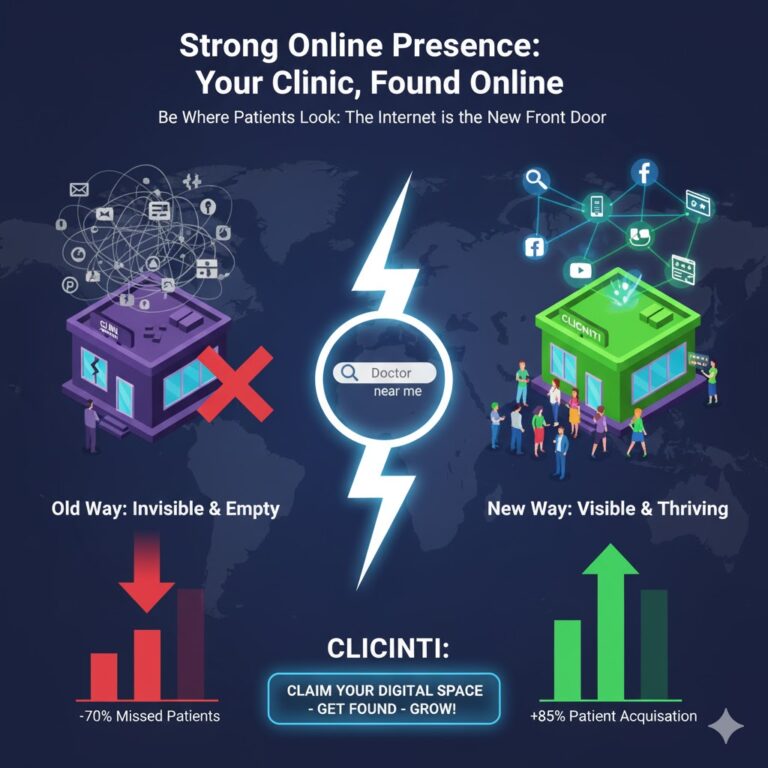
1.) Strong Online Presence
I know that my clinic needs to be where patients look for me. Today, I understand that patients find me online before they visit me.
The Numbers Tell My Story
I have learned that two-thirds of all patients search the internet before they visit a doctor. This means 67 out of 100 patients look me up online first.
89% of patients Google their health symptoms before visiting their doctor. This tells me that I am being searched for every single day.
Google gets more than 1 billion health questions every day. Some of these searches are for clinics like mine.
Put Your Clinic on the Radar
I have found that my patients look for me in these places:
Google Search: I make sure my clinic shows up when patients type “doctor near me” or “clinic in [my area].” 65% of people turn to Google before seeking advice from their doctor. If I am not on Google, I am invisible to most patients.
Facebook: I know that 95% of hospitals have an active presence on Facebook. As a clinic, I need to be there too. Patients check Facebook to see if I am real and trusted.
Google My Business: I claim my Google My Business page. I add my hours, phone number, and address. I post photos of my clinic. This is how patients find me on Google Maps.
My Website: I make sure my website works on phones. Most patients use their phones to search for doctors. My website loads fast and shows my services in a clear manner.
The Voice of My Clinic
I keep my online presence simple and helpful:
Health Tips: I share easy tips about staying healthy. I do not give medical advice online. I share general wellness tips that help people.
My Services: I list what I do at my clinic. I use simple words. I do not use medical terms that confuse patients.
My Team: I show photos of my staff. Patients want to see friendly faces. This makes them feel comfortable about visiting me.
Clean Photos: I post clear photos of my clinic. I show my waiting room, my office, and my equipment. This helps patients know what to expect.
How Often Your Patients Hear From You
I post something new every week. This can be:
- A simple health tip
- A photo of my clinic
- Information about my services
- A reminder about check-ups
I do not post every day. That is too much. Once or twice a week is enough.
The Reason My Practice Stays Ahead
When I show up online daily, good things happen:
- More patients find me
- Patients trust me before they meet me
- My appointment book gets fuller
- Patients choose me over other clinics
- I grow my practice without spending a lot
Being online is not optional anymore. It is necessary. My patients live online. If I want to reach them, I must be where they are looking.
I do not need to be perfect online. I need to be present, helpful, and real. When I do this daily, my clinic grows.
2.) Easy to Find
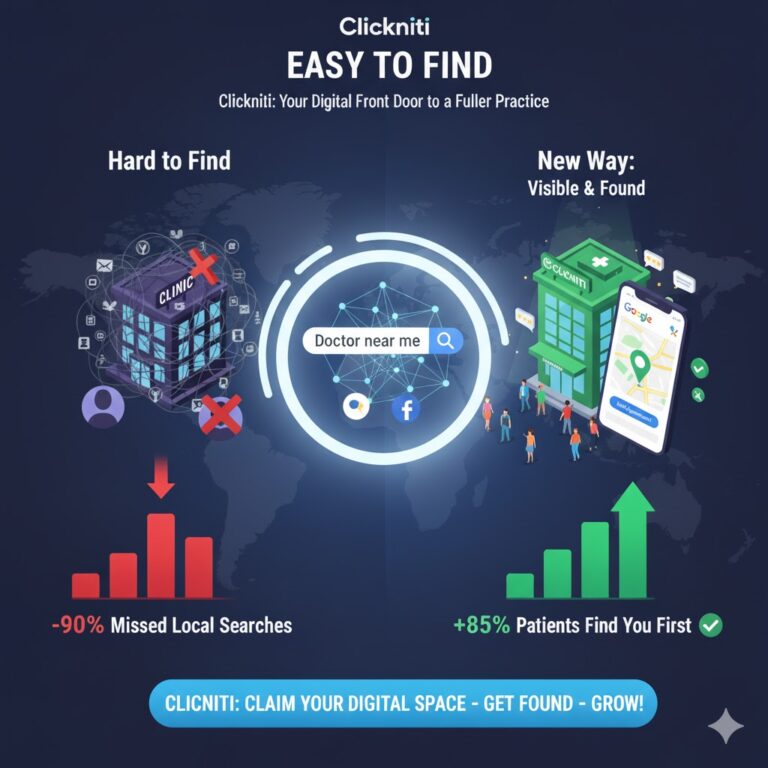
When patients need a doctor, I know they search online first. 77% of patients conduct an online search before booking a healthcare appointment. This means my clinic must be found quickly on the internet.
Why Being Found Online Matters
My practice is lost if patients cannot find me online. 5% of all Google searches are health-related. Every day, thousands of people near my clinic search for doctors like me. If my clinic is not seen in these searches, those patients will go to other doctors.
The First Page Rule
The top three search results capture 60% of all clicks. This means most patients only look at the first few results when they search. If my clinic shows up on page two or three, very few patients will see it. My goal is to be on the first page of Google when people search for my type of care.
Local Search Power
Most of my patients live close to my clinic. About 72% of consumers who perform a local search visit a facility within five miles. When people search for “doctor near me” or “clinic in [my city]”, my practice needs to show up first. This is called local SEO.
Google Maps is Key
Patients use Google Maps to find my clinic. When they search on their phones, they want to see:
- My clinic’s exact location
- How to get to my office
- My phone number
- My hours
- Patient reviews
If my clinic is not on Google Maps, or the information is wrong, patients cannot find me easily.
Search Happens in Seconds
Almost 60% of all healthcare searches are conducted on devices. This means most patients search for doctors on their phones, not computers. My website and Google listings must work well on mobile phones. If my site is slow or hard to use on phones, patients will choose other doctors.
What Patients Search For
When patients look for doctors online, they usually search for:
- “Doctor near me”
- “[My specialty] in [my city]”
- “[My clinic name]”
- “Best [type of doctor] near me”
My online presence is built around these search words. I use them on my website and Google Business Profile.
The Competition Reality
Every day, more doctors start using the internet to find patients. If I wait too long to improve my online presence, other clinics will take my patients. The doctors who act fast get the most patients from online searches.
Easy Ways to Shine Online
To be found online, I need to:
- Claim my Google Business Profile – This free tool puts my clinic on Google Maps and search results.
- Use the right words – My website includes words patients type when searching for my type of care.
- Keep information updated – My address, phone number, and hours must be correct all over the network.
- Ask for reviews – Happy patients who leave good reviews help my clinic show up higher in searches.
- Build a good website – My site must load fast and work well on phones.
When I do these things, my clinic becomes easy to find online. More patients will discover my practice, and my appointment book will stay full.
3.) Good First Impression
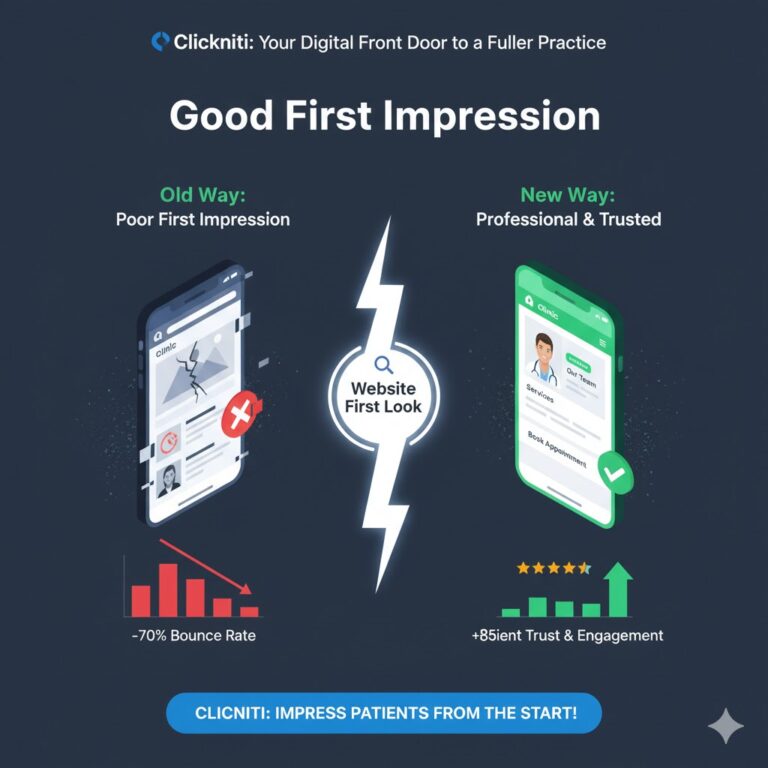
I check my clinic’s website every day. I know that my website is the first thing patients see about me.
When I started my practice, I learned something important. 71% of patients use online reviews as the very first step to finding a new doctor. This means my website is often the first place patients meet me.
Why My Website Matters
I make sure my website looks good. Here’s what I learned:
- 77% of patients look first to online reviews when finding a new doctor
- 84% wouldn’t go to a referred physician if that doctor had fewer than four stars
- Patients decide in an instant if they trust me or not
When patients visit my website, they ask themselves:
- Does this doctor look professional?
- Can I trust this clinic?
- Will this doctor take good care of me?
I have only a few seconds to answer these questions.
Quick to Load, Quick to Grow
I learned that speed matters a lot. A website that takes longer than 3 seconds to load on a mobile device loses approximately 53% of its users.
My website loads in 2 seconds or less. Here’s why:
- Google says the optimal page loading speed should be 2 seconds
- Healthcare websites average 5.4 seconds – but I do better
- Fast websites get more patients
When my website loads slowly, patients leave. They go to another doctor’s website instead.
Booking and info are now just a tap away for patients
I learned that most patients use phones to find doctors. 94% of people with smartphones search for local information via mobile.
My mobile website:
- Is easy to read on small screens
- Has big buttons that are easy to press
- Shows my phone number clearly
- Makes it easy to book appointments
Mobile friendly sites get higher click-through rates. This means more people visit my clinic after seeing my website.
The Homepage Tips That Turn Visitors Into Patients
I keep my homepage simple and clear:
At the top, I show:
- My clinic name
- My phone number
- “Book Appointment” button
In the middle, I tell patients:
- What services I offer
- My experience and training
- Why patients choose me
At the bottom, I include:
- My address
- Office hours
- Emergency contact
I use simple words. I avoid medical terms that patients don’t understand.
Use Good Photos
I put real photos of myself and my clinic on my website. No fake stock photos.
My photos show:
- Me smiling and looking friendly
- My clean clinic rooms
- My helpful staff
- Happy patients (with their permission)
Good photos make patients feel comfortable. They can see what my clinic looks like before they visit.
Always Current, Always Seen
I update my website every month with:
- New office hours
- New services I offer
- Current contact information
- Fresh health tips
Old information makes patients lose trust in me.
The Easiest Way to Reach Me
On every page of my website, patients can find:
- My phone number
- Online booking button
- My clinic address
- Contact form
I answer phone calls and messages fast. When patients contact me, I respond the same day.
Credentials That Speak for Themselves
I display my qualifications clearly:
- My medical degree
- My specialty training
- Years of experience
- Hospital affiliations
This helps patients trust me. They want to know I am qualified to treat them.
Hacks That I Know Now
My website is my digital clinic. Just like I keep my physical clinic clean and welcoming. I keep my website professional and helpful.
When patients visit my website first, they decide if they want to visit my clinic. A good website brings me more patients. A bad website sends patients to other doctors.
I spend time on my website because it works 24 hours a day. Even when I sleep, my website helps new patients find me.
4.) Patient Reviews Matter
I know how hard it is when patients choose other clinics over mine. The truth is, patients today read reviews before they book appointments. This is happening everywhere in India too.
The Numbers That Matter
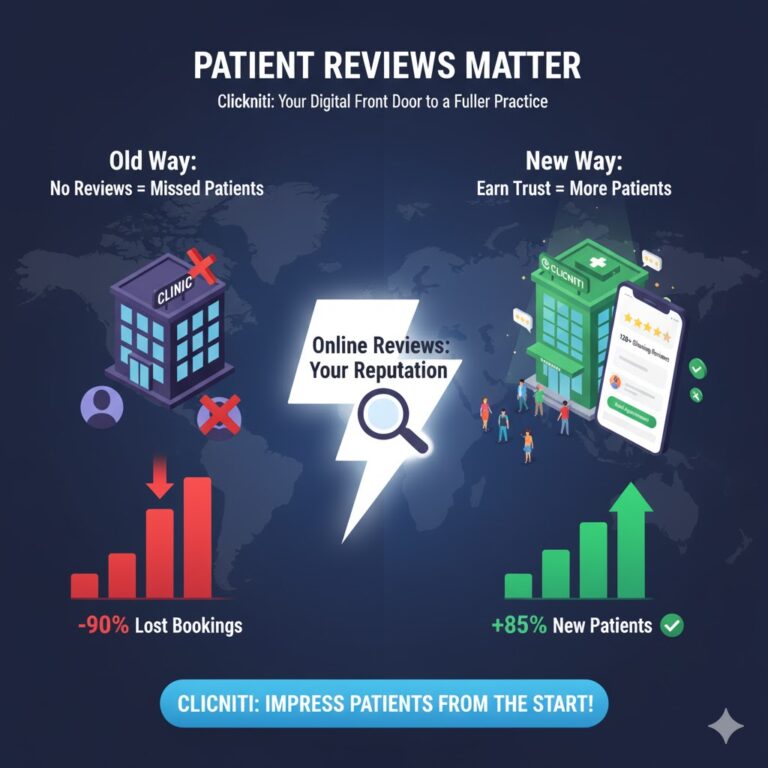
84% of patients visit online review sites to check doctors. 73% of patients use reviews to pick their healthcare providers. This means 7 out of 10 patients are reading what others say about my clinic before they call me.
Doctors with 50 reviews get 10 times more bookings than those with fewer than 10 reviews. Doctors with over 100 reviews see 27 times more bookings. When I think about this, it makes sense. More reviews mean more patients trust me.
84% of people trust online reviews as much as they trust advice from friends. This means a good review from a patient I helped is as powerful as a friend telling someone to visit my clinic.
Why Reviews Work So Well
When patients search for doctors online, they see star ratings first. 72% of patients want providers with 4 or 5-star ratings. If my clinic has no reviews or bad reviews, patients will pick someone else.
Reviews help patients feel safe about choosing me. They read stories from other patients who had similar problems. When they see that I helped others, they believe I can help them too.
Steps That Can Change Everything
I need to ask happy patients to write reviews. Most satisfied patients want to help but forget to leave reviews. A simple reminder helps.
I should respond to all reviews – both good and bad ones. When I reply, it shows that I care about my patients. Other people reading reviews will see that I listen and try to fix problems.
Bad reviews happen sometimes. Instead of ignoring them, I can use them to get better. When I fix the issues patients mention, my clinic becomes stronger.
Reviews are like word-of-mouth recommendations but online. In today’s world, patients check Google, Practo, and Facebook before they visit any clinic. If I want my practice to grow, I must pay attention to what patients are saying about me online.
The clinics that grow fast ask for reviews. The ones that fade away ignore them. I know which type I want my clinic to be.
5.) Clear Communication
Why I Send Messages to My Patients
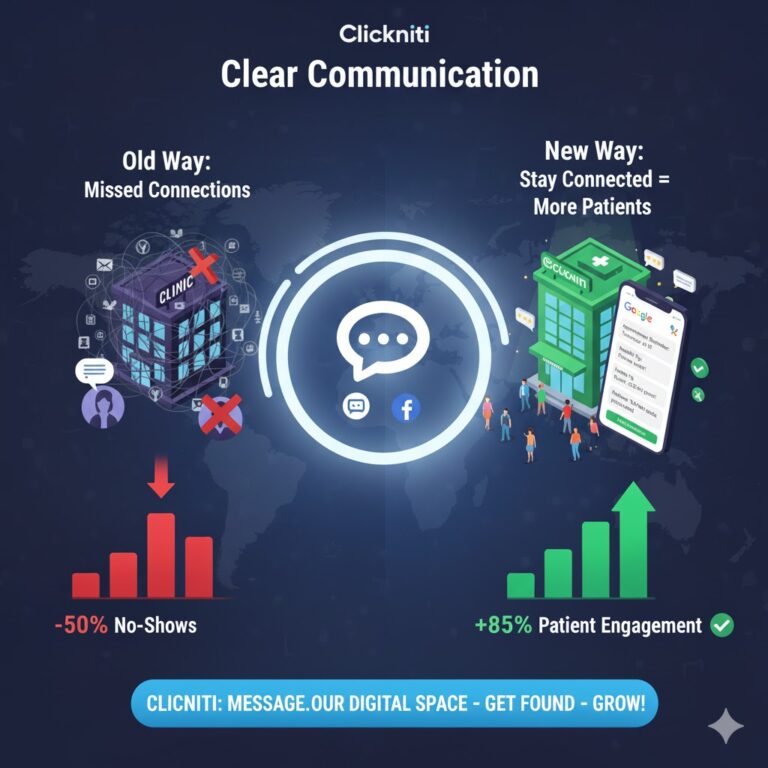
I have learnt that 65% of patients have an SMS-eligible number on file, compared to only 25% who are eligible to receive emails. This means text messages reach more of my patients than emails do.
When I started sending regular messages to my patients, something amazing happened. 41% of patients are willing to change providers over a lack of texting options. I realized that patients actually want me to text them. They expect it now.
Patients Remember You, Not Just Your Name
Before I used text reminders, many patients missed their appointments. Now I know that SMS text message reminders can reduce no-show rates by up to 50%. This means half as many empty chairs in my waiting room.
I send reminders 24 hours before appointments. 90% of SMS messages are seen within three minutes, and 99% are seen within 20 minutes. My patients see my messages right away. With emails, only 20% are seen.
Notes That Build Trust
I keep my patients connected with these simple messages:
Appointment Reminders: I send these the day before visits. They include the time, date, and my clinic address.
Health Tips: Once a week, I share one simple health tip. Things like “Drink 8 glasses of water today” or “Take a 10-minute walk after lunch.”
Test Results: When lab results are ready, I text patients right away. No more waiting by the phone.
Follow-up Care: After visits, I send care instructions and medication reminders.
Simple Words, Big Impact
I write all messages at a 4th grade level. I use short sentences. I avoid medical words that confuse people. Instead of “hypertension,” I write “high blood pressure.”
The Results I See
My patients tell me they feel cared for between visits. They remember their appointments more often. They follow my treatment plans better. Most importantly, they stay with my clinic instead of going somewhere else.
Automatic appointment reminders provided to patients to reduce confusion. And also save staff time spent confirming appointments, which improves efficiency. My staff now has more time to help patients instead of making reminder calls.
Easy Tools That Work Wonders
I use basic texting tools that connect to my appointment system. When I book an appointment, the system automatically sends reminders. I can also send quick messages to groups of patients about flu shots or office closures.
The key is staying connected with patients when they are not in my office. Simple messages show I care about their health every day, not just during visits.
6.) Active on Social Media
I use social media to build trust with my patients. Here is what I learned from data and my experience:
The Facts
70.7% of healthcare professionals now use Facebook, and 57.9% use YouTube. But here’s what shocked me most: over 90% of doctors use social media for personal reasons, but only 65% use it for work. I was missing a huge chance to connect with my patients.
What My Patients Tell Me
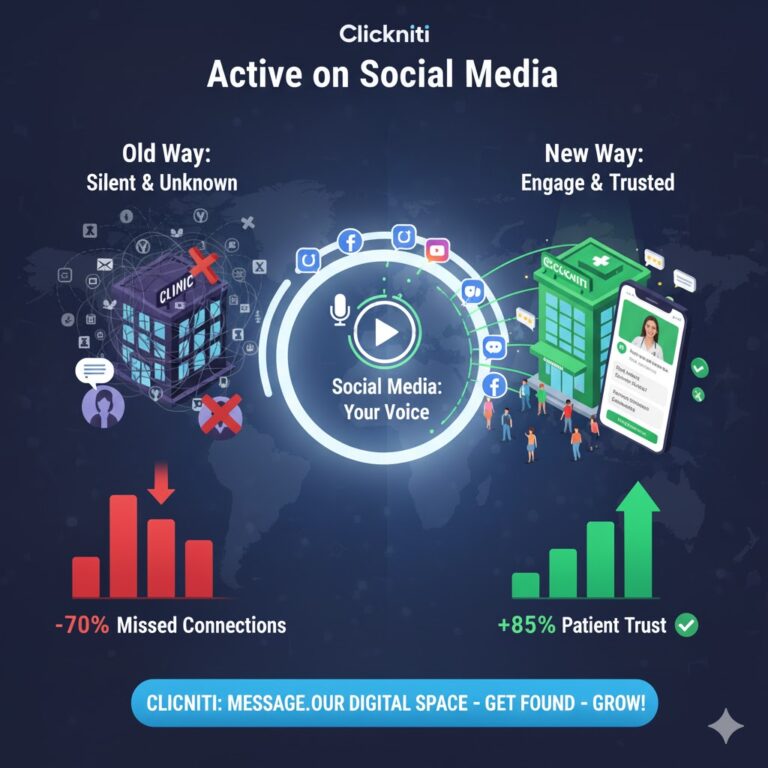
Around 70% of healthcare consumers trust health information shared by their peers on social media. When I started posting simple health tips, my patients said they felt more connected to me. They trusted me more because they saw me as a real person who cares about their health.
Patients Want to See Me Online
84% of patients use social media to seek health information and connect with healthcare organizations. When I post simple health tips, my patients feel like I care about them even outside the clinic. 41% of the health care consumers chose social media to decide on their health care providers.
Short Videos Work Best
Health-related videos on YouTube get an average of 4,000 views, indicating a marked audience for healthcare content. I make short videos about common health problems. My patients trust me more because they see me explain things clearly. 86% of viewers saying they were more likely to trust a doctor after watching such content.
The Easy Way to Start
I post about things I talk about every day:
- How to wash hands properly
- Why drinking water is important
- Simple exercises people can do at home
- What foods help with common problems
Insider Tips I’ve Learned
When I post about my medical knowledge, good things happen. Doctors sharing professional knowledge on social media not only fosters trust in physicians but also closely correlates with patient adherence and treatment effectiveness. My patients follow my advice better when they see me as an expert online.
Keeping It Simple
I use easy words to explain health problems. I share before and after stories of happy patients. I answer common questions about diseases. This makes my patients feel safe and informed.
A Steady Stream of Patients Starts Arriving
75% of people look online to find a doctor. When I stay active on Facebook and Instagram, more people find my clinic. They see my posts first, then they book appointments.
The Numbers Speak
More than 90% of physicians use some form of social media for personal activities. Whereas only 65% use these sites for professional reasons. I am part of the 65% who use it for work, and I see the results every day.
When I stay quiet online, patients forget about me. When I share helpful content, they remember me and trust me more.
7.) Smart Ads
I use Facebook and Google ads to find new patients. These ads work well because they show my clinic to people who need help right now.
Why Smart Ads Work
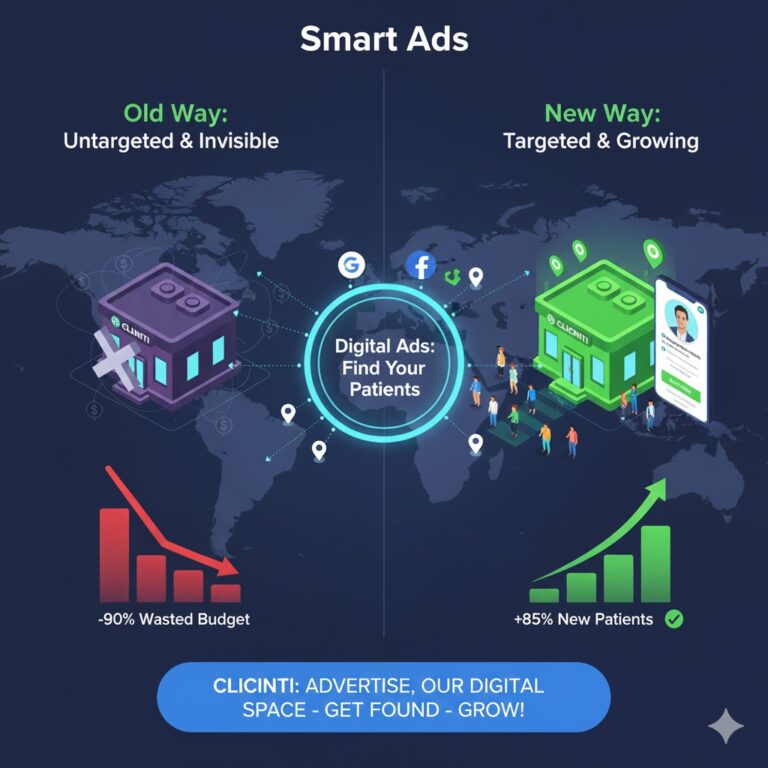
72% of patients look online for medical services. When I use ads, I can reach these people before they pick another doctor. Hospitals and clinics get the best results with 12.33% of people clicking on their ads.
Invest Smart, Grow Fast: Your Clinic’s Payback Explained
I spend money on ads and get more money back from new patients. Getting one new patient costs me between ₹660 to ₹2,200 through digital ads. Out of 100 people who call my clinic, I can turn 31 into real patients.
Google Ads vs Facebook Ads
I use both types of ads:
Google Ads – These show when people search for “doctor near me” or “clinic in my area”. I can turn 5% to 10% of people who call into patients. I see good results after 3 to 4 weeks of running ads.
Facebook Ads – These show my clinic to people based on their age, location, and interests. Facebook has 3.43 billion people using it every day. I can show my ads to people in my city who might need my help.
What I put in my ads:
- My clinic location
- Services I provide
- Patient success stories
- Easy ways to book appointments
- My phone number
The Magic That Makes Your Online Ads Count
I target people who live near my clinic. I show ads about health problems I treat. I use simple words that patients understand. The average cost to get one new patient is ₹23,500, but with smart ads, I spend much less.
I track which ads bring me patients. I change ads that don’t work. I spend more money on ads that bring me new patients.
When I don’t use ads, I only get patients who walk by my clinic. With smart ads, I reach thousands of people in my area who need medical help.
If I am not online, I am invisible. When patients search for doctors in my area, they find my competitors first. My empty clinic is not because I am a bad doctor. It is because patients cannot find me or trust me online.
My medical skills matter, but patients judge my online presence first. They see my website, read my reviews, and check my Google listing before they decide to visit me.
The Hard Truth:
I can be the best doctor in my city. But if another doctor has better online presence, patients will choose them over me. This is not fair, but this is how patients think today.
My success now depends on two things:
- Being a good doctor (what I learned in medical school)
- Being visible online (what I must learn now)
Both are equally important in 2025.
FAQs-
Because their Google Business Profile is updated often with correct details, photos, and reviews. Clinics without this are shown less.
Because those clinics are easy to book online, reply faster, and look more trustworthy with good reviews.
Because short health tips and updates are shared. This makes patients feel the doctor is active and caring.
Because their information is outdated, hard to find, or not clear. If booking or calling is not simple, patients move to another clinic.
Because most tools like Google profile, WhatsApp, reviews, and social media are free or very low cost.