Why Most Doctors Struggle to Attract Patients in 2025
(And How to Fix it)
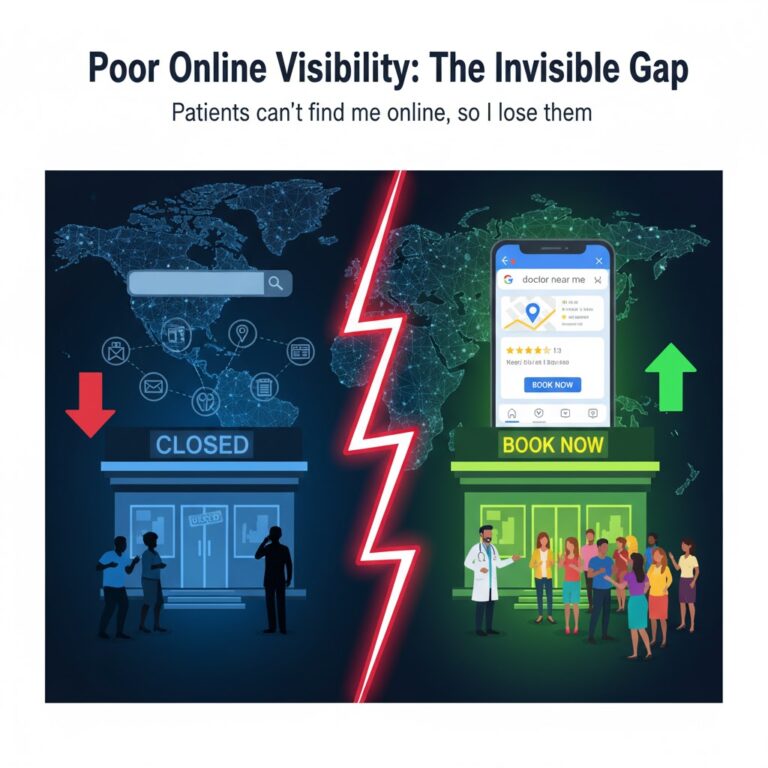
Poor Online Visibility:
Table of Contents
ToggleDoctors Struggle to Attract Patients in 2025? When people need a doctor, they don’t ask friends anymore. They go straight to Google. 5% of all Google searches are health-related. That means millions of people search for doctors every day. If my clinic doesn’t show up when patients search, I lose them. It’s that simple. They will pick the doctor they see first on Google, not the best doctor.
“Near Me” Searches Are Growing Fast:
Patients now search for “doctor near me” or “gynecologist near me” more than ever. All “near me” searches have a high volume, showing that more customers are using Google to find local shops. This includes medical practices too. When patients look for doctors near their location, Google will show the ones closest to them first. Therefore, if my clinic is far from where they are, I just wouldn’t show up in their search. Even being a better doctor, they wouldn’t find me.
a.)The Invisible Gap
Location matters more today than it ever did. Here’s what I’ve learned:
- Patients want doctors close to home or work
- Google Maps shows the nearest doctors first
- Patients pick doctors they can reach quick
- Far clinics lose patients to closer ones
What This Means:
When patients can’t find me online, I lose them to other doctors. Even if those doctors are not as good as me, they get the patients because they show up first on Google. Businesses with a complete Business Profile are 70% more likely to get visits. 50% more likely to be the first choice for purchases. This applies to medical practices too.
How to Fix This Problem
To attract more patients, I need to:
- Fix My Google Listing: Make sure my clinic shows up when patients search
- Get Good Reviews: Patients trust doctors with good online reviews
- Use Local SEO: My clinic’s location helps Google know where it is
- Update My Website: Make it easy for patients to find information about me
- Be Active Online: Post helpful content so patients can find and trust me
Patients find doctors online now. If I’m not visible on Google, I’m invisible to new patients. The doctors who show up first get the most patients, not generally the best doctors. I need to fix my online presence to grow my practice. It’s not about being the best doctor anymore, it’s about being the doctor patients can find when they search.
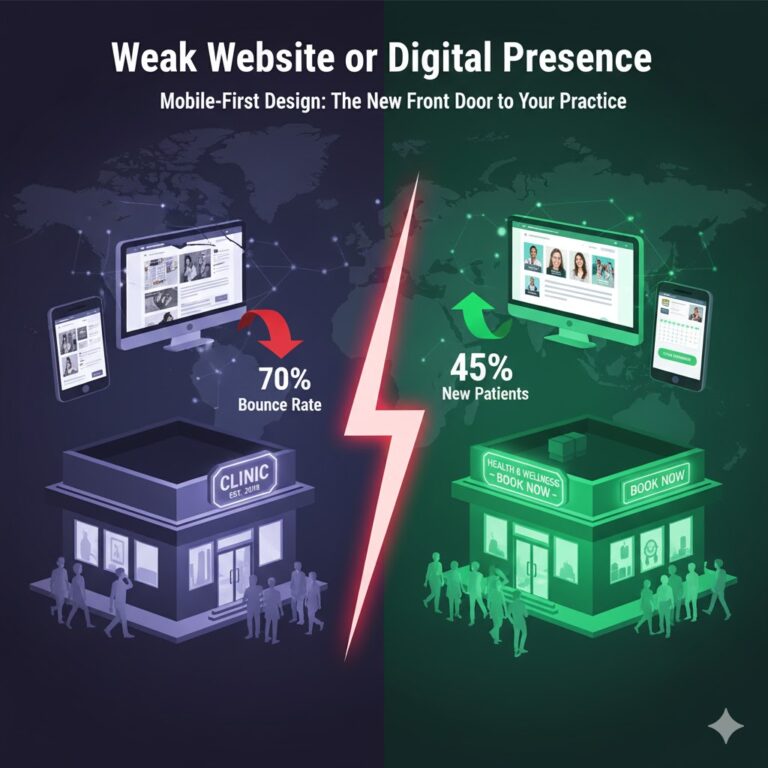
b.) Weak website or digital presence
My website was created in 2018. I thought it looked fine. But patients were leaving within seconds. Here’s what I learned:
- Most healthcare websites only convert 3% of visitors into patients
- Patients expect websites to load in under 3 seconds
- If a site looks old or broken, 70% of patients won’t trust the doctor
My web developer told me that my site was “fine.” But fine isn’t good enough anymore. Patients can tell when a website was not updated. They think that if this doctor can’t keep their website updated, how updated is the doctor’s medical knowledge?
The Silent Mobile Problem Behind Empty Waiting Rooms:
This one hurt the most. I found out that 72% of patients use their phones to search for doctors. But my website wasn’t built for phones.
When patients tried to view my site on their phone:
- Text was too small to read
- Buttons were too tiny to tap
- Forms didn’t work properly
- Pictures took forever to load
I was losing 7 out of 10 potential patients before they even called.
2025 Reality Check: Patients Won’t Wait. They’ll Move On:
Here are the facts that woke me up:
- 63% of Indians choose one doctor over another because of a strong online presence
- 91% of patients expect a reply within 24 hours when they contact us online
- 79% of healthcare providers rank website optimization as their main way to get new patients
Your Website Through a Patient’s Eyes
Easy to Find Information
- Clear service descriptions
- Doctor credentials and experience
- Office hours and location
- Insurance accepted
- How to book appointments
Mobile Friendly Design
- Website works on phones
- Easy to tap buttons and links
- Forms that work on small screens
- Fast loading times
Professional Look and Feel
- Modern, clean design
- Current photos of the office and staff
- Updated information
- No broken links or errors
The Hidden Price of Standing Still
I calculated what my bad website was costing me:
- Lost patients: About 40 potential patients per month were visiting my site but no one was calling
- Lost revenue: Each lost patient meant $2,000+ in missed appointments per year
- Reputation damage: Patients were going to competitors with better websites
My outdated website was costing me over $80,000 per year in lost business.
The Game Changer Every Doctor Needs to Know
Step 1: Make It Suitable For Mobile
- Every page redesign to work on phones first
- Buttons make it big enough for thumbs
- Text make it easy to read on small screens
Step 2: Speed It Up
- Large photos were compressed
- Unnecessary features were removed
- Hosting upgrading for faster loading
Step 3: Update the Content
- Old information was removed
- Clear service descriptions were added
- Current photos of my practice were used
Step 4: Make Booking Easy
- Online appointment booking was added
- Contact forms were simplified
- Phone numbers were made clickable
The Results After 6 Months
The changes were dramatic:
- Website visitors increased by 80%
- New patient calls increased by 45%
- Online appointment bookings went from 0 to 30% of all bookings
Most importantly, I stopped losing patients to competitors with better websites.
Why Attracting Patients Feels Harder Than Ever
After talking to other doctors, I found the same problems everywhere: My Website Looks Fine to Me, I Don’t Have Time for This, My Patients Don’t Use the Internet or It’s Too Expensive.
The Fast Test That Shows How to Fill Your Appointments
- Phone Test: Visit your website on your phone. Can you easily find your phone number and office hours? Can you read everything without zooming in?
- Speed Test: Time how long your website takes to load on your phone. If it’s longer than 3 seconds, you are losing patients.
- Booking Test: Try to schedule an appointment through your website. Is it easy or frustrating?
If you failed any of these tests, your website is costing you patients every day.
What to Do Next
Start Small
- Update your phone number and hours
- Add a simple contact form
- Make sure everything works on phones
Focus on Patients, Not Perfection
- Ask yourself: “Would I trust this doctor based on this website?”
- Make sure your credentials and experience are easy to find
- Use photos that make patients feel comfortable
Get Help When Needed
- Work with professionals who understand medical practices
- Don’t try to save money by using your nephew who “knows computers”
- Invest in your digital presence like you invest in your medical equipment
In 2025, your website is often the first impression patients have of your practice. A bad website makes good doctors look unprofessional. A good website makes average doctors look exceptional.
The choice is yours. Improve your digital presence or keep losing patients to doctors who have.
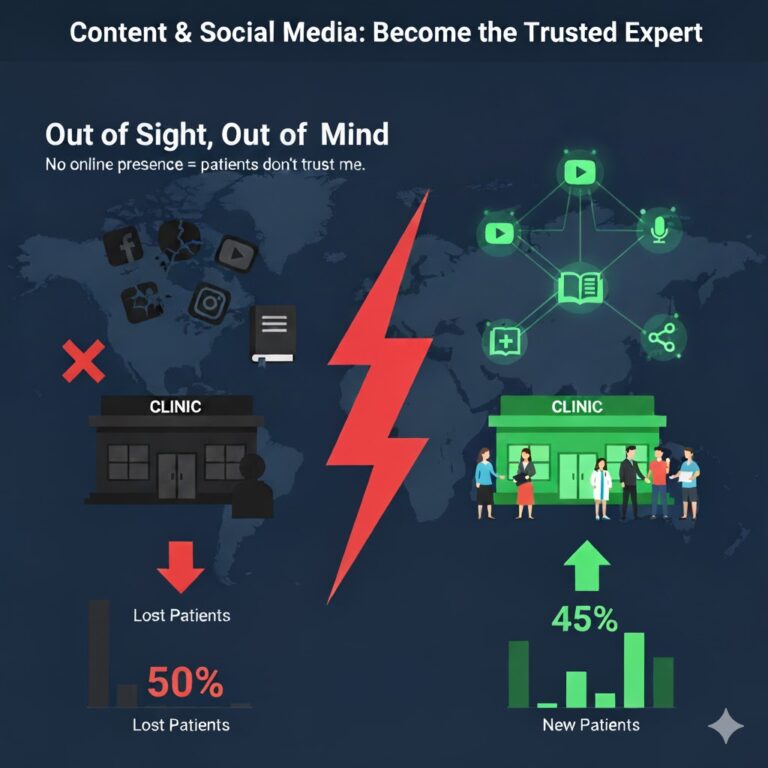
c.) Out of Sight, Out of Mind
When I don’t post health content or stay active on social media, several things happen:
1. I Lose Trust Before Patients Even Meet Me
If I’m not publishing online, then patients can’t differentiate me from other physicians. They have no idea what special training I’ve had, or what conditions I treat best.
2. My Competition Gets My Patients
Other doctors are posting health tips, patient success stories and answering questions. When patients search for help with their health problems, they find these doctors, not me.
3. Patients Don’t Know What I Do Well
If I don’t share my expertise online, patients can’t see what makes me different from other doctors. They don’t know about my special training or the conditions I treat best.
4. I Miss Chances to Educate
90% of people aged 18-24 trust medical information shared by others on the internet. Patients learn from the internet which might not be accurate.
The Price of Missing the Digital Spotlight
Let me be clear about what this costs me:
Lost Patients: Half of the patients are making decisions based on what they see online. If I’m not there, I lose them.
Lost Trust: Patients want to see that I care about helping people beyond just office visits. Social media shows I’m committed to their health education.
Lost Revenue: Every patient who chooses another doctor because they found that doctor online is money that could have been mine.
How to Fix This Problem
The solution isn’t complicated, but it does need me to take action:
1. Start Posting Health Tips Daily
I need to share simple health advice that my patients can use. Things like:
- How to prevent common illnesses
- When to worry about symptoms
- Healthy habits that work
2. Answer Common Questions
I should post answers to questions patients ask me all the time. This saves time in my office and helps more people.
3. Share Patient Success Stories:
When patients get better (with their permission), I can share their stories. This shows other patients what’s possible.
4. Show My Human Side:
Patients want to know I’m a real person who cares about them. I can share why I became a doctor or what I do to stay healthy.
5. Use the Right Platforms:
89% of hospitals use Facebook, making it the top choice. But I should also consider Instagram and YouTube based on where my patients spend their time.
I can keep pretending social media doesn’t matter for my practice. In 2025, having great medical skills isn’t enough. I need to show patients I care about their health education and I’m willing to meet them where they are, online.
d.) Letting Your Online Reputation Collect Dust
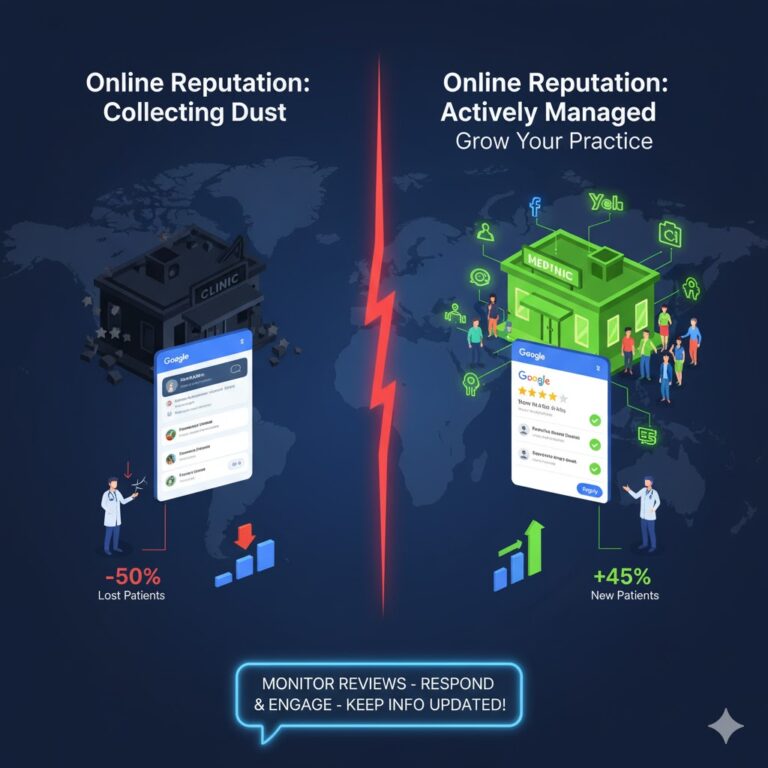
As a doctor or clinic owner, I see the same problem over and over. My waiting room is not as full as it used to be. New patients are harder to find. The truth is that I am struggling because it affects my practice every day and my online reputation.
What Patients Do Before They Visit Me
Here’s what I need to understand about my patients in 2025:
94% of my potential patients read online reviews before they choose me as their doctor. Think about this – almost every single person who might become my patient is looking me up online first.
75% of patients search online for doctors and healthcare providers. This means most of my future patients are finding me (or not finding me) through the internet.
71% of patients use online reviews to find a new doctor. Reviews are not nice to have – they are how patients make their choice.
Unnoticed Reviews = Missed Appointments
When I look at my online presence, I often find these problems:
Few Reviews or No Reviews
If I only have 2-3 reviews, patients think I am new or not popular. They want to see that other patients trust me. When I have very few reviews, patients choose other doctors who have more.
Bad Reviews That Stay There
When I get a bad review and do nothing about it, it sits there forever. New patients read it and think that’s how I treat everyone. 72% of patients trust 4-star reviews and higher, so even one bad review can hurt me a lot.
I Don’t Respond to Reviews
79% of patients expect a response from healthcare providers within 24 hours. When patients leave reviews and I say nothing back, they think I don’t care. Other potential patients see this and think I won’t care about them either.
My Reviews Are Old
If my newest review is from 2 years ago, patients think I am not active or that my practice is dying. They want to see fresh, recent reviews from other patients.
Why Wrong Listings Are Costing You Patients
My Google Business Profile and other online directories help me find patients . But often, they hurt me instead:
Wrong Information Everywhere
When my hours are wrong on Google, patients show up when I’m closed. They get angry and leave bad reviews. Patients look at other local providers when they see incomplete or non effective Google business listings.
When my address is wrong, patients can’t find me. They get frustrated and choose another doctor who is easier to find.
When my phone number is old, patients can’t reach me. They think I am not available or professional.
Missing Information
If I don’t have my specialty listed, patients don’t know what I do. If I don’t have photos of my office, patients don’t know what to expect. If I don’t list my services, patients assume I don’t offer what they need.
You need to provide high quality, trustworthy, and helpful content for people. Your name is written the same way everywhere online. When my information is different on different websites. Search engines get confused and don’t show me to patients.
The Daily Impact on Your Practice
These problems don’t hurt my online reputation but they hurt my business by Losing New Patients, Less Trust, Wasted Marketing Money, Staff Time Wasted and Lower Revenue
The Real Cost of Doing Nothing
When I ignore my online reputation, I am not missing opportunities. I am losing patients to competitors who understand how important this is.
Every month I wait to fix these problems is another month of lost patients and lost revenue. In 2025, my online reputation is not separate from my medical practice. It is my medical practice in the eyes of most patients.
What I Need to Remember
My patients are not looking for the best doctor in the world. They are looking for a good doctor. That they can trust, who seems professional online, and who other patients recommend.
When I take care of my online reputation the same way I take care of my patients, my practice grows. When I ignore it, my practice suffers – no matter how good a doctor I am.
The good news is that these problems can be fixed. With the right approach to managing my reviews and directories, I can turn my online presence into my biggest advantage for attracting new patients in 2025.
e.) Rules That Hold You Back
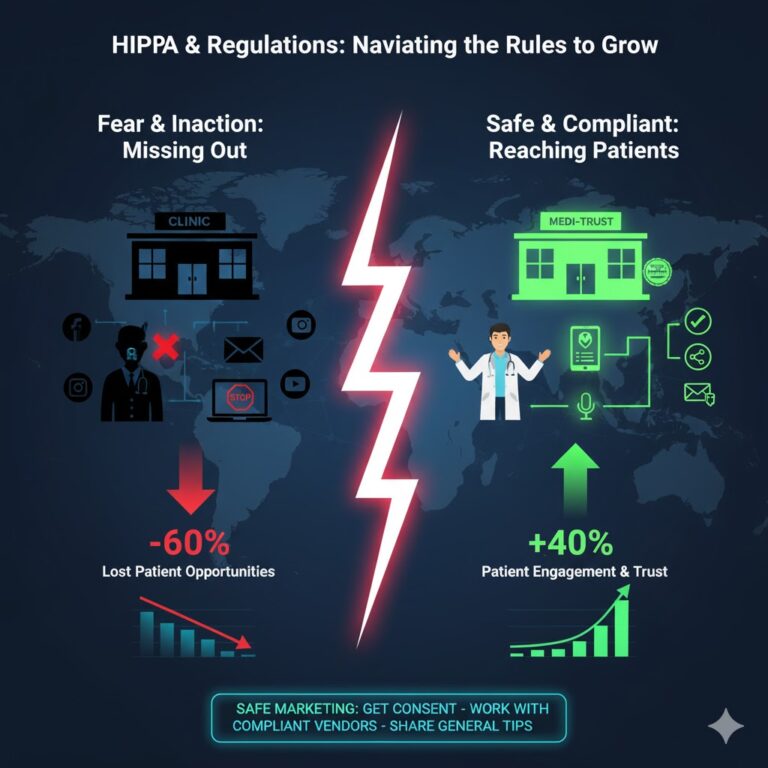
I know how hard it is to grow my practice in 2025. Rules are everywhere. One wrong move with patient data or ads can hurt my practice worse. This fear stops me from using online marketing that could bring in more patients.
Health Insurance Portability and Accountability Act (HIPAA) Marketing Rules
The biggest fear I have is breaking HIPAA rules. Here’s what I need to know:
I cannot use my patient’s health info in my marketing without asking them first. I need their written permission before I can talk about their health in my ads or posts.
The law says I must get each patient to say “yes” in writing before I use their health info for marketing.
What Counts as Marketing
Marketing means any message I send that tries to get people to use my services. This includes emails about what I do or ads that ask people to book an appointment with me.
Social Media Rules
Social media content must NEVER include protected health information. I cannot share patient stories or photos without proper consent.
The Invisible Walls Between Me and My Next Patient
Fear of Big Fines
HIPAA fines can be huge. This fear makes me avoid:
- Running Facebook ads
- Sending email campaigns
- Using patient tracking tools
- Posting on social media
Not Understanding the Rules
The rules are hard to understand. The Rule is designed to be flexible and comprehensive to cover the variety of uses and disclosures, but this makes it confusing for me.
Vendor Problems
Marketing agencies and vendors that process PHI on behalf of a covered entity must comply with HIPAA regulations, which include signing a BAA. Finding the right marketing help is hard when they need to follow HIPAA too.
New Rules Coming in 2025
The proposed 2025 HIPAA Security Rule will make all cybersecurity safeguards compulsory, stronger documentation, and increased accountability for business associates. This means even more rules to follow.
How to Fix This Difference
Get Proper Consent Forms
Healthcare organizations must have written authorization to use PHI for marketing purposes. I need to add these forms to my patient paperwork.
Work with HIPAA-Smart V
I should only work with marketing companies that:
- Sign business associate agreements
- Know HIPAA rules
- Use secure patient portals
- Encrypt all data
Focus on Safe Marketing
I can still market without using patient data:
- Share general health tips
- Talk about my services
- Post about my practice updates
- Use stock photos instead of patient photos
Learn the Rules Better
I need to understand what I can and cannot do. Many marketing activities are legal if done right.
My fear of breaking rules should not stop me from growing my practice. 91% of patients expect a reply within 24 hours, and they are looking for doctors online.
I can market by:
- Learning HIPAA marketing rules
- Getting proper consent forms
- Working with compliant vendors
- Focusing on general content instead of patient data
The goal is to reach patients who need my help while keeping their information safe. With the right knowledge and tools, I can do both.
f.) Strategy Gaps and Missed Connections
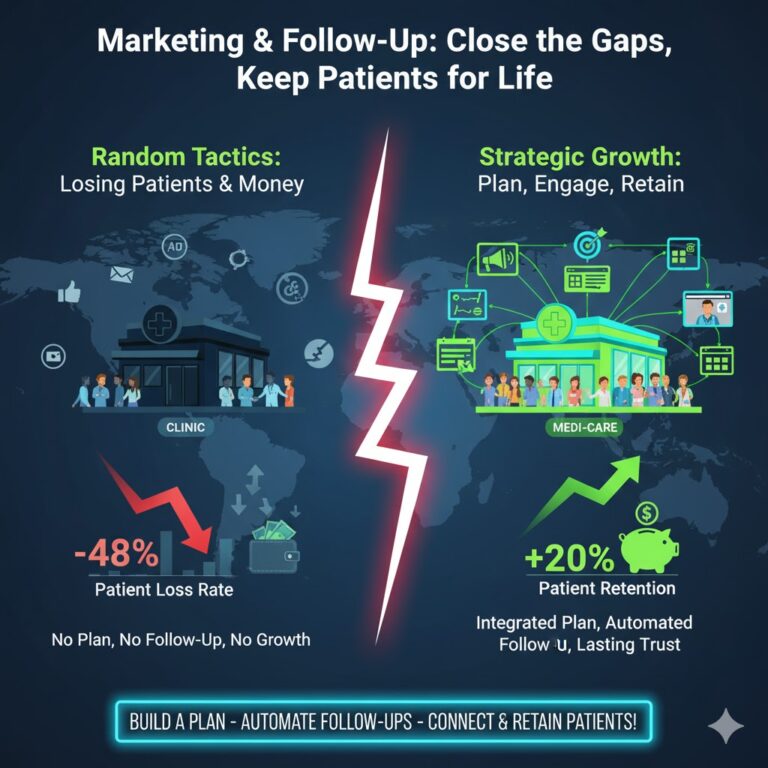
I see this mistake everywhere. Most doctors do marketing without a plan. They posted something on Facebook today. They run an ad next week. But there is no strategy behind it. Over 72% of healthcare ad budgets are spent online, but most of this money is wasted. Why? Because it is done without planning or measuring results.
When marketing is done randomly, it costs too much money and brings few patients. I have watched many practices spend thousands on ads that bring zero new patients.
How Forgotten Follow-Ups Drain Your Clinic
Here is the biggest problem I see: doctors get new patients but lose them fast. The average new patient retention rate over five years is only 43%. This means more than half of new patients never come back.
Healthcare providers lose patients faster than they get new ones. The numbers show that practices have a 45% growth rate but a 48% loss rate. This is a losing game.
Why does this happen? No follow-up system is used by most practices. When a patient visits once, no reminders are sent. No check-up calls. No emails about their health being shared.
What Patients Want (Based on Real Data)
65% of patients search online before contacting a doctor. This means patients want to find information easily online. But many doctor websites are hard to use or have old information.
91% of patients expect a reply within 24 hours. When patients call or email, they want fast answers. But many practices take days to respond.
36% of patients left their healthcare provider in the last two years due to poor experiences. Most left because of bad in-person service or hard access to care.
The Profit Waiting to Be Grabbed
For every 1% increase in keeping patients, there is a 4% improvement in patient lifetime value. This means keeping patients makes much more money than finding new ones.
But here is what hurts: there is only a 5-20% chance a new patient will visit again if no follow-up system is used.
How to Fix These Problems
1. Make a Real Marketing Plan
Stop doing random posts and ads. Make a plan that includes:
- Who your best patients are
- Where they look for doctors online
- What problems they need solved
- How much you will spend each month
- How you will measure if it works
2. Build a Follow-Up System
Every patient who visits should get:
- A thank you message within 24 hours
- Email reminders for check-ups
- Health tips related to their condition
- Birthday wishes and seasonal health reminders
Healthcare organizations using patient management systems see a 20% increase in patient retention.
3. Make Your Online Presence Better
7% of all Google searches each day are healthcare-related. Your practice needs to be found easily when patients search.
Make sure your:
- Website loads fast and is easy to use
- Google listing has correct hours and phone number
- Answering online reviews quick
- Social media shows helpful health information
4. Speed Up Your Response Time
Patients want fast answers. Set up systems to reply within a few hours, not days. Use automated messages to let patients know you got their message and when they will hear back.
Most doctors struggle to attract patients because they use old methods without seeing the results. They do not follow up with patients who visit. They are slow to respond to patient questions.
The solution is simple but needs work. Create a clear plan, build systems to keep in touch with patients, and measure what works.
Healthcare businesses have committed marketing budgets by up to 7% of their annual revenue in 2025. The ones who spend this money with a plan and good follow-up systems will win. The ones who keep doing random marketing will keep losing money and patients.
g.) The Race for Patients is heating up
As a doctor or clinic owner, I know you face more challenges today than ever before. The healthcare world has changed fast. Let me show you why attracting patients is harder now and what you can do about it.
Competition is Rising
The facts are clear: competition in healthcare marketing has blown up in 2025.
Here’s what I’ve found:
More money is spent on healthcare marketing: By the end of 2025, healthcare companies are expected to spend $19.6 billion on digital ads. That is huge! This means more doctors and clinics are fighting for the same patients you want.
Most Healthcare Providers Use Social Media: 98% of healthcare marketers in the U.S. use Facebook. This means almost every doctor or clinic is now marketing online. Your competitors are active on social media while you might not be.
Telemedicine Has Changed Everything: Over 97% of healthcare professionals now use telemedicine solutions. This means patients can get care from doctors anywhere. They don’t have to come to your office anymore.
Patients Have More Options Now
Your patients are not the same as they were before. They act differently now:
They Research Before They Choose: 90% of Americans use social media for health information. Patients read reviews online before they pick a doctor. They compare prices. They look at your website. They check what other patients say about you.
They Want Fast and Easy Care: Patients can book appointments online with other doctors. They can video chat with doctors from their home. They can get prescriptions delivered to their door. They will go elsewhere if your office is inaccessible or slow to respond.
They compare everything: Patients now compare doctors as if they were comparing restaurants or hotels. They look at:
- How much you charge
- How easy it is to book with you
- What your office looks like
- How long they have to wait
- What other patients say about you
Visibility Is the New Challenge
Most doctors are not good at marketing. The data shows this:
Most Don’t Have a Plan: Only 28% of healthcare marketers have a written plan for their content marketing. This means most doctors are guessing what to do.
Email Marketing is Underused: Healthcare emails only get opened 21.48% of the time. The click rate is 2.69%. Most doctors send boring emails that patients don’t read.
Many Doctors Resist Change: Some healthcare providers resist new technology because they don’t want more competition. But this thinking hurts them. While they wait, other doctors get ahead.
What This Means
If you don’t change how you attract patients, you will lose them to competitors who do. The main problems are as follows:
Your Practice Becomes Invisible: With so many doctors marketing online. Practices that don’t market become hard to find. Patients will not know you exist.
You lose control of your reputation if you’re not active online. You can’t control what people say about you. Bad reviews will hurt you more when you have no good content to balance them.
Younger Patients Will Go Elsewhere: Patients under 40 expect to find and book doctors online. If your practice is not easy to find and book online, you will lose younger patients.
How to Fix These Problems
Don’t worry. You can still attract patients if you make some changes:
Start with Simple Online Marketing
- Create a basic website that works on phones
- Set up a Google Business page
- Ask happy patients to leave good reviews
- Post helpful health tips on social media
Make It Easy for Patients to Reach You
- Let patients book appointments online
- Fast respond to calls and emails
- Offer some telehealth visits
- Make your office hours clear online
Focus on Patient Experience
- Reduce waiting times in your office
- Send reminder texts about appointments
- Follow up after visits
- Make your staff friendly and helpful
Track What Works
- Watch which marketing brings in new patients
- Ask new patients how they found you
- Keep track of your online reviews
- Measure if your changes help or not
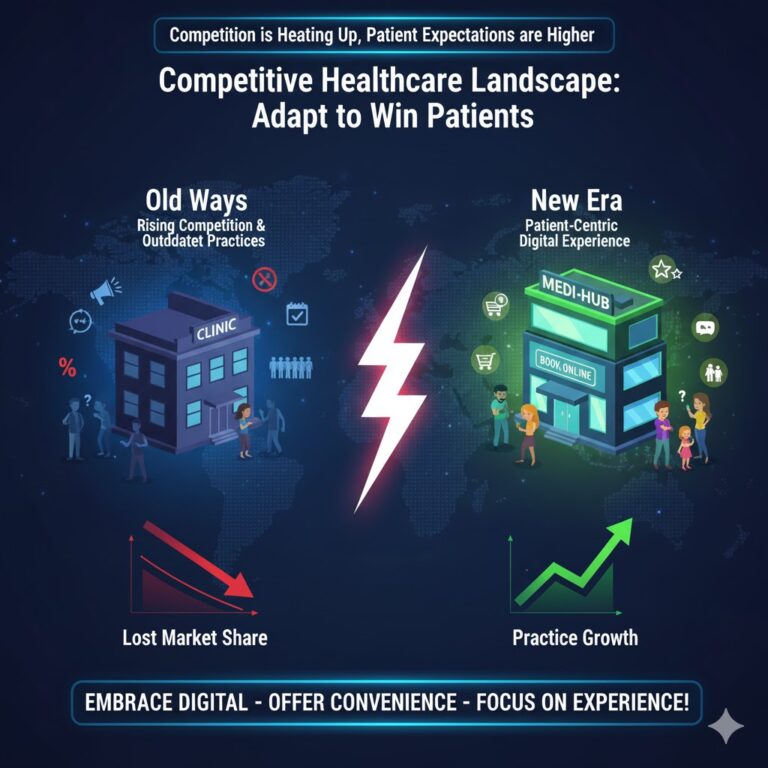
Competition for patients is more fierce than ever. Other physicians and practices are marketing in greater numbers and spending more dollars. Patients have more choices and higher expectations than ever before. Telemedicine lets patients get care from anywhere.
But it does not mean one can never make it. All you need to do is adapt. Start small. Make your practice easy to find online. Give patients a great experience. Track what works and do more of it.
The doctors who act now will get ahead. Those who wait will be left behind. The choice is yours.
Lorem ipsum dolor sit amet, consectetur adipiscing elit. Ut elit tellus, luctus nec ullamcorper mattis, pulvinar dapibus leo.
h.) Not being found when patients speak or type
Many doctors are losing patients. They work hard but still struggle. Why? Because they miss two big changes in how patients find doctors today.
The Power of Voice: How Patients Are Searching for Doctors in 2025
What is Voice Search?
Voice search means patients speak to their phones instead of typing. They ask questions like “find a dentist near me” or “what doctor takes my insurance?”
The Numbers That Will Surprise You
In the US alone, more than 153.5 million adults will use voice assistants in 2025. That’s about half of all adults in America.
More facts that matter:
- 32% of patients have used voice search to find healthcare providers
- 62% of healthcare-related searches occur on mobile devices. With 27% of users admittedly relying on a mobile device
- It is projected that by 2025, about 75% of households will own smart speakers capable of voice search
Why Voice Search is Different
When patients type, they use short words: “dentist Mumbai”
When patients speak, they use full sentences: “Where can I find a good dentist in Mumbai City that takes my insurance?”
If my website content is not written for these longer questions, patients will not find me.
How I Can Fix This
I need to write content that answers the questions patients ask out loud:
- “What are the symptoms of…”
- “How do I know if I need…”
- “Where can I find a doctor who…”
- “What insurance does Dr. Smith take?”
I should use natural language on my website. Write like I’m talking to a friend, not a textbook.
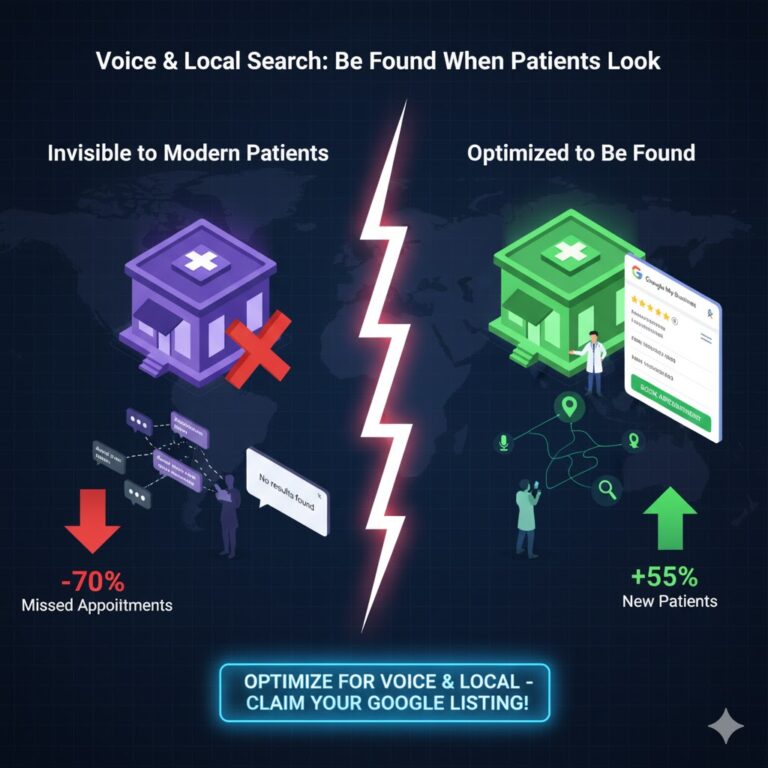
Local Search: The Free Tool That Makes Patients Walk Through Your Door by Google My Business
What is Local Search?
Local search is when a patient searches for doctors in their vicinity. They type, “family doctor near me” or “urgent care downtown.”
The Numbers Show It’s Critical
82.8% of the patients used search engines like Google and Bing to choose a healthcare provider.
More important facts:
- 65% of consumers turn to Google before consulting their doctor or other medical professionals
- 7% of the searches on Google each day are healthcare-related
- 32% use it to research a local business many times per week
Why Most Doctors Fail at Local Search
Many doctors ignore their Google My Business listing. This is a big mistake. Google My Business is free. It shows up when patients search for doctors nearby.
Without it, patients cannot find me easily. They will find my competitors instead. And they would get the patients I could have treated.
How I Can Fix Local Search
I need to claim and complete my Google My Business listing:
- Add all my information: address, phone, hours, services
- Add photos: of my office, staff, equipment
- Get patient reviews: ask happy patients to leave reviews
- Post updates: share health tips, office news
- Answer patient questions: fast respond to messages
I should also make sure my website mentions my city and neighborhood. Patients search for doctors in specific areas. Voice search and local search are not going away. They are getting bigger every year.
If I ignore them, I will keep losing patients to doctors who understand how patients search today.
These changes are not hard to fix.
What I Should Do Right Now
- Check my Google My Business: Is it complete? Are my hours correct? Do I have photos?
- Look at my website content: Does it answer questions patients ask out loud? Do I mention my location?
- Start writing for voice search: Create content that answers “who,” “what,” “where,” “when,” and “how” questions.
- Ask for reviews: Happy patients will be willing to help. I need to ask.
The doctors who adapt to these changes will get more patients. The ones who don’t will keep struggling. At Clickniti Digital, they only help doctors and clinics in digital marketing to grow more.
FAQs-
A digital brand is needed because patients now search online first. If no online presence is seen, the clinic is forgotten.
No. Free or low cost tools are available. Google Business Profile, WhatsApp, and social media can be used without heavy cost.
No. Simple tips or short videos help patients remember the doctor’s name. Trust is built, and new patients are attracted.
Yes. Online reviews are read by most patients. A clinic with more good reviews is trusted more.
No. Even small clinics can benefit. Patients usually search for the nearest doctor, not the biggest hospital.